
BuddhistCatholicContemplativeEvangelicalGeneral ChristianHinduJewishLatter-day SaintMuslimNew VisionsProgressive Christian
Beliefs
- Buddhist
- Catholic
- Contemplative
- Evangelical
- General Christian
- Hindu
- Jewish
- Latter-day Saint
- More Voices
- Muslim
- New Visions
- Pagan
- Progressive Christian
Topics
- Religion News
- Food and Religion
- Sports and Religion
- Religious Art
- Religious Music and Entertainment
- Religious Events
- History and Religion
- Style and Religion
- Politics and Religion
- Women in Religion
- Recreation Outdoors and Religion
- Business Finance and Religion
- Careers Workplace and Religion
- Education and Religion
- Family Parenting and Religion
- Health Fitness and Religion
- Home and Religion
- Relationships and Religion
- Technology and Religion
- Travel and Religion
Columnists
- Buddhist Columnists
- Business Finance and Religion Columnists
- Careers Workplace and Religion Columnists
- Catholic Columnists
- Contemplative Columnists
- Education and Religion Columnists
- Evangelists Columnists
- Family Parenting and Religion Columnists
- General Christian Columnists
- Health Fitness and Religion Columnists
- Hindu Columnists
- History and Religion Columnists
- Home and Religion Columnists
- Jewish Columnists
- More Voices Columnists
- Latter Day Columnists
- Muslim Columnists
- New Visions Columnists
- Nonreligious Columnists
- Pagan Columnists
- Politics and Religion Columnists
- Progressive Columnists
- Recreation Outdoors and Religion Columnists
- Relationships and Religion Columnists
- Religion News Columnists
- Religious Art Columnists
- Religious Events Columnists
- Religious Music and Entertainment Columnists
- Sports and Religion Columnists
- Style and Religion Columnists
- Technology and Religion Columnists
- Travel and Religion Columnists
- Women in Religion Columnists
Resource Library
- 2026 Calendar
- Library of World Religions
- The 100 Most Holy Places on Earth
- Patheos Answers
- Podcasts
- Videos
- Faith Leaders Database
- Anglican Episcopalian
- Bahai
- Baptist
- Buddhism
- Christianity
- Confucianism
- Eastern Orthodoxy
- Hinduism
- Holiness and Pentecostal
- ISKCON
- Islam
- Judaism
- Lutheran
- Methodist
- The Church of Jesus Christ of Latter-day Saints
- New Age
- Paganism
- Presbytarian and Reformed
- Protestantism
- Religion Behind the Scenes
- Roman Catholic
- Scientology
- Shia Islam
- Sikhism
- Sufism
- Sunni Islam
- Taoism
- Zen
- See all religions
Research Tools
 Ad-Free & Subscriber Log-In Subscription Support
Ad-Free & Subscriber Log-In Subscription Support
Follow Patheos 

- Trending:
- Forgiveness
- |
- Marriage
- |
- Consciousness
- |
- Death Penalty
- |
- Election
- |
- Halloween

- Home
- Evangelical
- Horace Bushnell and Progressive Orthodoxy 3
Horace Bushnell and Progressive Orthodoxy 3
Last updated on: March 12, 2025 at 8:46 am by Roger E. Olson
Horace Bushnell and Progressive Orthodoxy 3 2025-03-12T08:46:56-05:00 Roger E. Olson
Patheos Explore the world's faith through different perspectives on religion and spirituality! Patheos has the views of the prevalent religions and spiritualities of the world.
Horace Bushnell and Progressive Orthodoxy 3
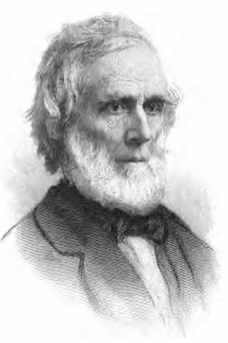
In the first two installments of this three part series I talked about what Gary Dorrien calls Bushnell’s “liberal-leaning experiment in progressive orthodoxy” with special focus on the 19th century theologian’s theological method. Here I want to suggest some ways in which Bushnell’s progressive orthodoxy can be helpful today.
As in Bushnell’s time and place (New England in mid-19th century), Protestant Christianity in America today is deeply divided between conservatives of various kinds and liberals of various kinds. And, among evangelicals, a gulf is widening between those I call postconservatives (including progressives and moderates) and neo-fundamentalists (conservative evangelicals). Notably missing is viable, attractive, influential middle ground.
In my estimation, what American theology needs is what Bushnell (and a few others) provided in mid-19th century New England: an attractive mediating theology that takes orthodoxy seriously but is willing to explore new horizons and frontiers in doctrinal reconstruction. Theologies of retrieval abound and are attracting many conservative-minded young people. These are either paleo-orthodox (retrieving and renewing ancient Christian teaching) or neo-fundamentalist (retrieving and usually entrenching the “received evangelical tradition”). Needed is a vision of orthodoxy in which it is living. Jaroslav Pelikan quipped that “Tradition is the living faith of the dead while traditionalism is the dead faith of the living.” Too often, I fear, orthodoxy is the dead faith of the dead. Progressive orthodoxy is the attempt to breathe new life into it and make it relevant (without relativism) to contemporary people.
Theologies of revision also abound. Among so-called “mainstream” Protestants there is new interest in process theology and various left-leaning political theologies of inclusion and social transformation. Among evangelicals, many younger people are attracted to revisionist theologies as espoused by some of the more progressive emerging church gurus. These often seem to repeat the liberal Protestant experiments of the later 19th century and early 20th century.
In the midst of the theological convulsions shaking New England Protestantism in the mid-19th century Bushnell attempted to provide a middle way, a via media, that took seriously the new knowledge of the sciences and new paths of philosophy while at the same time holding on to crucial doctrines of orthodoxy such as the Trinity. (Bushnell was a strong defender of the Trinity against the growing Unitarianism of his time and place.)
When people hear the phrase “progressive orthodoxy” there are usually two reactions. Conservatives hear only the “progressive” part and are deaf to the “orthodoxy” part. They react to it as if it were nothing but a new form of the old liberalism. Bushnell was no liberal; he believed in and defended the supernatural, the deity of Christ, the atoning death of Christ as more than a moral example. He was not a reductionist nor was he anxious to rush into accommodation to “modern thought.” Although he did believe it important to moralize dogma, he was not interested in reducing Christianity to ethics (which was the trend among the true liberals of his day).
The second reaction is from liberals who only hear the “orthodoxy” part and are deaf to the “progressive” part. They react to it as if it were nothing but a new form of fundamentalism, but Bushnell was no fundamentalist. He did not believe in biblical inerrancy (a concept he thought was foreign to the nature of Scripture as narrative and imagery), every biblical miracle (although he believed some biblical miracles are necessary such as Jesus’ resurrection), or that correct doctrine is the essence of authentic Christianity.
Like Bushnell, a new progressive orthodoxy would be a conscious via media between neo-fundamentalism that elevates correct doctrine to the sine qua non of authentic Christianity and neo-liberalism that reduces doctrine to unimportance. It would acknowledge that certain beliefs are necessary to holistic, mature Christianity in every place and time, namely the deity and humanity of Christ, the supernatural (that God sometimes acts in ways that transcend the laws of nature), the grace of God in salvation, and the Trinity (to name the most important ones). However, it would be open to reconsideration and revision of the ways in which doctrines have traditionally been formulated and expressed.
The new progressive orthodoxy would, like Bushnell’s, regard communion with God as the essence of authentic Christianity and emphasize spirituality as equally important, if not more important, than correct belief. It would recognize the distance between all human doctrinal formulations and the reality they aim to express. It would encourage Christian engagement with culture (science and philosophy especially) without capitulation to secularism or consumerism or “New Thought.” It would encourage the ongoing process of devout and faithful theological research that critiques and reconstructs traditional doctrinal formulations while at the same time holding firmly to the basics of the faith “once for all delivered.”
Bushnell’s lifelong work on the atonement is the best example of his own progressive orthodoxy at work. He refused to reduce the cross to a moral example and influence; he knew the biblical imagery of Christ’s sacrifice required an objective achievement that affected God as well as sinners. But he was dissatisfied with the traditional Puritan doctrine of penal substitution because it went beyond Scripture and portrayed God as a cruel judge who demands blood before he will be loving and forgive—also an unscriptural view of God and the atonement.
Bushnell’s proposal may not have been correct, but it was a valiant attempt to push on the frontiers of doctrinal achievement and break through impasses to something new and faithful and satisfying to both traditional theology and modern sentiments. (It’s important to remember that up until Anselm’s Cur Deus Homo the majority of medieval church leaders and theologians thought of the atonement in terms of a ransom paid by God to the devil. Anselm’s “satisfaction theory” was initially greeted with horror because it was new and culturally sensitive. During his own lifetime, however, Anselm’s theory caught on because it did take into account biblical images of the atonement not accounted for by the traditional ransom theory and it made sense in feudal society better than the ransom theory.)
Another example of Bushnell’s progressive orthodoxy is his open belief in the suffering of God. He was one of the first Christian theologians to affirm that God himself, not just the incarnate Son of God, suffers. It was Bushnell who first said (so far as I have been able to determine) that before there was a cross on the hill of Calvary there was a cross in the heart of God. (This is an image that has been much repeated in 20th century theology and attributed to many different poets and theologians; it belongs originally, so far as I can discover, to Bushnell.) There’s no evidence that in this he was at all influenced by Hegel who talked about a “speculative Good Friday” in God and Bushnell certainly did not mean anything like what Hegel meant by God’s “suffering.”) Bushnell was not afraid to break out of the confines of classical Christian theism when Scripture, spiritual experience and reason called for that. He was accused by critics of “patripassionism,” of course, but he steadfastly held on to his idea that God can and does suffer the sufferings of the world and especially of his Son on the cross against the overwhelming weight of traditional ideas of God’s immutability and impassibility.
Like Bushnell’s progressive orthodoxy, a contemporary one would seek to be reasonable while respecting and preserving mystery. It would attempt to take into account many different perspectives on Christian truth (“Christian comprehensiveness”) and unite them as much as possible. It would value imagination and creativity in theology without falling into relativism. It would keep an ear to the ground of culture and adjust doctrines to culture without reckless accommodation or capitulation. It would regard theology as a series of research projects rooted in tradition and community.
Who are some theologians working today along the lines of progressive orthodoxy? I’m not comparing them with Bushnell in terms of specific doctrinal formulations; I’m only comparing them with him in terms of approach and ethos.
One obvious example is N. T. Wright, although he is primarily a New Testament scholar. However, his work on justification is a good example of progressive orthodoxy. Jürgen Moltmann and Wolfhart Pannenberg are other examples. The late Stan Grenz was one, in my opinion. But the field of candidates is not cluttered. We are living in a time when only extremes get attention. Look at the ubiquitous use of the word “extreme” in entertainment. Radical proposals get more attention in politics and cuture generally (than moderate proposals). If a political candidate is perceived as moderate he or she had better do something quickly to appeal to the extremists in his or her political camp.
While I most certainly to not agree with every position Bushnell took, I think his example of moderate progressivism or progressive moderation in theology is a good model for contemporary theology. May his tiny tribe increase.
Previous Post
March 8, 2025
Liberal Theology and the Future
Next Post

March 13, 2025 Is Heresy A Sin?
Recent Comments
"No doubt Lewis was inspired by earlier thinkers. Ironically (or perhaps serendipitously) I am now ..."
The Abolition of Man: Chapter 3: ..."
"I am sure Lewis would agree. After all, as a Christian he believed in original ..."
The Abolition of Man: Chapter 3: ..."
"If I’m not mistaken, the quote from Lewis is his interpretation of the “Conditioners’” own ..."
The Abolition of Man: Chapter 3: ..."
"Thank you! It's been a great re-read of a thought provoking, but somewhat dense, little ..."
The Abolition of Man: Chapter 3: ..."
Browse Our Archives
Select a Category Against Liberal Theology Uncategorized
Select a Month October 2026 September 2026 August 2026 July 2026 June 2026 May 2026 April 2026 March 2026 February 2026 January 2026 December 2025 November 2025 October 2025 September 2025 August 2025 July 2025 June 2025 May 2025 April 2025 March 2025 February 2025 January 2025 December 2024 November 2024 October 2024 September 2024 August 2024 July 2024 June 2024 May 2024 April 2024 March 2024 February 2024 January 2024 December 2023 November 2023 October 2023 September 2023 August 2023 July 2023 June 2023 May 2023 April 2023 March 2023 February 2023 January 2023 December 2022 November 2022 October 2022 September 2022 August 2022 July 2022 June 2022 May 2022 April 2022 March 2022 February 2022 January 2022 December 2021 November 2021 October 2021 September 2021 August 2021 July 2021 June 2021 May 2021 April 2021 March 2021 February 2021 January 2021 December 2020 November 2020 October 2020 September 2020 August 2020 July 2020 June 2020 May 2020 April 2020 March 2020 February 2020 January 2020 December 2019 November 2019 October 2019 September 2019 August 2019 July 2019 June 2019 May 2019 April 2019 March 2019 February 2019 January 2019 December 2018 November 2018 October 2018 September 2018 August 2018 July 2018 June 2018 May 2018 April 2018 March 2018 February 2018 January 2018 December 2017 November 2017 October 2017 September 2017 August 2017 July 2017 June 2017 May 2017 April 2017 March 2017 February 2017 January 2017 December 2016 November 2016 October 2016 September 2016 August 2016 July 2016 June 2016 May 2016 April 2016 March 2016 February 2016 January 2016 December 2015 November 2015 October 2015 September 2015 August 2015 July 2015 June 2015 May 2015 April 2015 March 2015 February 2015 January 2015 December 2014 November 2014 October 2014 September 2014 August 2014 July 2014 June 2014 May 2014 April 2014 March 2014 February 2014 January 2014 December 2013 November 2013 October 2013 September 2013 August 2013 July 2013 June 2013 May 2013 April 2013 March 2013 February 2013 January 2013 December 2012 November 2012 October 2012 September 2012 August 2012 July 2012 June 2012 May 2012 April 2012 March 2012 February 2012 January 2012 December 2011 November 2011 October 2011 September 2011 August 2011 July 2011 June 2011 May 2011 April 2011 March 2011 February 2011 January 2011 December 2010 November 2010 October 2010 September 2010 August 2010 July 2010
TAKE THE
Religious Wisdom Quiz
I wanted a vineyard so badly that my wife arranged the owner's death through false witnesses. Who am I?
Select your answer to see how you score.
David Ahab Jezebel Naboth
Related posts from Roger E. Olson

The Abolition of Man: Chapter 3: The Abolition...

She Survived Her Execution. Should the State Try...
The Abolition of Man Part 2: Chapter 2:...

Ambiguity without Ambivalence in Faith
TRENDING AT PATHEOS Evangelical

I was strolling through the top floor of the brand new Parthenon...

What Does Gêvâh Mean For Kimberley Guifoyle &...
This week, a lot of the news is focused on Kimberly Guilfoyle....

INNER CIRCLE: Profound Mystery (Of Christ In All...
Ephesians 5:31-32 “For this reason, a man will leave his father and...

Do Not Rejoice When Your Enemy Falls: The...
Turning an execution into a public spectacle is a disturbing expression of...

'The Chosen' S6 Trailer: The Passion Gets Very...
Not many watching 'The Chosen' worry about spoilers, but just because they...

The purpose-driven labor priest
A labor activist reads Rick Warren and it gets me wondering about...
view all Evangelical blogs
What Are Your Thoughts?leave a comment
Ad-Free & Subscriber Log-In Subscription Support
- About Us
- 2026 Calendar
- Videos
- Podcasts
- Library of World Religions
- Faith In Media Tracker
- Advertise With Us
- Write for Us
- Privacy Policy
- Terms of Service
- Do Not Sell My Data
- Contact Us
- Radiant Digital
- Manage Newsletter Subscriptions
- Unsubscribe From Notifications
- Sitemap
Copyright 2008-2026, Patheos. All rights reserved.
Subscription Support Ad-Free & Subscriber Log-In
Follow Patheos