
BuddhistCatholicContemplativeEvangelicalGeneral ChristianHinduJewishLatter-day SaintMuslimNew VisionsProgressive Christian
Beliefs
- Buddhist
- Catholic
- Contemplative
- Evangelical
- General Christian
- Hindu
- Jewish
- Latter-day Saint
- More Voices
- Muslim
- New Visions
- Pagan
- Progressive Christian
Topics
- Religion News
- Food and Religion
- Sports and Religion
- Religious Art
- Religious Music and Entertainment
- Religious Events
- History and Religion
- Style and Religion
- Politics and Religion
- Women in Religion
- Recreation Outdoors and Religion
- Business Finance and Religion
- Careers Workplace and Religion
- Education and Religion
- Family Parenting and Religion
- Health Fitness and Religion
- Home and Religion
- Relationships and Religion
- Technology and Religion
- Travel and Religion
Columnists
- Buddhist Columnists
- Business Finance and Religion Columnists
- Careers Workplace and Religion Columnists
- Catholic Columnists
- Contemplative Columnists
- Education and Religion Columnists
- Evangelists Columnists
- Family Parenting and Religion Columnists
- General Christian Columnists
- Health Fitness and Religion Columnists
- Hindu Columnists
- History and Religion Columnists
- Home and Religion Columnists
- Jewish Columnists
- More Voices Columnists
- Latter Day Columnists
- Muslim Columnists
- New Visions Columnists
- Nonreligious Columnists
- Pagan Columnists
- Politics and Religion Columnists
- Progressive Columnists
- Recreation Outdoors and Religion Columnists
- Relationships and Religion Columnists
- Religion News Columnists
- Religious Art Columnists
- Religious Events Columnists
- Religious Music and Entertainment Columnists
- Sports and Religion Columnists
- Style and Religion Columnists
- Technology and Religion Columnists
- Travel and Religion Columnists
- Women in Religion Columnists
Resource Library
- 2026 Calendar
- Library of World Religions
- The 100 Most Holy Places on Earth
- Patheos Answers
- Podcasts
- Videos
- Faith Leaders Database
- Anglican Episcopalian
- Bahai
- Baptist
- Buddhism
- Christianity
- Confucianism
- Eastern Orthodoxy
- Hinduism
- Holiness and Pentecostal
- ISKCON
- Islam
- Judaism
- Lutheran
- Methodist
- The Church of Jesus Christ of Latter-day Saints
- New Age
- Paganism
- Presbytarian and Reformed
- Protestantism
- Religion Behind the Scenes
- Roman Catholic
- Scientology
- Shia Islam
- Sikhism
- Sufism
- Sunni Islam
- Taoism
- Zen
- See all religions
Research Tools
 Ad-Free & Subscriber Log-In Subscription Support
Ad-Free & Subscriber Log-In Subscription Support
Follow Patheos 

- Trending:
- Forgiveness
- |
- Marriage
- |
- Consciousness
- |
- Death Penalty
- |
- Election
- |
- Halloween

- Home
- Evangelical
- Remembering Horace Bushnell 2
Remembering Horace Bushnell 2
Last updated on: February 27, 2025 at 10:38 am by Roger E. Olson
Remembering Horace Bushnell 2 2025-02-27T10:38:53-05:00 Roger E. Olson
Patheos Explore the world's faith through different perspectives on religion and spirituality! Patheos has the views of the prevalent religions and spiritualities of the world.
Remembering the “Progessive Orthodoxy” of Horace Bushnell Part Two
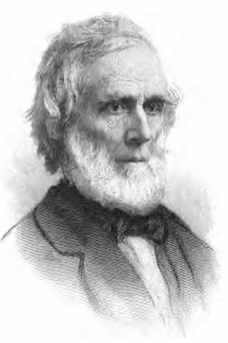
Bushnell was self-consciously a mediating theologian. He stood against the stream of New England Unitarianism and the accommodating liberalism while at the same time resisting the rigid orthodoxy and incipient fundamentalism of neo-Puritanism and the Princeton Theology (Alexander and Hodge). He strongly defended belief in the supernatural, including Jesus’ miracles (although he felt no need to defend every biblical miracle story), while at the same time defending the need to adjust Christian doctrines to the changing cultural context. He infuriated both liberals and conservatives. The latter attempted to expel him from the local Congregational association, but his church withdrew to protect him. The former heaped scorn and ridicule on him for being out of touch with modern thought.
Like Barth and Niebuhr in the next century, Bushnell never earned a doctoral degree; he was a seminary graduate and pastor. His only academic teaching involved tutoring Yale students. Yet he wrote many books of theology that sold well and were widely read, reviewed, discussed and sometimes condemned (especially by his opponents to the right such as Hodge and to the left). His main philosophical-theological influence was Samuel Taylor Coleridge, the enigmatic English romanticist poet and essayist whose book Aids to Reflection greatly inspired Bushnell. Like Kierkegaard, but without any obvious influence by him, Bushnell believed spiritual truth usually comes clothed in paradox and that many of theology’s pathologies arise from attempting to make everything rationally satisfying.
Among Bushnell’s most influential books (besides Christian Nurture) were God in Christ (1849), Nature and the Supernatural (1858), Christ and His Salvation (1864) and The Vicarious Sacrifice (1866). The latter book created the most controversy as there he tried to work out an objective doctrine of the atonement that would avoid the penal substitution theory which he thought portrayed God as cold and vindictive. He became dissatisfied with what he had written about the atonement there, so he revised his doctrine of the atonement in his last book Forgiveness and Law (1874). Essentially, he held that Jesus’ death was the cost of forgiveness by God. I won’t get into Bushnell’s mature theory of the atonement here as the details of his doctrinal proposals are not my focus in this post.
One cannot understand anything about Bushnell’s approach to theology and doctrinal reconstruction without realizing that he considered all language, not only theological language, metaphorical. All nouns outside of mathematics, he argued, are “faded metaphors”—images. Words about things never match them perfectly. And that is especially true in spiritual matters where we are talking about things unseen. Therefore, according to Bushnell, all God talk ought to admit that none of its words perfectly match the Reality they seek to express. This is more than merely affirmation of analogy; it seems to me that Bushnell’s theory of religious language takes a position somewhere between equivocal and analogical. The upshot was that for him, all creeds and doctrines must be held somewhat lightly because none of them correspond exactly to the spiritual realities they attempt to describe. Some words about God and salvation (etc.) are better than others, but all are like arrows shot toward a target too distant to hit. Some go right toward it but fall short; others go way off in a wrong direction entirely.
Also, one cannot understand anything about Bushnell’s theology without realizing that he considered religion, including Christianity, primarily about experiencing God. For him, the essence of Christianity is spiritual communion with God through Christ. “A few dull propositions” can never do justice to that life even if they are necessary. For him, there is a qualitative difference between that communion with God and doctrines that inevitably flow from it. Doctrines are secondary; personal communion with God is primary. Critics charge Bushnell with repeating Schleiermacher’s subjectivism, but that’s not correct. Bushnell did not believe in a universal “God consciousness” that serves as the criterion of all religious belief, including Christian belief. In other words, he did not acknowledge any “religious a priori” to become a Procrustean bed (look it up) for Christian doctrine. Nor did he think doctrines are subjective expressions of individual or corporate experiences; he held the Bible to be the source and norm for doctrine. However, he thought the Bible communicates spiritual truth through poetry and parable and even its didactic writings (e.g., Paul’s letters) are metaphorical such that they must be interpreted anew in each generation. For example, the New Testament uses the metaphor “ransom” for what Christ accomplished on the cross. That spoke meaningfully to people in the ancient world filled with slavery; it speaks less meaningfully to us in the modern world. The theologian’s task is to develop new accounts of the atonement that are nevertheless faithful to the original images.
Bushnell was appalled at the vicious theological debates tearing churches apart in New England. Much of what he was about was trying to provide ways of thinking about doctrines that make such heated debates unnecessary. To that end he developed (or at least began developing) what he called “Christian comprehensiveness.” Contrary to what his critics charged, he did not advocate throwing out all creeds and confessions of faith. However, he said of them “the more, the better.” All express something of the truth; none express truth perfectly. “Christian comprehensiveness” was Bushnell’s ecumenical endeavor; he thought a major task of theology is to draw out the truth in all the major, historical forms of Christianity and hold its various expressions in tension with each other. Unlike liberals, he was not interested in finding the “kernel within the husks” (essence of Christianity separated from all its historical forms) and discarding the husks. For him, there is no culturally neutral, transcendent propositional truth to which we have access. All expressions of Christian belief are culturally shaped. And all are metaphorical.
All this is vague without an example. Much of the heat of New England Protestant controversy in Bushnell’s time centered around Calvinism versus Arminianism. Bushnell argued that there is truth in both and neither is true alone. They need each other. His approach to this and other controversies among equally God-fearing, Bible-believing, Jesus-loving Christians was “both-and” rather than “either-or.” He rejected both Calvinism and Arminianism insofar as they were represented by their adherents as closed systems; he accepted both insofar as they are viewed as human attempts to express equally important truths of revelation. Both agree that God is sovereign; both agree that humans are responsible for sin and evil. The problem that gives rise to the controversy tearing churches apart, he argued, is that defenders of both go too far in speculation and deny the truth in the other soteriology. He knew that inquiring minds will inevitably seek to explain mysteries, but he believed these explanations ought to be held lightly and not as fortresses to be built up and defended and used as bases for forays against the “enemies.” He wasn’t in favor of Methodists giving up Arminianism or Presbyterians giving up Calvinism; he was in favor of Christian comprehensiveness in which both and all sides can come together, admit that their systems of belief are human attempts to understand something about God that humans cannot fully comprehend and unify around the truths about which they agree—that God is sovereign and humans alone are responsible for sin and evil. By “unify” he meant at least stop fighting each other and have fellowship and cooperation.
I think if Bushnell were alive today he would find himself most at home in a postliberal, narrative type of theology. Many things he wrote about doctrine anticipated that. I’m not saying he would agree with any specific theory of doctrine such as Lindbeck’s, but I think he would agree heartily with Hans Frei’s approach to the Bible and doctrine. The Bible, he would say (I think) is not a not-yet-systematized-systematic theology. All systems of theology are human attempts in a certain time and place to bring the truths of the biblical narrative to expression. More important than they, however, (and I’m not sure Frei would agree) is spiritual communion with God through Jesus Christ. It is that that the Bible is meant to create and promote and govern by its stories, parables, poetry, images and, yes, propositions. I think Bushnell would agree with Moravian leader Zinzendorf who, about a hundred years earlier, said that whoever attempts to put Christianity into a system kills it. He would certainly agree with Alfred Lord Tennyson who said “Our little systems have their day; they have their day and cease to be. They are but broken lights of Thee, and Thou, O God, art more than they.”
Of course, predictably, both liberals and conservatives of his day accused Bushnell of relativism. (It might be difficult to conceive that liberals would accuse him of that, but it’s important to know that the liberals of his day were, like the conservatives, under the influence of Scottish Common Sense Realism. Both liberals and conservatives then believed that propositions can correspond to reality. They just disagreed about what propositions correspond to reality.) I consider him to have been a precursor of critical realism in theology. He certainly was not a relativist even though he admitted and argued for the relativity of all human propositions—especially about God and spiritual realities. He believed in absolute truth; he denied human absolute knowledge of it.
An excellent example of Bushnell’s approach to theology is the atonement. He believed that Scripture does not communicate a “theory” of the atonement; it expresses what Christ accomplished on the cross with metaphors: sacrifice, conquest, ransom, cancelling a debt, etc. In his time and place, liberals and conservatives had staked out theories of the atonement and opposed each others’. Liberals by-and-large promoted a subjective view of the atonement called the moral example or moral influence theory. Conservatives virtually all promoted some version of the satisfaction or penal substitution theory. (Many Arminians and Wesleyans promoted the so-called governmental theory, but to Bushnell that would be just a modification of the penal substitution theory.) According to Bushnell, both (all) theories express some aspect of the truth of the atonement. Their faults lie in their claims to be comprehensive and exact as if they could look right into the mind of God and know what was going on between Father and Son before, during and after the death of Christ on the cross.
Bushnell believed a new theory of the atonement needed to be constructed—one that would take up the truth in both subjective and objective theories and avoid their problems. But his own constructed doctrine of the atonement, expressed differently in two books (mentioned above), was not to be final, closed or total. It was to be a new arrow, so to speak, aimed in the direction of the truth from a particular social, cultural context and frame of mind. In developing it he used a lot of the budding science of psychology as well as recent theories of justice. Basically, in a nutshell, his theory was that forgiveness is always costly and the death of Christ was God’s experience of the cost of forgiving. He thought that all Christians could rally around that even as they might hold onto their own theories as other arrows aimed at the truth. None hits the target’s bullseye. But Bushnell thought his own came closer to that for his own time and place.
In Part 3, the final installment of this series, I want to suggest ways in which Bushnell might be a model for contemporary theology.
Previous Post
February 24, 2025
Liberal Theology and Jesus Christ
Next Post

March 1, 2025 Starving Children in Sudan: Complicity in a Moral Tragedy
Recent Comments
"No doubt Lewis was inspired by earlier thinkers. Ironically (or perhaps serendipitously) I am now ..."
The Abolition of Man: Chapter 3: ..."
"I am sure Lewis would agree. After all, as a Christian he believed in original ..."
The Abolition of Man: Chapter 3: ..."
"If I’m not mistaken, the quote from Lewis is his interpretation of the “Conditioners’” own ..."
The Abolition of Man: Chapter 3: ..."
"Thank you! It's been a great re-read of a thought provoking, but somewhat dense, little ..."
The Abolition of Man: Chapter 3: ..."
Browse Our Archives
Select a Category Against Liberal Theology Uncategorized
Select a Month October 2026 September 2026 August 2026 July 2026 June 2026 May 2026 April 2026 March 2026 February 2026 January 2026 December 2025 November 2025 October 2025 September 2025 August 2025 July 2025 June 2025 May 2025 April 2025 March 2025 February 2025 January 2025 December 2024 November 2024 October 2024 September 2024 August 2024 July 2024 June 2024 May 2024 April 2024 March 2024 February 2024 January 2024 December 2023 November 2023 October 2023 September 2023 August 2023 July 2023 June 2023 May 2023 April 2023 March 2023 February 2023 January 2023 December 2022 November 2022 October 2022 September 2022 August 2022 July 2022 June 2022 May 2022 April 2022 March 2022 February 2022 January 2022 December 2021 November 2021 October 2021 September 2021 August 2021 July 2021 June 2021 May 2021 April 2021 March 2021 February 2021 January 2021 December 2020 November 2020 October 2020 September 2020 August 2020 July 2020 June 2020 May 2020 April 2020 March 2020 February 2020 January 2020 December 2019 November 2019 October 2019 September 2019 August 2019 July 2019 June 2019 May 2019 April 2019 March 2019 February 2019 January 2019 December 2018 November 2018 October 2018 September 2018 August 2018 July 2018 June 2018 May 2018 April 2018 March 2018 February 2018 January 2018 December 2017 November 2017 October 2017 September 2017 August 2017 July 2017 June 2017 May 2017 April 2017 March 2017 February 2017 January 2017 December 2016 November 2016 October 2016 September 2016 August 2016 July 2016 June 2016 May 2016 April 2016 March 2016 February 2016 January 2016 December 2015 November 2015 October 2015 September 2015 August 2015 July 2015 June 2015 May 2015 April 2015 March 2015 February 2015 January 2015 December 2014 November 2014 October 2014 September 2014 August 2014 July 2014 June 2014 May 2014 April 2014 March 2014 February 2014 January 2014 December 2013 November 2013 October 2013 September 2013 August 2013 July 2013 June 2013 May 2013 April 2013 March 2013 February 2013 January 2013 December 2012 November 2012 October 2012 September 2012 August 2012 July 2012 June 2012 May 2012 April 2012 March 2012 February 2012 January 2012 December 2011 November 2011 October 2011 September 2011 August 2011 July 2011 June 2011 May 2011 April 2011 March 2011 February 2011 January 2011 December 2010 November 2010 October 2010 September 2010 August 2010 July 2010
TAKE THE
Religious Wisdom Quiz
What was the name of the garden where Jesus prayed before His arrest?
Select your answer to see how you score.
Eden Gethsemane Bethany Golgotha
Related posts from Roger E. Olson

The Abolition of Man: Chapter 3: The Abolition...

She Survived Her Execution. Should the State Try...
The Abolition of Man Part 2: Chapter 2:...

Ambiguity without Ambivalence in Faith
TRENDING AT PATHEOS Evangelical

I was strolling through the top floor of the brand new Parthenon...

What Does Gêvâh Mean For Kimberley Guifoyle &...
This week, a lot of the news is focused on Kimberly Guilfoyle....

INNER CIRCLE: Profound Mystery (Of Christ In All...
Ephesians 5:31-32 “For this reason, a man will leave his father and...

Do Not Rejoice When Your Enemy Falls: The...
Turning an execution into a public spectacle is a disturbing expression of...

'The Chosen' S6 Trailer: The Passion Gets Very...
Not many watching 'The Chosen' worry about spoilers, but just because they...

The purpose-driven labor priest
A labor activist reads Rick Warren and it gets me wondering about...
view all Evangelical blogs
What Are Your Thoughts?leave a comment
Ad-Free & Subscriber Log-In Subscription Support
- About Us
- 2026 Calendar
- Videos
- Podcasts
- Library of World Religions
- Faith In Media Tracker
- Advertise With Us
- Write for Us
- Privacy Policy
- Terms of Service
- Do Not Sell My Data
- Contact Us
- Radiant Digital
- Manage Newsletter Subscriptions
- Unsubscribe From Notifications
- Sitemap
Copyright 2008-2026, Patheos. All rights reserved.
Subscription Support Ad-Free & Subscriber Log-In
Follow Patheos