
BuddhistCatholicContemplativeEvangelicalGeneral ChristianHinduJewishLatter-day SaintMuslimNew VisionsProgressive Christian
Beliefs
- Buddhist
- Catholic
- Contemplative
- Evangelical
- General Christian
- Hindu
- Jewish
- Latter-day Saint
- More Voices
- Muslim
- New Visions
- Pagan
- Progressive Christian
Topics
- Religion News
- Food and Religion
- Sports and Religion
- Religious Art
- Religious Music and Entertainment
- Religious Events
- History and Religion
- Style and Religion
- Politics and Religion
- Women in Religion
- Recreation Outdoors and Religion
- Business Finance and Religion
- Careers Workplace and Religion
- Education and Religion
- Family Parenting and Religion
- Health Fitness and Religion
- Home and Religion
- Relationships and Religion
- Technology and Religion
- Travel and Religion
Columnists
- Buddhist Columnists
- Business Finance and Religion Columnists
- Careers Workplace and Religion Columnists
- Catholic Columnists
- Contemplative Columnists
- Education and Religion Columnists
- Evangelists Columnists
- Family Parenting and Religion Columnists
- General Christian Columnists
- Health Fitness and Religion Columnists
- Hindu Columnists
- History and Religion Columnists
- Home and Religion Columnists
- Jewish Columnists
- More Voices Columnists
- Latter Day Columnists
- Muslim Columnists
- New Visions Columnists
- Nonreligious Columnists
- Pagan Columnists
- Politics and Religion Columnists
- Progressive Columnists
- Recreation Outdoors and Religion Columnists
- Relationships and Religion Columnists
- Religion News Columnists
- Religious Art Columnists
- Religious Events Columnists
- Religious Music and Entertainment Columnists
- Sports and Religion Columnists
- Style and Religion Columnists
- Technology and Religion Columnists
- Travel and Religion Columnists
- Women in Religion Columnists
Resource Library
- 2026 Calendar
- Library of World Religions
- The 100 Most Holy Places on Earth
- Patheos Answers
- Podcasts
- Videos
- Faith Leaders Database
- Anglican Episcopalian
- Bahai
- Baptist
- Buddhism
- Christianity
- Confucianism
- Eastern Orthodoxy
- Hinduism
- Holiness and Pentecostal
- ISKCON
- Islam
- Judaism
- Lutheran
- Methodist
- The Church of Jesus Christ of Latter-day Saints
- New Age
- Paganism
- Presbytarian and Reformed
- Protestantism
- Religion Behind the Scenes
- Roman Catholic
- Scientology
- Shia Islam
- Sikhism
- Sufism
- Sunni Islam
- Taoism
- Zen
- See all religions
Research Tools
 Ad-Free & Subscriber Log-In Subscription Support
Ad-Free & Subscriber Log-In Subscription Support
Follow Patheos 

- Trending:
- Forgiveness
- |
- Marriage
- |
- Consciousness
- |
- Death Penalty
- |
- Election
- |
- Halloween

- Home
- Evangelical
- A Prophetic Book for Conservatives and Progressives
A Prophetic Book for Conservatives and Progressives
Last updated on: May 15, 2024 at 10:22 am by Roger E. Olson
A Prophetic Book for Conservatives and Progressives 2024-05-15T10:22:28-05:00 Roger E. Olson
Patheos Explore the world's faith through different perspectives on religion and spirituality! Patheos has the views of the prevalent religions and spiritualities of the world.
A Prophetic Book for Conservatives and Progressives: Our Next Book for Discussion
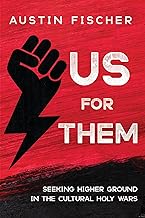
(First I will finish our current discussion of The Political Meaning of Christianity. Then, in a couple weeks, we will begin discussion of this excellent new book by Austin Fischer. Please order it as soon as possible. I guarantee it will inspire and challenge you.)
Austin Fischer is lead pastor of The Vista (church) in Temple, Texas and my former student. In this case, the student has surpassed the teacher! Austin is an excellent writer and good theologian. I have here reviewed two of his previous books: Young, Restless, No Longer Reformed and Faith in the Shadows. Through is books, pastoral work, and speaking, Austin is emerging as one of the leading influencers among young evangelicals in America. Here, below, is something from Austin and a portion of Chapter One of Us for Them, posted here with permission of Wipf and Stock Publishers (www.wipfandstock.com). At the end you will find a link to the book at the publisher’s web site. It is, of course, available through Amazon and all major book sellers.
I’ve written this little book for people who think it’s OK to love Jesus and hate their enemies, which is to say, I’ve written this book for people like me. And given that we bookish people tend to think ideas are very important, we are especially drawn to the heretical but irresistible belief that it’s OK (and maybe even virtuous) to hate people who think bad (according to us) thoughts and ideate bad (according to us) ideas. But Christians bear the annoying burden of being unable to justify their hatred.
I am not saying you can’t have enemies—one could even make a case they’re required this side of things. I am saying you can’t have enemies you don’t also love.
The modern American culture wars over social justice, politics, and a number of adjacent issues have been made much uglier than they need be by Christians who are far too comfortable justifying their hatred and contempt for their ideological enemies—i.e. “them.” Our failure is no trivial matter. According to Jesus at least, it makes the gospel unbelievable.
This book is an invitation to a friendly rebellion. In a world where everyone tells you it’s OK to hate “them”, churches should be places where, by the power of the Spirit, people are created (we call them Christians) who are for “them”—yes, even the worst of “them.”
Below is a small selection to, I hope, wet your appetite!
SYSTEMIC FRIENDSHIP
In the closing moments of World War II, Karl Barth found himself in an odd position. For he was German but had also been one of the most rigorous opponents of Nazism, and now that the Nazi defeat was certain there was deep confusion about what Germany needed. Barth’s answer was that while Germany needed justice, they also needed friends—“friends in spite of everything.” And in a lecture called “The Germans and Us,” he imagined what Jesus might say to the Germans by speaking of justice and friendship:
Come to me you unlovely creatures, you wicked Hitler youth and Hitler girls, you brutal SS soldiers, you evil Gestapo blackguards, you sorry compromisers and collaborationists, you sheep who now have run so patiently and so dumbly for so long behind your so-called leader! Come to me, you guilty ones and you connivers! Now you can and must see what your actions are really worth! Come to me!
I know you well, but I do not ask who you are and what you have done. I can only see that you are finished, and for good or ill you must begin again. I will refresh you. Now I will begin again with you from scratch. . . . I am for you! I am your friend!
I don’t know if this is exactly what Jesus would have said, but it does sound something like something Jesus might say.
One of my heroes is a man named Bennie Walsh—he’s a security guard at the local high school and president of the NAACP branch in our city. Bennie shoulders a heavy load for many people and is a relational ambassador between many groups. He advocates for the equality and advancement of minorities in our city, he regularly meets with our police chief, and he calls our Republican state representative a good friend. Few could shoulder such a load well, but Bennie manages it with dignity and warmth.
I have seen Bennie have a tough but friendly conversation with the police chief, and then walk over and hug the parents of a child who had recently been killed by a police officer. He is a man working for justice and friendship. I once heard someone ask him how he managed to have so many friendships with so many kinds of people. “Well, it’s not easy,” he said, “but it is simple: I make myself friendly to everybody. Jesus told me to do it.”
Friendship has come under fire in recent years, and understandably so. Many will find my pairing of justice and friendship odd, perhaps a category mistake—perhaps a serious one. What has Athens to do with Jerusalem? For at times friendship is the name given to unjust compromise. It has become standard to observe that conservatives are often personally friendly to minorities all the while endorsing social norms that preserve minority oppression (the white evangelical who is friendly with the black family who has a son on his son’s football team but mainlines FOX News every night and is convinced black people only vote Democrat because they’ve been brainwashed). Personal friendships cannot single-handedly solve our systemic problems, but our systemic problems cannot be solved without friendship.
In a deceptively perceptive sentence, Stanley Hauerwas has suggested modern society is stranded in a partisan lagoon because it has pursued justice at all costs and neglected political friendship: “Friendship has been abandoned in favor of trying to make justice the primary political virtue.”
No justice, no peace. Absolutely! But no friendship, no justice. Why? Because people who hate each other cannot agree on justice because they cannot agree on truth because victory is more important than communion.
Miroslav Volf agrees: “To agree on justice . . . you must want more than justice; you must want embrace. There can be no justice without the will to embrace.”
This does not seem debatable. You can walk into a negotiation loaded with unimpeachable facts and steel explanations, but if the person sitting across the table hates you or thinks you hate them, you probably couldn’t agree on anything of consequence if your lives depended on it. Further elaborating, Volf says,
to agree on justice you need to make space in yourself for the perspective of the other, and in order to make space, you need to want to embrace the other. If you insist that others do not belong to you and you to them, that their perspective should not muddle yours, you will have your justice and they will have theirs; your justices will clash and there will be no justice between you. The knowledge of justice depends on the will to embrace.
Willie James Jennings teaches systematic theology and Africana studies at Yale. He has explored this delicate territory better than most, arguing modern western notions of friendship are the bastardized children of colonialism and capitalism wherein friendship is primarily conceived as a personal choice wherein two individuals who do not need each other decide to share, care, and connect. And while acknowledging such individualistic and voluntarist visions of friendship come bearing certain truths, Jennings believes all friendship occurs on a deeper social fabric that must be seen, understood, and transformed.
Writing specifically of the ideological trench warfare surrounding justice that’s occurring in higher education, Jennings prophesies only a mounting body count because the goal of modern ideological combat is critique and not communion, and while critique is an indispensable means it’s an unworthy end: “We forget that critique itself is being overturned, turned right side up within the new purpose of life together. Critique must aim at communion. . . . [We] make a terrible mistake when [we] forget communion is the point.”
True communion requires critique, but critique must be motivated by the desire for communion, otherwise our critique is not Christian, whatever else it may be.
Rowan Williams concurs from a contemplative angle, advocating for a contemplative politics motivated by the pursuit of sustainable justice and not the spasms of ideology. A contemplative politics is one that “seeks to make room for the narrative of the other; one that does not begin by attempting to absorb this narrative into itself, and thus is willing to learn how it is itself seen and understood.”
Sounds pleasant enough. But making room for the narrative of the other proves wickedly difficult because it requires something that feels wicked to cultural holy warriors: we must distance ourselves from our political commitments.
Progressives will likely hear this as a privileged counsel of oppressive passive-ism. Conservatives will likely hear this as a naïve counsel of cowardly nicety. But Williams contends that such hearings expose the futility of pursuing the victory of holy-war justice instead of the communion of sustainable justice: “To say that we must learn to distance ourselves from our commitments in politics in order to arrive at both justice and love is at first sight a bizarre recommendation, suggesting a corrosive indifferentism. But the distance involved is not a refusal of commitment; it has rather to do with what it is that we are committed to.”
And what we must be ultimately committed to is not victory—what we must be ultimately committed to is each other. For only if our commitment to each other is more ultimate than our commitment to victory will we ceaselessly pursue a justice that is sustainable because sustained by the contemplative capacity to make room for the other that we might, more simply, call friendship.
The father of Latin American liberation theology, Gustavo Gutierrez, agrees in the updated introduction to his classic work, A Theology of Liberation, affirming that liberation is a means to friendship, just as friendship is the means to liberation. For the liberation from sin that is friendship is the only thing that “gets to the very source of social injustice and other forms of human oppression . . . ”
So rather than abandoning friendship in the name of justice, we are better served transposing friendship into a systemic key. Systemic injustice plagues our world, but so does systemic hostility, and systemic hostility makes systemic justice impossible because it makes both truth and communion impossible. This brings us to the friendly but firm argument at the center of this book: Jesus has commanded the church to be a place of systemic justice and systemic friendship, a space where the hostilities that make justice, peace, and communion impossible are exposed, diagnosed, and healed. Because not only is friendship not irrelevant to the pursuit of justice, and not only is justice not irrelevant to the pursuit of friendship, but there is no justice or friendship without justice and friendship.
URL for book : https://wipfandstock.com/9781666773866/us-for-them/
Previous Post

May 12, 2024
An Evangelical Side Show? Controversy Again
Next Post

May 15, 2024 What Is the “Decisive Factor” in Salvation?
Recent Comments
"No doubt Lewis was inspired by earlier thinkers. Ironically (or perhaps serendipitously) I am now ..."
The Abolition of Man: Chapter 3: ..."
"I am sure Lewis would agree. After all, as a Christian he believed in original ..."
The Abolition of Man: Chapter 3: ..."
"If I’m not mistaken, the quote from Lewis is his interpretation of the “Conditioners’” own ..."
The Abolition of Man: Chapter 3: ..."
"Thank you! It's been a great re-read of a thought provoking, but somewhat dense, little ..."
The Abolition of Man: Chapter 3: ..."
Browse Our Archives
Select a Category Against Liberal Theology Uncategorized
Select a Month October 2026 September 2026 August 2026 July 2026 June 2026 May 2026 April 2026 March 2026 February 2026 January 2026 December 2025 November 2025 October 2025 September 2025 August 2025 July 2025 June 2025 May 2025 April 2025 March 2025 February 2025 January 2025 December 2024 November 2024 October 2024 September 2024 August 2024 July 2024 June 2024 May 2024 April 2024 March 2024 February 2024 January 2024 December 2023 November 2023 October 2023 September 2023 August 2023 July 2023 June 2023 May 2023 April 2023 March 2023 February 2023 January 2023 December 2022 November 2022 October 2022 September 2022 August 2022 July 2022 June 2022 May 2022 April 2022 March 2022 February 2022 January 2022 December 2021 November 2021 October 2021 September 2021 August 2021 July 2021 June 2021 May 2021 April 2021 March 2021 February 2021 January 2021 December 2020 November 2020 October 2020 September 2020 August 2020 July 2020 June 2020 May 2020 April 2020 March 2020 February 2020 January 2020 December 2019 November 2019 October 2019 September 2019 August 2019 July 2019 June 2019 May 2019 April 2019 March 2019 February 2019 January 2019 December 2018 November 2018 October 2018 September 2018 August 2018 July 2018 June 2018 May 2018 April 2018 March 2018 February 2018 January 2018 December 2017 November 2017 October 2017 September 2017 August 2017 July 2017 June 2017 May 2017 April 2017 March 2017 February 2017 January 2017 December 2016 November 2016 October 2016 September 2016 August 2016 July 2016 June 2016 May 2016 April 2016 March 2016 February 2016 January 2016 December 2015 November 2015 October 2015 September 2015 August 2015 July 2015 June 2015 May 2015 April 2015 March 2015 February 2015 January 2015 December 2014 November 2014 October 2014 September 2014 August 2014 July 2014 June 2014 May 2014 April 2014 March 2014 February 2014 January 2014 December 2013 November 2013 October 2013 September 2013 August 2013 July 2013 June 2013 May 2013 April 2013 March 2013 February 2013 January 2013 December 2012 November 2012 October 2012 September 2012 August 2012 July 2012 June 2012 May 2012 April 2012 March 2012 February 2012 January 2012 December 2011 November 2011 October 2011 September 2011 August 2011 July 2011 June 2011 May 2011 April 2011 March 2011 February 2011 January 2011 December 2010 November 2010 October 2010 September 2010 August 2010 July 2010
TAKE THE
Religious Wisdom Quiz
Four beasts rose from the sea—one like a lion with eagle's wings, one like a bear, one like a leopard, and a fourth terrifying beast. What did these represent?
Select your answer to see how you score.
Four kingdoms Four kings Four judgments Four ages
Related posts from Roger E. Olson

The Abolition of Man: Chapter 3: The Abolition...

She Survived Her Execution. Should the State Try...
The Abolition of Man Part 2: Chapter 2:...

Ambiguity without Ambivalence in Faith
TRENDING AT PATHEOS Evangelical

I was strolling through the top floor of the brand new Parthenon...

What Does Gêvâh Mean For Kimberley Guifoyle &...
This week, a lot of the news is focused on Kimberly Guilfoyle....

INNER CIRCLE: Profound Mystery (Of Christ In All...
Ephesians 5:31-32 “For this reason, a man will leave his father and...

Do Not Rejoice When Your Enemy Falls: The...
Turning an execution into a public spectacle is a disturbing expression of...

'The Chosen' S6 Trailer: The Passion Gets Very...
Not many watching 'The Chosen' worry about spoilers, but just because they...

The purpose-driven labor priest
A labor activist reads Rick Warren and it gets me wondering about...
view all Evangelical blogs
What Are Your Thoughts?leave a comment
Ad-Free & Subscriber Log-In Subscription Support
- About Us
- 2026 Calendar
- Videos
- Podcasts
- Library of World Religions
- Faith In Media Tracker
- Advertise With Us
- Write for Us
- Privacy Policy
- Terms of Service
- Do Not Sell My Data
- Contact Us
- Radiant Digital
- Manage Newsletter Subscriptions
- Unsubscribe From Notifications
- Sitemap
Copyright 2008-2026, Patheos. All rights reserved.
Subscription Support Ad-Free & Subscriber Log-In
Follow Patheos