
BuddhistCatholicContemplativeEvangelicalGeneral ChristianHinduJewishLatter-day SaintMuslimNew VisionsProgressive Christian
Beliefs
- Buddhist
- Catholic
- Contemplative
- Evangelical
- General Christian
- Hindu
- Jewish
- Latter-day Saint
- More Voices
- Muslim
- New Visions
- Pagan
- Progressive Christian
Topics
- Religion News
- Food and Religion
- Sports and Religion
- Religious Art
- Religious Music and Entertainment
- Religious Events
- History and Religion
- Style and Religion
- Politics and Religion
- Women in Religion
- Recreation Outdoors and Religion
- Business Finance and Religion
- Careers Workplace and Religion
- Education and Religion
- Family Parenting and Religion
- Health Fitness and Religion
- Home and Religion
- Relationships and Religion
- Technology and Religion
- Travel and Religion
Columnists
- Buddhist Columnists
- Business Finance and Religion Columnists
- Careers Workplace and Religion Columnists
- Catholic Columnists
- Contemplative Columnists
- Education and Religion Columnists
- Evangelists Columnists
- Family Parenting and Religion Columnists
- General Christian Columnists
- Health Fitness and Religion Columnists
- Hindu Columnists
- History and Religion Columnists
- Home and Religion Columnists
- Jewish Columnists
- More Voices Columnists
- Latter Day Columnists
- Muslim Columnists
- New Visions Columnists
- Nonreligious Columnists
- Pagan Columnists
- Politics and Religion Columnists
- Progressive Columnists
- Recreation Outdoors and Religion Columnists
- Relationships and Religion Columnists
- Religion News Columnists
- Religious Art Columnists
- Religious Events Columnists
- Religious Music and Entertainment Columnists
- Sports and Religion Columnists
- Style and Religion Columnists
- Technology and Religion Columnists
- Travel and Religion Columnists
- Women in Religion Columnists
Resource Library
- 2026 Calendar
- Library of World Religions
- The 100 Most Holy Places on Earth
- Patheos Answers
- Podcasts
- Videos
- Faith Leaders Database
- Anglican Episcopalian
- Bahai
- Baptist
- Buddhism
- Christianity
- Confucianism
- Eastern Orthodoxy
- Hinduism
- Holiness and Pentecostal
- ISKCON
- Islam
- Judaism
- Lutheran
- Methodist
- The Church of Jesus Christ of Latter-day Saints
- New Age
- Paganism
- Presbytarian and Reformed
- Protestantism
- Religion Behind the Scenes
- Roman Catholic
- Scientology
- Shia Islam
- Sikhism
- Sufism
- Sunni Islam
- Taoism
- Zen
- See all religions
Research Tools
 Ad-Free & Subscriber Log-In Subscription Support
Ad-Free & Subscriber Log-In Subscription Support
Follow Patheos 

- Trending:
- Forgiveness
- |
- Marriage
- |
- Consciousness
- |
- Death Penalty
- |
- Election
- |
- Halloween

- Home
- Evangelical
- “Why?” Chapter 20: “The Spirit Has Time”
“Why?” Chapter 20: “The Spirit Has Time”
Last updated on: July 16, 2023 at 4:02 pm by Roger E. Olson
“Why?” Chapter 20: “The Spirit Has Time” 2023-07-16T16:02:43-05:00 Roger E. Olson
Patheos Explore the world's faith through different perspectives on religion and spirituality! Patheos has the views of the prevalent religions and spiritualities of the world.
“Why?” Chapter 20: “The Spirit Has Time”
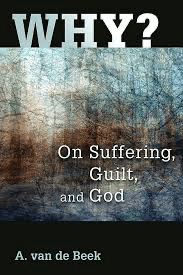
This is a commentary on Chapter 20 of Abram van de Beek’s book “Why? Suffering, Guilt and God.” Some of my readers are reading the book with me and we are taking OUR time to discuss it chapter by chapter. The previous chapter, 19, was “Jesus Christ—God’s Choice” and brought us to a sort of climax of both answers and frustration about vdB’s view of God. We now know, for example, that for vdB, “Only now [in Jesus Christ] do people see who God has been from all eternity. Only now does it become clear who the Creator of the world is: Jesus Christ. Not only did it become known to humans; it also became known in God.” (294)
I can’t help reading that and similar statements through a mind that studied the theology of Wolfhart Pannenberg and studied it with him, listening to his lectures, reading his books, talking to him: “God does not yet exist.” But it SEEMS vdB is saying that BEFORE Jesus Christ who God is was not yet fully determined but that in Jesus Christ, God’s choice, the elect one of God, God determined himself for all eternity to have been and always to be the God of Jesus Christ. “In Jesus Christ God elects himself.” (294)
Time determining eternity. Instead of time being the moving image of eternity (traditional Greek-inspired Christian theism), eternity becomes the image of time or stamped by time, backwards and forwards. Becoming over being (Eberhard Juengel). But not process theology in which God is dependent on the world for his very being. VdB insists throughout that God is free.
Now we step into Chapter 20. Again, we come up against startling statements such as “In the depths of his being God can heave a sigh of relief. For he decided once and for all to be gracious in Christ.” (301) But overall the motif of this chapter is the Holy Spirit who now leads us forward and onward to the time of the eschaton and the fullness of God in Christ revealed to the world, the time of eternal life, of peace with God and of love. (295) But that time and the time before it, the “time between the times,” is no guaranteed blueprint already decided and worked out by God in all its ways. “The way of the Spirit, as realization and revelation of the way of God’s actions from creation to Christ, is not a straight line.” (301)
In this chapter we read hints of open theism (304) and Pannenberg (305). “No theologian can escape the fact that the deity of God is at stake and threatened in the world of the presents decade [1990s]….” I have labeled that “Pannenberg’s principle”—that God’s deity is dependent on his rule and that God’s deity is at stake in the eventual coming of his reign of peace and love.
On page 309 vdB writes sentences about why “things” are not all already pre-determined. Here is view of divine providence is completely compatible with Arminianism and not at all compatible with Calvinism!! “If human beings are being saved, they must be saved as human beings, as thinking, willing beings created by the breath of the Spirit. The salvation of humans occurs, not apart from humans but with their involvement, or else it is not the salvation of humans.” (309) Having read a lot of Dutch Reformed theology, I can say with some confidence that Arminianism has risen up within it and saved it from high Calvinism and I consider that a work of the Holy Spirit.
VdB answers anticipated objections to his theology. He is not afraid of anthropomorphism of God because the Bible anthropomorphizes God. There is no way to know about God or speak about God than in human-like terms (Juengel). The Bible does that and it is the narrative about God identifying himself to us (Hans Frei). Then, vdB admits to speculation, but says that all theology speculates. “Every theologian embarks on a road of speculation.” (314)
Finally, vdB tells us that his “design,” his “model of God,” “is an attempt to do justice to as many data as possible.” But “Scriptural data play a key role in that attempt precisely because of the decisive place of Jesus Christ.” (316) This reminds me of another favorite theologian vdB does not mention among his “collage”: Emil Brunner. Brunner, in his “Dogmatics,” insisted that we Christians ought not to believe in Jesus (as God and Savior) because of the Bible but rather to believe in the Bible because of Jesus who we meet in the Bible.
Next time, in about a week to ten days, I will take up Chapter 21: “Prayer and Argument.”
For now, let me tell you what I think of vdB and this book. I already said earlier: “courageous” and “bold.” I also said “maybe heretical.” But what I admire about vdB’s theology is that it is based solely and entirely on the biblical narrative with no allowance of philosophy to override that. Sure, he admits to standing on the shoulders, so to speak, of other theologians, but they also have tried to let the Bible speak for itself without philosophy having veto power.
For too, too long has philosophy pre-determined what theologians can think and say. Barth attempted to yank theology free of the shackles of philosophy. According to Hans Urs von Balthasar he was only partly successful (German idealism remaining to haunt Barth’s mature theology). Is vdB telling us what theology based solely on the Bible apart from any veto power over theology from philosophy looks like, especially with regard to the doctrine of God?
I think that philosophy can be useful in theology in “filling in the gaps,” but I have never been happy to allow philosophy to veto biblical theology with things like process thought (panentheism) and existentialism and analytical philosophy and the ontology of perfection (Plato and Aristotle).
*Note: If you choose to comment, make sure you read this chapter in “Why?” Otherwise, ask a question. In either case, keep it relatively brief (no more than about 100 words), on topic, addressed to me, civil and respectful (not hostile or argumentative), and devoid of pictures or links.*
Previous Post
July 13, 2023
The Way We Were: Part 2
Next Post

July 18, 2023 This World Is Not My Home (I’m Just A-passin’ Through)
Recent Comments
"No doubt Lewis was inspired by earlier thinkers. Ironically (or perhaps serendipitously) I am now ..."
The Abolition of Man: Chapter 3: ..."
"I am sure Lewis would agree. After all, as a Christian he believed in original ..."
The Abolition of Man: Chapter 3: ..."
"If I’m not mistaken, the quote from Lewis is his interpretation of the “Conditioners’” own ..."
The Abolition of Man: Chapter 3: ..."
"Thank you! It's been a great re-read of a thought provoking, but somewhat dense, little ..."
The Abolition of Man: Chapter 3: ..."
Browse Our Archives
Select a Category Against Liberal Theology Uncategorized
Select a Month October 2026 September 2026 August 2026 July 2026 June 2026 May 2026 April 2026 March 2026 February 2026 January 2026 December 2025 November 2025 October 2025 September 2025 August 2025 July 2025 June 2025 May 2025 April 2025 March 2025 February 2025 January 2025 December 2024 November 2024 October 2024 September 2024 August 2024 July 2024 June 2024 May 2024 April 2024 March 2024 February 2024 January 2024 December 2023 November 2023 October 2023 September 2023 August 2023 July 2023 June 2023 May 2023 April 2023 March 2023 February 2023 January 2023 December 2022 November 2022 October 2022 September 2022 August 2022 July 2022 June 2022 May 2022 April 2022 March 2022 February 2022 January 2022 December 2021 November 2021 October 2021 September 2021 August 2021 July 2021 June 2021 May 2021 April 2021 March 2021 February 2021 January 2021 December 2020 November 2020 October 2020 September 2020 August 2020 July 2020 June 2020 May 2020 April 2020 March 2020 February 2020 January 2020 December 2019 November 2019 October 2019 September 2019 August 2019 July 2019 June 2019 May 2019 April 2019 March 2019 February 2019 January 2019 December 2018 November 2018 October 2018 September 2018 August 2018 July 2018 June 2018 May 2018 April 2018 March 2018 February 2018 January 2018 December 2017 November 2017 October 2017 September 2017 August 2017 July 2017 June 2017 May 2017 April 2017 March 2017 February 2017 January 2017 December 2016 November 2016 October 2016 September 2016 August 2016 July 2016 June 2016 May 2016 April 2016 March 2016 February 2016 January 2016 December 2015 November 2015 October 2015 September 2015 August 2015 July 2015 June 2015 May 2015 April 2015 March 2015 February 2015 January 2015 December 2014 November 2014 October 2014 September 2014 August 2014 July 2014 June 2014 May 2014 April 2014 March 2014 February 2014 January 2014 December 2013 November 2013 October 2013 September 2013 August 2013 July 2013 June 2013 May 2013 April 2013 March 2013 February 2013 January 2013 December 2012 November 2012 October 2012 September 2012 August 2012 July 2012 June 2012 May 2012 April 2012 March 2012 February 2012 January 2012 December 2011 November 2011 October 2011 September 2011 August 2011 July 2011 June 2011 May 2011 April 2011 March 2011 February 2011 January 2011 December 2010 November 2010 October 2010 September 2010 August 2010 July 2010
TAKE THE
Religious Wisdom Quiz
In Revelation, what is the correct sequence of events in the End Times?
Select your answer to see how you score.
Dragon cast to earth, beast rises from sea, false prophet rises from earth, mark of the beast given False prophet rises, dragon cast to earth, beast rises from sea, mark of the beast given Mark of the beast given, dragon cast to earth, beast rises, false prophet rises Beast rises from sea, dragon cast to earth, mark of the beast given, false prophet rises
Related posts from Roger E. Olson

The Abolition of Man: Chapter 3: The Abolition...

She Survived Her Execution. Should the State Try...
The Abolition of Man Part 2: Chapter 2:...

Ambiguity without Ambivalence in Faith
TRENDING AT PATHEOS Evangelical

I was strolling through the top floor of the brand new Parthenon...

What Does Gêvâh Mean For Kimberley Guifoyle &...
This week, a lot of the news is focused on Kimberly Guilfoyle....

INNER CIRCLE: Profound Mystery (Of Christ In All...
Ephesians 5:31-32 “For this reason, a man will leave his father and...

Do Not Rejoice When Your Enemy Falls: The...
Turning an execution into a public spectacle is a disturbing expression of...

'The Chosen' S6 Trailer: The Passion Gets Very...
Not many watching 'The Chosen' worry about spoilers, but just because they...

The purpose-driven labor priest
A labor activist reads Rick Warren and it gets me wondering about...
view all Evangelical blogs
What Are Your Thoughts?leave a comment
Ad-Free & Subscriber Log-In Subscription Support
- About Us
- 2026 Calendar
- Videos
- Podcasts
- Library of World Religions
- Faith In Media Tracker
- Advertise With Us
- Write for Us
- Privacy Policy
- Terms of Service
- Do Not Sell My Data
- Contact Us
- Radiant Digital
- Manage Newsletter Subscriptions
- Unsubscribe From Notifications
- Sitemap
Copyright 2008-2026, Patheos. All rights reserved.
Subscription Support Ad-Free & Subscriber Log-In
Follow Patheos