
BuddhistCatholicContemplativeEvangelicalGeneral ChristianHinduJewishLatter-day SaintMuslimNew VisionsProgressive Christian
Beliefs
- Buddhist
- Catholic
- Contemplative
- Evangelical
- General Christian
- Hindu
- Jewish
- Latter-day Saint
- More Voices
- Muslim
- New Visions
- Pagan
- Progressive Christian
Topics
- Religion News
- Food and Religion
- Sports and Religion
- Religious Art
- Religious Music and Entertainment
- Religious Events
- History and Religion
- Style and Religion
- Politics and Religion
- Women in Religion
- Recreation Outdoors and Religion
- Business Finance and Religion
- Careers Workplace and Religion
- Education and Religion
- Family Parenting and Religion
- Health Fitness and Religion
- Home and Religion
- Relationships and Religion
- Technology and Religion
- Travel and Religion
Columnists
- Buddhist Columnists
- Business Finance and Religion Columnists
- Careers Workplace and Religion Columnists
- Catholic Columnists
- Contemplative Columnists
- Education and Religion Columnists
- Evangelists Columnists
- Family Parenting and Religion Columnists
- General Christian Columnists
- Health Fitness and Religion Columnists
- Hindu Columnists
- History and Religion Columnists
- Home and Religion Columnists
- Jewish Columnists
- More Voices Columnists
- Latter Day Columnists
- Muslim Columnists
- New Visions Columnists
- Nonreligious Columnists
- Pagan Columnists
- Politics and Religion Columnists
- Progressive Columnists
- Recreation Outdoors and Religion Columnists
- Relationships and Religion Columnists
- Religion News Columnists
- Religious Art Columnists
- Religious Events Columnists
- Religious Music and Entertainment Columnists
- Sports and Religion Columnists
- Style and Religion Columnists
- Technology and Religion Columnists
- Travel and Religion Columnists
- Women in Religion Columnists
Resource Library
- 2026 Calendar
- Library of World Religions
- The 100 Most Holy Places on Earth
- Patheos Answers
- Podcasts
- Videos
- Faith Leaders Database
- Anglican Episcopalian
- Bahai
- Baptist
- Buddhism
- Christianity
- Confucianism
- Eastern Orthodoxy
- Hinduism
- Holiness and Pentecostal
- ISKCON
- Islam
- Judaism
- Lutheran
- Methodist
- The Church of Jesus Christ of Latter-day Saints
- New Age
- Paganism
- Presbytarian and Reformed
- Protestantism
- Religion Behind the Scenes
- Roman Catholic
- Scientology
- Shia Islam
- Sikhism
- Sufism
- Sunni Islam
- Taoism
- Zen
- See all religions
Research Tools
 Ad-Free & Subscriber Log-In Subscription Support
Ad-Free & Subscriber Log-In Subscription Support
Follow Patheos 

- Trending:
- Forgiveness
- |
- Marriage
- |
- Consciousness
- |
- Death Penalty
- |
- Election
- |
- Halloween

- Home
- Evangelical
- “Why?” Part III, Chapter 16: “God Is Different”
“Why?” Part III, Chapter 16: “God Is Different”
Last updated on: June 24, 2023 at 8:33 am by Roger E. Olson
“Why?” Part III, Chapter 16: “God Is Different” 2023-06-24T08:33:13-05:00 Roger E. Olson
Patheos Explore the world's faith through different perspectives on religion and spirituality! Patheos has the views of the prevalent religions and spiritualities of the world.
“Why?” Part III, Chapter 16: “God Is Different”
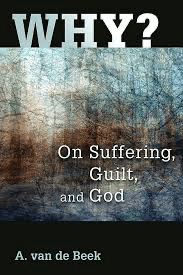
This is another installment of my continuing series about the book “Why? On Suffering, Guilt, and God” by Dutch theologian Abram van de Beek (here vdB). Several readers of this blog are reading the book and I am slowing down my commentaries in order to allow everyone to catch up. Today’s installment will be a commentary on Chapter 16 “God Is Different” in which vdB pursues further his ruminations, musings, about the problem of God’s omnipotence and goodness—how to reconcile them in light of the horrors of human history.
On page 222 vdB says that “basic to the conflict between the omnipotence and goodness of God in the pastoral situation of human beings there is a philosophical notion of God.” It emerges again in this chapter that, like other Dutch Christian theologians, vdB is responding to a novel by Dutch author Martin Hart entitled “A Flight of Curlews” which poses the problem of evil for believers in God.
VdB is now hinting at the need for a “change in paradigm” in Christian theology. In light of the horrors of human history, “We have to go back to square one.” (225) He refers positively to two earlier theologians who said as much and attempted to do that: Karl Barth and Christoph Blumhardt. (The latter is well-known to students of Barth and Emil Brunner but not well-known to most Americans. He should be remembered.) In complete agreement with Barth and Blumhardt vdB says “We do not find [God]; he presents himself; he posits himself in his revelation, in Jesus Christ. Jesus Christ alone is the true God, and nothing or no one else. If we want to know who God is we must look to him.” (226) (Juergen Moltmann has said the same.)
According to vdB, a major difference between God and humanity is power-seeking and using. Humans seek power-over; “God does not lust for power.” (228) “God breaks [this] power by delivering himself up to humans.” (229) Also, “In the story of Jesus it is evident that suffering is not conferred by God; on the contrary he goes out to be with the suffering.” (230) And, “He [God] is not the Kaiser-God, he is the God of compassion. He is not the super-God who is approached most nearly by the Superman, but the God of Jesus Christ.” (231)
Now I detect that I am “hearing” the voice of vdB and not just vdB’s recounting of someone else’s view although his own is informed by Barth and Blumhardt AND Moltmann. In this chapter vdB engages with Moltmann’s theology of “The Crucified God” at length and seems to agree with much, if not all, of it. VdB says “If God is the suffering one, then the signs of his presence on earth are not to be found in power, beauty, and achievement. The signs of his presence are the oppressed. It is the suffering needy human who points to the true God.” (244)
After much interaction with Christian theologians who have posited God as future rather than as the all-controlling power of the past dominating history, controlling everything, vdB ends the chapter by saying “Whether one views history from the end of from the beginning, the free will of God remains determinative for how he acts.” (252)
My “take away” from this chapter is that vdB is exploring a new paradigm in the Christian doctrine of God that centers solely on the person of Jesus Christ including his suffering. The all-determining God who writes the script of history from beginning to end or from end backwards to beginning is not, for vdB, the God revealed in Jesus Christ. What, then, of the God of the Old Testament? What, then, of God’s omnipotence? Is he discarding both? I believe we have hints that he is NOT doing that. But, in this chapter, anyway, he is arguing that contemporary Christian theology must begin its doctrine of God with Jesus Christ and NOT with a preconceived philosophical, abstract idea of God which he believes has infected much Christian theology and brought about atheism. In other words, and this is me saying this, atheism is grounded in rejection of God as omnipotent “decider” of everything including guilt, suffering, evil. VdB talks now of a new “concrete God” who is not above history, determining it for some higher purpose of his own, but within history, struggling with humanity, suffering along with humans—the God of Hosea. And Jesus Christ is his final, unsurpassable, perfect self-revelation. In other words, when a person asks a Christian about God, he or she should respond “Jesus Christ.” Let’s continue and see how VdB answers questions this raises.
I plan to comment on Chapters 17, “Which Model Do We Choose?” And 18, “God Is Changeable” in about one week, perhaps ten days. Please read through that chapter as soon as possible but do not read ahead.
*Note: If you choose to comment, make sure you have read this chapter. If you have not, feel free to ask a question. In either case, keep your comment or question relatively brief, no more than 100 words, on topic, addressed to me, civil and respectful in tone (not hostile or argumentative), and devoid of pictures or links.*
Previous Post

June 21, 2023
Where Does the Slippery Slope End?
Next Post

June 28, 2023 Polyamory Is Not “Next;” It’s Here Now, In the Churches
Recent Comments
"No doubt Lewis was inspired by earlier thinkers. Ironically (or perhaps serendipitously) I am now ..."
The Abolition of Man: Chapter 3: ..."
"I am sure Lewis would agree. After all, as a Christian he believed in original ..."
The Abolition of Man: Chapter 3: ..."
"If I’m not mistaken, the quote from Lewis is his interpretation of the “Conditioners’” own ..."
The Abolition of Man: Chapter 3: ..."
"Thank you! It's been a great re-read of a thought provoking, but somewhat dense, little ..."
The Abolition of Man: Chapter 3: ..."
Browse Our Archives
Select a Category Against Liberal Theology Uncategorized
Select a Month October 2026 September 2026 August 2026 July 2026 June 2026 May 2026 April 2026 March 2026 February 2026 January 2026 December 2025 November 2025 October 2025 September 2025 August 2025 July 2025 June 2025 May 2025 April 2025 March 2025 February 2025 January 2025 December 2024 November 2024 October 2024 September 2024 August 2024 July 2024 June 2024 May 2024 April 2024 March 2024 February 2024 January 2024 December 2023 November 2023 October 2023 September 2023 August 2023 July 2023 June 2023 May 2023 April 2023 March 2023 February 2023 January 2023 December 2022 November 2022 October 2022 September 2022 August 2022 July 2022 June 2022 May 2022 April 2022 March 2022 February 2022 January 2022 December 2021 November 2021 October 2021 September 2021 August 2021 July 2021 June 2021 May 2021 April 2021 March 2021 February 2021 January 2021 December 2020 November 2020 October 2020 September 2020 August 2020 July 2020 June 2020 May 2020 April 2020 March 2020 February 2020 January 2020 December 2019 November 2019 October 2019 September 2019 August 2019 July 2019 June 2019 May 2019 April 2019 March 2019 February 2019 January 2019 December 2018 November 2018 October 2018 September 2018 August 2018 July 2018 June 2018 May 2018 April 2018 March 2018 February 2018 January 2018 December 2017 November 2017 October 2017 September 2017 August 2017 July 2017 June 2017 May 2017 April 2017 March 2017 February 2017 January 2017 December 2016 November 2016 October 2016 September 2016 August 2016 July 2016 June 2016 May 2016 April 2016 March 2016 February 2016 January 2016 December 2015 November 2015 October 2015 September 2015 August 2015 July 2015 June 2015 May 2015 April 2015 March 2015 February 2015 January 2015 December 2014 November 2014 October 2014 September 2014 August 2014 July 2014 June 2014 May 2014 April 2014 March 2014 February 2014 January 2014 December 2013 November 2013 October 2013 September 2013 August 2013 July 2013 June 2013 May 2013 April 2013 March 2013 February 2013 January 2013 December 2012 November 2012 October 2012 September 2012 August 2012 July 2012 June 2012 May 2012 April 2012 March 2012 February 2012 January 2012 December 2011 November 2011 October 2011 September 2011 August 2011 July 2011 June 2011 May 2011 April 2011 March 2011 February 2011 January 2011 December 2010 November 2010 October 2010 September 2010 August 2010 July 2010
TAKE THE
Religious Wisdom Quiz
Four beasts rose from the sea—one like a lion with eagle's wings, one like a bear, one like a leopard, and a fourth terrifying beast. What did these represent?
Select your answer to see how you score.
Four kingdoms Four kings Four judgments Four ages
Related posts from Roger E. Olson

The Abolition of Man: Chapter 3: The Abolition...

She Survived Her Execution. Should the State Try...
The Abolition of Man Part 2: Chapter 2:...

Ambiguity without Ambivalence in Faith
TRENDING AT PATHEOS Evangelical

I was strolling through the top floor of the brand new Parthenon...

What Does Gêvâh Mean For Kimberley Guifoyle &...
This week, a lot of the news is focused on Kimberly Guilfoyle....

INNER CIRCLE: Profound Mystery (Of Christ In All...
Ephesians 5:31-32 “For this reason, a man will leave his father and...

Do Not Rejoice When Your Enemy Falls: The...
Turning an execution into a public spectacle is a disturbing expression of...

'The Chosen' S6 Trailer: The Passion Gets Very...
Not many watching 'The Chosen' worry about spoilers, but just because they...

The purpose-driven labor priest
A labor activist reads Rick Warren and it gets me wondering about...
view all Evangelical blogs
What Are Your Thoughts?leave a comment
Ad-Free & Subscriber Log-In Subscription Support
- About Us
- 2026 Calendar
- Videos
- Podcasts
- Library of World Religions
- Faith In Media Tracker
- Advertise With Us
- Write for Us
- Privacy Policy
- Terms of Service
- Do Not Sell My Data
- Contact Us
- Radiant Digital
- Manage Newsletter Subscriptions
- Unsubscribe From Notifications
- Sitemap
Copyright 2008-2026, Patheos. All rights reserved.
Subscription Support Ad-Free & Subscriber Log-In
Follow Patheos