
BuddhistCatholicContemplativeEvangelicalGeneral ChristianHinduJewishLatter-day SaintMuslimNew VisionsProgressive Christian
Beliefs
- Buddhist
- Catholic
- Contemplative
- Evangelical
- General Christian
- Hindu
- Jewish
- Latter-day Saint
- More Voices
- Muslim
- New Visions
- Pagan
- Progressive Christian
Topics
- Religion News
- Food and Religion
- Sports and Religion
- Religious Art
- Religious Music and Entertainment
- Religious Events
- History and Religion
- Style and Religion
- Politics and Religion
- Women in Religion
- Recreation Outdoors and Religion
- Business Finance and Religion
- Careers Workplace and Religion
- Education and Religion
- Family Parenting and Religion
- Health Fitness and Religion
- Home and Religion
- Relationships and Religion
- Technology and Religion
- Travel and Religion
Columnists
- Buddhist Columnists
- Business Finance and Religion Columnists
- Careers Workplace and Religion Columnists
- Catholic Columnists
- Contemplative Columnists
- Education and Religion Columnists
- Evangelists Columnists
- Family Parenting and Religion Columnists
- General Christian Columnists
- Health Fitness and Religion Columnists
- Hindu Columnists
- History and Religion Columnists
- Home and Religion Columnists
- Jewish Columnists
- More Voices Columnists
- Latter Day Columnists
- Muslim Columnists
- New Visions Columnists
- Nonreligious Columnists
- Pagan Columnists
- Politics and Religion Columnists
- Progressive Columnists
- Recreation Outdoors and Religion Columnists
- Relationships and Religion Columnists
- Religion News Columnists
- Religious Art Columnists
- Religious Events Columnists
- Religious Music and Entertainment Columnists
- Sports and Religion Columnists
- Style and Religion Columnists
- Technology and Religion Columnists
- Travel and Religion Columnists
- Women in Religion Columnists
Resource Library
- 2026 Calendar
- Library of World Religions
- The 100 Most Holy Places on Earth
- Patheos Answers
- Podcasts
- Videos
- Faith Leaders Database
- Anglican Episcopalian
- Bahai
- Baptist
- Buddhism
- Christianity
- Confucianism
- Eastern Orthodoxy
- Hinduism
- Holiness and Pentecostal
- ISKCON
- Islam
- Judaism
- Lutheran
- Methodist
- The Church of Jesus Christ of Latter-day Saints
- New Age
- Paganism
- Presbytarian and Reformed
- Protestantism
- Religion Behind the Scenes
- Roman Catholic
- Scientology
- Shia Islam
- Sikhism
- Sufism
- Sunni Islam
- Taoism
- Zen
- See all religions
Research Tools
 Ad-Free & Subscriber Log-In Subscription Support
Ad-Free & Subscriber Log-In Subscription Support
Follow Patheos 

- Trending:
- Forgiveness
- |
- Marriage
- |
- Consciousness
- |
- Death Penalty
- |
- Election
- |
- Halloween

- Home
- Evangelical
- “Why?” Chapters 17 and 18: “Which Model?” And “God Is Changeable”
“Why?” Chapters 17 and 18: “Which Model?” And “God Is Changeable”
Last updated on: June 30, 2023 at 12:07 pm by Roger E. Olson
“Why?” Chapters 17 and 18: “Which Model?” And “God Is Changeable” 2023-06-30T12:07:33-05:00 Roger E. Olson
Patheos Explore the world's faith through different perspectives on religion and spirituality! Patheos has the views of the prevalent religions and spiritualities of the world.
“Why?” Chapters 17 and 18: “Which Model Do We Choose?” And “God Is Changeable?”
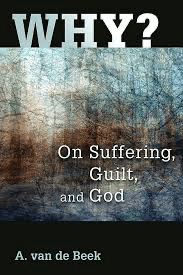
Does God change? If so, how and in what ways? In these two chapters our author (of “Why? Suffering, Guilt and God”), Abram van de Beek, is wrestling again with the problem of God’s omnipotence and goodness. How to reconcile them in light of the horrors of human history?
In Chapter 17 “Which Model Do We Choose?” He lays the groundwork for what is yet to come. He has been discussing “models” of God. So far he seems to find all traditional ones flawed. Here he claims that “Theology…attempts critically to review the assertions Christians make.” (253) I completely agree, even though that task of theology is becoming more and more controversial all the time. Even many American Christians don’t want theologians to do that—unless they are critically reviewing assertions made by people with whom they strongly disagree. Even then, however, many Christians don’t want “negativity” from Christian theologians.
”No single model can contain the fullness of God.” (255) Right again. However, some models are better than others. “Not every assertion is valid.” (256) Right again. VdB rejects several common attempts to deal with conflicting models of God within the churches and among Christians. Now he shows us his own approach: “God is the concrete God of history—hence God is Jesus Christ.” (258). Right again. But the vdB makes some “marginal comments”—qualifications. I won’t repeat those here. But vdB ends this programmatic chapter by making a rather startlingly claim that he hinted at earlier in the book. Various valid models of God in revelation (salvation history as recorded in the Bible) cannot be treated well except in chronological fashion. (260) I take it he means God has a history, at least from our point of view, that cannot be collapsed into a one-fits-all model true in the same way for all times.
Is this grabbing your attention? It grabbed mine! I have underlined most of page 261 with arrows pointing from the edge of the page toward certain highly controversial claims such as “[God’s] relationship to the world cannot be stated in just one way….” (261)
Now I move on, hopefully with you, to Chapter 18: “God Is Changeable.” First let me say, autobiographically, that I have always thought the God of the Bible is changeable but NOT in the sense of process theology (too philosophical and sacrifices too much) and NOT in the sense of God’s essence changing (makes God unreliable). So I have long looked for a biblically-committed theologian who at least helpfully points me in the right direction of thinking about God as historical and changeable.
On page 265 vdB lays out his main thesis: “[t]he goodness of God is the constant decision of God as manifest in his action. It is the goodness of his history.” Then he says at the bottom of that page “[w]hen God created time for people, he also created time for himself.” Here a reader could not be blamed for asking what constitutes God’s eternal, temporal, historical being. VdB says “God’s deity stands or falls with the consistency of his deed.” (267) “God is immutable in his faithfulness and at the same time continually changeable in his revelation.” (269) At the bottom of page 269 vdB says that God is “a God with a heart, always in motion.” And, “[t]here is constant change in God’s plans, feelings, and actions.” (273) VdB brushes aside objections that God’s “repentance” and other indications of change in God are only anthropomorphic figures of speech. (273) Further on this page (273) vdB preaches a sermon about how “terrifying” our time (1990s) is and insists that we cannot abstract God from this situation. “If God is a God of humans, a God who has to do with this history, then God is a terrifying God.”
VdB ends the chapter on another homiletical note: “[O]ne who seeks the real God of the world will find no other than the Living One who performs acts. He is the variable God of life; but in that variability he is the God of unchanging fidelity to the history of the life he created.” (276)
So what to say about this so far? Here, especially in this chapter, vdB is finally showing us his own thoughts. Can we say that, according to him, God’s omnipotence and God’s goodness cannot be reconciled except chronologically in thinking of God as in his acts which vary radically according to his relationships with his creatures? But that God is not arbitrary or endlessly changeable because he is faithful TO HIMSELF in everything he did and does? That God is a passionate God with strong emotions? That God has acted in “salvation history” in ways that are not wrong but terrifying? Then what? Where is this going? I think vdB has already told us.
My friend Greg Boyd talks about “character solidification” in human beings. There comes a point, he says, where Pharoah’s character was so solidified that God knew what he was going to do. Same with Peter. Might vdB about to say that about the God of the Bible? Was there a “point” in salvation history where God said “Enough is enough,” now I am going to solidify myself in history and never change after that? Or am I rushing ahead too far?
*Note to potential commenters: If you choose to comment, make sure you have read the book up through these chapters. Otherwise, you may ask questions. In any case, make sure your comment or question is: relatively brief (no more than 100 words), on topic, addressed to me, civil and respectful (not hostile or argumentative), and devoid of pictures or links.*
Previous Post
June 28, 2023
Polyamory Is Not “Next;” It’s Here Now, In the Churches
Next Post

July 4, 2023 Patriotism vs. Nationalism
Recent Comments
"No doubt Lewis was inspired by earlier thinkers. Ironically (or perhaps serendipitously) I am now ..."
The Abolition of Man: Chapter 3: ..."
"I am sure Lewis would agree. After all, as a Christian he believed in original ..."
The Abolition of Man: Chapter 3: ..."
"If I’m not mistaken, the quote from Lewis is his interpretation of the “Conditioners’” own ..."
The Abolition of Man: Chapter 3: ..."
"Thank you! It's been a great re-read of a thought provoking, but somewhat dense, little ..."
The Abolition of Man: Chapter 3: ..."
Browse Our Archives
Select a Category Against Liberal Theology Uncategorized
Select a Month October 2026 September 2026 August 2026 July 2026 June 2026 May 2026 April 2026 March 2026 February 2026 January 2026 December 2025 November 2025 October 2025 September 2025 August 2025 July 2025 June 2025 May 2025 April 2025 March 2025 February 2025 January 2025 December 2024 November 2024 October 2024 September 2024 August 2024 July 2024 June 2024 May 2024 April 2024 March 2024 February 2024 January 2024 December 2023 November 2023 October 2023 September 2023 August 2023 July 2023 June 2023 May 2023 April 2023 March 2023 February 2023 January 2023 December 2022 November 2022 October 2022 September 2022 August 2022 July 2022 June 2022 May 2022 April 2022 March 2022 February 2022 January 2022 December 2021 November 2021 October 2021 September 2021 August 2021 July 2021 June 2021 May 2021 April 2021 March 2021 February 2021 January 2021 December 2020 November 2020 October 2020 September 2020 August 2020 July 2020 June 2020 May 2020 April 2020 March 2020 February 2020 January 2020 December 2019 November 2019 October 2019 September 2019 August 2019 July 2019 June 2019 May 2019 April 2019 March 2019 February 2019 January 2019 December 2018 November 2018 October 2018 September 2018 August 2018 July 2018 June 2018 May 2018 April 2018 March 2018 February 2018 January 2018 December 2017 November 2017 October 2017 September 2017 August 2017 July 2017 June 2017 May 2017 April 2017 March 2017 February 2017 January 2017 December 2016 November 2016 October 2016 September 2016 August 2016 July 2016 June 2016 May 2016 April 2016 March 2016 February 2016 January 2016 December 2015 November 2015 October 2015 September 2015 August 2015 July 2015 June 2015 May 2015 April 2015 March 2015 February 2015 January 2015 December 2014 November 2014 October 2014 September 2014 August 2014 July 2014 June 2014 May 2014 April 2014 March 2014 February 2014 January 2014 December 2013 November 2013 October 2013 September 2013 August 2013 July 2013 June 2013 May 2013 April 2013 March 2013 February 2013 January 2013 December 2012 November 2012 October 2012 September 2012 August 2012 July 2012 June 2012 May 2012 April 2012 March 2012 February 2012 January 2012 December 2011 November 2011 October 2011 September 2011 August 2011 July 2011 June 2011 May 2011 April 2011 March 2011 February 2011 January 2011 December 2010 November 2010 October 2010 September 2010 August 2010 July 2010
TAKE THE
Religious Wisdom Quiz
In Revelation, what is the correct sequence of events in the End Times?
Select your answer to see how you score.
Dragon cast to earth, beast rises from sea, false prophet rises from earth, mark of the beast given False prophet rises, dragon cast to earth, beast rises from sea, mark of the beast given Mark of the beast given, dragon cast to earth, beast rises, false prophet rises Beast rises from sea, dragon cast to earth, mark of the beast given, false prophet rises
Related posts from Roger E. Olson

The Abolition of Man: Chapter 3: The Abolition...

She Survived Her Execution. Should the State Try...
The Abolition of Man Part 2: Chapter 2:...

Ambiguity without Ambivalence in Faith
TRENDING AT PATHEOS Evangelical

I was strolling through the top floor of the brand new Parthenon...

What Does Gêvâh Mean For Kimberley Guifoyle &...
This week, a lot of the news is focused on Kimberly Guilfoyle....

INNER CIRCLE: Profound Mystery (Of Christ In All...
Ephesians 5:31-32 “For this reason, a man will leave his father and...

Do Not Rejoice When Your Enemy Falls: The...
Turning an execution into a public spectacle is a disturbing expression of...

'The Chosen' S6 Trailer: The Passion Gets Very...
Not many watching 'The Chosen' worry about spoilers, but just because they...

The purpose-driven labor priest
A labor activist reads Rick Warren and it gets me wondering about...
view all Evangelical blogs
What Are Your Thoughts?leave a comment
Ad-Free & Subscriber Log-In Subscription Support
- About Us
- 2026 Calendar
- Videos
- Podcasts
- Library of World Religions
- Faith In Media Tracker
- Advertise With Us
- Write for Us
- Privacy Policy
- Terms of Service
- Do Not Sell My Data
- Contact Us
- Radiant Digital
- Manage Newsletter Subscriptions
- Unsubscribe From Notifications
- Sitemap
Copyright 2008-2026, Patheos. All rights reserved.
Subscription Support Ad-Free & Subscriber Log-In
Follow Patheos