
BuddhistCatholicContemplativeEvangelicalGeneral ChristianHinduJewishLatter-day SaintMuslimNew VisionsProgressive Christian
Beliefs
- Buddhist
- Catholic
- Contemplative
- Evangelical
- General Christian
- Hindu
- Jewish
- Latter-day Saint
- More Voices
- Muslim
- New Visions
- Pagan
- Progressive Christian
Topics
- Religion News
- Food and Religion
- Sports and Religion
- Religious Art
- Religious Music and Entertainment
- Religious Events
- History and Religion
- Style and Religion
- Politics and Religion
- Women in Religion
- Recreation Outdoors and Religion
- Business Finance and Religion
- Careers Workplace and Religion
- Education and Religion
- Family Parenting and Religion
- Health Fitness and Religion
- Home and Religion
- Relationships and Religion
- Technology and Religion
- Travel and Religion
Columnists
- Buddhist Columnists
- Business Finance and Religion Columnists
- Careers Workplace and Religion Columnists
- Catholic Columnists
- Contemplative Columnists
- Education and Religion Columnists
- Evangelists Columnists
- Family Parenting and Religion Columnists
- General Christian Columnists
- Health Fitness and Religion Columnists
- Hindu Columnists
- History and Religion Columnists
- Home and Religion Columnists
- Jewish Columnists
- More Voices Columnists
- Latter Day Columnists
- Muslim Columnists
- New Visions Columnists
- Nonreligious Columnists
- Pagan Columnists
- Politics and Religion Columnists
- Progressive Columnists
- Recreation Outdoors and Religion Columnists
- Relationships and Religion Columnists
- Religion News Columnists
- Religious Art Columnists
- Religious Events Columnists
- Religious Music and Entertainment Columnists
- Sports and Religion Columnists
- Style and Religion Columnists
- Technology and Religion Columnists
- Travel and Religion Columnists
- Women in Religion Columnists
Resource Library
- 2026 Calendar
- Library of World Religions
- The 100 Most Holy Places on Earth
- Patheos Answers
- Podcasts
- Videos
- Faith Leaders Database
- Anglican Episcopalian
- Bahai
- Baptist
- Buddhism
- Christianity
- Confucianism
- Eastern Orthodoxy
- Hinduism
- Holiness and Pentecostal
- ISKCON
- Islam
- Judaism
- Lutheran
- Methodist
- The Church of Jesus Christ of Latter-day Saints
- New Age
- Paganism
- Presbytarian and Reformed
- Protestantism
- Religion Behind the Scenes
- Roman Catholic
- Scientology
- Shia Islam
- Sikhism
- Sufism
- Sunni Islam
- Taoism
- Zen
- See all religions
Research Tools
 Ad-Free & Subscriber Log-In Subscription Support
Ad-Free & Subscriber Log-In Subscription Support
Follow Patheos 

- Trending:
- Forgiveness
- |
- Marriage
- |
- Consciousness
- |
- Death Penalty
- |
- Election
- |
- Halloween

- Home
- Evangelical
- A Theologian’s Journey
A Theologian’s Journey
Last updated on: June 6, 2023 at 4:48 pm by Roger E. Olson
A Theologian’s Journey 2023-06-06T16:48:17-05:00 Roger E. Olson
Patheos Explore the world's faith through different perspectives on religion and spirituality! Patheos has the views of the prevalent religions and spiritualities of the world.
A Theologian’s Journey

I have no idea how many, if any, of you are interested in this brief autobiographical reminiscence about my theological journey. But perhaps especially those of you reading “Why?” With me may be interested—in why (no pun intended) I find the book so fascinating and thought-provoking and even supportive of my own thoughts about God.
I grew up in a form of Christian life that, for the most part, anthropomorphized God. To us, God was very personal, although on human in Jesus Christ. All three persons of the Trinity were talked about as real persons—relatable to us, capable of being affected by us, more than willing and able to have real personal relationships with us that were interactive. Our prayers could make a difference in what God might do. God talked to us. We heard him if we listened.
Then I entered seminary and discovered that the mainline of traditional Christian theological thinking about God is different. God is self-sufficient, immutable, impassible, lives outside of time, cannot be affected by anything that happens inside of time. Not that all of my professors thought that way, but they certainly introduced me to theologians who were considered normative who thought that way.
That’s called “classical theism” and I found it appalling. So I took a course outside the seminary, through a Lutheran seminary extension at a nearby college, in process theology. I was equally appalled by process theology. The professor was a process theologian and promoted it heavily.
So I began a journey to find out if there were any “world class” theologians who were neither advocates of classical theism nor of process theology who believed in a personal, historical God, a God such as I read about in the Bible, a God who could really relate to us and let us affect him.
My discovery of such a theologian was Donald G. Bloesch. But the one who really met my need and opened my mind further was Robert Jenson. His book “God After God” was about the theology of Karl Barth but was really also Jenson’s own exposition of the historicity of God. From Jenson I moved on to Moltmann and Pannenberg and then began “collecting” theologians who appeared to me to emphasize God as one who can change, not had to change as in process theology, but could change.
Along that journey I found many non-liberal, non-traditional theologians who encourage me to re-embrace something of the God of my childhood and youth, a God who opens himself up to us and goes on a historical journey with us, a God who is in time with us (or we are in time with him) but not a God who is pathetically impotent to work miracles and assure an ending to history that is in accord with his will.
Some of the theologians who influenced me in this way, who, in one way or another, seemed to believe in and teach a “historical God,” were Emil Brunner, Karl Barth (debatable but at least in some places there), Juergen Moltmann, Wolfhart Pannenberg (at least before his ST appeared), Robert Jenson, Ted Peters, Hendrikus Berkhof, and then, of course, the open theists such as Clark Pinnock and others. I never “signed onto” open theism, but I agreed with their emphasis on God’s “historicity,” God with us.
I learned that in the “deep background” of all of this rethinking of God, away from classical theism, was G. W. F. Hegel. Or was it just an honest reading of the Bible? Or somehow both? I could never agree with Hegel about panentheism—that God is somehow necessarily dependent on the world. But I could believe that God always has as-yet-unfulfilled potential and is not “pure actuality with no potentiality” (as in Thomas Aquinas and most scholastic Christian thinkers). On the American side I discovered mostly philosophers (beyond the open theists and Robert Jenson) who helped me on my journey toward thinking of God as intensely personal and historical: Nicholas Wolterstorff, Keith Ward (British or Canadian, I’m not sure), Richard Kearney, and others.
Then I found Abram van de Beek’s “Why? On Suffering, Guilt and God” and persevered to the end. There I found something new and different, daring and risky, but seemingly, to me, taking the Bible’s account of God with utmost seriousness without being a fundamentalist. I was surprised to find that he was almost completely unknown outside of the Netherlands. In the book I “heard” the “voices” of Brunner, Berkhof, Vincent Brummer (another Dutch philosopher-theologian who takes God’s personhood and historicity very seriously). I found a helper on my journey.
I have no trouble now affirming that I believe that much of what is traditionally called “anthropomorphism” in the Bible was not intended to be interpreted figuratively as “mere anthropomorphism.” The God of the Bible is a God without philosophical simplicity (a philosophical-metaphysical construct), with timefullness, with a complex emotional life, who can be affected by us because he chooses to be so out of love.
*Note: If you choose to comment, make sure your comment is relatively brief (no more than 100 words), on topic, addressed to me, civil and respectful (not hostile or argumentative), and devoid of pictures or links.*
Previous Post

June 3, 2023
“Why?” Chapter III, Parts 12 & 13 (pp. 121-169)
Next Post
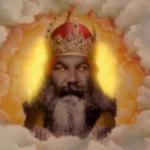
June 10, 2023 “God” in Popular Culture
Recent Comments
"No doubt Lewis was inspired by earlier thinkers. Ironically (or perhaps serendipitously) I am now ..."
The Abolition of Man: Chapter 3: ..."
"I am sure Lewis would agree. After all, as a Christian he believed in original ..."
The Abolition of Man: Chapter 3: ..."
"If I’m not mistaken, the quote from Lewis is his interpretation of the “Conditioners’” own ..."
The Abolition of Man: Chapter 3: ..."
"Thank you! It's been a great re-read of a thought provoking, but somewhat dense, little ..."
The Abolition of Man: Chapter 3: ..."
Browse Our Archives
Select a Category Against Liberal Theology Uncategorized
Select a Month October 2026 September 2026 August 2026 July 2026 June 2026 May 2026 April 2026 March 2026 February 2026 January 2026 December 2025 November 2025 October 2025 September 2025 August 2025 July 2025 June 2025 May 2025 April 2025 March 2025 February 2025 January 2025 December 2024 November 2024 October 2024 September 2024 August 2024 July 2024 June 2024 May 2024 April 2024 March 2024 February 2024 January 2024 December 2023 November 2023 October 2023 September 2023 August 2023 July 2023 June 2023 May 2023 April 2023 March 2023 February 2023 January 2023 December 2022 November 2022 October 2022 September 2022 August 2022 July 2022 June 2022 May 2022 April 2022 March 2022 February 2022 January 2022 December 2021 November 2021 October 2021 September 2021 August 2021 July 2021 June 2021 May 2021 April 2021 March 2021 February 2021 January 2021 December 2020 November 2020 October 2020 September 2020 August 2020 July 2020 June 2020 May 2020 April 2020 March 2020 February 2020 January 2020 December 2019 November 2019 October 2019 September 2019 August 2019 July 2019 June 2019 May 2019 April 2019 March 2019 February 2019 January 2019 December 2018 November 2018 October 2018 September 2018 August 2018 July 2018 June 2018 May 2018 April 2018 March 2018 February 2018 January 2018 December 2017 November 2017 October 2017 September 2017 August 2017 July 2017 June 2017 May 2017 April 2017 March 2017 February 2017 January 2017 December 2016 November 2016 October 2016 September 2016 August 2016 July 2016 June 2016 May 2016 April 2016 March 2016 February 2016 January 2016 December 2015 November 2015 October 2015 September 2015 August 2015 July 2015 June 2015 May 2015 April 2015 March 2015 February 2015 January 2015 December 2014 November 2014 October 2014 September 2014 August 2014 July 2014 June 2014 May 2014 April 2014 March 2014 February 2014 January 2014 December 2013 November 2013 October 2013 September 2013 August 2013 July 2013 June 2013 May 2013 April 2013 March 2013 February 2013 January 2013 December 2012 November 2012 October 2012 September 2012 August 2012 July 2012 June 2012 May 2012 April 2012 March 2012 February 2012 January 2012 December 2011 November 2011 October 2011 September 2011 August 2011 July 2011 June 2011 May 2011 April 2011 March 2011 February 2011 January 2011 December 2010 November 2010 October 2010 September 2010 August 2010 July 2010
TAKE THE
Religious Wisdom Quiz
In Revelation, what is the correct sequence of events in the End Times?
Select your answer to see how you score.
Dragon cast to earth, beast rises from sea, false prophet rises from earth, mark of the beast given False prophet rises, dragon cast to earth, beast rises from sea, mark of the beast given Mark of the beast given, dragon cast to earth, beast rises, false prophet rises Beast rises from sea, dragon cast to earth, mark of the beast given, false prophet rises
Related posts from Roger E. Olson

The Abolition of Man: Chapter 3: The Abolition...

She Survived Her Execution. Should the State Try...
The Abolition of Man Part 2: Chapter 2:...

Ambiguity without Ambivalence in Faith
TRENDING AT PATHEOS Evangelical

I was strolling through the top floor of the brand new Parthenon...

What Does Gêvâh Mean For Kimberley Guifoyle &...
This week, a lot of the news is focused on Kimberly Guilfoyle....

INNER CIRCLE: Profound Mystery (Of Christ In All...
Ephesians 5:31-32 “For this reason, a man will leave his father and...

Do Not Rejoice When Your Enemy Falls: The...
Turning an execution into a public spectacle is a disturbing expression of...

'The Chosen' S6 Trailer: The Passion Gets Very...
Not many watching 'The Chosen' worry about spoilers, but just because they...

The purpose-driven labor priest
A labor activist reads Rick Warren and it gets me wondering about...
view all Evangelical blogs
What Are Your Thoughts?leave a comment
Ad-Free & Subscriber Log-In Subscription Support
- About Us
- 2026 Calendar
- Videos
- Podcasts
- Library of World Religions
- Faith In Media Tracker
- Advertise With Us
- Write for Us
- Privacy Policy
- Terms of Service
- Do Not Sell My Data
- Contact Us
- Radiant Digital
- Manage Newsletter Subscriptions
- Unsubscribe From Notifications
- Sitemap
Copyright 2008-2026, Patheos. All rights reserved.
Subscription Support Ad-Free & Subscriber Log-In
Follow Patheos