
BuddhistCatholicContemplativeEvangelicalGeneral ChristianHinduJewishLatter-day SaintMuslimNew VisionsProgressive Christian
Beliefs
- Buddhist
- Catholic
- Contemplative
- Evangelical
- General Christian
- Hindu
- Jewish
- Latter-day Saint
- More Voices
- Muslim
- New Visions
- Pagan
- Progressive Christian
Topics
- Religion News
- Food and Religion
- Sports and Religion
- Religious Art
- Religious Music and Entertainment
- Religious Events
- History and Religion
- Style and Religion
- Politics and Religion
- Women in Religion
- Recreation Outdoors and Religion
- Business Finance and Religion
- Careers Workplace and Religion
- Education and Religion
- Family Parenting and Religion
- Health Fitness and Religion
- Home and Religion
- Relationships and Religion
- Technology and Religion
- Travel and Religion
Columnists
- Buddhist Columnists
- Business Finance and Religion Columnists
- Careers Workplace and Religion Columnists
- Catholic Columnists
- Contemplative Columnists
- Education and Religion Columnists
- Evangelists Columnists
- Family Parenting and Religion Columnists
- General Christian Columnists
- Health Fitness and Religion Columnists
- Hindu Columnists
- History and Religion Columnists
- Home and Religion Columnists
- Jewish Columnists
- More Voices Columnists
- Latter Day Columnists
- Muslim Columnists
- New Visions Columnists
- Nonreligious Columnists
- Pagan Columnists
- Politics and Religion Columnists
- Progressive Columnists
- Recreation Outdoors and Religion Columnists
- Relationships and Religion Columnists
- Religion News Columnists
- Religious Art Columnists
- Religious Events Columnists
- Religious Music and Entertainment Columnists
- Sports and Religion Columnists
- Style and Religion Columnists
- Technology and Religion Columnists
- Travel and Religion Columnists
- Women in Religion Columnists
Resource Library
- 2026 Calendar
- Library of World Religions
- The 100 Most Holy Places on Earth
- Patheos Answers
- Podcasts
- Videos
- Faith Leaders Database
- Anglican Episcopalian
- Bahai
- Baptist
- Buddhism
- Christianity
- Confucianism
- Eastern Orthodoxy
- Hinduism
- Holiness and Pentecostal
- ISKCON
- Islam
- Judaism
- Lutheran
- Methodist
- The Church of Jesus Christ of Latter-day Saints
- New Age
- Paganism
- Presbytarian and Reformed
- Protestantism
- Religion Behind the Scenes
- Roman Catholic
- Scientology
- Shia Islam
- Sikhism
- Sufism
- Sunni Islam
- Taoism
- Zen
- See all religions
Research Tools
 Ad-Free & Subscriber Log-In Subscription Support
Ad-Free & Subscriber Log-In Subscription Support
Follow Patheos 

- Trending:
- Forgiveness
- |
- Marriage
- |
- Consciousness
- |
- Death Penalty
- |
- Election
- |
- Halloween

- Home
- Evangelical
- Truth and Knowledge: A Critical Realist Perspective
Truth and Knowledge: A Critical Realist Perspective
Last updated on: May 27, 2023 at 8:19 am by Roger E. Olson
Truth and Knowledge: A Critical Realist Perspective 2023-05-27T08:19:01-05:00 Roger E. Olson
Patheos Explore the world's faith through different perspectives on religion and spirituality! Patheos has the views of the prevalent religions and spiritualities of the world.
Truth and Knowledge: A Critical Realist Perspective
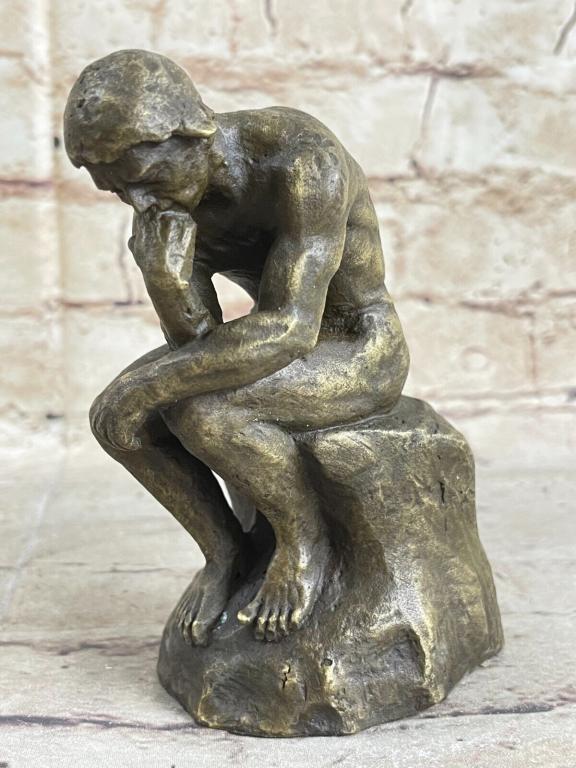
I know I have discussed this here before, but after 2K blog posts I don’t recall when or in what way, exactly, and I have new readers. Even long-time readers may have forgotten this perspectives on truth and knowledge.
I am a critical realist. That phrase doesn’t cover all of my philosophy, but it is a big part of my philosophy and impacts almost everything else, both in my philosophy and my theology.
Here it is in a nutshell: “Truth” is what is real outside the mind. For example, it is true that a tree fell in the forest even if there was nobody and nothing to hear or see it fall. Even if no one ever comes across the fallen tree in the forest, it is true that it fell. Imagine there is a long ago event in time and space that nobody now remembers or knows about. If it happened, the truth is that it happened. Truth is what is really the case—even if nobody ever knows it.
Note: Here I am abstracted God and God’s knowledge from the discussion of truth. Bringing God into it complicates things, so, for now at least, I am leaving God and God’s knowledge of all things aside.
So, to repeat, for the critical realist, like me, truth is reality whether known or unknown. But “knowledge” is our best justified belief about truth. Knowledge and ignorance do not change reality. And, for most critical realist, including me, it is impossible ever to know whether and to what extent a person’s knowledge matches reality in itself. (But unlike the critical idealism of Immanuel Kant, critical realists do belief in “the thing in itself” as more than an “as if” and knowledge as justified belief can “know” the thing in itself to some extent without the huge Kantian “gap” where the mind organizes it before knowing it. In other words, unlike Kant, critical realists do not think space and time, for example, are mere forms of intuition.)
”Knowledge” is justified belief. Some critical realist philosophers call it “justified true belief,” but I leave out the word “true” because I think it begs the question. Can knowledge ever be true in the sense of perfectly matching reality or does perspective ALWAYS intrude in knowing? So there is a degree of perspectivalism in critical realism.
But none of this means knowledge is impossible. It just means that we must keep in mind the difference between the orders of being and knowing.
I recently attempted to read a novel entitled “I Know This Much Is True” by author Wally Lamb. I won’t go into why I gave up. But the title is relevant to this explanation of truth versus knowledge. When someone says “I know this is true” he or she is simply saying, meaning, that he or she believes something (the “this”) is really the case and that belief is justified. How it is justified is another, related matter. But I can’t go into that here, now.
Critical realism is, among other things, a guard against intellectual arrogance but especially, most importantly, a guard against turning any “knowledge” into ideology, forcing “truth” on people. And that because no knowledge can be known to exactly match reality.
”Opinion” is unjustified belief or weakly justified belief, so weakly justified (if at all) that it does not count as knowledge. The line between knowledge and opinion is uncertain, of course, but is, I think, a major subject for philosophy.
Now, departing from philosophy for a moment, as a Christian I think critical realism is strongly supported FOR CHRISTIANS by the Apostle Paul in the New Testament when he wrote that NOW we see through a glass darkly (1 Corinthians 13:12), especially in matters of spirituality and faith. What I am saying is that critical realism is not just a philosophical construct applicable to, say, the sciences, but also a basic fact of Christianity. That is, when Christians (and others) make truth claims about reality, including God, we use remember that our claims are opinion or at best knowledge and not truth itself. Truth itself is eschatological for us even if it is always “there” in the mind of God. That means that as Christians we have no right to impose our faith, our beliefs, our doctrines, our way of life, on other people. But we can use persuasion and testimony to draw non-Christians toward faith in Christ.
Whenever and wherever Christians have attempted to impose Christianity on non-Christians by coercion, they have abandoned the spirit of Christ (who did not do that) and they have ignored 1 Corinthians 13:12.
But none of this means that religious people have “faith” while others have “facts”—a vulgarized expression of Kant’s philosophy as channeled through theologian Albrecht Ritschl’s theological epistemology.
A justified belief counts as fact even if it is not provable.
I am also reading (or listening to) another novel (which I will now finish) entitled “Enduring Love” by author Ian Mcewan. (It is not at all what the title implies as it is a tragedy that goes deeply into mental illness. It’s kind of a psychological thriller.) In the middle of the book the author puts in the mind of the main character a long monologue (to himself) about science (because he is a science writer) and how the basic “facts” of science have changed and continue to change and will probably continue to change forever which creates for him a crisis of thought which interacts with his crisis of personality.
We all like to think that our truth claims constitute more than justified belief, but, outside of what Hume called the “analytic” sphere (matters of definition), in the “synthetic” sphere, no a priori knowledge is possible in spite of Kant. Critical realism gives up on Kant’s (and others’) search for synthetic a priori truth. It opts not for chronic skepticism but for intellectual humility.
*Note: If you choose to comment, make sure your comment is relatively brief (less than 100 words), on topic, addressed to me, civil and respectful (not hostile or argumentative), and devoid of pictures or links.*
Previous Post
May 25, 2023
“Why?” Chapter II, Parts 9-11: Suffering and God’s Providence
Next Post
May 29, 2023 Can the Trinity Be Explained?
Recent Comments
"No doubt Lewis was inspired by earlier thinkers. Ironically (or perhaps serendipitously) I am now ..."
The Abolition of Man: Chapter 3: ..."
"I am sure Lewis would agree. After all, as a Christian he believed in original ..."
The Abolition of Man: Chapter 3: ..."
"If I’m not mistaken, the quote from Lewis is his interpretation of the “Conditioners’” own ..."
The Abolition of Man: Chapter 3: ..."
"Thank you! It's been a great re-read of a thought provoking, but somewhat dense, little ..."
The Abolition of Man: Chapter 3: ..."
Browse Our Archives
Select a Category Against Liberal Theology Uncategorized
Select a Month October 2026 September 2026 August 2026 July 2026 June 2026 May 2026 April 2026 March 2026 February 2026 January 2026 December 2025 November 2025 October 2025 September 2025 August 2025 July 2025 June 2025 May 2025 April 2025 March 2025 February 2025 January 2025 December 2024 November 2024 October 2024 September 2024 August 2024 July 2024 June 2024 May 2024 April 2024 March 2024 February 2024 January 2024 December 2023 November 2023 October 2023 September 2023 August 2023 July 2023 June 2023 May 2023 April 2023 March 2023 February 2023 January 2023 December 2022 November 2022 October 2022 September 2022 August 2022 July 2022 June 2022 May 2022 April 2022 March 2022 February 2022 January 2022 December 2021 November 2021 October 2021 September 2021 August 2021 July 2021 June 2021 May 2021 April 2021 March 2021 February 2021 January 2021 December 2020 November 2020 October 2020 September 2020 August 2020 July 2020 June 2020 May 2020 April 2020 March 2020 February 2020 January 2020 December 2019 November 2019 October 2019 September 2019 August 2019 July 2019 June 2019 May 2019 April 2019 March 2019 February 2019 January 2019 December 2018 November 2018 October 2018 September 2018 August 2018 July 2018 June 2018 May 2018 April 2018 March 2018 February 2018 January 2018 December 2017 November 2017 October 2017 September 2017 August 2017 July 2017 June 2017 May 2017 April 2017 March 2017 February 2017 January 2017 December 2016 November 2016 October 2016 September 2016 August 2016 July 2016 June 2016 May 2016 April 2016 March 2016 February 2016 January 2016 December 2015 November 2015 October 2015 September 2015 August 2015 July 2015 June 2015 May 2015 April 2015 March 2015 February 2015 January 2015 December 2014 November 2014 October 2014 September 2014 August 2014 July 2014 June 2014 May 2014 April 2014 March 2014 February 2014 January 2014 December 2013 November 2013 October 2013 September 2013 August 2013 July 2013 June 2013 May 2013 April 2013 March 2013 February 2013 January 2013 December 2012 November 2012 October 2012 September 2012 August 2012 July 2012 June 2012 May 2012 April 2012 March 2012 February 2012 January 2012 December 2011 November 2011 October 2011 September 2011 August 2011 July 2011 June 2011 May 2011 April 2011 March 2011 February 2011 January 2011 December 2010 November 2010 October 2010 September 2010 August 2010 July 2010
TAKE THE
Religious Wisdom Quiz
Four beasts rose from the sea—one like a lion with eagle's wings, one like a bear, one like a leopard, and a fourth terrifying beast. What did these represent?
Select your answer to see how you score.
Four kingdoms Four kings Four judgments Four ages
Related posts from Roger E. Olson

The Abolition of Man: Chapter 3: The Abolition...

She Survived Her Execution. Should the State Try...
The Abolition of Man Part 2: Chapter 2:...

Ambiguity without Ambivalence in Faith
TRENDING AT PATHEOS Evangelical

I was strolling through the top floor of the brand new Parthenon...

What Does Gêvâh Mean For Kimberley Guifoyle &...
This week, a lot of the news is focused on Kimberly Guilfoyle....

INNER CIRCLE: Profound Mystery (Of Christ In All...
Ephesians 5:31-32 “For this reason, a man will leave his father and...

Do Not Rejoice When Your Enemy Falls: The...
Turning an execution into a public spectacle is a disturbing expression of...

'The Chosen' S6 Trailer: The Passion Gets Very...
Not many watching 'The Chosen' worry about spoilers, but just because they...

The purpose-driven labor priest
A labor activist reads Rick Warren and it gets me wondering about...
view all Evangelical blogs
What Are Your Thoughts?leave a comment
Ad-Free & Subscriber Log-In Subscription Support
- About Us
- 2026 Calendar
- Videos
- Podcasts
- Library of World Religions
- Faith In Media Tracker
- Advertise With Us
- Write for Us
- Privacy Policy
- Terms of Service
- Do Not Sell My Data
- Contact Us
- Radiant Digital
- Manage Newsletter Subscriptions
- Unsubscribe From Notifications
- Sitemap
Copyright 2008-2026, Patheos. All rights reserved.
Subscription Support Ad-Free & Subscriber Log-In
Follow Patheos