
BuddhistCatholicContemplativeEvangelicalGeneral ChristianHinduJewishLatter-day SaintMuslimNew VisionsProgressive Christian
Beliefs
- Buddhist
- Catholic
- Contemplative
- Evangelical
- General Christian
- Hindu
- Jewish
- Latter-day Saint
- More Voices
- Muslim
- New Visions
- Pagan
- Progressive Christian
Topics
- Religion News
- Food and Religion
- Sports and Religion
- Religious Art
- Religious Music and Entertainment
- Religious Events
- History and Religion
- Style and Religion
- Politics and Religion
- Women in Religion
- Recreation Outdoors and Religion
- Business Finance and Religion
- Careers Workplace and Religion
- Education and Religion
- Family Parenting and Religion
- Health Fitness and Religion
- Home and Religion
- Relationships and Religion
- Technology and Religion
- Travel and Religion
Columnists
- Buddhist Columnists
- Business Finance and Religion Columnists
- Careers Workplace and Religion Columnists
- Catholic Columnists
- Contemplative Columnists
- Education and Religion Columnists
- Evangelists Columnists
- Family Parenting and Religion Columnists
- General Christian Columnists
- Health Fitness and Religion Columnists
- Hindu Columnists
- History and Religion Columnists
- Home and Religion Columnists
- Jewish Columnists
- More Voices Columnists
- Latter Day Columnists
- Muslim Columnists
- New Visions Columnists
- Nonreligious Columnists
- Pagan Columnists
- Politics and Religion Columnists
- Progressive Columnists
- Recreation Outdoors and Religion Columnists
- Relationships and Religion Columnists
- Religion News Columnists
- Religious Art Columnists
- Religious Events Columnists
- Religious Music and Entertainment Columnists
- Sports and Religion Columnists
- Style and Religion Columnists
- Technology and Religion Columnists
- Travel and Religion Columnists
- Women in Religion Columnists
Resource Library
- 2026 Calendar
- Library of World Religions
- The 100 Most Holy Places on Earth
- Patheos Answers
- Podcasts
- Videos
- Faith Leaders Database
- Anglican Episcopalian
- Bahai
- Baptist
- Buddhism
- Christianity
- Confucianism
- Eastern Orthodoxy
- Hinduism
- Holiness and Pentecostal
- ISKCON
- Islam
- Judaism
- Lutheran
- Methodist
- The Church of Jesus Christ of Latter-day Saints
- New Age
- Paganism
- Presbytarian and Reformed
- Protestantism
- Religion Behind the Scenes
- Roman Catholic
- Scientology
- Shia Islam
- Sikhism
- Sufism
- Sunni Islam
- Taoism
- Zen
- See all religions
Research Tools
 Ad-Free & Subscriber Log-In Subscription Support
Ad-Free & Subscriber Log-In Subscription Support
Follow Patheos 

- Trending:
- Forgiveness
- |
- Marriage
- |
- Consciousness
- |
- Death Penalty
- |
- Election
- |
- Halloween

- Home
- Evangelical
- The Two Most Influential Modern Economic Philosophers
The Two Most Influential Modern Economic Philosophers
Last updated on: November 19, 2022 at 11:09 am by Roger E. Olson
The Two Most Influential Modern Economic Philosophers 2022-11-19T11:09:50-05:00 Roger E. Olson
Patheos Explore the world's faith through different perspectives on religion and spirituality! Patheos has the views of the prevalent religions and spiritualities of the world.
The Two Most Influential Modern Economic Philosophers
*Note: If you choose to comment here, be aware that I do not approve all comments; this is not a discussion board. If you hope your comment will appear here, make sure it is relatively brief (no more than 100 words), on topic, addressed to me, civil and respectful (not hostile or argumentative) and does not misrepresent what I wrote in the blog post.*
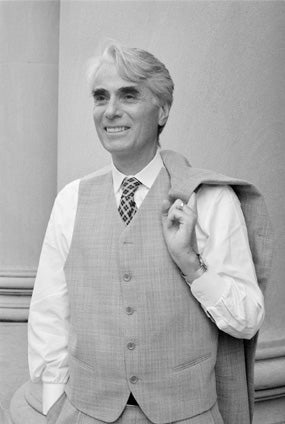
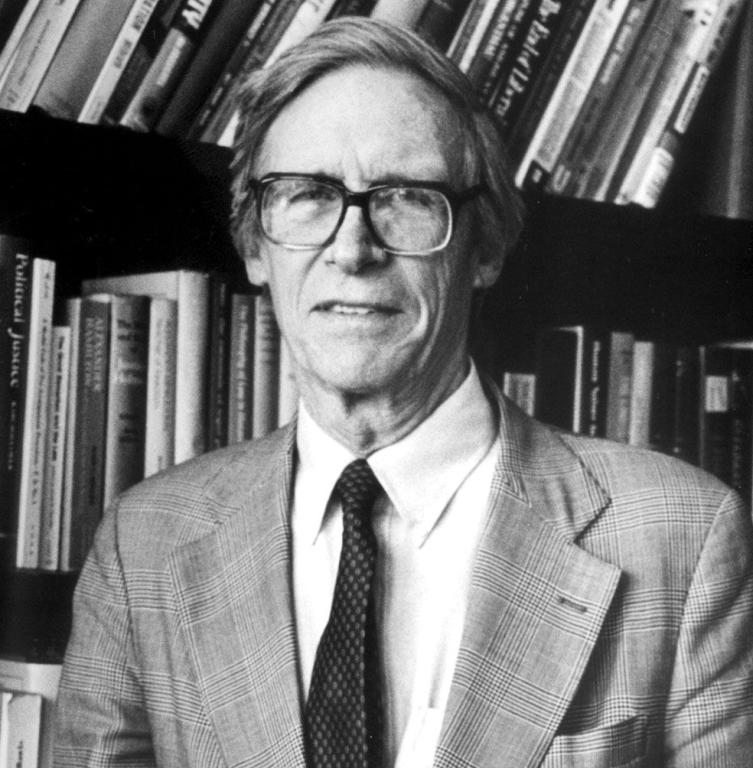
Recently here we have been discussing Christian (and other) theories of economics, the distribution of wealth (including government services) within a functioning and “good” social order. There has been, predictably, much disagreement. I think it it time to “educate” some people here, who read my blog, about philosophies that lie behind and beneath American economic theories today. There are really only two main ones—the philosophies of John Rawls and Robert Nozick. Both wrote classic books about justice, focusing especially on economics, that have been extremely influential in American political life (broadly defined). Both have passionate followers and critics.
Both were professors of philosophy at Harvard University in the 1960s and into the 1980s. John Rawls wrote a massive volume about justice entitled “A Theory of Justice.” His theory is often allied “justice as fairness.” In the book he describes a fair society as one structured as reasonable citizens would structure if “under the veil of ignorance” which he called “the original condition.” He was a classical liberal, so he advocated individual freedom consistent with individual freedom for all. However, in “A Theory of Justice” he argued that AFTER deciding on maximum individual freedom for the future, as yet unstructured social order, reasonable people in the original condition, under the veil of ignorance, not knowing their advantages or disadvantages in the social order once the veil of ignorance is lifted, would decide on a principle Rawls called “the maximin principle.” That means “maximizing the minimum.” The principle means that reasonable people under the veil of ignorance would decide on a social order, including government, that assures that as the rich get richer their increases in wealth benefits the poor also. The point was, of course, to stop an inevitable widening “gap” between the rich and the poor in a capitalist society. Part of that would necessarily include redistribution of wealth, not necessarily in the form of cash handouts to the poor but necessarily through programs to help them rise out of poverty.
Robert Nozick’s classic book “Anarchy, the State and Utopia” (1974) was largely a response to Rawls’s theory of justice. Nozick strong disagreed with Rawls and argued rationally for a largely libertarian society in which the government’s main job is to protect boundaries and preserve for the owners property to which they are entitled. The only property to which owners are not entitled are properties (wealth) that were obtained by some kind of deception or by sheer theft. So long as a person willingly and knowingly transferred property/wealth to another person, even if at a greatly reduced value, the new owner is entitled to that property/wealth and government protection of it for him or her.
As you can suspect, both proposals have come under harsh criticism over the years since the books were published and both books were revised and “corrected” by their authors with responses to critics. But the main ideas of both remained the same. Specific examples changed some over the years as people raised reasonable questions about the proposals.
Once you understand Rawls’s and Nozick’s philosophies, you can easily see how they underly the “great divide,” even among academics, in American political life, especially with regard to government intervention or non-intervention in the economy. Most people have never heard of either Rawls or Nozick, but their views “trickle down” anyway. When I was a Ph.D student at Rice University in the late 1970s and early 1980s I saw many students carrying around either Rawls’ or Nozick’s books. In our seminar on ethics, we were required by our professor (James Sellers) to read portions of both. I read all of both. And I read commentaries on both. And I interacted with other students who were passionately devoted to one or the other.
This is an example of something that frustrates me almost to no end. That people latch onto a particular view of economics without studying the philosophies behind them. Clearly, Ronald Reagan was influenced by Nozick even if he never heard of him. In my considered opinion, so was Marvin Olasky although I do not recall him every mentioning Nozick. The same can be said about Rawls’s theory of justice. It has “trickled down” into policies crafted and promoted by politicians who never heard of him.
All general, broad approaches to American social policy, especially as it regards the government’s role in the economy, TEND toward either Rawls’s approach and theory OR Nozick’s. As with Calvinism and Arminianism, I do not think there is any middle ground or hybrid between or of them.
But anyone who learns about these two philosophies has to “see” that they are fundamental, basic, to current and recent American politics. In the next post here I will talk about my own thoughts about Rawls and Nozick and their philosophies—as a Christian ethicist. In the meantime, if you intend enter into conversation about them, I urge you to familiarize yourself more with them. All I have provided here are totally inadequate thumbnail sketches of their main ideas.
Previous Post

November 16, 2022
Surely It’s Time to Retire the Role of “Celebrity Christian”
Next Post
November 21, 2022 Evaluations and Critiques: Nozick and Rawls (Gloves Off)
Browse Our Archives
Select a Category Against Liberal Theology Uncategorized
Select a Month October 2026 September 2026 August 2026 July 2026 June 2026 May 2026 April 2026 March 2026 February 2026 January 2026 December 2025 November 2025 October 2025 September 2025 August 2025 July 2025 June 2025 May 2025 April 2025 March 2025 February 2025 January 2025 December 2024 November 2024 October 2024 September 2024 August 2024 July 2024 June 2024 May 2024 April 2024 March 2024 February 2024 January 2024 December 2023 November 2023 October 2023 September 2023 August 2023 July 2023 June 2023 May 2023 April 2023 March 2023 February 2023 January 2023 December 2022 November 2022 October 2022 September 2022 August 2022 July 2022 June 2022 May 2022 April 2022 March 2022 February 2022 January 2022 December 2021 November 2021 October 2021 September 2021 August 2021 July 2021 June 2021 May 2021 April 2021 March 2021 February 2021 January 2021 December 2020 November 2020 October 2020 September 2020 August 2020 July 2020 June 2020 May 2020 April 2020 March 2020 February 2020 January 2020 December 2019 November 2019 October 2019 September 2019 August 2019 July 2019 June 2019 May 2019 April 2019 March 2019 February 2019 January 2019 December 2018 November 2018 October 2018 September 2018 August 2018 July 2018 June 2018 May 2018 April 2018 March 2018 February 2018 January 2018 December 2017 November 2017 October 2017 September 2017 August 2017 July 2017 June 2017 May 2017 April 2017 March 2017 February 2017 January 2017 December 2016 November 2016 October 2016 September 2016 August 2016 July 2016 June 2016 May 2016 April 2016 March 2016 February 2016 January 2016 December 2015 November 2015 October 2015 September 2015 August 2015 July 2015 June 2015 May 2015 April 2015 March 2015 February 2015 January 2015 December 2014 November 2014 October 2014 September 2014 August 2014 July 2014 June 2014 May 2014 April 2014 March 2014 February 2014 January 2014 December 2013 November 2013 October 2013 September 2013 August 2013 July 2013 June 2013 May 2013 April 2013 March 2013 February 2013 January 2013 December 2012 November 2012 October 2012 September 2012 August 2012 July 2012 June 2012 May 2012 April 2012 March 2012 February 2012 January 2012 December 2011 November 2011 October 2011 September 2011 August 2011 July 2011 June 2011 May 2011 April 2011 March 2011 February 2011 January 2011 December 2010 November 2010 October 2010 September 2010 August 2010 July 2010
TAKE THE
Religious Wisdom Quiz
I wanted a vineyard so badly that my wife arranged the owner's death through false witnesses. Who am I?
Select your answer to see how you score.
David Ahab Jezebel Naboth
Related posts from Roger E. Olson

The Abolition of Man: Chapter 3: The Abolition...

She Survived Her Execution. Should the State Try...
The Abolition of Man Part 2: Chapter 2:...

Ambiguity without Ambivalence in Faith
TRENDING AT PATHEOS Evangelical

I was strolling through the top floor of the brand new Parthenon...

What Does Gêvâh Mean For Kimberley Guifoyle &...
This week, a lot of the news is focused on Kimberly Guilfoyle....

INNER CIRCLE: Profound Mystery (Of Christ In All...
Ephesians 5:31-32 “For this reason, a man will leave his father and...

Do Not Rejoice When Your Enemy Falls: The...
Turning an execution into a public spectacle is a disturbing expression of...

'The Chosen' S6 Trailer: The Passion Gets Very...
Not many watching 'The Chosen' worry about spoilers, but just because they...

The purpose-driven labor priest
A labor activist reads Rick Warren and it gets me wondering about...
view all Evangelical blogs
Ad-Free & Subscriber Log-In Subscription Support
- About Us
- 2026 Calendar
- Videos
- Podcasts
- Library of World Religions
- Faith In Media Tracker
- Advertise With Us
- Write for Us
- Privacy Policy
- Terms of Service
- Do Not Sell My Data
- Contact Us
- Radiant Digital
- Manage Newsletter Subscriptions
- Unsubscribe From Notifications
- Sitemap
Copyright 2008-2026, Patheos. All rights reserved.
Subscription Support Ad-Free & Subscriber Log-In
Follow Patheos