
BuddhistCatholicContemplativeEvangelicalGeneral ChristianHinduJewishLatter-day SaintMuslimNew VisionsProgressive Christian
Beliefs
- Buddhist
- Catholic
- Contemplative
- Evangelical
- General Christian
- Hindu
- Jewish
- Latter-day Saint
- More Voices
- Muslim
- New Visions
- Pagan
- Progressive Christian
Topics
- Religion News
- Food and Religion
- Sports and Religion
- Religious Art
- Religious Music and Entertainment
- Religious Events
- History and Religion
- Style and Religion
- Politics and Religion
- Women in Religion
- Recreation Outdoors and Religion
- Business Finance and Religion
- Careers Workplace and Religion
- Education and Religion
- Family Parenting and Religion
- Health Fitness and Religion
- Home and Religion
- Relationships and Religion
- Technology and Religion
- Travel and Religion
Columnists
- Buddhist Columnists
- Business Finance and Religion Columnists
- Careers Workplace and Religion Columnists
- Catholic Columnists
- Contemplative Columnists
- Education and Religion Columnists
- Evangelists Columnists
- Family Parenting and Religion Columnists
- General Christian Columnists
- Health Fitness and Religion Columnists
- Hindu Columnists
- History and Religion Columnists
- Home and Religion Columnists
- Jewish Columnists
- More Voices Columnists
- Latter Day Columnists
- Muslim Columnists
- New Visions Columnists
- Nonreligious Columnists
- Pagan Columnists
- Politics and Religion Columnists
- Progressive Columnists
- Recreation Outdoors and Religion Columnists
- Relationships and Religion Columnists
- Religion News Columnists
- Religious Art Columnists
- Religious Events Columnists
- Religious Music and Entertainment Columnists
- Sports and Religion Columnists
- Style and Religion Columnists
- Technology and Religion Columnists
- Travel and Religion Columnists
- Women in Religion Columnists
Resource Library
- 2026 Calendar
- Library of World Religions
- The 100 Most Holy Places on Earth
- Patheos Answers
- Podcasts
- Videos
- Faith Leaders Database
- Anglican Episcopalian
- Bahai
- Baptist
- Buddhism
- Christianity
- Confucianism
- Eastern Orthodoxy
- Hinduism
- Holiness and Pentecostal
- ISKCON
- Islam
- Judaism
- Lutheran
- Methodist
- The Church of Jesus Christ of Latter-day Saints
- New Age
- Paganism
- Presbytarian and Reformed
- Protestantism
- Religion Behind the Scenes
- Roman Catholic
- Scientology
- Shia Islam
- Sikhism
- Sufism
- Sunni Islam
- Taoism
- Zen
- See all religions
Research Tools
 Ad-Free & Subscriber Log-In Subscription Support
Follow Patheos 

- Trending:
- Advent
- |
- Forgiveness
- |
- Thanksgiving
- |
- Election
- |
- Seasonal Holidays
- |
- Marriage

- Home
- Evangelical
- On Becoming Anabaptist
On Becoming Anabaptist
Last updated on: February 21, 2022 at 10:04 am by Roger E. Olson
On Becoming Anabaptist 2022-02-21T10:04:25-05:00 Roger E. Olson
Patheos Explore the world's faith through different perspectives on religion and spirituality! Patheos has the views of the prevalent religions and spiritualities of the world.
On Becoming Anabaptist
I do not consider my becoming Anabaptist a rejection of what I have been, namely, Pentecostal and Baptist. Both have strong elements of the Anabaptist vision and ethos within them. Many Baptist historians believe the Baptist tradition has its strongest roots in Anabaptism (namely, among others, William Estep and Glen Stassen). A few years ago Southwestern Baptist Theological Seminary in Fort Worth, Texas held a symposium, out of which at least one book was published, celebrating the intimate historical and theological connections between Baptists and Anabaptists. As for Pentecostals, well, we hardly were aware of Anabaptists, but as soon as I began studying church history, still as a Pentecostal, I recognized the similarities—in ethos and practice. Few Pentecostals, to say nothing of non-Pentecostals, know that almost all Pentecostals were pacifists for the first half of the 20th century. Many still are. I have often described the church I grew up in as “urban Amish.” That’s somewhat tongue-in-cheek, but I stand by it as not entirely inaccurate.
So, what I say here is that becoming Anabaptist, for me, is not a huge leap or radical move away from what I have been before. Throughout my time as a Baptist theologian I have argued for continuity rather than discontinuity between the Baptist and Anabaptist traditions in spite of some differences. Both, together with others, fall into the category labeled “baptist” (small “b”) identified and described by Baptist theologian and philosopher James McClendon.
One not the reasons I wrote The Story of Christian Theology: Twenty Centuries of Tradition and Reform (IVP) was to tell the stories of the Anabaptists (and the Arminians and Pietists) often left out or distorted by other volumes of church history and historical theology.
My first memories of Anabaptists are of Hutterites who lived around us in eastern South Dakota when I was a teenager. I would see them coming into town in trucks, dressed somewhat strangely, shopping at K-Mart and not interacting with us. I asked my parents and others about them and received little in the way of serious information about them. But I remember being told they were “Anabaptists” “kind of like Amish and Mennonites.” There was one Mennonite church near our house. One Sunday evening, as a teenager, I dared to skip my own church service and visit the Mennonite church out of curiosity. I liked what I heard there. Later, during my Baptist seminary studies, one of my professors was a Mennonite. So were some of the students. It was then that I really began to awaken to what being Anabaptist meant.
Earlier, here, I wrote about my awakening to the “young evangelicals” movement. Many of them were Anabaptists, mostly Mennonites or Brethren (e.g., Brethren in Christ or what used to be called River Brethren). (Not all Brethren churches are Anabaptist; some are.)
Gradually, over the years, I adopted many of the perspectives and values of Anabaptism while being Baptist. I did not see them as in any real conflict. I took classes to visit Anabaptist churches, including a “Beachy Amish” church, and invited Anabaptists into my classes when I taught about the Reformation especially. I felt drawn to what I would call a moderate, evangelical form of Anabaptism but saw no reason to leave the Baptist community. I believe it is possible to be both—Anabaptist and Baptist.
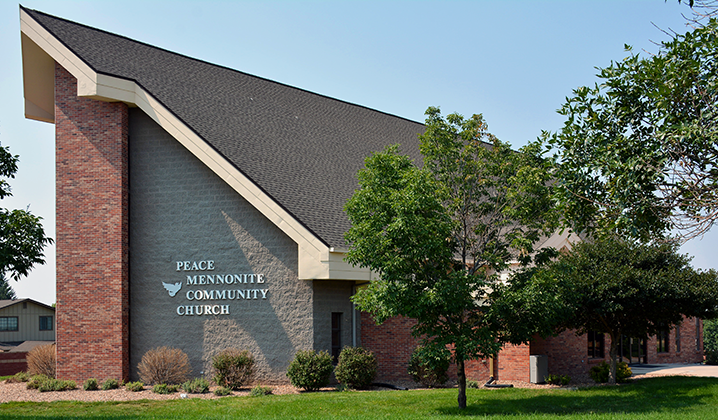
However, now, finally, I have settled into a truly Anabaptist, Mennonite church. It is modern (not Amish or Old Order Mennonite), evangelical (but not fundamentalist), and not very different on the surface from most Baptist churches. The difference lies under the surface, in the church’s roots and ethos.
I want to encourage you to learn about the Anabaptist ethos by reading a relatively brief but very informative essay entitled The Anabaptist Vision by Mennonite theologian Harold Bender, probably the most influential Mennonite and Anabaptist theologian of the 20th century. (Yes, he was eclipsed by John Howard Yoder, but Yoder’s audience was more non-Anabaptists whereas Bender wrote mainly for Anabaptists. But they overlap much in spite of being in different generation. I think Bender’s The Anabaptist Vision is the best brief introduction to Anabaptist theology.) Bender’s essay is available at Amazon for $1.99 (Kindle edition).
Bender identifies three main “visions” of original and faithful Anabaptism: 1) a new conception of the essence of Christianity as discipleship, 2) a new conception of the church as a brotherhood, and 3) a new ethic of love and nonresistance. You might read those and think “What’s new about those?” Well, as Bender rightly points out, it was the Anabaptists who introduced these themes into the “stream” of Christianity and, yes, they have largely caught on from the Anabaptists in many non-Anabaptist traditions and communities.
However, you need to read how Bender explains the three visions. For example, the “new conception of the essence of Christianity as discipleship” includes nonconformity of the Christian to the worldly way of life—of the surrounding culture. And the “new conception of the church as a brotherhood” includes the idea of the church as composed only of true believers whose lives are marked by the teachings of Jesus in, for example, the Sermon on the Mount. No mixed assembly of disciples and not disciples. And it includes church discipline after baptism.
All I can say is, if you are at all curious, read the essay. It is well worth the almost two dollars!
Basically, I decided long ago that the Anabaptists (not to the exclusion of others but especially) are the closest restoration of the New Testament church existing today. And that is what I think the task of the church is in every time and place–to be the New Testament church in that context.
Now, as anyone familiar with modern Anabaptism knows, it is divided into numerous subgroups, some of which do not get along with each other. The largest group of Anabaptists in the world is the Mennonites, but there are many different kinds of Mennonites churches—from Old Order which are hardly different from Amish—to contemporary liberal-leaning Mennonites within the Mennonite Church USA. Then there are the various Brethren Anabaptists that blend together Pietism and sometimes Wesleyanism. Then there are the many Amish sects especially in Pennsylvania, Ohio and Indiana (but spreading out more sparsely everywhere in America and Canada). Then there are the Hutterites, perhaps the most peculiar group of Anabaptists. Watch the Youtube documentary “To Care and Not to Care” to learn about them. Finally I will mention a very little known Anabaptist denomination called The Apostolic Christian Church. I visited one recently. They have no paid clergy, the men sit on one side of the sanctuary and the men on the other, the women wear head coverings in church, and they have a Sunday meal together between two services—one morning and one early afternoon.
I do not consider my becoming Anabaptist of the Mennonite variety a “conversion,” nor do I consider it a leaving behind of what I was before. I see it as a letting out of what was already inside of me, in a formal and somewhat official way. But I remain critically Pentecostal and Baptist (“Bapticostal”).
Previous Post

February 17, 2022
You Don’t Deserve…And There Are Always Limits
Next Post
February 25, 2022 About Russia’s AND America’s Invasions
Browse Our Archives
Select a Category Against Liberal Theology Uncategorized
Select a Month November 2026 October 2026 September 2026 August 2026 July 2026 June 2026 May 2026 April 2026 March 2026 February 2026 January 2026 December 2025 November 2025 October 2025 September 2025 August 2025 July 2025 June 2025 May 2025 April 2025 March 2025 February 2025 January 2025 December 2024 November 2024 October 2024 September 2024 August 2024 July 2024 June 2024 May 2024 April 2024 March 2024 February 2024 January 2024 December 2023 November 2023 October 2023 September 2023 August 2023 July 2023 June 2023 May 2023 April 2023 March 2023 February 2023 January 2023 December 2022 November 2022 October 2022 September 2022 August 2022 July 2022 June 2022 May 2022 April 2022 March 2022 February 2022 January 2022 December 2021 November 2021 October 2021 September 2021 August 2021 July 2021 June 2021 May 2021 April 2021 March 2021 February 2021 January 2021 December 2020 November 2020 October 2020 September 2020 August 2020 July 2020 June 2020 May 2020 April 2020 March 2020 February 2020 January 2020 December 2019 November 2019 October 2019 September 2019 August 2019 July 2019 June 2019 May 2019 April 2019 March 2019 February 2019 January 2019 December 2018 November 2018 October 2018 September 2018 August 2018 July 2018 June 2018 May 2018 April 2018 March 2018 February 2018 January 2018 December 2017 November 2017 October 2017 September 2017 August 2017 July 2017 June 2017 May 2017 April 2017 March 2017 February 2017 January 2017 December 2016 November 2016 October 2016 September 2016 August 2016 July 2016 June 2016 May 2016 April 2016 March 2016 February 2016 January 2016 December 2015 November 2015 October 2015 September 2015 August 2015 July 2015 June 2015 May 2015 April 2015 March 2015 February 2015 January 2015 December 2014 November 2014 October 2014 September 2014 August 2014 July 2014 June 2014 May 2014 April 2014 March 2014 February 2014 January 2014 December 2013 November 2013 October 2013 September 2013 August 2013 July 2013 June 2013 May 2013 April 2013 March 2013 February 2013 January 2013 December 2012 November 2012 October 2012 September 2012 August 2012 July 2012 June 2012 May 2012 April 2012 March 2012 February 2012 January 2012 December 2011 November 2011 October 2011 September 2011 August 2011 July 2011 June 2011 May 2011 April 2011 March 2011 February 2011 January 2011 December 2010 November 2010 October 2010 September 2010 August 2010 July 2010
TAKE THE
Religious Wisdom Quiz
Who said: "Let us draw near to God with a sincere heart and with the full assurance that faith brings"?
Select your answer to see how you score.
Peter James Paul John
Related posts from Roger E. Olson

Reflections on the Evangelical Theological Society

Why I Struggle with "Inerrancy" Part 2
Why I Struggle with Biblical "Inerrancy"

Should Oneness Pentecostals Be Embraced as Evangelicals?
TRENDING AT PATHEOS Evangelical

Book III, Chapter 3: Christ "Classic" (Matt. 9:9-34)
Book III, Chapter 3: Christ "Classic" (Matt. 9:9-34) In honor of tomorrow's...

Jesus explicitly mentions the book of Jonah twice, but he retells the...

Peggy Sue Got Married: Coppola’s Always Been Like...
I enjoyed Megalopolis (2024). It’s a mess, but I enjoyed it. The...

My dissertation The Place of Mysticism in the Late Middle Ages concerns...

God and the Contingency of This World
The great Catholic philosopher Aquinas and the great Lutheran philosopher Leibniz developed...

Pope Francis and The Devil – A Pagan...
According to his private diaries, Pope Francis saw visions of the devil...
view all Evangelical blogs
Ad-Free & Subscriber Log-In Subscription Support
- About Us
- 2026 Calendar
- Videos
- Podcasts
- Library of World Religions
- Faith In Media Tracker
- Advertise With Us
- Write for Us
- Privacy Policy
- Terms of Service
- Do Not Sell My Data
- Contact Us
- Radiant Digital
- Manage Newsletter Subscriptions
- Unsubscribe From Notifications
- Sitemap
Copyright 2008-2026, Patheos, part of the Radiant Digital network of media brands. All rights reserved.
Subscription Support Ad-Free & Subscriber Log-In
Follow Patheos