
BuddhistCatholicContemplativeEvangelicalGeneral ChristianHinduJewishLatter-day SaintMuslimNew VisionsProgressive Christian
Beliefs
- Buddhist
- Catholic
- Contemplative
- Evangelical
- General Christian
- Hindu
- Jewish
- Latter-day Saint
- More Voices
- Muslim
- New Visions
- Pagan
- Progressive Christian
Topics
- Religion News
- Food and Religion
- Sports and Religion
- Religious Art
- Religious Music and Entertainment
- Religious Events
- History and Religion
- Style and Religion
- Politics and Religion
- Women in Religion
- Recreation Outdoors and Religion
- Business Finance and Religion
- Careers Workplace and Religion
- Education and Religion
- Family Parenting and Religion
- Health Fitness and Religion
- Home and Religion
- Relationships and Religion
- Technology and Religion
- Travel and Religion
Columnists
- Buddhist Columnists
- Business Finance and Religion Columnists
- Careers Workplace and Religion Columnists
- Catholic Columnists
- Contemplative Columnists
- Education and Religion Columnists
- Evangelists Columnists
- Family Parenting and Religion Columnists
- General Christian Columnists
- Health Fitness and Religion Columnists
- Hindu Columnists
- History and Religion Columnists
- Home and Religion Columnists
- Jewish Columnists
- More Voices Columnists
- Latter Day Columnists
- Muslim Columnists
- New Visions Columnists
- Nonreligious Columnists
- Pagan Columnists
- Politics and Religion Columnists
- Progressive Columnists
- Recreation Outdoors and Religion Columnists
- Relationships and Religion Columnists
- Religion News Columnists
- Religious Art Columnists
- Religious Events Columnists
- Religious Music and Entertainment Columnists
- Sports and Religion Columnists
- Style and Religion Columnists
- Technology and Religion Columnists
- Travel and Religion Columnists
- Women in Religion Columnists
Resource Library
- 2026 Calendar
- Library of World Religions
- The 100 Most Holy Places on Earth
- Patheos Answers
- Podcasts
- Videos
- Faith Leaders Database
- Anglican Episcopalian
- Bahai
- Baptist
- Buddhism
- Christianity
- Confucianism
- Eastern Orthodoxy
- Hinduism
- Holiness and Pentecostal
- ISKCON
- Islam
- Judaism
- Lutheran
- Methodist
- The Church of Jesus Christ of Latter-day Saints
- New Age
- Paganism
- Presbytarian and Reformed
- Protestantism
- Religion Behind the Scenes
- Roman Catholic
- Scientology
- Shia Islam
- Sikhism
- Sufism
- Sunni Islam
- Taoism
- Zen
- See all religions
Research Tools
 Ad-Free & Subscriber Log-In Subscription Support
Ad-Free & Subscriber Log-In Subscription Support
Follow Patheos 

- Trending:
- Forgiveness
- |
- Marriage
- |
- Consciousness
- |
- Death Penalty
- |
- Election
- |
- Halloween

- Home
- Evangelical
- What Is the Essence of Christianity? Part 1
What Is the Essence of Christianity? Part 1
Last updated on: October 2, 2021 at 10:08 am by Roger E. Olson
What Is the Essence of Christianity? Part 1 2021-10-02T10:08:28-05:00 Roger E. Olson
Patheos Explore the world's faith through different perspectives on religion and spirituality! Patheos has the views of the prevalent religions and spiritualities of the world.
What Is the Essence of Christianity? Part 1
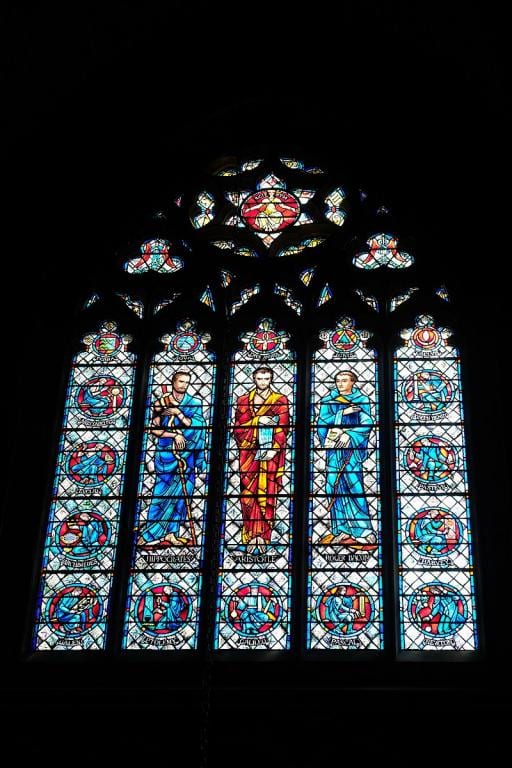
Obviously, this question would take a whole volume to answer and even one volume might not be adequate to answer it. There have been several such volumes. Atheist Ludwig Feuerbach famously wrote a volume entitled Das Wesen des Christentums (pub., 1841). Liberal Protestant church historian and theologian Adolf Harnack gave a series of lectures in Berlin in 1900 with that same title, but it was published in English as What Is Christianity? in 1901. Many scholars (and some non-scholars) have written books and articles about the essence of Christianity. Here I give some of my own thoughts about the subject.
*Sidebar: The opinions expressed here are my own (or those of the guest writer); I do not speak for any other person, group or organization; nor do I imply that the opinions expressed here reflect those of any other person, group or organization unless I say so specifically. Before commenting read the entire post and the “Note to commenters” at its end.*
Let me first clear away some underbrush. Whatever the essence of Christianity is, it is not simply what people who call themselves “Christians” believe or experience or do. By inquiring into the essence of Christianity we are asking about what Christianity ought to be in order to be authentically itself.
If anyone wants to define the essence of Christianity by what most people who call themselves Christians have done or believed or experienced (past or present), then I have no conversation with them about the essence of Christianity. I am asking about it theologically, not sociologically.
In order to define the essence of Christianity theologically we have to look at it historically, in terms of its foundations, its prototypes—persons and documents—and not at its later distorted permutations.
Historically, the debate has been about whether the essence of Christianity is belief (doctrine), experience (spirituality), or practice (ethics). Here, in order to make things manageable, I am going to focus on Protestant theology about the essence of Christianity.
Even Protestant Christians need to answer this question not only using the Bible (especially the New Testament) but also the early church fathers. The question has to be answered biblically and historically. The alternative is to accept any current definition of Christianity which leads to the concept becoming meaningless.
Now let me make my point even more clearly (which I realize always brings strong disagreement and harsh criticism). All over the world one finds churches that call themselves “Christian” but have very little in common with each other. When one goes around and into these extremely diverse churches, what is one to make of them? Can they all really be “Christian”—authentically? To say yes is to sacrifice Christianity on the altar of radical diversity and even relativism. The concept becomes meaningless.
I have read the early church fathers. I taught historical theology for many years and that included the whole scope. I spent many years reading and teaching about the whole scope of Christian history—around the world, not just in Europe or North America. A few years ago I set aside an entire summer to read every book of African theologies I could get my hands on. I have read many books of Asian theologies, Latin American theologies, and theologies coming out of Europe. This has literally been my adult life’s work.
My conclusion—at this point approaching the end of my career as a Christian theologian and even my life—I have to conclude that “Christianity” seems to be a blooming, buzzing confusion (to borrow a term from philosopher William James).
Is there any “essence of Christianity” that helps bring some unity to authentic Christianity in spite of differences of style which will always exist? Is there some “touchstone” (I will not say “litmus test”) one can use to decide “That particular church or group of churches is authentically Christian and that particular church or group of churches is not authentically Christian?” If not, then “Christianity” is meaningless. I fear that is where we are nearly at. There are numerous reasons for that but one, I believe, is that most contemporary people have given up on the concept of essences. To them, there are no essences of thing—especially religion (but also political movements).
When the World Council of Churches Faith and Order Commission decided there had to be some way of distinguishing possibly true and authentic Christianity from counterfeit Christianity they came up with the criterion “Jesus Christ is God and Savior.” Virtually any church that would affirm that could become a member while any church that denied that could not become a member.
But is that criterion sufficient? I don’t think so.
Story: Years ago I had a good friend who earned his Ph.D. in theology from a major European university and went to teach at an African seminary affiliated with a major African indigenous church/denomination/ movement. After teaching there for a year he told me that all the leaders and members of that church believe that their “prophet” was the incarnation of the Holy Spirit. They did not include that in their written doctrinal documents, but he came to believe it was a universal belief among that church’s leaders and informed adherents.
That church, one of the largest in Africa, is a member of the World Council of Churches. What to make of that? Just accept it as authentically Christian in spite of its belief that clearly clashes with everything the church fathers, medieval theologians, reformers and post-reformation Christian leaders believed? We can say with certainty that all of them would reject that belief as incompatible with true, authentic Christianity.
(Warning to would be commenters: Do not name that or any church. I am not here out to identify churches that are false or counterfeit; I am here only attempting to help Christians begin to have mental discernment that separates the true from the false when it comes to this blooming, buzzing confusion of empirical “Christianity” in the world today.)
Back now to the three major options for defining the essence of Christianity—right belief, right experience, and right practice. These have been labeled “orthodoxy,” “orthopathy,” and “orthopraxy.” And among Christian theologians, and this filters down into the ranks of church leaders and especially decision-makers of cooperative, “umbrella” groups of churches and Christian organizations, which one of these is closest to defining the essence of Christianity?
Since at least the post-reformation era in Europe and the United States, conservative Protestants, and especially those who we call fundamentalists, elevate orthodoxy to the supreme status in regard to defining the essence of Christianity. But not only fundamentalists! Very influential evangelical theologian Millard Erickson famously defined the enduring essence of Christianity, across time and cultures, as doctrine. (See volume 1 of his three volume Christian Theology published by Baker Publishing.) Liberal-leaning Protestants have tended to elevate experience, especially a universal human “God-consciousness,” as the enduring essence of Christianity, while some liberal-leaning and liberation theology-leaning Protestants have tended to elevate ethics, orthopraxy, to that status. Which is it? Orthodoxy, orthopathy, or orthopraxy?
*Note to commenters: This blog is not a discussion board; please respond with a question or comment only to me. If you do not share my evangelical Christian perspective (very broadly defined), feel free to ask a question for clarification, but know that this is not a space for debating incommensurate perspectives/worldviews. In any case, know that there is no guarantee that your question or comment will be posted by the moderator or answered by the writer. If you hope for your question or comment to appear here and be answered or responded to, make sure it is civil, respectful, and “on topic.” Do not comment if you have not read the entire post and do not misrepresent what it says. Keep any comment (including questions) to minimal length; do not post essays, sermons or testimonies here. Do not post links to internet sites here. This is a space for expressions of the blogger’s (or guest writers’) opinions and constructive dialogue among evangelical Christians (very broadly defined).
Previous Post

September 28, 2021
Let's Talk about Evil--Theologically
Next Post
October 5, 2021 What Is the Essence of Christianity? Part 2
Browse Our Archives
Select a Category Against Liberal Theology Uncategorized
Select a Month October 2026 September 2026 August 2026 July 2026 June 2026 May 2026 April 2026 March 2026 February 2026 January 2026 December 2025 November 2025 October 2025 September 2025 August 2025 July 2025 June 2025 May 2025 April 2025 March 2025 February 2025 January 2025 December 2024 November 2024 October 2024 September 2024 August 2024 July 2024 June 2024 May 2024 April 2024 March 2024 February 2024 January 2024 December 2023 November 2023 October 2023 September 2023 August 2023 July 2023 June 2023 May 2023 April 2023 March 2023 February 2023 January 2023 December 2022 November 2022 October 2022 September 2022 August 2022 July 2022 June 2022 May 2022 April 2022 March 2022 February 2022 January 2022 December 2021 November 2021 October 2021 September 2021 August 2021 July 2021 June 2021 May 2021 April 2021 March 2021 February 2021 January 2021 December 2020 November 2020 October 2020 September 2020 August 2020 July 2020 June 2020 May 2020 April 2020 March 2020 February 2020 January 2020 December 2019 November 2019 October 2019 September 2019 August 2019 July 2019 June 2019 May 2019 April 2019 March 2019 February 2019 January 2019 December 2018 November 2018 October 2018 September 2018 August 2018 July 2018 June 2018 May 2018 April 2018 March 2018 February 2018 January 2018 December 2017 November 2017 October 2017 September 2017 August 2017 July 2017 June 2017 May 2017 April 2017 March 2017 February 2017 January 2017 December 2016 November 2016 October 2016 September 2016 August 2016 July 2016 June 2016 May 2016 April 2016 March 2016 February 2016 January 2016 December 2015 November 2015 October 2015 September 2015 August 2015 July 2015 June 2015 May 2015 April 2015 March 2015 February 2015 January 2015 December 2014 November 2014 October 2014 September 2014 August 2014 July 2014 June 2014 May 2014 April 2014 March 2014 February 2014 January 2014 December 2013 November 2013 October 2013 September 2013 August 2013 July 2013 June 2013 May 2013 April 2013 March 2013 February 2013 January 2013 December 2012 November 2012 October 2012 September 2012 August 2012 July 2012 June 2012 May 2012 April 2012 March 2012 February 2012 January 2012 December 2011 November 2011 October 2011 September 2011 August 2011 July 2011 June 2011 May 2011 April 2011 March 2011 February 2011 January 2011 December 2010 November 2010 October 2010 September 2010 August 2010 July 2010
TAKE THE
Religious Wisdom Quiz
I wanted a vineyard so badly that my wife arranged the owner's death through false witnesses. Who am I?
Select your answer to see how you score.
David Ahab Jezebel Naboth
Related posts from Roger E. Olson

The Abolition of Man: Chapter 3: The Abolition...

She Survived Her Execution. Should the State Try...
The Abolition of Man Part 2: Chapter 2:...

Ambiguity without Ambivalence in Faith
TRENDING AT PATHEOS Evangelical

I was strolling through the top floor of the brand new Parthenon...

What Does Gêvâh Mean For Kimberley Guifoyle &...
This week, a lot of the news is focused on Kimberly Guilfoyle....

INNER CIRCLE: Profound Mystery (Of Christ In All...
Ephesians 5:31-32 “For this reason, a man will leave his father and...

Do Not Rejoice When Your Enemy Falls: The...
Turning an execution into a public spectacle is a disturbing expression of...

'The Chosen' S6 Trailer: The Passion Gets Very...
Not many watching 'The Chosen' worry about spoilers, but just because they...

The purpose-driven labor priest
A labor activist reads Rick Warren and it gets me wondering about...
view all Evangelical blogs
Ad-Free & Subscriber Log-In Subscription Support
- About Us
- 2026 Calendar
- Videos
- Podcasts
- Library of World Religions
- Faith In Media Tracker
- Advertise With Us
- Write for Us
- Privacy Policy
- Terms of Service
- Do Not Sell My Data
- Contact Us
- Radiant Digital
- Manage Newsletter Subscriptions
- Unsubscribe From Notifications
- Sitemap
Copyright 2008-2026, Patheos. All rights reserved.
Subscription Support Ad-Free & Subscriber Log-In
Follow Patheos