
BuddhistCatholicContemplativeEvangelicalGeneral ChristianHinduJewishLatter-day SaintMuslimNew VisionsProgressive Christian
Beliefs
- Buddhist
- Catholic
- Contemplative
- Evangelical
- General Christian
- Hindu
- Jewish
- Latter-day Saint
- More Voices
- Muslim
- New Visions
- Pagan
- Progressive Christian
Topics
- Religion News
- Food and Religion
- Sports and Religion
- Religious Art
- Religious Music and Entertainment
- Religious Events
- History and Religion
- Style and Religion
- Politics and Religion
- Women in Religion
- Recreation Outdoors and Religion
- Business Finance and Religion
- Careers Workplace and Religion
- Education and Religion
- Family Parenting and Religion
- Health Fitness and Religion
- Home and Religion
- Relationships and Religion
- Technology and Religion
- Travel and Religion
Columnists
- Buddhist Columnists
- Business Finance and Religion Columnists
- Careers Workplace and Religion Columnists
- Catholic Columnists
- Contemplative Columnists
- Education and Religion Columnists
- Evangelists Columnists
- Family Parenting and Religion Columnists
- General Christian Columnists
- Health Fitness and Religion Columnists
- Hindu Columnists
- History and Religion Columnists
- Home and Religion Columnists
- Jewish Columnists
- More Voices Columnists
- Latter Day Columnists
- Muslim Columnists
- New Visions Columnists
- Nonreligious Columnists
- Pagan Columnists
- Politics and Religion Columnists
- Progressive Columnists
- Recreation Outdoors and Religion Columnists
- Relationships and Religion Columnists
- Religion News Columnists
- Religious Art Columnists
- Religious Events Columnists
- Religious Music and Entertainment Columnists
- Sports and Religion Columnists
- Style and Religion Columnists
- Technology and Religion Columnists
- Travel and Religion Columnists
- Women in Religion Columnists
Resource Library
- 2026 Calendar
- Library of World Religions
- The 100 Most Holy Places on Earth
- Patheos Answers
- Podcasts
- Videos
- Faith Leaders Database
- Anglican Episcopalian
- Bahai
- Baptist
- Buddhism
- Christianity
- Confucianism
- Eastern Orthodoxy
- Hinduism
- Holiness and Pentecostal
- ISKCON
- Islam
- Judaism
- Lutheran
- Methodist
- The Church of Jesus Christ of Latter-day Saints
- New Age
- Paganism
- Presbytarian and Reformed
- Protestantism
- Religion Behind the Scenes
- Roman Catholic
- Scientology
- Shia Islam
- Sikhism
- Sufism
- Sunni Islam
- Taoism
- Zen
- See all religions
Research Tools
 Ad-Free & Subscriber Log-In Subscription Support
Follow Patheos 

- Trending:
- Advent
- |
- Forgiveness
- |
- Thanksgiving
- |
- Election
- |
- Seasonal Holidays
- |
- Marriage

- Home
- Evangelical
- Answering a Question about the Trinity: Is “Social Trinitarianism” a Heresy?
Answering a Question about the Trinity: Is “Social Trinitarianism” a Heresy?
Last updated on: October 20, 2021 at 11:38 am by Roger E. Olson
Answering a Question about the Trinity: Is “Social Trinitarianism” a Heresy? 2021-10-20T11:38:43-05:00 Roger E. Olson
Patheos Explore the world's faith through different perspectives on religion and spirituality! Patheos has the views of the prevalent religions and spiritualities of the world.
Answering a Question about the Trinity: Is “Social Trinitarianism” a Heresy?
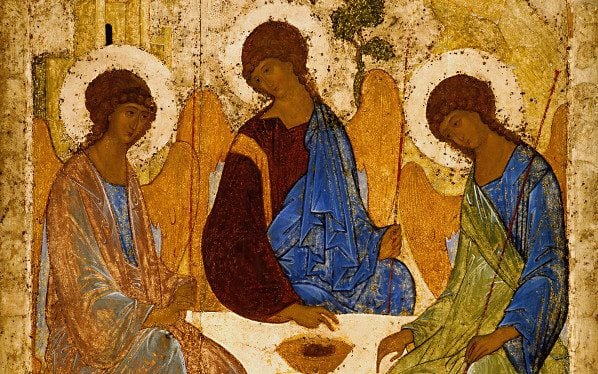
I am informed that some evangelical (and perhaps other) theologians are again labeling social trinitarianism a heresy. To put it bluntly and “up front,” this is nonsense. But, as you should be aware, there are conservative theologians who specialize in identifying heresies. They seem never to be satisfied; three is always another heresy lurking just around a corner. They get “points” from colleagues and “higher ups” (in their denominations and organizations) for identifying heresies where they have not been noticed before.
So what is “social trinitarianism?” Well, the answer to that is not so simple. It depends much on whom you ask. I have studied the concept for many years and no two explanations of it are identical.
While I was in seminary, I read widely and deeply in theology—far beyond what was required. One of the theologians I encountered was Leonard Hodgson (1889-1969) who taught theology at Oxford University. One of his books, recommended to me by my seminary faculty advisor Samuel Mikolaski (who earned his Oxford degree under Hodgson) was The Doctrine of the Trinity (1944). I liked it, a lot. Hodgson was developing and defending a version of the social Trinity and I was convinced that it was (and is) better than alternatives such as the so-called “psychological model” of the Trinity that goes back at least to Augustine in the fourth and fifth centuries. (I also read a book that promoted and defending that view of the Trinity by theologian Claude Welch entitled In This Name: The Doctrine of the Trinity in Contemporary Theology (1952).
In brief, social trinitarianism, or belief in the social model of the Trinity, is the idea that Father, Son and Holy Spirit are three distinct persons bound together eternally and equally by one divine nature or substance and by perfect love. Something like this was promoted and defended by the Cappadocian Fathers of the fourth century—Basil the Great, Gregory of Nyssa, and Gregory Nazianzus.
Why the emphasis on three distinct persons, the starting point of thinking about the Trinity for social trinitarians? Simply because the Bible, especially the New Testament, requires it. Think of all the gospel narratives in which Father, Son and Holy Spirit are clearly not one person—such as Jesus’s baptism. But I don’t have time or space to go into every supporting biblical passage. You can read these for yourself if you are interested enough to read a good book about the social Trinity.
*Sidebar: The opinions expressed here are my own (or those of the guest writer); I do not speak for any other person, group or organization; nor do I imply that the opinions expressed here reflect those of any other person, group or organization unless I say so specifically. Before commenting read the entire post and the “Note to commenters” at its end.*
I was already convinced of social trinitarianism when I heard about and then attended a high-level theological conference held at Marquette University in Milwaukee, Wisconsin in 1988. The title of the conference was “Trinity, Incarnation, and Atonement.” It was convened, as I recall, by two Calvin College and Seminary theologians, professors, named Ronald Feenstra and Cornelius Plantinga. I drove down to Milwaukee for the conference together with my Bethel College colleagues, philosopher-theologian Mel Steward. I don’t remember all the presenters or their papers, but the focus of the conference was to explore the concept of the social Trinity and kenotic Christology. (The two tend to go together.) The conference resulted in an edited volume entitled Trinity, Incarnation, and Atonement: Philosophical and Theological (University of Notre Dame Press, 1990.) I used to own the book, but like so many of my books, it “walked away.” I haven’t seen it in years. But I remember that it contained some, if not all, of the papers read at the conference.
For years I have recommended to my students a popular essay that I assume arose out of the conference: “The Perfect Family: Our Model for Life Together Is Found in the Father, Son, and Holy Spirit” by Cornelius Plantinga (Christianity Today, March 4, 1988). For non-theologians, Plantinga lays out the social Trinity very well. I highly recommend it if you can get a copy. With Christianity Today’s and Plantinga’s permission, I made copies of the article and handed it out to my students. It is the finest exposition of the doctrine of the Trinity from a social perspective I have read—for non-theologians.
Social trinitarianism is really the only alternative to an Augustinian view of the Trinity that begins with the oneness of Father, Son, and Holy Spirit, and struggles to explain how they can be three distinct persons such as is portrayed in the New Testament and the early Greek church fathers. The Augustinian view of the Trinity is sometimes called the “psychological analogy” because Augustine used psychological concepts (of his time) such as “memory,” “understanding,” and “will” to depict and describe the threeness of God. But that means the best analogy for the Trinity is one human person with three dimensions or aspects. It would be very difficult to reconcile that with New Testament narratives about Father, Son and Holy Spirit. For example, in the Gospel of John Jesus told his disciples that he would send them “another comforter” or “another advocate”—the Holy Spirit. He didn’t say he would return in some ethereal form.
The danger of the social Trinity concept is, of course, tritheism—belief in three Gods. Therefore, the Greek church fathers emphasized the “perichoresis” of the three persons (“hypostases”)—their interpenetration. And they came up with the principle “opera trinitaris ad extra indivisa sunt” (Latin translation which in English means “all acts or operations of the Trinity are indivisible.” But the danger of the psychological model of the Trinity is modalism and I don’t see anyway to escape it insofar as the Trinity is compared with a single, individual human person (e.g., modern theologian Hastings Rashdall’s analogy of the Trinity using President Teddy Roosevelt’s three roles as father, president and rough rider).
The inner “workings” of the Trinity are mysterious to us; we cannot really know them. But, of the two major theological (not Sunday School) analogies, I prefer the social analogy or model of the Trinity—as expressed, for example, by Cornelius Plantinga in his Christianity Today article.
*Note to commenters: This blog is not a discussion board; please respond with a question or comment only to me. If you do not share my evangelical Christian perspective (very broadly defined), feel free to ask a question for clarification, but know that this is not a space for debating incommensurate perspectives/worldviews. In any case, know that there is no guarantee that your question or comment will be posted by the moderator or answered by the writer. If you hope for your question or comment to appear here and be answered or responded to, make sure it is civil, respectful, and “on topic.” Do not comment if you have not read the entire post and do not misrepresent what it says. Keep any comment (including questions) to minimal length; do not post essays, sermons or testimonies here. Do not post links to internet sites here. This is a space for expressions of the blogger’s (or guest writers’) opinions and constructive dialogue among evangelical Christians (very broadly defined).
Previous Post

October 16, 2021
Answer to a Question: Philosophy and Theology
Browse Our Archives
Select a Category Against Liberal Theology Uncategorized
Select a Month November 2026 October 2026 September 2026 August 2026 July 2026 June 2026 May 2026 April 2026 March 2026 February 2026 January 2026 December 2025 November 2025 October 2025 September 2025 August 2025 July 2025 June 2025 May 2025 April 2025 March 2025 February 2025 January 2025 December 2024 November 2024 October 2024 September 2024 August 2024 July 2024 June 2024 May 2024 April 2024 March 2024 February 2024 January 2024 December 2023 November 2023 October 2023 September 2023 August 2023 July 2023 June 2023 May 2023 April 2023 March 2023 February 2023 January 2023 December 2022 November 2022 October 2022 September 2022 August 2022 July 2022 June 2022 May 2022 April 2022 March 2022 February 2022 January 2022 December 2021 November 2021 October 2021 September 2021 August 2021 July 2021 June 2021 May 2021 April 2021 March 2021 February 2021 January 2021 December 2020 November 2020 October 2020 September 2020 August 2020 July 2020 June 2020 May 2020 April 2020 March 2020 February 2020 January 2020 December 2019 November 2019 October 2019 September 2019 August 2019 July 2019 June 2019 May 2019 April 2019 March 2019 February 2019 January 2019 December 2018 November 2018 October 2018 September 2018 August 2018 July 2018 June 2018 May 2018 April 2018 March 2018 February 2018 January 2018 December 2017 November 2017 October 2017 September 2017 August 2017 July 2017 June 2017 May 2017 April 2017 March 2017 February 2017 January 2017 December 2016 November 2016 October 2016 September 2016 August 2016 July 2016 June 2016 May 2016 April 2016 March 2016 February 2016 January 2016 December 2015 November 2015 October 2015 September 2015 August 2015 July 2015 June 2015 May 2015 April 2015 March 2015 February 2015 January 2015 December 2014 November 2014 October 2014 September 2014 August 2014 July 2014 June 2014 May 2014 April 2014 March 2014 February 2014 January 2014 December 2013 November 2013 October 2013 September 2013 August 2013 July 2013 June 2013 May 2013 April 2013 March 2013 February 2013 January 2013 December 2012 November 2012 October 2012 September 2012 August 2012 July 2012 June 2012 May 2012 April 2012 March 2012 February 2012 January 2012 December 2011 November 2011 October 2011 September 2011 August 2011 July 2011 June 2011 May 2011 April 2011 March 2011 February 2011 January 2011 December 2010 November 2010 October 2010 September 2010 August 2010 July 2010
TAKE THE
Religious Wisdom Quiz
What food was eaten during the first Passover?
Select your answer to see how you score.
Roasted quail and dates Barley and honey Unleavened bread, bitter herbs, and lamb Fish and figs
Related posts from Roger E. Olson

Why I Struggle with "Inerrancy" Part 2
Why I Struggle with Biblical "Inerrancy"

Should Oneness Pentecostals Be Embraced as Evangelicals?

TRENDING AT PATHEOS Evangelical

Adventurous Lectionary -1st. Sunday of Advent - November...
The Adventurous Lectionary - The First Sunday of Advent – November 29,...

Will Islam become the world's biggest religion by 2035? Congo will replace...

The resilience of the Christian faith in the english speaking world of...

An Advent Calendar, and a Tree full of...
I've spent the weekend deeply invested in internet drama about a $150...

How to Have Financial Transparency in Marriage
Despite the fact that financial issues and money problems are the number...
The Healing Power of Forgiveness in Marriage
Learning how to give and accept apologies are essential ingredients of a...
view all Evangelical blogs
Ad-Free & Subscriber Log-In Subscription Support
- About Us
- 2026 Calendar
- Videos
- Podcasts
- Library of World Religions
- Faith In Media Tracker
- Advertise With Us
- Write for Us
- Privacy Policy
- Terms of Service
- Do Not Sell My Data
- Contact Us
- Radiant Digital
- Manage Newsletter Subscriptions
- Unsubscribe From Notifications
- Sitemap
Copyright 2008-2026, Patheos. All rights reserved.
Subscription Support Ad-Free & Subscriber Log-In
Follow Patheos