
BuddhistCatholicContemplativeEvangelicalGeneral ChristianHinduJewishLatter-day SaintMuslimNew VisionsProgressive Christian
Beliefs
- Buddhist
- Catholic
- Contemplative
- Evangelical
- General Christian
- Hindu
- Jewish
- Latter-day Saint
- More Voices
- Muslim
- New Visions
- Pagan
- Progressive Christian
Topics
- Religion News
- Food and Religion
- Sports and Religion
- Religious Art
- Religious Music and Entertainment
- Religious Events
- History and Religion
- Style and Religion
- Politics and Religion
- Women in Religion
- Recreation Outdoors and Religion
- Business Finance and Religion
- Careers Workplace and Religion
- Education and Religion
- Family Parenting and Religion
- Health Fitness and Religion
- Home and Religion
- Relationships and Religion
- Technology and Religion
- Travel and Religion
Columnists
- Buddhist Columnists
- Business Finance and Religion Columnists
- Careers Workplace and Religion Columnists
- Catholic Columnists
- Contemplative Columnists
- Education and Religion Columnists
- Evangelists Columnists
- Family Parenting and Religion Columnists
- General Christian Columnists
- Health Fitness and Religion Columnists
- Hindu Columnists
- History and Religion Columnists
- Home and Religion Columnists
- Jewish Columnists
- More Voices Columnists
- Latter Day Columnists
- Muslim Columnists
- New Visions Columnists
- Nonreligious Columnists
- Pagan Columnists
- Politics and Religion Columnists
- Progressive Columnists
- Recreation Outdoors and Religion Columnists
- Relationships and Religion Columnists
- Religion News Columnists
- Religious Art Columnists
- Religious Events Columnists
- Religious Music and Entertainment Columnists
- Sports and Religion Columnists
- Style and Religion Columnists
- Technology and Religion Columnists
- Travel and Religion Columnists
- Women in Religion Columnists
Resource Library
- 2026 Calendar
- Library of World Religions
- The 100 Most Holy Places on Earth
- Patheos Answers
- Podcasts
- Videos
- Faith Leaders Database
- Anglican Episcopalian
- Bahai
- Baptist
- Buddhism
- Christianity
- Confucianism
- Eastern Orthodoxy
- Hinduism
- Holiness and Pentecostal
- ISKCON
- Islam
- Judaism
- Lutheran
- Methodist
- The Church of Jesus Christ of Latter-day Saints
- New Age
- Paganism
- Presbytarian and Reformed
- Protestantism
- Religion Behind the Scenes
- Roman Catholic
- Scientology
- Shia Islam
- Sikhism
- Sufism
- Sunni Islam
- Taoism
- Zen
- See all religions
Research Tools
 Ad-Free & Subscriber Log-In Subscription Support
Ad-Free & Subscriber Log-In Subscription Support
Follow Patheos 

- Trending:
- Forgiveness
- |
- Marriage
- |
- Consciousness
- |
- Death Penalty
- |
- Election
- |
- Halloween

- Home
- Evangelical
- Were “Christianity’s” Evil “Bullies” True Christians?
Were “Christianity’s” Evil “Bullies” True Christians?
Last updated on: June 11, 2021 at 8:27 am by Roger E. Olson
Were “Christianity’s” Evil “Bullies” True Christians? 2021-06-11T08:27:42-05:00 Roger E. Olson
Patheos Explore the world's faith through different perspectives on religion and spirituality! Patheos has the views of the prevalent religions and spiritualities of the world.
Were “Christianity’s” Evil “Bullies” True Christians?
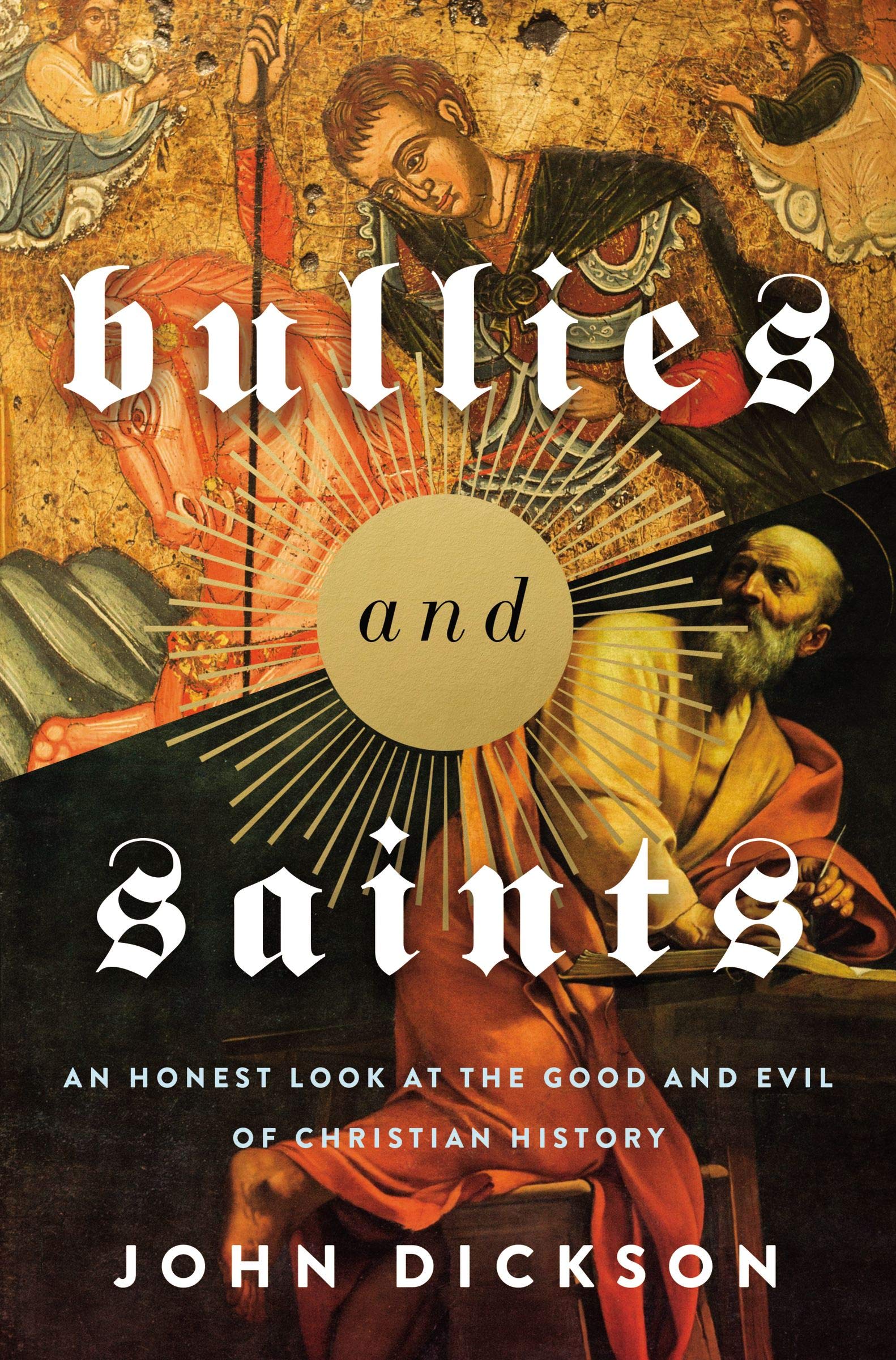
I recently received in the mail, unexpected, a complimentary copy of a new book published by Zondervan, one of my publishers: Bullies and Saints: An Honest Look at the Good and Evil of Christian History by John Dickson (Visiting Academic in the Faculty of Classics at Oxford University and Distinguished Fellow and Senior Lecturer in Public Christianity at Ridley College, Melbourne, Australia). First, let me say “thank you” to Zondervan for sending this beautiful, boxed book to me. I have thoroughly enjoyed reading it even though I have some qualms about its main argument.
Second, I have to mention that author Dickson is an Anglican which, to me, anyway, makes a big difference in terms of my interpretation of the book and its main argument. Others may not recognize this as a root of my disagreement with Dickson and his argument. But, to me, anyway, it’s very important. I’ll explain more here.
Third, this is a beautiful book, extremely well-written, and worthy of wide readership. It’s an exercise in Christian history and you will learn much by reading it. I highly recommend it. Please don’t allow anything I say here deter you from buying and reading it.
In a nutshell, the argument of the book is that Christianity has, throughout much of its history, perpetrator terrible horrors on people. Or, perhaps better stated, Christians have done that. The author wants to take an honest look at Christian history and not whitewash it. He wants to admit, in great detail, the terrible things that many Christians have done and not sweep them under the rug, so to speak, as he thinks many Christian historians and apologists have done. The book also includes the stories of Christian saints, people who have done great and wonderful things in the name of Christianity (or in the name of Jesus Christ).
You really ought to read this book and make up your own mind about its central argument and whether you agree with Dickson or me. Our divergence is deep and profound. Here follows my “take” on this well-intentioned but misguided exposé of Christian terrors.
*Sidebar: The opinions expressed here are my own (or those of the guest writer); I do not speak for any other person, group or organization; nor do I imply that the opinions expressed here reflect those of any other person, group or organization unless I say so specifically. Before commenting read the entire post and the “Note to commenters” at its end.*
Perhaps unlike Dickson, although I cannot say for him, I was raised in a branch of Christianity that emphasized often and vehemently that the vast majority of people who have called themselves “Christians” throughout the ages, including now, are not true Christians. We called them “nominal Christians.” I well remember a discussion of the medieval crusades in a high school class. My teacher and some of the students used those horrible “holy wars” launched by emperors and popes who called themselves Christians as evidence that Christianity itself is deeply flawed. I spoke up—from the only perspective I knew personally—and stated unequivocally that those people who perpetrated the massacres of the crusades were not real Christians. A favorite saying among us was “Just because you’re in a garage does not make you a car.” Trite, yes, but memorable also.
Although I did not grow up in an Anabaptist church, our church’s and denomination’s ethos was somewhat like that of Anabaptists. (I have often referred to my home church, the church of my childhood and youth, as “urban Amish.”) When we, my family and I, drove by churches not at all like ours, I sometimes asked my pastor father to say something about them. Frequently he said “It’s not a true Christian church even if the sign says it is.” We were taught and believed that most people who called themselves “Christians” were false Christians at best.
Dickson sweeps this explanation off the table near the beginning of his book and argues that it cannot be used to defend Christian atrocities throughout history. These atrocities, such as the crusades and the Inquisition, were committed by Christians. Period. This is where I disagreed with his basic premise. To this day, as a proud sectarian Christian, non-catholic, together with most Anabaptists, Pentecostals, Holiness Christians and others, I deny that anyone who committed atrocities “in the name of Jesus Christ” was a true Christian whatever they claimed.
Does Dickson’s Anglican identity and my (roughly) Anabaptist-sectarian identity have something to do with this fundamental disagreement? I think so.
I take no responsibility for the crusades or the Inquisition or for any other of the atrocities committed by self-identified “Christians” in the name of Jesus Christ throughout history.
Who can seriously doubt that there have been false Christians throughout Christian history? The New Testament itself says so! The earliest church fathers said so! The reformers said so! I am not the only one saying so. And I still believe this is our best defense against those who, like my high school teacher and fellow students, would blame Christianity and Christians for numerous atrocities throughout history. “Those so-called Christians ‘bullies’ were not real Christians anymore than Adolf Hitler was a real Catholic even though he was baptized into the Catholic Church and paid his church tax to the Catholic Church throughout his miserable lifetime.”
With all due respect to scholar Dickson and his book, I think our difference of opinion about this matter has something to do with his being Anglican and my being Anabaptist (leaning).
True Christians have always been a “remnant” even among the masses who called themselves “Christians.” I admit it, still to this day, in my late sixties, after teaching theology for forty years, as I drive around cities and towns, I automatically relegate many of the churches I see and know about to the category of “nominal Christianity”—meaning “in name only.” This is my deeply ingrained “sectarian,” “true Christian” (if you will) attitude toward the majority of churches and their ministers and members.
I often think to myself that nobody should really call themself (to invent a word) a “Christian.” I remember a song from my youth: “Lord, I want to be a Christian in my heart….” Being a true Christian is an aspiration, not a settled identity. A Christian is a person who actually lives a Christ-like life. Who can claim that? Even John Wesley sometimes said that he was not a Christian. What did he mean? Obviously that he was striving, with the help of the Holy Spirit, to live up to the high calling and high standard of Christlikeness.
Yet, there always have been people who not only fell short of that, but who lived lives so contrary to the way of Jesus Christ that they cannot fairly be considered true Christians at all. They deserve to be called “false Christians,” “Christian pretenders.” British Baptist preacher Charles Spurgeon called them “mere professors”—people who merely “professed” true faith in Jesus Christ.
By-and-large, the Anglican churches, worldwide, have sought to include as many people as possible within the “fold” of Christians and have not worked to exclude from their churches false Christians. Their ideal has traditionally been a kind of union between culture, even population, if possible, and church membership. This is anathema to “my Christian tribe and ethos.” We are believer churches rather than mixed assemblies. Surely that ecclesiological difference must have something to do with my disagreement with Dickson. Read his book and see what you think. I highly recommend it.
*Note to commenters: This blog is not a discussion board; please respond with a question or comment only to me. If you do not share my evangelical Christian perspective (very broadly defined), feel free to ask a question for clarification, but know that this is not a space for debating incommensurate perspectives/worldviews. In any case, know that there is no guarantee that your question or comment will be posted by the moderator or answered by the writer. If you hope for your question or comment to appear here and be answered or responded to, make sure it is civil, respectful, and “on topic.” Do not comment if you have not read the entire post and do not misrepresent what it says. Keep any comment (including questions) to minimal length; do not post essays, sermons or testimonies here. Do not post links to internet sites here. This is a space for expressions of the blogger’s (or guest writers’) opinions and constructive dialogue among evangelical Christians (very broadly defined).
Previous Post

June 8, 2021
Can God Change the Past?
Next Post
June 15, 2021 What Is Christian Mission without Any Call to Conversion?
Browse Our Archives
Select a Category Against Liberal Theology Uncategorized
Select a Month October 2026 September 2026 August 2026 July 2026 June 2026 May 2026 April 2026 March 2026 February 2026 January 2026 December 2025 November 2025 October 2025 September 2025 August 2025 July 2025 June 2025 May 2025 April 2025 March 2025 February 2025 January 2025 December 2024 November 2024 October 2024 September 2024 August 2024 July 2024 June 2024 May 2024 April 2024 March 2024 February 2024 January 2024 December 2023 November 2023 October 2023 September 2023 August 2023 July 2023 June 2023 May 2023 April 2023 March 2023 February 2023 January 2023 December 2022 November 2022 October 2022 September 2022 August 2022 July 2022 June 2022 May 2022 April 2022 March 2022 February 2022 January 2022 December 2021 November 2021 October 2021 September 2021 August 2021 July 2021 June 2021 May 2021 April 2021 March 2021 February 2021 January 2021 December 2020 November 2020 October 2020 September 2020 August 2020 July 2020 June 2020 May 2020 April 2020 March 2020 February 2020 January 2020 December 2019 November 2019 October 2019 September 2019 August 2019 July 2019 June 2019 May 2019 April 2019 March 2019 February 2019 January 2019 December 2018 November 2018 October 2018 September 2018 August 2018 July 2018 June 2018 May 2018 April 2018 March 2018 February 2018 January 2018 December 2017 November 2017 October 2017 September 2017 August 2017 July 2017 June 2017 May 2017 April 2017 March 2017 February 2017 January 2017 December 2016 November 2016 October 2016 September 2016 August 2016 July 2016 June 2016 May 2016 April 2016 March 2016 February 2016 January 2016 December 2015 November 2015 October 2015 September 2015 August 2015 July 2015 June 2015 May 2015 April 2015 March 2015 February 2015 January 2015 December 2014 November 2014 October 2014 September 2014 August 2014 July 2014 June 2014 May 2014 April 2014 March 2014 February 2014 January 2014 December 2013 November 2013 October 2013 September 2013 August 2013 July 2013 June 2013 May 2013 April 2013 March 2013 February 2013 January 2013 December 2012 November 2012 October 2012 September 2012 August 2012 July 2012 June 2012 May 2012 April 2012 March 2012 February 2012 January 2012 December 2011 November 2011 October 2011 September 2011 August 2011 July 2011 June 2011 May 2011 April 2011 March 2011 February 2011 January 2011 December 2010 November 2010 October 2010 September 2010 August 2010 July 2010
TAKE THE
Religious Wisdom Quiz
In Revelation, what is the correct sequence of events in the End Times?
Select your answer to see how you score.
Dragon cast to earth, beast rises from sea, false prophet rises from earth, mark of the beast given False prophet rises, dragon cast to earth, beast rises from sea, mark of the beast given Mark of the beast given, dragon cast to earth, beast rises, false prophet rises Beast rises from sea, dragon cast to earth, mark of the beast given, false prophet rises
Related posts from Roger E. Olson

The Abolition of Man: Chapter 3: The Abolition...

She Survived Her Execution. Should the State Try...
The Abolition of Man Part 2: Chapter 2:...

Ambiguity without Ambivalence in Faith
TRENDING AT PATHEOS Evangelical

I was strolling through the top floor of the brand new Parthenon...

What Does Gêvâh Mean For Kimberley Guifoyle &...
This week, a lot of the news is focused on Kimberly Guilfoyle....

INNER CIRCLE: Profound Mystery (Of Christ In All...
Ephesians 5:31-32 “For this reason, a man will leave his father and...

Do Not Rejoice When Your Enemy Falls: The...
Turning an execution into a public spectacle is a disturbing expression of...

'The Chosen' S6 Trailer: The Passion Gets Very...
Not many watching 'The Chosen' worry about spoilers, but just because they...

The purpose-driven labor priest
A labor activist reads Rick Warren and it gets me wondering about...
view all Evangelical blogs
Ad-Free & Subscriber Log-In Subscription Support
- About Us
- 2026 Calendar
- Videos
- Podcasts
- Library of World Religions
- Faith In Media Tracker
- Advertise With Us
- Write for Us
- Privacy Policy
- Terms of Service
- Do Not Sell My Data
- Contact Us
- Radiant Digital
- Manage Newsletter Subscriptions
- Unsubscribe From Notifications
- Sitemap
Copyright 2008-2026, Patheos. All rights reserved.
Subscription Support Ad-Free & Subscriber Log-In
Follow Patheos