
BuddhistCatholicContemplativeEvangelicalGeneral ChristianHinduJewishLatter-day SaintMuslimNew VisionsProgressive Christian
Beliefs
- Buddhist
- Catholic
- Contemplative
- Evangelical
- General Christian
- Hindu
- Jewish
- Latter-day Saint
- More Voices
- Muslim
- New Visions
- Pagan
- Progressive Christian
Topics
- Religion News
- Food and Religion
- Sports and Religion
- Religious Art
- Religious Music and Entertainment
- Religious Events
- History and Religion
- Style and Religion
- Politics and Religion
- Women in Religion
- Recreation Outdoors and Religion
- Business Finance and Religion
- Careers Workplace and Religion
- Education and Religion
- Family Parenting and Religion
- Health Fitness and Religion
- Home and Religion
- Relationships and Religion
- Technology and Religion
- Travel and Religion
Columnists
- Buddhist Columnists
- Business Finance and Religion Columnists
- Careers Workplace and Religion Columnists
- Catholic Columnists
- Contemplative Columnists
- Education and Religion Columnists
- Evangelists Columnists
- Family Parenting and Religion Columnists
- General Christian Columnists
- Health Fitness and Religion Columnists
- Hindu Columnists
- History and Religion Columnists
- Home and Religion Columnists
- Jewish Columnists
- More Voices Columnists
- Latter Day Columnists
- Muslim Columnists
- New Visions Columnists
- Nonreligious Columnists
- Pagan Columnists
- Politics and Religion Columnists
- Progressive Columnists
- Recreation Outdoors and Religion Columnists
- Relationships and Religion Columnists
- Religion News Columnists
- Religious Art Columnists
- Religious Events Columnists
- Religious Music and Entertainment Columnists
- Sports and Religion Columnists
- Style and Religion Columnists
- Technology and Religion Columnists
- Travel and Religion Columnists
- Women in Religion Columnists
Resource Library
- 2026 Calendar
- Library of World Religions
- The 100 Most Holy Places on Earth
- Patheos Answers
- Podcasts
- Videos
- Faith Leaders Database
- Anglican Episcopalian
- Bahai
- Baptist
- Buddhism
- Christianity
- Confucianism
- Eastern Orthodoxy
- Hinduism
- Holiness and Pentecostal
- ISKCON
- Islam
- Judaism
- Lutheran
- Methodist
- The Church of Jesus Christ of Latter-day Saints
- New Age
- Paganism
- Presbytarian and Reformed
- Protestantism
- Religion Behind the Scenes
- Roman Catholic
- Scientology
- Shia Islam
- Sikhism
- Sufism
- Sunni Islam
- Taoism
- Zen
- See all religions
Research Tools
 Ad-Free & Subscriber Log-In Subscription Support
Follow Patheos 

- Trending:
- Advent
- |
- Forgiveness
- |
- Thanksgiving
- |
- Election
- |
- Seasonal Holidays
- |
- Marriage

- Home
- Evangelical
- Is “Liberal Christianity” Authentic Christianity?
Is “Liberal Christianity” Authentic Christianity?
Last updated on: January 16, 2021 at 11:25 am by Roger E. Olson
Is “Liberal Christianity” Authentic Christianity? 2021-01-16T11:25:50-05:00 Roger E. Olson
Patheos Explore the world's faith through different perspectives on religion and spirituality! Patheos has the views of the prevalent religions and spiritualities of the world.
Is “Liberal Christianity” Authentic Christianity?
A few weeks ago I invited you to join me in reading A Theology for the Twenty-first Century by theologian Douglas Ottati (Eerdmans, 2020). I don’t know how many, if any, took up my invitation, but I plunged on perhaps alone and finished the 749 page volume today. Why? Because it’s there. For me, reading a massive theological tome of this quality and substance is like others climbing Mount Everest. It’s there and calls and challenges. It took me longer to read it than I had anticipated because, for a few weeks, I was without the book. But that’s another story. By God’s grace and my own sheer “stick-to-itiveness” I finished it. And I wrote at least a hundred notes on key points of the book.
Before I go on to review and critique the book, I want to say how much I enjoyed reading it. Ottati is a greatly gifted thinker and writer and this volume is a rarity among systematic theologies—readable, engaging, even engrossing (for those interested in theology) and at times inspiring. I consider it a magisterial work and at the same time one that is almost breath taking in its literary quality. If you are at all interested in contemporary Christian theology you really ought to own and read this magnum opus of a leading contemporary Protestant theologian.
There. With that sincerely out of the way, I have to be honest in my critical assessment of A Theology for the Twenty-first Century. It is not authentically Christian. With this account of “Christian piety” and the beliefs and dispositions and works that flow from it, Ottati, like other liberal Protestant thinkers, has cut the cord of continuity so completely that I cannot recognize it as an account of true, authentic Christianity.
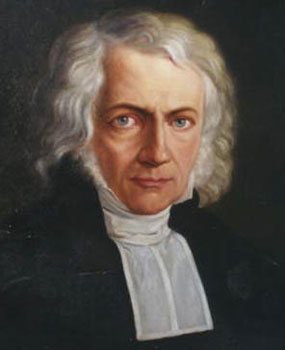
Lest anyone question my labeling it “liberal,” let me say most emphatically that Ottati himself labels it such. On page 363 (among other places) he labels it “liberal Protestant theology.” As a scholar who specializes in modern Christian thought, I began early to hear loud echoes of Friedrich Schleiermacher, the “father” of modern and liberal Christian theology. Indeed, throughout the book Ottati admits his dependence on Schleiermacher or at least his agreement with the Prussian theologian and also frequently refers positively to other liberal Protestant theologians (and some Catholic ones) including especially and most notably Ernst Troeltsch and Paul Tillich.
Toward the end of the book Ottati asks a question raised by Troeltsch about Christianity itself. (Ottati is raising the question about “Reformed” Christianity—a tradition with which he aligns himself.) Troeltsch asked about Christianity crossing a line into something else and actually predicted that someday in the future Christianity would “morph” (Ottati’s term) into something other than Christianity. In his own time (early 20th century) many Christians believed Troeltsch had done just that—“morphed” Christianity into something non-Christian. Ottati defends his account of Reformed Christianity as continuous with even if also discontinuous with Reformed Christianity. Even though he wrestles with the church fathers (especially Augustine) and reformers (especially Calvin) and agrees with much that they wrote, Ottati feels perfectly free to re-imagine and revise that tradition and, I would say, Christianity itself.
*Sidebar: The opinions expressed here are my own (or those of the guest writer); I do not speak for any other person, group or organization; nor do I imply that the opinions expressed here reflect those of any other person, group or organization unless I say so specifically. Before commenting read the entire post and the “Note to commenters” at its end.*
What is “revelation” for Ottati? What is the source upon which Christianity reflects in its piety and thought? For him, as he often says, it is mythopoeic images and symbols in Hebrew, Christian scriptures and Christian tradition and piety. Essentially, Christian theology is “mythopoeic discourse” about “theocentric piety.” A typical sentence making a claim about God (and subjects related to God) is “The mythopoeic resources of the Bible and Christian tradition encourage people of piety to acknowledge….” (323) Also, for him, Christology is based on “rich mythopoeic material.” That material on which Christology (and all of theology) is based is filled with symbols and images that call forth certain distinctive patterns of piety (devotion and experience) and thought and active living.
In other words, this theology is an example of what theologian George Lindbeck labeled “experiential-expressivist” theology in The Nature of Doctrine (Westminster John Knox, 1984). What Ottati does is attempt to interpret biblical-Christian symbols and images with an eye primarily on what they mean for Christian piety, devotion, worship and ethics. He is almost consistently anti-metaphysical and highly reticent about speculation (e.g., about God-in-himself). It seems to me that Ottati does not think theology’s purpose is to explain anything but to express, encourage and shape Christian experiences, ideas, and practices.
Clearly Ottati does not consider the Bible supernaturally inspired in any sense. For him, so it seems, the Bible is inspired insofar as it is inspiring. He draws heavily on higher criticism of the Bible to the point of finding much diversity within the Bible itself on major topics. However, in spite of scripture’s flaws and lack of authority, Ottati says that “Scripture is the primary source for Christian doctrine. I mean that it is the basic source of images, portraits, and ideas about God, the world, and ourselves that shape and express the Christian community’s living piety.” (128) For him, it “will be understood with the aid of historical, critical, and literary studies.” (129-130)
Throughout A Theology for the Twenty-first Century the author handles scripture very freely, subjecting it to criticism and so it seems to me he elevates a thoroughly modern, Western vision of reality, a non-supernatural one, “non-reductive naturalism,” to the status of litmus test for what can be believed. That is what makes this account of Christianity liberal and not authentically Christian. Throughout it, everything supernatural is stripped away from Christian piety and thought. Here, as in Schleiermacher’s and Tillich’s theologies, Christianity is interpreted as absolutely consistent with modern naturalism. Nowhere does Ottati wrestle with the living and thriving Christian piety of non-Western, Global South and Asian, renewalist and charismatic Christianity—the Christianity that is alive and growing and thriving in the world.
Now to some specifics that I believe support my claim that this is not an account of true, authentic Christianity. In several treatments of classical Christian doctrines, Ottati has, to my way of thinking as a historical theologian, cut the cord of continuity with classical Christianity just as thoroughly as, say, the Church of Jesus Christ of Latter Day Saints or a number of other sects/religions that claim to be Christian.
Whenever I am attempting to decide, for myself and for whoever wants to know what I think, whether a person or church or sect or theology is authentically Christian I turn first and foremost to Christology. For Ottati, both the incarnation and resurrection are rich symbolic metaphors that enliven Christian piety and ethical commitment and action. Put most succinctly, for Ottati, as for Schleiermacher, Jesus was a “God-shaped man.” (389) “Incarnation” is, for him, a symbolic representation of Jesus’s human life as “reconciling event.” (390, 393) Jesus was ontologically just a man but one who uniquely (?) presented the Kingdom of God to us not only in teaching but also in living. And Jesus communicates that Kingdom of God lifestyle of reconciliation among people to us through the church (shades of Schleiermacher). There is no hint of preexistence or ontological deity or equality with God the Father in this account of Christology. It smacks of adoptionism or at least a thoroughly functional Christology in continuity with classical liberal theology’s thoroughly revised vision of the person of Christ. Like his liberal Protestant heroes, Ottati regards the conciliar statements about Christ (e.g., the Nicene Creed and the Chalcedonian Definition) as “excessively speculative” and declines to follow or adhere to them. Basically, Jesus was a man, different from others in degree, not in kind, who enacted the Kingdom of God as a radical, new, alternative way of life. (456)
On to Jesus’s resurrection. In my humble opinion, if there is one miracle a person must believe in to be authentically Christian (I am not talking about relationship with God/salvation), it is the bodily resurrection and empty tomb of Jesus Christ. That Jesus was bodily risen to a new form of life fit for heaven was an essential part of the gospel of the apostles and it remains and has always been a cornerstone, if not the cornerstone, of the Christian message. For Ottati, the real meaning of the resurrection is that after Jesus’s tragic martyrdom, the disciples “encountered the deep strangeness and assurance of grace in Jesus’s abiding presence among them….” (475) He strongly implies that both the empty tomb and the bodily appearances of Jesus after his crucifixion are legends or symbols, not actual, historical events in time and space.
Because Ottati writes with a certain style that leaves some significant ambiguity about what he means, someone who has read the book may say, with some justification, that he leaves the door open to an empty tomb and bodily resurrection. If so, it is only slightly ajar. And I, personally, do not think it is open at all. On page 495 Ottati writes about the true meaning of Easter and rejects “intellectual speculations…about…Jesus’s resurrection body.” These, together with “supernatural” motifs (about the resurrection event) “risk leading piety astray toward a somber and anxious emphasis on right belief.” (495) The upshot is that Ottati is not interested in whether Jesus actually rose bodily from the dead leaving the tomb empty. What he seems most interested in is that, in the words of New Testament scholar Willi Marxsen, “the cause of Jesus continues.” (497) In other words, Jesus “still comes today as a patterned and articulated presence or identity in the instruction, preaching, sacraments, and mission of the church.” (497)
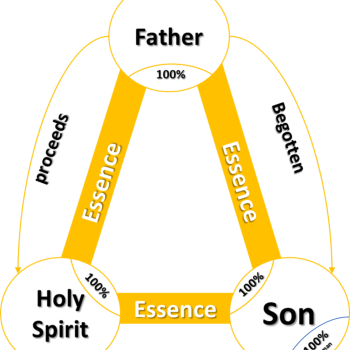
I could go on describing in detail how Ottati handles other classical doctrines of the Christian faith in ways that, in my considered opinion, cut the cord of continuity such that his theology is no longer part of the Christian tradition but another gospel and another religion. Like Schleiermacher in The Christian Faith, Ottati relegates the Trinity to a sort of appendix or “Epilogue” in which he denies the classical trinitarian faith of all the churches and treats Father, Son, and Holy Spirit as “three aspects of piety’s experience.” (748) He is at best agnostic about three distinctions within the Godhead. With regard to God, Ottati is strikingly ambiguous about God’s personness. At one point he refers to God as “the ultimate mystery” and “the gracious divine dynamic.” With regard to life after death, Ottati expresses doubt or at least ambivalence about personal existence after death but strongly affirms that every person’s life is held in God’s memory. (724-734)
Ottati admits right off the bat, without shame or excuse, that his is a revisionist approach to Christian theology and throughout the book he expresses higher respect for Christian tradition than he seems actually to have. For him, for example, the death of Jesus was not atoning in any traditional sense but only in the sense that it revealed the horrors of human history and life, leaving us with “the right nightmare” (484) about all of that. There was nothing objectively salvific about Christ’s death on the cross other than the power of Christ’s suffering to reveal the power of unjust suffering all around us and to energize us to fight against it.
My conclusion is that in A Theology for the Twenty-first Century Ottati has cut the cord of continuity with Christian tradition so thoroughly that it is not an account of authentic Christian faith. Here we have an extremely articulate and perhaps, to some people, extremely attractive account of a different faith than classical, historical Christianity.
But the real problem is that, having read and studied liberal theology deeply and thoroughly and having studied theology with liberal theologians, I can say with conviction that Ottati’s theology is thoroughly consistent with classical liberal “Christian” theology from Schleiermacher to Tillich to Spong and Borg. This theology, or these versions of a liberal “Christian” tradition, has/have permeated mainline, Western, Protestant Christianity which is why it is dying.
*Note to commenters: This blog is not a discussion board; please respond with a question or comment only to me. If you do not share my evangelical Christian perspective (very broadly defined), feel free to ask a question for clarification, but know that this is not a space for debating incommensurate perspectives/worldviews. In any case, know that there is no guarantee that your question or comment will be posted by the moderator or answered by the writer. If you hope for your question or comment to appear here and be answered or responded to, make sure it is civil, respectful, and “on topic.” Do not comment if you have not read the entire post and do not misrepresent what it says. Keep any comment (including questions) to minimal length; do not post essays, sermons or testimonies here. Do not post links to internet sites here. This is a space for expressions of the blogger’s (or guest writers’) opinions and constructive dialogue among evangelical Christians (very broadly defined).
Previous Post

January 13, 2021
A Church Father Senator Hawley and His Mentors Should Read
Next Post
January 20, 2021 What Is "The Church?"
Browse Our Archives
Select a Category Against Liberal Theology Uncategorized
Select a Month November 2026 October 2026 September 2026 August 2026 July 2026 June 2026 May 2026 April 2026 March 2026 February 2026 January 2026 December 2025 November 2025 October 2025 September 2025 August 2025 July 2025 June 2025 May 2025 April 2025 March 2025 February 2025 January 2025 December 2024 November 2024 October 2024 September 2024 August 2024 July 2024 June 2024 May 2024 April 2024 March 2024 February 2024 January 2024 December 2023 November 2023 October 2023 September 2023 August 2023 July 2023 June 2023 May 2023 April 2023 March 2023 February 2023 January 2023 December 2022 November 2022 October 2022 September 2022 August 2022 July 2022 June 2022 May 2022 April 2022 March 2022 February 2022 January 2022 December 2021 November 2021 October 2021 September 2021 August 2021 July 2021 June 2021 May 2021 April 2021 March 2021 February 2021 January 2021 December 2020 November 2020 October 2020 September 2020 August 2020 July 2020 June 2020 May 2020 April 2020 March 2020 February 2020 January 2020 December 2019 November 2019 October 2019 September 2019 August 2019 July 2019 June 2019 May 2019 April 2019 March 2019 February 2019 January 2019 December 2018 November 2018 October 2018 September 2018 August 2018 July 2018 June 2018 May 2018 April 2018 March 2018 February 2018 January 2018 December 2017 November 2017 October 2017 September 2017 August 2017 July 2017 June 2017 May 2017 April 2017 March 2017 February 2017 January 2017 December 2016 November 2016 October 2016 September 2016 August 2016 July 2016 June 2016 May 2016 April 2016 March 2016 February 2016 January 2016 December 2015 November 2015 October 2015 September 2015 August 2015 July 2015 June 2015 May 2015 April 2015 March 2015 February 2015 January 2015 December 2014 November 2014 October 2014 September 2014 August 2014 July 2014 June 2014 May 2014 April 2014 March 2014 February 2014 January 2014 December 2013 November 2013 October 2013 September 2013 August 2013 July 2013 June 2013 May 2013 April 2013 March 2013 February 2013 January 2013 December 2012 November 2012 October 2012 September 2012 August 2012 July 2012 June 2012 May 2012 April 2012 March 2012 February 2012 January 2012 December 2011 November 2011 October 2011 September 2011 August 2011 July 2011 June 2011 May 2011 April 2011 March 2011 February 2011 January 2011 December 2010 November 2010 October 2010 September 2010 August 2010 July 2010
TAKE THE
Religious Wisdom Quiz
What was Jesus’ first recorded miracle in Mark?
Select your answer to see how you score.
Healing a leper Raising a widow’s son Casting out an unclean spirit Turning water into wine
Related posts from Roger E. Olson

Why I Struggle with "Inerrancy" Part 2
Why I Struggle with Biblical "Inerrancy"
Should Oneness Pentecostals Be Embraced as Evangelicals?

TRENDING AT PATHEOS Evangelical

Are You a Scrooge or an Ebenezer?
A Call to Remember As the Christmas season rings in, will we...

Noah’s Ark Archaeologists: Gopher Wood or Should We...
Ancient wood, a boat-shaped formation and dates that invite a second look:...

Smart people saying smart things (11.24.26)
Please take time to listen to Perry Bacon, Sarah Posner, Adam Serwer,...

The Contingency of Our Technology
Last week we were hit with a raft of massive technology outages....

In 1939, President Franklin D. Roosevelt moved Thanksgiving from November 30 to...

Reasons for Restraint: Ricardo Gonzalez, Florida and Dec...
The Morning of January 3 I begin with the dead. On the...
view all Evangelical blogs
Ad-Free & Subscriber Log-In Subscription Support
- About Us
- 2026 Calendar
- Videos
- Podcasts
- Library of World Religions
- Faith In Media Tracker
- Advertise With Us
- Write for Us
- Privacy Policy
- Terms of Service
- Do Not Sell My Data
- Contact Us
- Radiant Digital
- Manage Newsletter Subscriptions
- Unsubscribe From Notifications
- Sitemap
Copyright 2008-2026, Patheos, part of the Radiant Digital network of media brands. All rights reserved.
Subscription Support Ad-Free & Subscriber Log-In
Follow Patheos