
BuddhistCatholicContemplativeEvangelicalGeneral ChristianHinduJewishLatter-day SaintMuslimNew VisionsProgressive Christian
Beliefs
- Buddhist
- Catholic
- Contemplative
- Evangelical
- General Christian
- Hindu
- Jewish
- Latter-day Saint
- More Voices
- Muslim
- New Visions
- Pagan
- Progressive Christian
Topics
- Religion News
- Food and Religion
- Sports and Religion
- Religious Art
- Religious Music and Entertainment
- Religious Events
- History and Religion
- Style and Religion
- Politics and Religion
- Women in Religion
- Recreation Outdoors and Religion
- Business Finance and Religion
- Careers Workplace and Religion
- Education and Religion
- Family Parenting and Religion
- Health Fitness and Religion
- Home and Religion
- Relationships and Religion
- Technology and Religion
- Travel and Religion
Columnists
- Buddhist Columnists
- Business Finance and Religion Columnists
- Careers Workplace and Religion Columnists
- Catholic Columnists
- Contemplative Columnists
- Education and Religion Columnists
- Evangelists Columnists
- Family Parenting and Religion Columnists
- General Christian Columnists
- Health Fitness and Religion Columnists
- Hindu Columnists
- History and Religion Columnists
- Home and Religion Columnists
- Jewish Columnists
- More Voices Columnists
- Latter Day Columnists
- Muslim Columnists
- New Visions Columnists
- Nonreligious Columnists
- Pagan Columnists
- Politics and Religion Columnists
- Progressive Columnists
- Recreation Outdoors and Religion Columnists
- Relationships and Religion Columnists
- Religion News Columnists
- Religious Art Columnists
- Religious Events Columnists
- Religious Music and Entertainment Columnists
- Sports and Religion Columnists
- Style and Religion Columnists
- Technology and Religion Columnists
- Travel and Religion Columnists
- Women in Religion Columnists
Resource Library
- 2026 Calendar
- Library of World Religions
- The 100 Most Holy Places on Earth
- Patheos Answers
- Podcasts
- Videos
- Faith Leaders Database
- Anglican Episcopalian
- Bahai
- Baptist
- Buddhism
- Christianity
- Confucianism
- Eastern Orthodoxy
- Hinduism
- Holiness and Pentecostal
- ISKCON
- Islam
- Judaism
- Lutheran
- Methodist
- The Church of Jesus Christ of Latter-day Saints
- New Age
- Paganism
- Presbytarian and Reformed
- Protestantism
- Religion Behind the Scenes
- Roman Catholic
- Scientology
- Shia Islam
- Sikhism
- Sufism
- Sunni Islam
- Taoism
- Zen
- See all religions
Research Tools
 Ad-Free & Subscriber Log-In Subscription Support
Ad-Free & Subscriber Log-In Subscription Support
Follow Patheos 

- Trending:
- Forgiveness
- |
- Marriage
- |
- Consciousness
- |
- Death Penalty
- |
- Election
- |
- Halloween

- Home
- Evangelical
- A Theology for the Twenty-first Century
A Theology for the Twenty-first Century
Last updated on: December 3, 2020 at 12:21 pm by Roger E. Olson
A Theology for the Twenty-first Century 2020-12-03T12:21:00-05:00 Roger E. Olson
Patheos Explore the world's faith through different perspectives on religion and spirituality! Patheos has the views of the prevalent religions and spiritualities of the world.
A Theology for the Twenty-first Century
” />
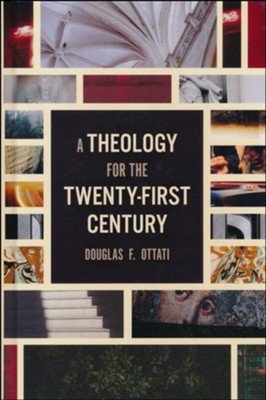
What am I reading now? A Theology for the Twenty-first Century by theologian Douglas F. Ottati (Eerdmans, 2020). It’s a new 770 page systematic theology described by the author (a Presbyterian theologian) as “Augustinian, Protestant, Liberal, and Humanist.” The volume consists of 70 propositions expounded and defended—using the Wesleyan Quadrilateral as method. (Yes, both the author and I “get” the irony of a Presbyterian using the “Wesleyan Quadrilateral,” but we both also know that it is not unique to Wesleyanism. Probably all contemporary theologians use these four sources and norms—scripture, tradition, reason, and experience.) If I may say so, even though I am only on about page 288, Ottati relies more heavily on “experience” than scripture or tradition. The “finger prints” of Friedrich Schleiermacher and later liberal Protestant theologians such as Ritschl, Herrmann, Troeltsch and Kaufman are all over this system.
One of the strengths I have found so far is Ottati’s defense of systematic theology. He rightly points out that all human thought, at its best, strives toward coherence. On the other the hand, he is not a slave to absolute consistency insofar as that would rule out mystery. He does strive to exclude sheer contradictions and that is all to the good.
One thing that is troubling me so far is Ottati’s seeming avoidance of the issue of truth. I’m sure he would not agree, but it seems to me that his main concern is pragmatic. For him, so it appears, theology’s main task is not to explain but to guide. Guide toward what? Good pastoral practices, good Christian attitudes and dispositions, and good Christian conduct. He relies heavily on what I call “symbolic realism”—that what God has given us in revelation are symbols, images, that transform. One such is, of course, the cross. But even “God” is a symbol. What I am missing (so far) is any firm affirmation of historical reality in which the symbols are solidly rooted.
*Sidebar: The opinions expressed here are my own (or those of the guest writer); I do not speak for any other person, group or organization; nor do I imply that the opinions expressed here reflect those of any other person, group or organization unless I say so specifically. Before commenting read the entire post and the “Note to commenters” at its end.*
Ottati is unapologetically liberal in his approach to theology and he describes that approach very well. He is not an “accidental liberal.” But he is also not entirely accommodationist to modernity or to culture. His approach to scripture, tradition and culture is critical openness. Change of belief is always possible. Theology must be continually self-critical and open to challenges from secular culture.
At this point in my reading of the volume, however, I am not sure that any secularist would strongly disagree with anything Ottati says (so far)—if they “get” that he is talking to Christians about proper and appropriate Christian attitudes, feelings, dispositions and ways of being in the world.
For him, certain Christian symbols, arising out of the mythpoeic images of revelation, call forth imaginative models of believing about reality and ways of living in the world. For example, Christians “see” the world “as” created and governed (not controlled meticulously) by God. And this image of God and the world should result in care for the creation, the environment. Ottati is clearly concerned with overcoming any notion that humanity is the “crown of creation” given a mandate by God to exploit the rest of nature. He even goes so far as to suggest that humanity, like most species, is destined to become extinct and is not elevated in value above other animals. Yes, humans have special “gifts” that are to be used for the good of the rest of creation, but humans are not the reason for creation. Not only is it likely, according to Ottati, that humanity will cease to exist; the earth will probably some day be destroyed in a fiery explosion from the sun. At least that is the latest thinking of science about the earth’s future.
While I am enjoying reading A Theology for the Twenty-first Century I am so far dismayed by two main things. First, it seems to me that Ottati does not think theology explains things that cannot be explained by the sciences. It seems to me that Ottati regards theology as therapeutic in the broadest sense of offering people symbols and images that transform them from despair or complacency into hope and transforming initiatives for the good of all creation. Second, I cannot yet tell whether Ottati actually believes in the historical reality of the events described in the Bible such as the exodus and the resurrection of Jesus Christ. Perhaps I will be enlightened more about that later and I am keeping an open mind as I go.
I am looking forward to Ottati’s Christology because, for me, anyway, a theologian’s Christology is defining as to whether he or she is really a Christian theologian. However, one sentence on page 128 worries me. There the author says that “Scripture will be interpreted [here, in this book] as it is configured by the suggestion redemption-in-Jesus-Christ.” (Italics added) “Suggestion?” That way of phrasing the person and place of Jesus Christ in scripture puzzles me, to say the least.
I will blog more about A Theology for the Twenty-first Century as I continue reading it. If you are as interested in contemporary Christian thought as I am, you might want to purchase your own copy and read it along with me and enter into conversation with me (and others here) about it.
*Note to commenters: This blog is not a discussion board; please respond with a question or comment only to me. If you do not share my evangelical Christian perspective (very broadly defined), feel free to ask a question for clarification, but know that this is not a space for debating incommensurate perspectives/worldviews. In any case, know that there is no guarantee that your question or comment will be posted by the moderator or answered by the writer. If you hope for your question or comment to appear here and be answered or responded to, make sure it is civil, respectful, and “on topic.” Do not comment if you have not read the entire post and do not misrepresent what it says. Keep any comment (including questions) to minimal length; do not post essays, sermons or testimonies here. Do not post links to internet sites here. This is a space for expressions of the blogger’s (or guest writers’) opinions and constructive dialogue among evangelical Christians (very broadly defined).
Previous Post

November 29, 2020
Why John Piper Does Not Want Me to Be a Calvinist
Next Post
December 7, 2020 What Is Truth?
Browse Our Archives
Select a Category Against Liberal Theology Uncategorized
Select a Month October 2026 September 2026 August 2026 July 2026 June 2026 May 2026 April 2026 March 2026 February 2026 January 2026 December 2025 November 2025 October 2025 September 2025 August 2025 July 2025 June 2025 May 2025 April 2025 March 2025 February 2025 January 2025 December 2024 November 2024 October 2024 September 2024 August 2024 July 2024 June 2024 May 2024 April 2024 March 2024 February 2024 January 2024 December 2023 November 2023 October 2023 September 2023 August 2023 July 2023 June 2023 May 2023 April 2023 March 2023 February 2023 January 2023 December 2022 November 2022 October 2022 September 2022 August 2022 July 2022 June 2022 May 2022 April 2022 March 2022 February 2022 January 2022 December 2021 November 2021 October 2021 September 2021 August 2021 July 2021 June 2021 May 2021 April 2021 March 2021 February 2021 January 2021 December 2020 November 2020 October 2020 September 2020 August 2020 July 2020 June 2020 May 2020 April 2020 March 2020 February 2020 January 2020 December 2019 November 2019 October 2019 September 2019 August 2019 July 2019 June 2019 May 2019 April 2019 March 2019 February 2019 January 2019 December 2018 November 2018 October 2018 September 2018 August 2018 July 2018 June 2018 May 2018 April 2018 March 2018 February 2018 January 2018 December 2017 November 2017 October 2017 September 2017 August 2017 July 2017 June 2017 May 2017 April 2017 March 2017 February 2017 January 2017 December 2016 November 2016 October 2016 September 2016 August 2016 July 2016 June 2016 May 2016 April 2016 March 2016 February 2016 January 2016 December 2015 November 2015 October 2015 September 2015 August 2015 July 2015 June 2015 May 2015 April 2015 March 2015 February 2015 January 2015 December 2014 November 2014 October 2014 September 2014 August 2014 July 2014 June 2014 May 2014 April 2014 March 2014 February 2014 January 2014 December 2013 November 2013 October 2013 September 2013 August 2013 July 2013 June 2013 May 2013 April 2013 March 2013 February 2013 January 2013 December 2012 November 2012 October 2012 September 2012 August 2012 July 2012 June 2012 May 2012 April 2012 March 2012 February 2012 January 2012 December 2011 November 2011 October 2011 September 2011 August 2011 July 2011 June 2011 May 2011 April 2011 March 2011 February 2011 January 2011 December 2010 November 2010 October 2010 September 2010 August 2010 July 2010
TAKE THE
Religious Wisdom Quiz
I wanted a vineyard so badly that my wife arranged the owner's death through false witnesses. Who am I?
Select your answer to see how you score.
David Ahab Jezebel Naboth
Related posts from Roger E. Olson

The Abolition of Man: Chapter 3: The Abolition...

She Survived Her Execution. Should the State Try...
The Abolition of Man Part 2: Chapter 2:...

Ambiguity without Ambivalence in Faith
TRENDING AT PATHEOS Evangelical

I was strolling through the top floor of the brand new Parthenon...

What Does Gêvâh Mean For Kimberley Guifoyle &...
This week, a lot of the news is focused on Kimberly Guilfoyle....

INNER CIRCLE: Profound Mystery (Of Christ In All...
Ephesians 5:31-32 “For this reason, a man will leave his father and...

Do Not Rejoice When Your Enemy Falls: The...
Turning an execution into a public spectacle is a disturbing expression of...

'The Chosen' S6 Trailer: The Passion Gets Very...
Not many watching 'The Chosen' worry about spoilers, but just because they...

The purpose-driven labor priest
A labor activist reads Rick Warren and it gets me wondering about...
view all Evangelical blogs
Ad-Free & Subscriber Log-In Subscription Support
- About Us
- 2026 Calendar
- Videos
- Podcasts
- Library of World Religions
- Faith In Media Tracker
- Advertise With Us
- Write for Us
- Privacy Policy
- Terms of Service
- Do Not Sell My Data
- Contact Us
- Radiant Digital
- Manage Newsletter Subscriptions
- Unsubscribe From Notifications
- Sitemap
Copyright 2008-2026, Patheos. All rights reserved.
Subscription Support Ad-Free & Subscriber Log-In
Follow Patheos