
BuddhistCatholicContemplativeEvangelicalGeneral ChristianHinduJewishLatter-day SaintMuslimNew VisionsProgressive Christian
Beliefs
- Buddhist
- Catholic
- Contemplative
- Evangelical
- General Christian
- Hindu
- Jewish
- Latter-day Saint
- More Voices
- Muslim
- New Visions
- Pagan
- Progressive Christian
Topics
- Religion News
- Food and Religion
- Sports and Religion
- Religious Art
- Religious Music and Entertainment
- Religious Events
- History and Religion
- Style and Religion
- Politics and Religion
- Women in Religion
- Recreation Outdoors and Religion
- Business Finance and Religion
- Careers Workplace and Religion
- Education and Religion
- Family Parenting and Religion
- Health Fitness and Religion
- Home and Religion
- Relationships and Religion
- Technology and Religion
- Travel and Religion
Columnists
- Buddhist Columnists
- Business Finance and Religion Columnists
- Careers Workplace and Religion Columnists
- Catholic Columnists
- Contemplative Columnists
- Education and Religion Columnists
- Evangelists Columnists
- Family Parenting and Religion Columnists
- General Christian Columnists
- Health Fitness and Religion Columnists
- Hindu Columnists
- History and Religion Columnists
- Home and Religion Columnists
- Jewish Columnists
- More Voices Columnists
- Latter Day Columnists
- Muslim Columnists
- New Visions Columnists
- Nonreligious Columnists
- Pagan Columnists
- Politics and Religion Columnists
- Progressive Columnists
- Recreation Outdoors and Religion Columnists
- Relationships and Religion Columnists
- Religion News Columnists
- Religious Art Columnists
- Religious Events Columnists
- Religious Music and Entertainment Columnists
- Sports and Religion Columnists
- Style and Religion Columnists
- Technology and Religion Columnists
- Travel and Religion Columnists
- Women in Religion Columnists
Resource Library
- 2026 Calendar
- Library of World Religions
- The 100 Most Holy Places on Earth
- Patheos Answers
- Podcasts
- Videos
- Faith Leaders Database
- Anglican Episcopalian
- Bahai
- Baptist
- Buddhism
- Christianity
- Confucianism
- Eastern Orthodoxy
- Hinduism
- Holiness and Pentecostal
- ISKCON
- Islam
- Judaism
- Lutheran
- Methodist
- The Church of Jesus Christ of Latter-day Saints
- New Age
- Paganism
- Presbytarian and Reformed
- Protestantism
- Religion Behind the Scenes
- Roman Catholic
- Scientology
- Shia Islam
- Sikhism
- Sufism
- Sunni Islam
- Taoism
- Zen
- See all religions
Research Tools
 Ad-Free & Subscriber Log-In Subscription Support
Ad-Free & Subscriber Log-In Subscription Support
Follow Patheos 

- Trending:
- Forgiveness
- |
- Marriage
- |
- Consciousness
- |
- Death Penalty
- |
- Election
- |
- Halloween

- Home
- Evangelical
- Who Died on the Cross?
Who Died on the Cross?
Last updated on: November 17, 2020 at 9:09 am by Roger E. Olson
Who Died on the Cross? 2020-11-17T09:09:49-05:00 Roger E. Olson
Patheos Explore the world's faith through different perspectives on religion and spirituality! Patheos has the views of the prevalent religions and spiritualities of the world.
Who Died on the Cross?
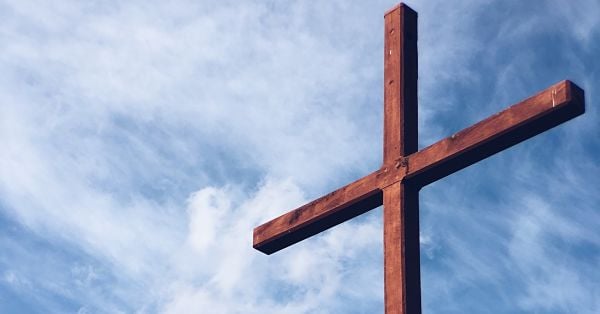
This is really “part 2”—following my immediately preceding blog essay “Can God Change without Changing?” There I answered in the affirmative. I do not believe in God’s immutability or impassibility or simplicity—as those attributes are often explained in the literature of traditional Christian theism. Of course I believe in them in my own way, a way which I consider more biblical than the way they have of often been described in traditional theological literature.
For example, Anselm of Canterbury wrote that God cannot feel compassion because that would conflict with his being immutable and impassible. What, then, do we mean (he asked) when we talk about God’s compassion? Only that WE feel compassion when we contemplate God’s mercy.
Behind traditional Christian theism is “perfect being ontology” which assumes and asserts that there is no potential in God; God is “pure actuality without potentiality.” That is what I deny. But I also deny that God is pure potentiality without actuality. God is both; both are “in God.”
The crux of the matter, for me, comes down to this: Who was it who died on the cross of Calvary? Yes, of course, everyone will say “Jesus Christ.” But my question is, did GOD die on the cross? Then many people get nervous and want to back away from any answer. Or, some traditionalists will say “No, because God cannot die.” I affirm, together with Luther and a host of recent theologians (viz., Moltmann, Jüngel, Jenson, von Balthasar, et al.) that GOD died on the cross.
*Sidebar: The opinions expressed here are my own (or those of the guest writer); I do not speak for any other person, group or organization; nor do I imply that the opinions expressed here reflect those of any other person, group or organization unless I say so specifically. Before commenting read the entire post and the “Note to commenters” at its end.*
Now, please know that here I am talking to people who believe that Jesus Christ was and is God incarnate, not merely a man with perfect God-consciousness or “God’s deputy and representative,” etc. Why are you reluctant to say that God died on the cross if you believe that Jesus Christ was God’s Son, God the Son, the Second Person of the Trinity eternally equal with the Father and the Holy Spirit as to his and their deity?
I can only think of two reasons. First, many people think of the word “death” as referring to cessation of existence. But, of course, that cannot be what Christians mean by “death.” It certainly is a cessation of this earthly existence as we know it between birth and bodily death, but it is not the end of being in existence. Second, many people have been taught that God is incapable of death because God is by nature immortal and immutable and impassible (even if those last two words are not used).
Some of the ancient church fathers, under the spell of Greek metaphysics (perfect being ontology) were wary of saying that God died on the cross even though they believed that Jesus Christ was God the Son. There was the danger of “Patripassionism”—the heresy that the Father died on the cross (a view tied to Modalism). There was also the perceived danger of lessening God’s transcendence so some of them, at least, talked about the Son of God, God the Son, experiencing death through the human nature that he “took on” in the incarnation. But they held back from saying that God died on the cross.
This set the trend for traditional Christian theism that has undergone radical revisions since at least I. A. Dorner in the mid-19th century. I talked about him in the previous blog post as the first Christian theologian that I have discovered who dared to teach that God’s immutability is qualified. He called it “ethical immutability” and argued, cogently, to my way of thinking, that God’s eternal character cannot change but that God can change in his relationships with creatures and that time and history have real affects on God’s life experience. To put it bluntly, God experiences new things through his interactions with creatures within history. Dorner even went so far as to suggest that God learns as he goes along with us in history.
I regard this radical alteration of the doctrine of God—away from traditional theism toward what is now being called “relational theism”—one of the most important transitions in 20th and 21st century Christian theology. We have finally broken the shackles of classical theism, perfect being ontology, and begun to realize that a perfect being, such as God is, being love, can voluntarily experience death and it is no heresy now to say that on the cross God died.
Of course, I have to deny the radical theological claims of the “death of God” theologians of the 1960s such as Thomas Altizer who seems really to have meant that on the cross God committed suicide and ceased to exist as a separate being from humanity. That’s nonsense, heresy, and even apostasy.
Still, I want to stop being mealy-mouthed about the cross and say it outright—on the cross when Jesus died God died. Not all of God, of course, and so some embrace of the social Trinity is implied. But I don’t see how to escape that if you believe (as I certainly do) that Jesus Christ was God the Son. God the Son died on the cross—and went on living, triumphing over death by dying. He was raised by God to a new form of bodily existence fit for heaven—as we will be.
*Note to commenters: This blog is not a discussion board; please respond with a question or comment only to me. If you do not share my evangelical Christian perspective (very broadly defined), feel free to ask a question for clarification, but know that this is not a space for debating incommensurate perspectives/worldviews. In any case, know that there is no guarantee that your question or comment will be posted by the moderator or answered by the writer. If you hope for your question or comment to appear here and be answered or responded to, make sure it is civil, respectful, and “on topic.” Do not comment if you have not read the entire post and do not misrepresent what it says. Keep any comment (including questions) to minimal length; do not post essays, sermons or testimonies here. Do not post links to internet sites here. This is a space for expressions of the blogger’s (or guest writers’) opinions and constructive dialogue among evangelical Christians (very broadly defined).
Previous Post

November 13, 2020
Can God Change without Changing?
Next Post
November 19, 2020 Essentials of Christian Thought
Browse Our Archives
Select a Category Against Liberal Theology Uncategorized
Select a Month October 2026 September 2026 August 2026 July 2026 June 2026 May 2026 April 2026 March 2026 February 2026 January 2026 December 2025 November 2025 October 2025 September 2025 August 2025 July 2025 June 2025 May 2025 April 2025 March 2025 February 2025 January 2025 December 2024 November 2024 October 2024 September 2024 August 2024 July 2024 June 2024 May 2024 April 2024 March 2024 February 2024 January 2024 December 2023 November 2023 October 2023 September 2023 August 2023 July 2023 June 2023 May 2023 April 2023 March 2023 February 2023 January 2023 December 2022 November 2022 October 2022 September 2022 August 2022 July 2022 June 2022 May 2022 April 2022 March 2022 February 2022 January 2022 December 2021 November 2021 October 2021 September 2021 August 2021 July 2021 June 2021 May 2021 April 2021 March 2021 February 2021 January 2021 December 2020 November 2020 October 2020 September 2020 August 2020 July 2020 June 2020 May 2020 April 2020 March 2020 February 2020 January 2020 December 2019 November 2019 October 2019 September 2019 August 2019 July 2019 June 2019 May 2019 April 2019 March 2019 February 2019 January 2019 December 2018 November 2018 October 2018 September 2018 August 2018 July 2018 June 2018 May 2018 April 2018 March 2018 February 2018 January 2018 December 2017 November 2017 October 2017 September 2017 August 2017 July 2017 June 2017 May 2017 April 2017 March 2017 February 2017 January 2017 December 2016 November 2016 October 2016 September 2016 August 2016 July 2016 June 2016 May 2016 April 2016 March 2016 February 2016 January 2016 December 2015 November 2015 October 2015 September 2015 August 2015 July 2015 June 2015 May 2015 April 2015 March 2015 February 2015 January 2015 December 2014 November 2014 October 2014 September 2014 August 2014 July 2014 June 2014 May 2014 April 2014 March 2014 February 2014 January 2014 December 2013 November 2013 October 2013 September 2013 August 2013 July 2013 June 2013 May 2013 April 2013 March 2013 February 2013 January 2013 December 2012 November 2012 October 2012 September 2012 August 2012 July 2012 June 2012 May 2012 April 2012 March 2012 February 2012 January 2012 December 2011 November 2011 October 2011 September 2011 August 2011 July 2011 June 2011 May 2011 April 2011 March 2011 February 2011 January 2011 December 2010 November 2010 October 2010 September 2010 August 2010 July 2010
TAKE THE
Religious Wisdom Quiz
In which city did David reign seven years before becoming king over all Israel?
Select your answer to see how you score.
Hebron Jerusalem Bethlehem Shechem
Related posts from Roger E. Olson

The Abolition of Man: Chapter 3: The Abolition...

She Survived Her Execution. Should the State Try...
The Abolition of Man Part 2: Chapter 2:...

Ambiguity without Ambivalence in Faith
TRENDING AT PATHEOS Evangelical

I was strolling through the top floor of the brand new Parthenon...

What Does Gêvâh Mean For Kimberley Guifoyle &...
This week, a lot of the news is focused on Kimberly Guilfoyle....

INNER CIRCLE: Profound Mystery (Of Christ In All...
Ephesians 5:31-32 “For this reason, a man will leave his father and...

Do Not Rejoice When Your Enemy Falls: The...
Turning an execution into a public spectacle is a disturbing expression of...

'The Chosen' S6 Trailer: The Passion Gets Very...
Not many watching 'The Chosen' worry about spoilers, but just because they...

The purpose-driven labor priest
A labor activist reads Rick Warren and it gets me wondering about...
view all Evangelical blogs
Ad-Free & Subscriber Log-In Subscription Support
- About Us
- 2026 Calendar
- Videos
- Podcasts
- Library of World Religions
- Faith In Media Tracker
- Advertise With Us
- Write for Us
- Privacy Policy
- Terms of Service
- Do Not Sell My Data
- Contact Us
- Radiant Digital
- Manage Newsletter Subscriptions
- Unsubscribe From Notifications
- Sitemap
Copyright 2008-2026, Patheos. All rights reserved.
Subscription Support Ad-Free & Subscriber Log-In
Follow Patheos