
BuddhistCatholicContemplativeEvangelicalGeneral ChristianHinduJewishLatter-day SaintMuslimNew VisionsProgressive Christian
Beliefs
- Buddhist
- Catholic
- Contemplative
- Evangelical
- General Christian
- Hindu
- Jewish
- Latter-day Saint
- More Voices
- Muslim
- New Visions
- Pagan
- Progressive Christian
Topics
- Religion News
- Food and Religion
- Sports and Religion
- Religious Art
- Religious Music and Entertainment
- Religious Events
- History and Religion
- Style and Religion
- Politics and Religion
- Women in Religion
- Recreation Outdoors and Religion
- Business Finance and Religion
- Careers Workplace and Religion
- Education and Religion
- Family Parenting and Religion
- Health Fitness and Religion
- Home and Religion
- Relationships and Religion
- Technology and Religion
- Travel and Religion
Columnists
- Buddhist Columnists
- Business Finance and Religion Columnists
- Careers Workplace and Religion Columnists
- Catholic Columnists
- Contemplative Columnists
- Education and Religion Columnists
- Evangelists Columnists
- Family Parenting and Religion Columnists
- General Christian Columnists
- Health Fitness and Religion Columnists
- Hindu Columnists
- History and Religion Columnists
- Home and Religion Columnists
- Jewish Columnists
- More Voices Columnists
- Latter Day Columnists
- Muslim Columnists
- New Visions Columnists
- Nonreligious Columnists
- Pagan Columnists
- Politics and Religion Columnists
- Progressive Columnists
- Recreation Outdoors and Religion Columnists
- Relationships and Religion Columnists
- Religion News Columnists
- Religious Art Columnists
- Religious Events Columnists
- Religious Music and Entertainment Columnists
- Sports and Religion Columnists
- Style and Religion Columnists
- Technology and Religion Columnists
- Travel and Religion Columnists
- Women in Religion Columnists
Resource Library
- 2026 Calendar
- Library of World Religions
- The 100 Most Holy Places on Earth
- Patheos Answers
- Podcasts
- Videos
- Faith Leaders Database
- Anglican Episcopalian
- Bahai
- Baptist
- Buddhism
- Christianity
- Confucianism
- Eastern Orthodoxy
- Hinduism
- Holiness and Pentecostal
- ISKCON
- Islam
- Judaism
- Lutheran
- Methodist
- The Church of Jesus Christ of Latter-day Saints
- New Age
- Paganism
- Presbytarian and Reformed
- Protestantism
- Religion Behind the Scenes
- Roman Catholic
- Scientology
- Shia Islam
- Sikhism
- Sufism
- Sunni Islam
- Taoism
- Zen
- See all religions
Research Tools
 Ad-Free & Subscriber Log-In Subscription Support
Ad-Free & Subscriber Log-In Subscription Support
Follow Patheos 

- Trending:
- Forgiveness
- |
- Marriage
- |
- Consciousness
- |
- Death Penalty
- |
- Election
- |
- Halloween

- Home
- Evangelical
- Why Study/Learn Historical Theology
Why Study/Learn Historical Theology
Last updated on: May 26, 2020 at 8:30 am by Roger E. Olson
Why Study/Learn Historical Theology 2020-05-26T08:30:09-05:00 Roger E. Olson
Patheos Explore the world's faith through different perspectives on religion and spirituality! Patheos has the views of the prevalent religions and spiritualities of the world.
Why Study/Learn Historical Theology?
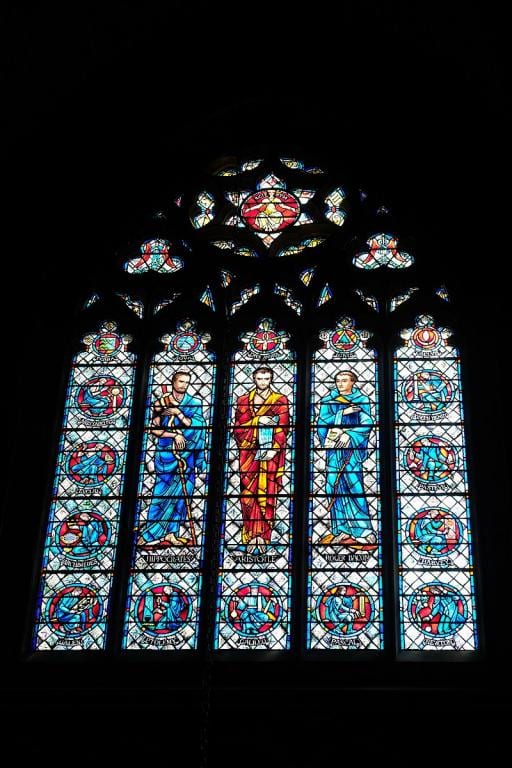
I was recently asked to address a group on this subject: Why study and learn about historical theology? The answers seem self-evident to me, but that’s because I became a historical theologian forty years ago after several years of formally studying the subject. Here are my five reasons why every Christian should learn enough historical theology to be relatively knowledgeable about it:
Under scripture itself, the Great Tradition of faithful Christian thought and reflection about God, Jesus Christ, humanity, salvation, the future, serves us (Christians) as a guide as we “faithfully improvise” our own Christian discipleship in today’s world. I believe it is N. T. Wright who compared Christian discipleship to actors improvising the third act of a play. With only the first two acts to read and study (the Old Testament and the New) we faithfully improvise the third act which is not written. I would like to extend that metaphor and say we are called to faithfully improvise the fourth act of a play only the first three acts of which are written. We have the Hebrew scriptures, promise, and the New Testament, fulfillment, and the Great Tradition of faithful Christian thought and reflection on those. They, the church fathers and reformers, were attempting to faithfully improvise the third act; we are standing on their shoulders (to mix metaphors) as we seek to faithfully improvise the fourth act. What they did is not infallible, but it gives us guidance.
Scripture is not always as clear as we wish it were. What about evil? Did God create evil? Such questions find no easy answers in the Bible. However, church fathers such as Gregory of Nyssa and Augustine of Hippo answered them in ways faithful to the Bible but going beyond anything explicitly said in the Bible. We have a “great cloud of witnesses” between the first century and the twenty-first century to look to and listen to. They were not always right, but in many cases they came up with ideas that we do not need to discover on our own. In other words, the Great Tradition can help us understand scripture and shape our own task of faithfully improvising Christian discipleship today.
There are really no new ideas even among Christians. Everything’s been thought and taught before. This is one reason I became a historical theologian, because I early on discovered that every idea proclaimed as new among Christians was just a new version of something old. I can’t tell you how often a Christian has attempted to “introduce” me to a new interpretation of the Bible or a new doctrine and I have discovered it to be simply a new version of something old. I will offer an example here. I was first introduced to so-called “open theism” in the 1990s as a new idea about God’s knowledge and the future. I immediately recognized it as nearly identical to German Protestant theologian Isaac August Dorner’s “ethical immutability” idea of God’s relationship with time and the future—written and published in the 1870s. The same thing has happened to me numerous times.
This realization can and should instill in us humility and wisdom—about our own “new ideas” and about others’ “new ideas” that come to us. We should realize that we are not as smart or creative as we think we are and that our forefathers and foremothers were brilliant. British essayist Alexander Pope said “We think our fathers fools, so wise we grow; our wiser sons will no doubt think us so.” Theologians, whether academic or pastoral or lay, have a tendency to think they are very creative and inventive and they put out “new ideas” that are really just new versions of old ones. When the old ones are discovered and brought to light, the new versions seem silly insofar as they were touted as new. If I have a new idea, about God, for example, I should certainly acknowledge that it is probably not really new but that I am simply carrying forward in a new way something old.
We have a natural tendency to think that “new” is better than “old” and that is simply not so.
Also, this realization can give us a healthy perspective on the Christian faith. It is what I call “the long view”—the understanding that we are heirs of a great heritage of Christianity and not inventors of new and better versions of biblical faith. When I was taking driving lessons at age sixteen my instructor emphasized the importance of the “long view.” He forced me not to stare at the road right in front of the car we were driving but to look up and around and see the “big picture.” That habit saved me from many accidents later in my life as a driver.
In the same way, we contemporary Christians can and should seek the “big picture” of our common faith and realize that the Christian faith has been around a long time. It includes great achievements and accomplishments to be cherished but also grave dangers to be avoided.
**Sidebar: The opinions expressed here are my own (or those of the guest writer); I do not speak for any other person, group or organization; nor do I imply that the opinions expressed here reflect those of any other person, group or organization unless I say so specifically. Before commenting read the entire post and the “Note to commenters” at its end.**Studying historical theology helps us quickly and easily identify heresies. The Great Tradition of Christian thought, which I wrote about in The Story of Christian Theology: Twenty Centuries of Tradition and Reform also includes Counterfeit Christianity—the title of another book I wrote about ancient and modern heresies being taught among Christians centuries ago and still today. My argument in Counterfeit Christianity is that every heresy that existed in ancient Christianity still exists today—only under a different name. It might be somewhat altered, but at its core it remains the same heresy.
Not studying historical theology can make a Christian pastor or other leader look and sound stupid. I once visited a friend whose grandfather was a well-known evangelical leader. The grandfather wrote a series of booklets about Christianity and my friend, who admired his grandfather almost to the point of worshiping him, urged me to read his grandfather’s booklets. I picked up the first one and began reading it. Near the beginning the author claimed that the ancient church before Emperor Constantine was perfectly united in thought and spirit. That is, of course, nonsense and anyone who has studied church history knows it. The grandfather embarrassed himself and his grandson without knowing it!
The ancient Christian churches were riddled with heresies. Every imaginable heresy can be found in the second through the fifth centuries! Some modern and contemporary heresies are disguised so that they do not seem the same as an ancient heresy, but a careful examination of both will reveal the inner similarity.
Years ago there was a Christian legend making the rounds. I read it in books and heard it is sermons. It went like this: When the United States Secret Service teaches bank tellers how to identify counterfeit money, they never show them counterfeit money; they make them study real money so that they will immediately recognize counterfeit money by its difference from real money. I immediately knew that could not be true—the first time I heard it as a sermon illustration. The point of the legend was that Christians should only study truth and never error. Eventually I wrote to the United States Department of the Treasury and asked them about the story. I received back a nice letter contradicting the story, saying it is absolutely false. They do make bank tellers study counterfeit money. Of course they do.
So studying historical theology includes studying counterfeit Christianity—as part of the Great Tradition of Christian thought and reflection. Ancient modalism still exists in Oneness Pentecostalism and ancient Arianism still exists among Jehovah’s Witnesses. Ancient Pelagianism is rampant in American folk religion, even among Christians who say things like “God helps those who help themselves” and emphasize good works as part of salvation.
Many Christians seem intent on reinventing Christianity as if nothing of any value happened between the New Testament times and today. A great deal of time and effort is wasted on reinventing Christianity. What studying historical theology can do is help us realize the need to rediscover Christianity rather than reinvent it. Of course that does not mean nothing can be new, but the new should not be novel; it should be informed by what has gone before, taking that into account and building on it. Reinventing Christianity runs the real risk of tearing up the roots and creating something so different from real Christianity that it is a different religion. God has not been absent for two thousand years. Our modern and contemporary churches and forms of discipleship have much to learn from church fathers and reformers such as Irenaeus, Origen, Athanasius, Augustine and Jan Hus and Luther and Calvin and Wesley and Karl Barth—just to name a few of the members of that “great cloud of witnesses” that make up the Great Tradition of Christianity.
Studying historical theology is, for the Christian, like studying your family tree, your own family roots. It can reveal much about yourself. When I teach church history I require my students to investigate their own religious family tree—going back as far as they can. I require them to trace their historical-theological influences back through their parents, aunts and uncles, grandparents, great-grandparents, etc. Then they create a written family tree and an essay explaining it. They always tell me how practical that assignment was for them.
I grew up Pentecostal; my father was a Pentecostal minister. But my mother was raised in the Evangelical Free Church—a Scandinavian Pietist denomination. Both, by the way, send missionaries to Brazil. Many Brazilian Protestant churches could trace their origins back to Swedish Pietist-Pentecostal missionaries from Chicago. My father’s grandparents were immigrants to the United States from Norway and Denmark and they joined an American denomination called The Church of God—a holiness-Wesleyan denomination headquartered in Anderson, Illinois. The Church of God was strongly influenced by the Wesleyan-holiness movement of the nineteenth century, so some of my religious roots are in the Wesleyan tradition. All of this investigation helps me understand my family’s mixed up religious influences. After I studied historical theology and church history I understood my family better.
Studying historical theology is somewhat like studying your own ancestors, only it is studying your spiritual ancestors. Among mine I found a woman named Phoebe Palmer who lived in New York in the middle of the nineteenth century and who led massive Bible studies about the Holy Spirit. She was one of the first modern Christians to emphasize the “second blessing” of the infilling of the Holy Spirit and the Holiness-Pentecostal movements owe much to her even if they have largely forgotten her.
There are so many advantages, for Christians, of studying historical theology and church history that I could go on talking about them for a very long time, but I hope I have said enough to whet your appetite for it.
*Note to commenters: This blog is not a discussion board; please respond with a question or comment only to me. If you do not share my evangelical Christian perspective (very broadly defined), feel free to ask a question for clarification, but know that this is not a space for debating incommensurate perspectives/worldviews. In any case, know that there is no guarantee that your question or comment will be posted by the moderator or answered by the writer. If you hope for your question or comment to appear here and be answered or responded to, make sure it is civil, respectful, and “on topic.” Do not comment if you have not read the entire post and do not misrepresent what it says. Keep any comment (including questions) to minimal length; do not post essays, sermons or testimonies here. Do not post links to internet sites here. This is a space for expressions of the blogger’s (or guest writers’) opinions and constructive dialogue among evangelical Christians (very broadly defined).
Previous Post

May 23, 2020
Why Lying Has Become Normal and Acceptable
Browse Our Archives
Select a Category Against Liberal Theology Uncategorized
Select a Month October 2026 September 2026 August 2026 July 2026 June 2026 May 2026 April 2026 March 2026 February 2026 January 2026 December 2025 November 2025 October 2025 September 2025 August 2025 July 2025 June 2025 May 2025 April 2025 March 2025 February 2025 January 2025 December 2024 November 2024 October 2024 September 2024 August 2024 July 2024 June 2024 May 2024 April 2024 March 2024 February 2024 January 2024 December 2023 November 2023 October 2023 September 2023 August 2023 July 2023 June 2023 May 2023 April 2023 March 2023 February 2023 January 2023 December 2022 November 2022 October 2022 September 2022 August 2022 July 2022 June 2022 May 2022 April 2022 March 2022 February 2022 January 2022 December 2021 November 2021 October 2021 September 2021 August 2021 July 2021 June 2021 May 2021 April 2021 March 2021 February 2021 January 2021 December 2020 November 2020 October 2020 September 2020 August 2020 July 2020 June 2020 May 2020 April 2020 March 2020 February 2020 January 2020 December 2019 November 2019 October 2019 September 2019 August 2019 July 2019 June 2019 May 2019 April 2019 March 2019 February 2019 January 2019 December 2018 November 2018 October 2018 September 2018 August 2018 July 2018 June 2018 May 2018 April 2018 March 2018 February 2018 January 2018 December 2017 November 2017 October 2017 September 2017 August 2017 July 2017 June 2017 May 2017 April 2017 March 2017 February 2017 January 2017 December 2016 November 2016 October 2016 September 2016 August 2016 July 2016 June 2016 May 2016 April 2016 March 2016 February 2016 January 2016 December 2015 November 2015 October 2015 September 2015 August 2015 July 2015 June 2015 May 2015 April 2015 March 2015 February 2015 January 2015 December 2014 November 2014 October 2014 September 2014 August 2014 July 2014 June 2014 May 2014 April 2014 March 2014 February 2014 January 2014 December 2013 November 2013 October 2013 September 2013 August 2013 July 2013 June 2013 May 2013 April 2013 March 2013 February 2013 January 2013 December 2012 November 2012 October 2012 September 2012 August 2012 July 2012 June 2012 May 2012 April 2012 March 2012 February 2012 January 2012 December 2011 November 2011 October 2011 September 2011 August 2011 July 2011 June 2011 May 2011 April 2011 March 2011 February 2011 January 2011 December 2010 November 2010 October 2010 September 2010 August 2010 July 2010
TAKE THE
Religious Wisdom Quiz
Four beasts rose from the sea—one like a lion with eagle's wings, one like a bear, one like a leopard, and a fourth terrifying beast. What did these represent?
Select your answer to see how you score.
Four kingdoms Four kings Four judgments Four ages
Related posts from Roger E. Olson

The Abolition of Man: Chapter 3: The Abolition...

She Survived Her Execution. Should the State Try...
The Abolition of Man Part 2: Chapter 2:...

Ambiguity without Ambivalence in Faith
TRENDING AT PATHEOS Evangelical

I was strolling through the top floor of the brand new Parthenon...

What Does Gêvâh Mean For Kimberley Guifoyle &...
This week, a lot of the news is focused on Kimberly Guilfoyle....

INNER CIRCLE: Profound Mystery (Of Christ In All...
Ephesians 5:31-32 “For this reason, a man will leave his father and...

Do Not Rejoice When Your Enemy Falls: The...
Turning an execution into a public spectacle is a disturbing expression of...

'The Chosen' S6 Trailer: The Passion Gets Very...
Not many watching 'The Chosen' worry about spoilers, but just because they...

The purpose-driven labor priest
A labor activist reads Rick Warren and it gets me wondering about...
view all Evangelical blogs
Ad-Free & Subscriber Log-In Subscription Support
- About Us
- 2026 Calendar
- Videos
- Podcasts
- Library of World Religions
- Faith In Media Tracker
- Advertise With Us
- Write for Us
- Privacy Policy
- Terms of Service
- Do Not Sell My Data
- Contact Us
- Radiant Digital
- Manage Newsletter Subscriptions
- Unsubscribe From Notifications
- Sitemap
Copyright 2008-2026, Patheos. All rights reserved.
Subscription Support Ad-Free & Subscriber Log-In
Follow Patheos