
BuddhistCatholicContemplativeEvangelicalGeneral ChristianHinduJewishLatter-day SaintMuslimNew VisionsProgressive Christian
Beliefs
- Buddhist
- Catholic
- Contemplative
- Evangelical
- General Christian
- Hindu
- Jewish
- Latter-day Saint
- More Voices
- Muslim
- New Visions
- Pagan
- Progressive Christian
Topics
- Religion News
- Food and Religion
- Sports and Religion
- Religious Art
- Religious Music and Entertainment
- Religious Events
- History and Religion
- Style and Religion
- Politics and Religion
- Women in Religion
- Recreation Outdoors and Religion
- Business Finance and Religion
- Careers Workplace and Religion
- Education and Religion
- Family Parenting and Religion
- Health Fitness and Religion
- Home and Religion
- Relationships and Religion
- Technology and Religion
- Travel and Religion
Columnists
- Buddhist Columnists
- Business Finance and Religion Columnists
- Careers Workplace and Religion Columnists
- Catholic Columnists
- Contemplative Columnists
- Education and Religion Columnists
- Evangelists Columnists
- Family Parenting and Religion Columnists
- General Christian Columnists
- Health Fitness and Religion Columnists
- Hindu Columnists
- History and Religion Columnists
- Home and Religion Columnists
- Jewish Columnists
- More Voices Columnists
- Latter Day Columnists
- Muslim Columnists
- New Visions Columnists
- Nonreligious Columnists
- Pagan Columnists
- Politics and Religion Columnists
- Progressive Columnists
- Recreation Outdoors and Religion Columnists
- Relationships and Religion Columnists
- Religion News Columnists
- Religious Art Columnists
- Religious Events Columnists
- Religious Music and Entertainment Columnists
- Sports and Religion Columnists
- Style and Religion Columnists
- Technology and Religion Columnists
- Travel and Religion Columnists
- Women in Religion Columnists
Resource Library
- 2026 Calendar
- Library of World Religions
- The 100 Most Holy Places on Earth
- Patheos Answers
- Podcasts
- Videos
- Faith Leaders Database
- Anglican Episcopalian
- Bahai
- Baptist
- Buddhism
- Christianity
- Confucianism
- Eastern Orthodoxy
- Hinduism
- Holiness and Pentecostal
- ISKCON
- Islam
- Judaism
- Lutheran
- Methodist
- The Church of Jesus Christ of Latter-day Saints
- New Age
- Paganism
- Presbytarian and Reformed
- Protestantism
- Religion Behind the Scenes
- Roman Catholic
- Scientology
- Shia Islam
- Sikhism
- Sufism
- Sunni Islam
- Taoism
- Zen
- See all religions
Research Tools
 Ad-Free & Subscriber Log-In Subscription Support
Ad-Free & Subscriber Log-In Subscription Support
Follow Patheos 

- Trending:
- Forgiveness
- |
- Marriage
- |
- Consciousness
- |
- Death Penalty
- |
- Election
- |
- Halloween

- Home
- Evangelical
- What Makes a Group of People “Church?” Part 1
What Makes a Group of People “Church?” Part 1
Last updated on: April 17, 2020 at 8:39 am by Roger E. Olson
What Makes a Group of People “Church?” Part 1 2020-04-17T08:39:21-05:00 Roger E. Olson
Patheos Explore the world's faith through different perspectives on religion and spirituality! Patheos has the views of the prevalent religions and spiritualities of the world.
What Makes a Group of People “Church?” Part 1
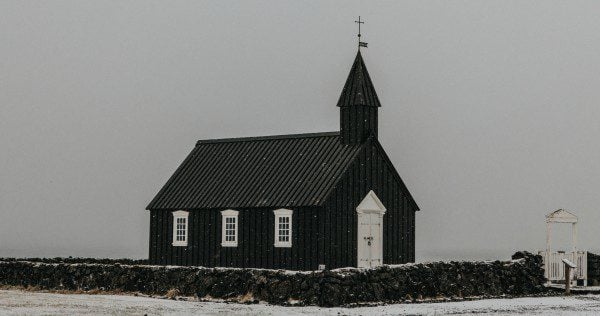
Let’s get something out of the way—right away—to head off a predictable but unwelcome response. I have studied American churches for many years. I am the editor (really author) of the 14th edition of the Handbook of American Denominations in the United States (Abingdon Press). I have studied and visited literally hundreds of “Christian” churches over the years and been a faithful attender—often member and sometimes leader—of about thirteen individual congregations. I am convinced that not every group of people who calls itself “church” really is a church—theologically speaking. I do not go with the common opinion that every group that calls itself “church” really deserves that identity. Of course, I have no authority or power to suppress or prevent any group from calling itself anything. But as a Christian theologian who is also an avid student of churches, I have decided that there are many so-called “churches” in America that I do not consider authentically churches.
I am not writing this as a sociologist of religion; I am writing this blog—always—as a Christian theologian. My two main areas of research, study and teaching are historical theology and systematic theology. In other words, I do not approach “church” merely descriptively (except in the Handbook mentioned above—due to its history) but also prescriptively.
Of the myriad of groups in America that call themselves “church,” which ones deserve my recognition as living up to that description? That is what I ask myself and sometimes my students and others.
*Sidebar: The opinions expressed here are my own (or those of the guest writer); I do not speak for any other person, group or organization; nor do I imply that the opinions expressed here reflect those of any other person, group or organization unless I say so specifically. Before commenting read the entire post and the “Note to commenters” at its end.*
It is my opinion that American nominalism has led many people, even many orthodox Christians, to regard every group that calls itself “church” as authentically “church.” But when I have this conversation with fellow evangelical, orthodox Christians (e.g., students) I easily break that attitude down by mentioning and describing some so-called churches that I know about. I’m not going to name any of those here, but I will point to some by description.
I know of one “church” that exists really as a haven for white racists and includes within itself an active chapter of a white racist organization. And I know it’s not the only one in the country.
On the other hand, I also know of “churches” that exist primarily to be inclusive of everybody and exclude nobody. You don’t even have to believe in God to be a member or even a leader within the church.
There are “churches” that exist primarily to rake in money from gullible people. They promise those people freedom from sickness, poverty, even sometimes the limitations of matter and time.
There is a large network of “churches” in America that flourishes on offering members a spiritual technology that is virtually “guaranteed” to bring them financial prosperity, health, and success in life. Most of the members and leaders believe in reincarnation.
On and on and on I could go.
Yes, sociologically speaking, all are churches just because they claim to be. Although, in the past, anyway, the Internal Revenue Service has withdrawn tax exempt status from some self-identified “churches” when it was discovered that they were really profit-making businesses. One notable leader of such a network of “churches” famously went to federal prison for tax evasion because the government decided he was deceiving the government about the group’s finances.
However, for the most part, Americans, even most conservative Protestants, evangelicals, simply assume that any group that calls itself “church” is a “church.” Very little thought goes into this.
Some years ago Pope Benedict XVI ordered Catholics to stop calling non-Catholic churches churches. He declared that they are, at best, “ecclesial communities.” I asked a conservative Catholic friend who happens to be a priest of the Catholic church what that means. He very honestly said “parachurch organization.”
You might assume that I would be angry about that, but you would be wrong. I respected the Pope for at least not emptying the word “church” of meaning by recognizing every group that calls itself “church” truly a church. I disagree with the Catholic church about that, but I respect its having a vision of what constitutes “church”—really, theologically.
All of this has come to the forefront of my thoughts lately for two practical reasons (beyond teaching ecclesiology as part of my teaching about theology). First, I have been looking for a new church to join in a city where I do not yet live. I go there often and sometimes stay for two or three weeks. During the last three years I have visited at least ten churches in that metropolitan area—especially in a certain large and diverse suburb. Sometime I will move there and I don’t want to wait until then to find a church to attend and probably join.
Second, the current pandemic crisis has raised the question, for me, at least, of whether a church can exist solely in “virtual reality”—“online”—without physical gatherings. Even before this pandemic began there were “churches” that existed only in virtual reality—connecting members solely by the internet. I often used that as a case study for class discussions when we came to ecclesiology.
In my future metropolitan area, where I will live in retirement, I visit only churches that I think are probably evangelical in a broad sense of that term. And they are of many different denominations or totally independent. What criteria should I use in deciding whether one is really “church” or just a group of people gathering on Sundays and maybe Wednesday evenings for—something? That is the question.
To make the question clearer—what are the necessary “marks” of “true church?”
Now, again, let me warn you not to waste your time composing a comment here that won’t pass muster, that won’t pass moderation and show up on my blog. Don’t bother saying that only one particular denomination or fellowship or family of congregations constitutes the true church of Jesus Christ. We all know of that belief on the part of some denominations. I forbid that here. Instead of simply asserting that “such-and-such” a denomination or fellowship of congregations is the one true church, say why. What makes it that? If you say “apostolic succession” I will laugh and try to be nice because every historian knows there are breaks in apostolic succession where it is really impossible to say that a particular bishop (for example) stands in unbroken ordination “pedigree” back to one of the first century apostles. But don’t waste my and our time with that argument because it simply can’t “work” for those of us who are not members of churches that adhere to apostolic succession in that way. This is an evangelical blog. My question is mainly to evangelical Christians and surely every evangelical Christian knows that it takes more than apostolic succession to be authentically “the (or a) church of Jesus Christ.”
In my follow up post to this one, “Part 2,” I will share my own thoughts about the subject—what criteria I apply when attempting to decide whether a group of people really “counts” as church.
*Note to commenters: This blog is not a discussion board; please respond with a question or comment only to me. If you do not share my evangelical Christian perspective (very broadly defined), feel free to ask a question for clarification, but know that this is not a space for debating incommensurate perspectives/worldviews. In any case, know that there is no guarantee that your question or comment will be posted by the moderator or answered by the writer. If you hope for your question or comment to appear here and be answered or responded to, make sure it is civil, respectful, and “on topic.” Do not comment if you have not read the entire post and do not misrepresent what it says. Keep any comment (including questions) to minimal length; do not post essays, sermons or testimonies here. Do not post links to internet sites here. This is a space for expressions of the blogger’s (or guest writers’) opinions and constructive dialogue among evangelical Christians (very broadly defined).
Previous Post

April 12, 2020
Christianity and Economics
Next Post
April 20, 2020 What Makes a Group of People "Church?" Part 2
Browse Our Archives
Select a Category Against Liberal Theology Uncategorized
Select a Month October 2026 September 2026 August 2026 July 2026 June 2026 May 2026 April 2026 March 2026 February 2026 January 2026 December 2025 November 2025 October 2025 September 2025 August 2025 July 2025 June 2025 May 2025 April 2025 March 2025 February 2025 January 2025 December 2024 November 2024 October 2024 September 2024 August 2024 July 2024 June 2024 May 2024 April 2024 March 2024 February 2024 January 2024 December 2023 November 2023 October 2023 September 2023 August 2023 July 2023 June 2023 May 2023 April 2023 March 2023 February 2023 January 2023 December 2022 November 2022 October 2022 September 2022 August 2022 July 2022 June 2022 May 2022 April 2022 March 2022 February 2022 January 2022 December 2021 November 2021 October 2021 September 2021 August 2021 July 2021 June 2021 May 2021 April 2021 March 2021 February 2021 January 2021 December 2020 November 2020 October 2020 September 2020 August 2020 July 2020 June 2020 May 2020 April 2020 March 2020 February 2020 January 2020 December 2019 November 2019 October 2019 September 2019 August 2019 July 2019 June 2019 May 2019 April 2019 March 2019 February 2019 January 2019 December 2018 November 2018 October 2018 September 2018 August 2018 July 2018 June 2018 May 2018 April 2018 March 2018 February 2018 January 2018 December 2017 November 2017 October 2017 September 2017 August 2017 July 2017 June 2017 May 2017 April 2017 March 2017 February 2017 January 2017 December 2016 November 2016 October 2016 September 2016 August 2016 July 2016 June 2016 May 2016 April 2016 March 2016 February 2016 January 2016 December 2015 November 2015 October 2015 September 2015 August 2015 July 2015 June 2015 May 2015 April 2015 March 2015 February 2015 January 2015 December 2014 November 2014 October 2014 September 2014 August 2014 July 2014 June 2014 May 2014 April 2014 March 2014 February 2014 January 2014 December 2013 November 2013 October 2013 September 2013 August 2013 July 2013 June 2013 May 2013 April 2013 March 2013 February 2013 January 2013 December 2012 November 2012 October 2012 September 2012 August 2012 July 2012 June 2012 May 2012 April 2012 March 2012 February 2012 January 2012 December 2011 November 2011 October 2011 September 2011 August 2011 July 2011 June 2011 May 2011 April 2011 March 2011 February 2011 January 2011 December 2010 November 2010 October 2010 September 2010 August 2010 July 2010
TAKE THE
Religious Wisdom Quiz
I wanted a vineyard so badly that my wife arranged the owner's death through false witnesses. Who am I?
Select your answer to see how you score.
David Ahab Jezebel Naboth
Related posts from Roger E. Olson

The Abolition of Man: Chapter 3: The Abolition...

She Survived Her Execution. Should the State Try...
The Abolition of Man Part 2: Chapter 2:...

Ambiguity without Ambivalence in Faith
TRENDING AT PATHEOS Evangelical

I was strolling through the top floor of the brand new Parthenon...

What Does Gêvâh Mean For Kimberley Guifoyle &...
This week, a lot of the news is focused on Kimberly Guilfoyle....

INNER CIRCLE: Profound Mystery (Of Christ In All...
Ephesians 5:31-32 “For this reason, a man will leave his father and...

Do Not Rejoice When Your Enemy Falls: The...
Turning an execution into a public spectacle is a disturbing expression of...

'The Chosen' S6 Trailer: The Passion Gets Very...
Not many watching 'The Chosen' worry about spoilers, but just because they...

The purpose-driven labor priest
A labor activist reads Rick Warren and it gets me wondering about...
view all Evangelical blogs
Ad-Free & Subscriber Log-In Subscription Support
- About Us
- 2026 Calendar
- Videos
- Podcasts
- Library of World Religions
- Faith In Media Tracker
- Advertise With Us
- Write for Us
- Privacy Policy
- Terms of Service
- Do Not Sell My Data
- Contact Us
- Radiant Digital
- Manage Newsletter Subscriptions
- Unsubscribe From Notifications
- Sitemap
Copyright 2008-2026, Patheos. All rights reserved.
Subscription Support Ad-Free & Subscriber Log-In
Follow Patheos