
BuddhistCatholicContemplativeEvangelicalGeneral ChristianHinduJewishLatter-day SaintMuslimNew VisionsProgressive Christian
Beliefs
- Buddhist
- Catholic
- Contemplative
- Evangelical
- General Christian
- Hindu
- Jewish
- Latter-day Saint
- More Voices
- Muslim
- New Visions
- Pagan
- Progressive Christian
Topics
- Religion News
- Food and Religion
- Sports and Religion
- Religious Art
- Religious Music and Entertainment
- Religious Events
- History and Religion
- Style and Religion
- Politics and Religion
- Women in Religion
- Recreation Outdoors and Religion
- Business Finance and Religion
- Careers Workplace and Religion
- Education and Religion
- Family Parenting and Religion
- Health Fitness and Religion
- Home and Religion
- Relationships and Religion
- Technology and Religion
- Travel and Religion
Columnists
- Buddhist Columnists
- Business Finance and Religion Columnists
- Careers Workplace and Religion Columnists
- Catholic Columnists
- Contemplative Columnists
- Education and Religion Columnists
- Evangelists Columnists
- Family Parenting and Religion Columnists
- General Christian Columnists
- Health Fitness and Religion Columnists
- Hindu Columnists
- History and Religion Columnists
- Home and Religion Columnists
- Jewish Columnists
- More Voices Columnists
- Latter Day Columnists
- Muslim Columnists
- New Visions Columnists
- Nonreligious Columnists
- Pagan Columnists
- Politics and Religion Columnists
- Progressive Columnists
- Recreation Outdoors and Religion Columnists
- Relationships and Religion Columnists
- Religion News Columnists
- Religious Art Columnists
- Religious Events Columnists
- Religious Music and Entertainment Columnists
- Sports and Religion Columnists
- Style and Religion Columnists
- Technology and Religion Columnists
- Travel and Religion Columnists
- Women in Religion Columnists
Resource Library
- 2026 Calendar
- Library of World Religions
- The 100 Most Holy Places on Earth
- Patheos Answers
- Podcasts
- Videos
- Faith Leaders Database
- Anglican Episcopalian
- Bahai
- Baptist
- Buddhism
- Christianity
- Confucianism
- Eastern Orthodoxy
- Hinduism
- Holiness and Pentecostal
- ISKCON
- Islam
- Judaism
- Lutheran
- Methodist
- The Church of Jesus Christ of Latter-day Saints
- New Age
- Paganism
- Presbytarian and Reformed
- Protestantism
- Religion Behind the Scenes
- Roman Catholic
- Scientology
- Shia Islam
- Sikhism
- Sufism
- Sunni Islam
- Taoism
- Zen
- See all religions
Research Tools
 Ad-Free & Subscriber Log-In Subscription Support
Ad-Free & Subscriber Log-In Subscription Support
Follow Patheos 

- Trending:
- Forgiveness
- |
- Marriage
- |
- Consciousness
- |
- Death Penalty
- |
- Election
- |
- Halloween
 Robert Hunt: Interfaith Encounters
- Home
- Progressive Christian
- What ISIS Means?
What ISIS Means?
Last updated on: March 13, 2015 at 8:07 pm by Robert Hunt
What ISIS Means? 2015-03-13T20:07:52-06:00 Robert Hunt
Patheos Explore the world's faith through different perspectives on religion and spirituality! Patheos has the views of the prevalent religions and spiritualities of the world.
When I think of ISIS I’m more inclined to think of “Political extremism and the religious justifications for terror.” Because I really don’t think Religious Extremism is a root cause of the ISIS phenomenon.
On September 23rd I spoke on a panel about ISIS – my notes are found below.
If we look across history, ancient and modern, we find that terror as an approach to gaining and maintaining political control is not uncommon. We might think, for example, of Timor – the Mongol / Muslim conquerer known for stacking heads outside the cities he conquered. Or the Orthodox Christian known commonly as Vlad the Impaler for his way of displaying the victims (mostly Muslim) of his violent wrath.
In more modern history we have the Lord’s Resistance Army in West Africa, The God’s Army (led by adolescent Thais), and any number of radicalized Jihadi groups in Indonesia, and sometimes their Christian opponents. Under-reported terrorists groups in Kalimantan, Mindinao, and Sulawesi remain active. And of course we have to think of the genocidal violence in Rawanda, the Congo, and West Africa.
But it isn’t a religion that unites these groups, or indeed any religion. The common denominator, amply found in the case of ISIS, is the presence of a failed state (or failure of state power) and thus a significant power vacuum, an angry and dis-enfranchised minority, and a desire to establish political control without having the actual means to immediately maintain that control by force.
I realize that there are some vicious and brutal people in the world. They do violence every day. But apart from acts of revenge or desperation terror is essentially a political short cut, a way to gain control of a population when you don’t have the power or ability to establish more subtle and pervasive bureaucratic methods of control. It is usually followed by extortion, piracy, theft, taxes, bootlegging, drug running and smuggling. Because terrorist states have never been able to develop an actual economy to support an actual government. (My definition, by the way, excludes individual acts with no intended political consequences.)
And again this is the case with ISIS. There has been much wringing of hands over its ability to fund its operations through theft and oil exports, but I think this is misplaced in the long run. Timor’s empire collapsed in a generation because it not only generated no income except through conquest, but actively destroyed the agricultural basis of its economy in Persia, Anatolia, and the Iraq.
Right now, even as I speak, ISIS is learning that having carved out their pseudo-caliphate they must sell their oil at a huge discount because of the dangers of shipping it out, and must buy everything they use (including weapons) at a huge markup because of the danger of importing them.
So, first there have been many terrorist regimes in human history. And they are build on the politics of fear. But they have shown themselves inevitably to be short lived, collapsing under the failure of fear to create the kind of order necessary for human flourishing and stable states.
So where is religion in all of this? ISIS calls itself an Islamic State, and claims to administer its territories on the basis of Shari’a law, which it uses to justify its terrorist acts. The vast majority of the world’s Muslims, through their leaders both religious and political, have rejected this understanding of Islam. B’y any rational standard ISIS is not Islamic.
Yet we do need to consider how they are able to make this argument to at least part of the Muslim population, even if the vast majority of Muslims and Muslim nations condemn them. We should ask how they are able to recruit people who believe that ISIS really offer a path that is true to Islam.
To do this we need to realize that the word “extreme” doesn’t accurately characterize the religion of ISIS. It is, rather, a kind of apocalyptic fundamentalism that shows the danger of a reading of revelation unrestrained by the wisdom gained through historical experience. It isn’t religion that has gone to an extreme. It is religion that hasn’t gone far enough to fully grasp the Islam it claims to represent.
Muhammad and his companions, followed by the early Muslim jurists, understood that God had revealed God’s will for humankind in manifold ways outside the Qur’an, not only through the thousands of prophets whose existence is an essential of Muslim belief, but through the natural world. Nor is the exercise of human rationality and dialogue irrelevant as a means by which God reveals how humans should relate to one another. Thus Shari’a, God’s command, was discovered through a rational process of exploring the Qur’an, the sayings of the Prophet Muhammad, the wisdom of other religions, long standing customs and traditions, and even the natural world. Only this process of rational discovery could fully grasp God’s will.
And ISIS, and its leaders and frankly their so-called spiritual guides simply haven’t chosen to undertake this long process of discovery. They have rejected the lessons learned in the great historical caliphates of the Ummayads, Abbasids, Fatimids, and Ottomans, not to mention the many minor kingdoms and empires like the Mughals. They drank the Qutb coolaid and believed that they could simply start over from scratch as a light in the world of darkness and ignorance. But even if, and this is a big question, even if they possessed the Qur’an and the Hadith of the Prophet Muhammad as a foundation, they have not shown any inclination to build on it.
So again the leaders of ISIS are not religious extremists, because Islam, when it set off to the ends of the earth to discover the breadth of God’s revelation, the extremes of God’s reach through the whole of creation, created civilizations. ISIS creates wastelands. BUT I hasten to add, its highly simplistic version of religion does have attraction to some people, as fundamentalisms through the ages have a certain attraction.
And this is particularly true among those whose sense of their identity, and thus personhood, is under threat. Fundamentalisms arise when religious complexity, in the form of numerous expressions of faith across a variety of different social classes and cultures, makes the boundaries of an identity blurry and porous and liable to break down or be violated. And this is particularly so when these boundaries are perceived as being violated and under attack. Fundamentalism is a fall back to a more easily defensible boundary of identity.
And lets face it, Muslims have some justification in thinking that their identity, at least as traditionally understood, has been under attack by colonialism and modernity in the last couple of hundred years, and most recently by minority sects that gained political power in the post-colonial era. The boundaries of Muslim identity were proven quite porous, and have at least to some seem desperately threatened.
But in ISIS, and its related movements, this fundamentalism isn’t a fall back to just the five pillars of Islam and the 5 or 6 fundamental beliefs held by Muslims through the ages. These are not sufficient visible and visceral to secure a threatened identity. The beliefs are too internal, to easy to affirm without actually being held. And the pillars, aside perhaps from the daily prayers, have little public presence.
So Islamic fundamentalism, like Christian puritanism or some phases of Roman Catholicism and even one phase of early Judaism in the time of the Macabees insists on more constant and visible forms of conformity. Clothing becomes an essential and constant sign of identity. Non-Islamic religious rituals and buildings are destroyed and non-Muslims are killed or driven out. It is not enough to have a fixed center and a clear boundary. Muslims gripped by this fundamentalism must see only Muslims like themselves as far as the eye can see in order to be certain of their identity.
And soon this visible conformity isn’t enough either. People might be faking it. At a certain level of insecurity about one’s identity, one must constantly test both one’s self and everyone else. Insecurity feels good only in the presence of others who are insecure. And then the terror begins.
A person who is sufficiently insecure can be recruited both to commit terrorists acts as proof to themselves and others that they are truly religious. He or she will create insecurity to assuage his or her own insecurity. These new terrorists will threaten others with un-passable tests to insure that the others are truly religious. If you google Youtube Palestinian Parody of ISIS you’ll find a humorous look at this – and a sharp comment on how these Palestinians believe ISIS has lost track of the narrative of the loss of Muslim identity in the Middle East.
https://www.youtube.com/watch?v=K5nigZzgf4Y
And here we find the religious justification for terror that was initially exercised as a political tool. What we call terror is justified as a process of purification and draws on the insecure, or simply vicious, to execute its strategy. Which is exactly the justification used during the great terror of the French Revolution, the terror of the Spanish inquisition, and the terror of both Stalin’s rise and that of Mao Tse Tung’s Cultural Revolution.
Now none of this offers ready solutions for ISIS, but it suggests at least a couple of three things. First, that we’ll never see an end of insecure and violent individuals who can be recruited for terrorist regimes. That would require a change in human nature, not religion. Secondly, that making Muslims less secure will only create more potential recruits both in the middle east and worldwide. And finally, that allowing one’s self to be overwhelmed by fear simply gives in to the strategy of terror. Those of us who are, rationally speaking, beyond the reach of terrorists must remain unafraid, and calmly rational in our relations to our neighbors.
I was asked at the forum where we could find a solution to fear. The Christian scripture says that love casts out fear. But you cannot love what you have not met in person. If we want to end fear we need to get out from in front of our television sets and computer screens and meet people face to face. Turn off the cable news and go out into the world of real human beings – whether at a church, mosque, synagogue, or temple. There we will find the end of fear.
Previous Post

October 16, 2014
Theological Education Inside Out
Next Post
December 2, 2014 Dialogue in Context - Israel/Palestine
Browse Our Archives
Select a Category Christian Identity Christian Muslim Relations Home Page Inter-Religious Dialogue Uncategorized
Select a Month September 2017 August 2017 July 2017 June 2017 May 2017 April 2017 March 2017 February 2017 January 2017 December 2016 November 2016 October 2016 September 2016 August 2016 July 2016 June 2016 April 2016 March 2016 February 2016 January 2016 December 2015 November 2015 October 2015 September 2015 August 2015 July 2015 June 2015 May 2015 April 2015 March 2015 February 2015 January 2015 December 2014 October 2014 September 2014 August 2014 July 2014 June 2014 May 2014 April 2014 March 2014 February 2014 January 2014 December 2013 September 2013 August 2013 July 2013 June 2013 April 2013 March 2013 February 2013 January 2013 December 2012 November 2012 October 2012 September 2012 August 2012 July 2012 June 2012 May 2012 April 2012 December 2011 November 2011 October 2011 September 2011 August 2011 June 2011 May 2011 April 2011 March 2011 February 2011 January 2011 December 2010 November 2010 October 2010 September 2010 July 2010 May 2010
TAKE THE
Religious Wisdom Quiz
In 2 Timothy, what did Paul leave with Carpus at Troas?
Select your answer to see how you score.
His cloak and scrolls His money His letters His tent-making tools
Related posts from Robert Hunt: Interfaith Encounters
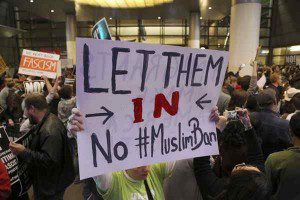
Its Not a Muslim Ban - Its Worse
Robert Hunt: Interfaith Encounters

The Hollowness of Ethics Without Relationships
Robert Hunt: Interfaith Encounters

Robert Hunt: Interfaith Encounters

Banning the Burqa: the New Exile
Robert Hunt: Interfaith Encounters
TRENDING AT PATHEOS Progressive Christian

Did Prayer Cure His Cancer? Or Was It...
At 4 AM one morning, Joshua W. Brown’s wife awoke to a...

8 Ways a Near-Death Experience Rewires the Soul
Does Consciousness Survive Physical Death? After 50 Years of Research, Dr. Raymond...

Holy Longing: What Our Restlessness Is Telling Us
“One can find so many pains when the rain is falling.” -John...

What this is NOT about. This blog is definitely not about...

Who said the Israelites were God’s chosen? That’s right, they did. Who...

The Spirit World Is the Real World: God...
A Monk’s Wisdom on Body and Spirit I sit with Brother Martin...
view all Progressive Christian blogs
Ad-Free & Subscriber Log-In Subscription Support
- About Us
- 2026 Calendar
- Videos
- Podcasts
- Library of World Religions
- Faith In Media Tracker
- Advertise With Us
- Write for Us
- Privacy Policy
- Terms of Service
- Do Not Sell My Data
- Contact Us
- Radiant Digital
- Manage Newsletter Subscriptions
- Unsubscribe From Notifications
- Sitemap
Copyright 2008-2026, Patheos. All rights reserved.
Subscription Support Ad-Free & Subscriber Log-In
Follow Patheos