
BuddhistCatholicContemplativeEvangelicalGeneral ChristianHinduJewishLatter-day SaintMuslimNew VisionsProgressive Christian
Beliefs
- Buddhist
- Catholic
- Contemplative
- Evangelical
- General Christian
- Hindu
- Jewish
- Latter-day Saint
- More Voices
- Muslim
- New Visions
- Pagan
- Progressive Christian
Topics
- Religion News
- Food and Religion
- Sports and Religion
- Religious Art
- Religious Music and Entertainment
- Religious Events
- History and Religion
- Style and Religion
- Politics and Religion
- Women in Religion
- Recreation Outdoors and Religion
- Business Finance and Religion
- Careers Workplace and Religion
- Education and Religion
- Family Parenting and Religion
- Health Fitness and Religion
- Home and Religion
- Relationships and Religion
- Technology and Religion
- Travel and Religion
Columnists
- Buddhist Columnists
- Business Finance and Religion Columnists
- Careers Workplace and Religion Columnists
- Catholic Columnists
- Contemplative Columnists
- Education and Religion Columnists
- Evangelists Columnists
- Family Parenting and Religion Columnists
- General Christian Columnists
- Health Fitness and Religion Columnists
- Hindu Columnists
- History and Religion Columnists
- Home and Religion Columnists
- Jewish Columnists
- More Voices Columnists
- Latter Day Columnists
- Muslim Columnists
- New Visions Columnists
- Nonreligious Columnists
- Pagan Columnists
- Politics and Religion Columnists
- Progressive Columnists
- Recreation Outdoors and Religion Columnists
- Relationships and Religion Columnists
- Religion News Columnists
- Religious Art Columnists
- Religious Events Columnists
- Religious Music and Entertainment Columnists
- Sports and Religion Columnists
- Style and Religion Columnists
- Technology and Religion Columnists
- Travel and Religion Columnists
- Women in Religion Columnists
Resource Library
- 2026 Calendar
- Library of World Religions
- The 100 Most Holy Places on Earth
- Patheos Answers
- Podcasts
- Videos
- Faith Leaders Database
- Anglican Episcopalian
- Bahai
- Baptist
- Buddhism
- Christianity
- Confucianism
- Eastern Orthodoxy
- Hinduism
- Holiness and Pentecostal
- ISKCON
- Islam
- Judaism
- Lutheran
- Methodist
- The Church of Jesus Christ of Latter-day Saints
- New Age
- Paganism
- Presbytarian and Reformed
- Protestantism
- Religion Behind the Scenes
- Roman Catholic
- Scientology
- Shia Islam
- Sikhism
- Sufism
- Sunni Islam
- Taoism
- Zen
- See all religions
Research Tools
 Ad-Free & Subscriber Log-In Subscription Support
Ad-Free & Subscriber Log-In Subscription Support
Follow Patheos 

- Trending:
- Forgiveness
- |
- Marriage
- |
- Consciousness
- |
- Death Penalty
- |
- Election
- |
- Halloween
 Robert Hunt: Interfaith Encounters
- Home
- Progressive Christian
- Apostasy and Blaspheme
Apostasy and Blaspheme
Last updated on: March 13, 2015 at 8:09 pm by Robert Hunt
Apostasy and Blaspheme 2015-03-13T20:09:04-06:00 Robert Hunt
Patheos Explore the world's faith through different perspectives on religion and spirituality! Patheos has the views of the prevalent religions and spiritualities of the world.
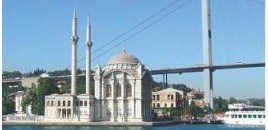
Last week in Sweden two bombs were set off, apparently by a Muslim man still chaffing at the perceived blaspheme against Muhammad supposedly perpetrated by a Swedish cartoonist. In Pakistan a life hangs in the balance over similar charges. Here in Malaysia it appears that hundreds, if not thousands of converts from Islam to other religions must live dangerous double lives because of laws against apostasy. It is only worse elsewhere in the Muslim World.
From a western standpoint harsh punishments for apostasy and blaspheme, and indeed even the concepts of blaspheme and apostasy seem the like remnants of some medieval barbarism. So it is worth exploring the reasons they endure into our own time, and the ways they might still resonate with even modern Christians. We need to understand, even if we reject absolutely, why a verbal attack on a community or human person could be believed to be a justify a violent response, and why an individual’s decision about religious affiliation could be met with imprisonment and death.
Most humans, like all animals, will respond violently to protect themselves against direct physical harm. But why should there be a violent response to words and images and attacks on words and images that pose no physical harm, and which sometimes take place long before the response? Why not simply reply with the old retort “sticks and stones may break my bones but words will never hurt me?”
One answer, of course, is that words do hurt, as do images. They have the power to convey into individuals and communities ideas that are offensive and cause emotional and even intellectual wounds. This power to hurt is among the many types of power words and images have as forms of human communication. And it is one of the most important. Words can be the weapon of the physically weak against the physically powerful. They can inflict (as we see in the Wikileaks case) real damage to an enemy or a friend, even if it isn’t physical damage.
For this reason there has always been a tension between the freedom to use words and images and the need to protect people from their harm. The values of free and open communication, the use of words and images are valued so highly that in most European and American societies they are protected almost absolutely. The exceptions are generally those words which incite violence, or which make false accusations that harm the material well-being of a person or the justice of the state.
But for Muslims some words and the images they create in the human soul are more than a way of communicating ideas. They are the indissoluble link between the human person and God. When they are absent or damaged the human person isn’t merely deprived of a means of communication, but of the actual presence of the Divine reality that they alone can re-present. Such sacred words are what the Christian Gospel of John calls the Word, the logos, that makes the reality of the Divine immediately manifest. They have a qualitatively different form of power over humans than do words which merely convey ideas. Attacks on these words, and the images they create in the soul, are not felt as merely attacks on an idea. They are felt as an attack on the human person who draws his or her life from reality the words and images re-present.
Prior to the Enlightenment Christians in the West, as well as Jews, understood at least some words and images in this way as well. Laws against blaspheme remain on the books in some European countries as remnants of that understanding. Attacks on certain Christian images and words were understood to be more than just attacks on ideas. They were attacks on that which linked humans with God and thus were essential to human life and well-being. Even the introduction of alternative words was dangerous, since like idols they could lead the believer into the worship of false Gods.
Apostasy is not, in this respect, so very different from blaspheme. The apostate is a living repudiation of all those icons, verbal and otherwise, that link humans with their meaning in the divine. He or she is a word, even if unspoken, against other words.
The concepts of apostasy and blaspheme have changed in the West, and even well beyond the West. Protestant Christians, like many Buddhists and Taoists, have understood words and images to be dangerously misleading, creating an emotional attachment to something that cannot represent, and usually mis-represents, transcendent reality. For many in the West an attachment to particular words and images as anything other than representations of ideas is regarded as infantile. Thus the attacking of icons, visible and aural, is seen as a necessary part of fostering both individual and social maturity. It is part of the entire Enlightenment project of drawing the sharpest possible boundary between noumenal and phenomenal realities so that humans can focus their attention where it belongs – on the phenomenal. Anything that claims to cross that boundary is considered fair game for deconstruction. Real faith, in this new world, requires a leap – not a bridge. Every individual must make his or her own leap, and it is senseless to ask for conformity.
Yet we need to understand that this Enlightenment project wasn’t just iconoclastic on intellectual grounds. The strong identification of the peoples of Europe with religious icons, visible or aural, was one source of never-ending social violence. Religiously plural societies could never exist where a people’s sense of self-hood depended on iconic support (aural or visible) in the public sphere because these icons themselves could not share a common public space. One person’s icon was always another person’s anti-icon. One person’s apostasy was another persons fidelity. Only by purging icons of their power to give human life meaning, or by privatizing that meaning by allowing their public desecration, could they co-exist. The bare walled chapel in England, itself a protest against perceived Catholic idolatry, could co-exist with the Catholic cathedral resplendent with images and relics because neither was allowed to mean anything in public, while believers in either drew their own private meaning from their chosen icons. The apostate was simply another private believer rather than a visible attack on the dominant religion.
Muslims are understandably reluctant to give up a more than thousand year tradition in which human meaning in relationship to the divine was continually affirmed in the public sphere through icons both heard and seen. Loosing this is a wrenching blow, and (given European history) it is not surprisingly accompanied by violence. Yet whether there is another strategy for fostering religious pluralism without violence in the public sphere is debatable. Typical Muslim proposals (The Cairo Declaration) return to the kind of social contracts articulated in classical Islamic law. In these religion and religious people of all types are protected by a divine mandate administered by Muslims (or another dominant religion.) Non-Muslims have real questions about whether such systems ever actually worked in reality. Even theoretically the human administration of divine mandates has serious flaws because of human weakness and corruption. Nor do contemporary Muslim societies offer any reassurance; given the endemic sectarian violence and oppression of religious minorities that is characteristic of virtually all of them.
Perhaps the most pressing issue in inter-religious dialogue today is the need to seek a common understanding of a plurality of religious icons (verbal, visible, and human) can exist in a society whose members depend on them for their very sense of being human, yet must respect that this may not be understood, and may even be opposed by others on equally urgent grounds.
Robert Hunt
Previous Post

December 11, 2010
The Big Picture and the Small - Religion in Malaysia
Next Post
January 2, 2011 Science and Religion - A Common Aim?
Browse Our Archives
Select a Category Christian Identity Christian Muslim Relations Home Page Inter-Religious Dialogue Uncategorized
Select a Month September 2017 August 2017 July 2017 June 2017 May 2017 April 2017 March 2017 February 2017 January 2017 December 2016 November 2016 October 2016 September 2016 August 2016 July 2016 June 2016 April 2016 March 2016 February 2016 January 2016 December 2015 November 2015 October 2015 September 2015 August 2015 July 2015 June 2015 May 2015 April 2015 March 2015 February 2015 January 2015 December 2014 October 2014 September 2014 August 2014 July 2014 June 2014 May 2014 April 2014 March 2014 February 2014 January 2014 December 2013 September 2013 August 2013 July 2013 June 2013 April 2013 March 2013 February 2013 January 2013 December 2012 November 2012 October 2012 September 2012 August 2012 July 2012 June 2012 May 2012 April 2012 December 2011 November 2011 October 2011 September 2011 August 2011 June 2011 May 2011 April 2011 March 2011 February 2011 January 2011 December 2010 November 2010 October 2010 September 2010 July 2010 May 2010
TAKE THE
Religious Wisdom Quiz
What was the name of the sea Jesus calmed during a storm?
Select your answer to see how you score.
Sea of Galilee Red Sea Dead Sea Mediterranean Sea
Related posts from Robert Hunt: Interfaith Encounters

Robert Hunt: Interfaith Encounters

Privilege and the Loss of Personhood
Robert Hunt: Interfaith Encounters

Restoring Civilization: Whose Babies?
Robert Hunt: Interfaith Encounters
The Dis-Uniting of Methodist Christianity - When Dialogue...
Robert Hunt: Interfaith Encounters
TRENDING AT PATHEOS Progressive Christian

Did Prayer Cure His Cancer? Or Was It...
At 4 AM one morning, Joshua W. Brown’s wife awoke to a...

8 Ways a Near-Death Experience Rewires the Soul
Does Consciousness Survive Physical Death? After 50 Years of Research, Dr. Raymond...

Holy Longing: What Our Restlessness Is Telling Us
“One can find so many pains when the rain is falling.” -John...

What this is NOT about. This blog is definitely not about...

Who said the Israelites were God’s chosen? That’s right, they did. Who...

The Spirit World Is the Real World: God...
A Monk’s Wisdom on Body and Spirit I sit with Brother Martin...
view all Progressive Christian blogs
Ad-Free & Subscriber Log-In Subscription Support
- About Us
- 2026 Calendar
- Videos
- Podcasts
- Library of World Religions
- Faith In Media Tracker
- Advertise With Us
- Write for Us
- Privacy Policy
- Terms of Service
- Do Not Sell My Data
- Contact Us
- Radiant Digital
- Manage Newsletter Subscriptions
- Unsubscribe From Notifications
- Sitemap
Copyright 2008-2026, Patheos. All rights reserved.
Subscription Support Ad-Free & Subscriber Log-In
Follow Patheos