
BuddhistCatholicContemplativeEvangelicalGeneral ChristianHinduJewishLatter-day SaintMuslimNew VisionsProgressive Christian
Beliefs
- Buddhist
- Catholic
- Contemplative
- Evangelical
- General Christian
- Hindu
- Jewish
- Latter-day Saint
- More Voices
- Muslim
- New Visions
- Pagan
- Progressive Christian
Topics
- Religion News
- Food and Religion
- Sports and Religion
- Religious Art
- Religious Music and Entertainment
- Religious Events
- History and Religion
- Style and Religion
- Politics and Religion
- Women in Religion
- Recreation Outdoors and Religion
- Business Finance and Religion
- Careers Workplace and Religion
- Education and Religion
- Family Parenting and Religion
- Health Fitness and Religion
- Home and Religion
- Relationships and Religion
- Technology and Religion
- Travel and Religion
Columnists
- Buddhist Columnists
- Business Finance and Religion Columnists
- Careers Workplace and Religion Columnists
- Catholic Columnists
- Contemplative Columnists
- Education and Religion Columnists
- Evangelists Columnists
- Family Parenting and Religion Columnists
- General Christian Columnists
- Health Fitness and Religion Columnists
- Hindu Columnists
- History and Religion Columnists
- Home and Religion Columnists
- Jewish Columnists
- More Voices Columnists
- Latter Day Columnists
- Muslim Columnists
- New Visions Columnists
- Nonreligious Columnists
- Pagan Columnists
- Politics and Religion Columnists
- Progressive Columnists
- Recreation Outdoors and Religion Columnists
- Relationships and Religion Columnists
- Religion News Columnists
- Religious Art Columnists
- Religious Events Columnists
- Religious Music and Entertainment Columnists
- Sports and Religion Columnists
- Style and Religion Columnists
- Technology and Religion Columnists
- Travel and Religion Columnists
- Women in Religion Columnists
Resource Library
- 2026 Calendar
- Library of World Religions
- The 100 Most Holy Places on Earth
- Patheos Answers
- Podcasts
- Videos
- Faith Leaders Database
- Anglican Episcopalian
- Bahai
- Baptist
- Buddhism
- Christianity
- Confucianism
- Eastern Orthodoxy
- Hinduism
- Holiness and Pentecostal
- ISKCON
- Islam
- Judaism
- Lutheran
- Methodist
- The Church of Jesus Christ of Latter-day Saints
- New Age
- Paganism
- Presbytarian and Reformed
- Protestantism
- Religion Behind the Scenes
- Roman Catholic
- Scientology
- Shia Islam
- Sikhism
- Sufism
- Sunni Islam
- Taoism
- Zen
- See all religions
Research Tools
 Ad-Free & Subscriber Log-In Subscription Support
Ad-Free & Subscriber Log-In Subscription Support
Follow Patheos 

- Trending:
- Forgiveness
- |
- Marriage
- |
- Consciousness
- |
- Death Penalty
- |
- Election
- |
- Halloween
 Rhetoric Race and Religion
- Home
- Progressive Christian
- From the Mountain Top and Beyond: The Rhetoric of #MLK 50 Years Later
From the Mountain Top and Beyond: The Rhetoric of #MLK 50 Years Later
Last updated on: June 12, 2018 at 9:50 am by Andre E. Johnson
From the Mountain Top and Beyond: The Rhetoric of #MLK 50 Years Later 2018-06-12T09:50:03-05:00 Andre E. Johnson
Patheos Explore the world's faith through different perspectives on religion and spirituality! Patheos has the views of the prevalent religions and spiritualities of the world.
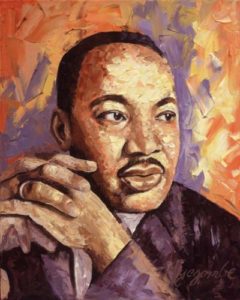 I am pleased to announce the publication of this special issue of the Journal of Contemporary Rhetoric I edited titled “From the Mountain Top and Beyond: Contemporary Meanings and Understandings of the Rhetoric of Martin Luther King Jr., 50 Years Later.”
Dislocations and Shutdowns: MLK, BLM and the Rhetoric of Confrontation
Andre E. Johnson
During the last year of King’s life, his ability to persuade and to gain a national consensus around issues of war, poverty, economic injustice, and the inequality suffered by blacks and all people of color had waned. Faced with increasing hostility to him and the movement along with the rising white backlash, King knew that moral suasion would not give him the results that he had hoped. This lead King, to launch the Poor People’s Campaign as a movement of massive civil disobedience that would lead to economic boycotts and the shutdown entire cities. By doing this, King hoped that the government, sensitive to the dislocation and shutdowns would eventually do the “right thing.” I conclude by arguing that BLM whether knowingly or not, have adopted many of the ideas that King argued during the last year of his life becoming the natural extension of King’s vision in the last year of his life.
Keywords: Martin Luther King Jr., Social Movements, Black Lives Matter, Protest Rhetoric, African American Public Address
Martin Luther King Jr., W.E.B. Du Bois, and Attitudes Toward Change
Jonathan M. Smith
Antonio de Velasco
There is a less recognized Martin Luther King Jr. who has received limited attention in history books. As King approached the final year of his life, his speeches appeared to evolve in their treatment of progress. One such speech is “Honoring Dr. Du Bois.” In this essay, we suggest that “Honoring Dr. Du Bois” provides a platform to partially understand the nature of King’s activism during his final year. We argue that the speech characterizes a perspective toward revolutionary change that differs significantly from the King of past years. In King’s earlier and most iconic speeches, he often treats change as tangible and achievable; however, in “Honoring Dr. Du Bois,” King regards social justice as an ongoing, indefinite journey. Therefore, we argue that rather than characterizing his activism as moving toward a “promised land” as he did in the “I Have a Dream” speech, “Honoring Dr. Du Bois” suggests that King now views progress as perpetual action with no clear-cut destination. Additionally, we argue that “Honoring Dr. Du Bois” provides a lens to examine the types of rhetorical moves King used to establish this evolved perspective. We contend that King employs synecdoche to establish and clarify his attitude. King eulogizes Du Bois while simultaneously adopting Du Bois’ activist philosophy and the trajectory of his life. Ultimately, King uses the speech as a rhetorical vehicle to express his current vision of change and progress in 1968. In our conclusion, we explore the presence of King’s sustaining influence in the contemporary US.
Keywords: W.E.B Du Bois, Martin Luther King Jr., Synecdoche, Substance, Change.
Children in the Dream: Barack Obama and the Struggle over Martin Luther King’s Legacy
David Deifell
The rhetoricity in the relationship between Martin Luther King, Jr.’s “I Have a Dream” speech and the election of Obama reveals hopes and anxieties about contemporary race relations. Examining the connection between an old rhetoric and its new realities, this study elaborates on the implications of popular articulations of Obama’s initial election to King’s Dream. Drawing on theories of constitutive rhetoric and interpellation, the essay frames King’s speech as a constitutive narrative with which we imagine race in America. Beyond its rhetorical situation, the speech continues shaping us as its political subjects, children of the Dream. An analysis of competing characterizations of Obama regarding that subject positioning elaborates on the rhetorical tension that developed into the debate about whether society has become post-racial or not. Perhaps innocent exuberance at first, the King-Obama link lays bare the consequences of positions Americans take in relation to increasingly divergent ideologies about race in America.
Keywords: constitutive rhetoric, post-race, King, Obama, interpellation, narrative, subject position.
“My Living Shall Not Be in Vain”: The Rhetorical Power of Eulogies in the Face of Civil Unrest
Melissa Renee Harris
Ashley R. Hall
Rhetoric of eulogies traditionally follow an identifiable epideictic or deliberative form. However, the funeral orator may blend both forms as a hybrid rhetoric based on the life, death, and social conditions at the time of the eulogy. This essay provides a rhetorical analysis of the eulogy of Dr. Martin Luther King Jr. for the young victims of the Sixteenth Street Church Bombing and the eulogy of Barack Obama for Rev. Clementa Pinckney after the massacre at Emanuel AME Church. The authors argue that historically the eulogies for murdered Blacks are socially significant as the rhetor uses purification, association, and unification as rhetorical tools to martyr the decedents and unite the audience in social corrective action. Further, the rhetorical situation is impacted by the need for justification of prematurely and unjustly lost life. There is currently an alarming trend of Blacks being murdered by police and racially charged incidents, often resulting in social upheaval within communities across the country. This analysis provides insight into the resulting eulogies of unjustified Black death and the rhetorical power of the eulogist when addressing communities on the verge of civil unrest.
Keywords: Eulogies, African American rhetoric, Black, hybrid, martyr, justice.
WWMLKD?: Coopting the Rhetorical Legacy of Martin Luther King, Jr. and the Civil Rights Movement
Michelle Kelsey Kearl
Created Equal, an anti-abortion organization based in Ohio, argues it is fulfilling the legacy of the Civil Rights Movement (CRM) by fighting widespread and systemic age discrimination. Putting to work the images, tactics, and rhetorics of the Civil Rights Movement and Dr. Martin Luther King, Jr. (MLK), Created Equal argues abortion enacts ageism and is worthy of formal civil rights protection. I argue that Created Equal leverages the ideographic ethos and pathos of the CRM and MLK to tap into American public memory of the man and the movement, then use them as ciphers in which they invest their own connotative meaning. This appropriation or coopting of the rhetorical legacy of MLK and CRM allows Created Equal to repurpose the past towards contemporary political ends incongruous with King and the movement. I draw implications to broader neoliberal rhetorical practices that appropriate progressive narratives, in both form and content, towards traditionally conservative aims.
Keywords: Martin Luther King, Jr., Civil Rights Movements, abortion, ideograph, cipher.
Donate to the Work of R3
Like the work we do at Rhetoric Race and Religion? Please consider helping us continue to do this work. All donations are tax-deductible through Gifts of Life Ministries/G’Life Outreach, a 501 (3) tax-exempt organization, and our fiscal sponsor. Any donation helps. Just click here to support our work.
Journal of Contemporary Rhetoric
Next Post

June 17, 2018 Dislocations and Shutdowns: #MLK, #BLM and the Rhetoric of Confrontation
Browse Our Archives
Select a Category Amy Steele Andre E. Johnson Book Reviews/Series Brian Foulks Call for Chapters Carol Howard Merritt Classes Conferences Contributors Crystal St.Marie Lewis Daniel White Hodge Earle Fisher Eulogy Fredrick Robinson Guest Contributions Henry McNeal Turner Institutes Interviews Joseph Boston Katherine Whitfield Kimberly Peeler-Ringer Lectures/Roundtables Natalie Bullock Brown R3 Book Series R3 Contributor Rashad Grove Readers Reflections Symposiums Teaching Traci Ellis Travis Harris Uncategorized Video
Select a Month June 2020 February 2020 December 2019 November 2019 July 2019 June 2019 May 2019 October 2018 June 2018 May 2018 April 2018 March 2018 February 2018 January 2018 December 2017 November 2017 October 2017 September 2017 August 2017 July 2017 June 2017 May 2017 April 2017 March 2017 February 2017 January 2017 December 2016 November 2016 October 2016 September 2016 August 2016 July 2016 June 2016 May 2016 April 2016 March 2016 February 2016 January 2016 December 2015 November 2015 October 2015 September 2015 August 2015 July 2015 June 2015 May 2015 April 2015 March 2015 February 2015 January 2015 December 2014 November 2014 October 2014 September 2014 August 2014 July 2014 June 2014 May 2014 April 2014 March 2014 February 2014 January 2014 December 2013 November 2013 October 2013 September 2013 August 2013 July 2013 June 2013 May 2013 April 2013 March 2013 February 2013 January 2013 December 2012 November 2012 October 2012 September 2012 August 2012 July 2012 June 2012 May 2012 April 2012 March 2012 February 2012 January 2012 December 2011 November 2011 October 2011
Follow Us!
TAKE THE
Religious Wisdom Quiz
What did God write the Ten Commandments with?
Select your answer to see how you score.
His finger A pen A chisel A sword
Related posts from Rhetoric Race and Religion


Dislocations and Shutdowns: #MLK, #BLM and the Rhetoric...
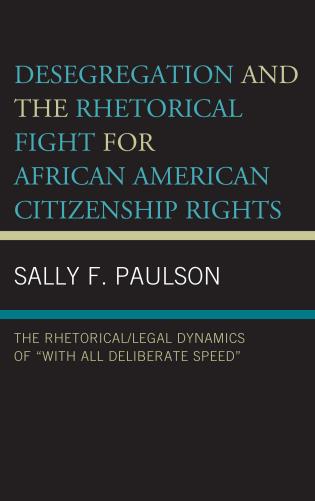
New Book in R3 Book Series on Desegregation...

Special Issue: Communication, Religion, and Race in America
TRENDING AT PATHEOS Progressive Christian

Why Christians Have a Sacred Duty to Vote:...
The Bible offers strong support for the sacred duty to vote. Here...

What Being a Modern-Day Apostle Means to Me
In my last column, I discussed the ins and outs of modern-day...

Did Ancient China Once Worship the God of...
Across human history, a common thread weaves through the origins of the...

Love Your Neighbor – Including Earth-Kin: Lev. 19,...
God’s command to love your neighbor means acting in an ethical and...

Lead a Church Study of “Jesus and Lao...
Guest writer Jack Thomas (The Irreverent Reverend) reflects on leading his church...

Principles for Understanding the Apostolic Ministry Today
Whenever people discover that my formal ministry title is "apostle," as in...
view all Progressive Christian blogs
Ad-Free & Subscriber Log-In Subscription Support
- About Us
- 2026 Calendar
- Videos
- Podcasts
- Library of World Religions
- Faith In Media Tracker
- Advertise With Us
- Write for Us
- Privacy Policy
- Terms of Service
- Do Not Sell My Data
- Contact Us
- Radiant Digital
- Manage Newsletter Subscriptions
- Unsubscribe From Notifications
- Sitemap
Copyright 2008-2026, Patheos. All rights reserved.
Subscription Support Ad-Free & Subscriber Log-In
Follow Patheos