
BuddhistCatholicContemplativeEvangelicalGeneral ChristianHinduJewishLatter-day SaintMuslimNew VisionsProgressive Christian
Beliefs
- Buddhist
- Catholic
- Contemplative
- Evangelical
- General Christian
- Hindu
- Jewish
- Latter-day Saint
- More Voices
- Muslim
- New Visions
- Pagan
- Progressive Christian
Topics
- Religion News
- Food and Religion
- Sports and Religion
- Religious Art
- Religious Music and Entertainment
- Religious Events
- History and Religion
- Style and Religion
- Politics and Religion
- Women in Religion
- Recreation Outdoors and Religion
- Business Finance and Religion
- Careers Workplace and Religion
- Education and Religion
- Family Parenting and Religion
- Health Fitness and Religion
- Home and Religion
- Relationships and Religion
- Technology and Religion
- Travel and Religion
Columnists
- Buddhist Columnists
- Business Finance and Religion Columnists
- Careers Workplace and Religion Columnists
- Catholic Columnists
- Contemplative Columnists
- Education and Religion Columnists
- Evangelists Columnists
- Family Parenting and Religion Columnists
- General Christian Columnists
- Health Fitness and Religion Columnists
- Hindu Columnists
- History and Religion Columnists
- Home and Religion Columnists
- Jewish Columnists
- More Voices Columnists
- Latter Day Columnists
- Muslim Columnists
- New Visions Columnists
- Nonreligious Columnists
- Pagan Columnists
- Politics and Religion Columnists
- Progressive Columnists
- Recreation Outdoors and Religion Columnists
- Relationships and Religion Columnists
- Religion News Columnists
- Religious Art Columnists
- Religious Events Columnists
- Religious Music and Entertainment Columnists
- Sports and Religion Columnists
- Style and Religion Columnists
- Technology and Religion Columnists
- Travel and Religion Columnists
- Women in Religion Columnists
Resource Library
- 2026 Calendar
- Library of World Religions
- The 100 Most Holy Places on Earth
- Patheos Answers
- Podcasts
- Videos
- Faith Leaders Database
- Anglican Episcopalian
- Bahai
- Baptist
- Buddhism
- Christianity
- Confucianism
- Eastern Orthodoxy
- Hinduism
- Holiness and Pentecostal
- ISKCON
- Islam
- Judaism
- Lutheran
- Methodist
- The Church of Jesus Christ of Latter-day Saints
- New Age
- Paganism
- Presbytarian and Reformed
- Protestantism
- Religion Behind the Scenes
- Roman Catholic
- Scientology
- Shia Islam
- Sikhism
- Sufism
- Sunni Islam
- Taoism
- Zen
- See all religions
Research Tools
 Ad-Free & Subscriber Log-In Subscription Support
Ad-Free & Subscriber Log-In Subscription Support
Follow Patheos 

- Trending:
- Forgiveness
- |
- Marriage
- |
- Consciousness
- |
- Death Penalty
- |
- Election
- |
- Halloween
 Rhetoric Race and Religion
- Home
- Progressive Christian
- The Most Dangerous Negro in America
The Most Dangerous Negro in America
Last updated on: May 31, 2018 at 12:07 pm by Andre E. Johnson
The Most Dangerous Negro in America 2018-05-31T12:07:31-05:00 Andre E. Johnson
Patheos Explore the world's faith through different perspectives on religion and spirituality! Patheos has the views of the prevalent religions and spiritualities of the world.
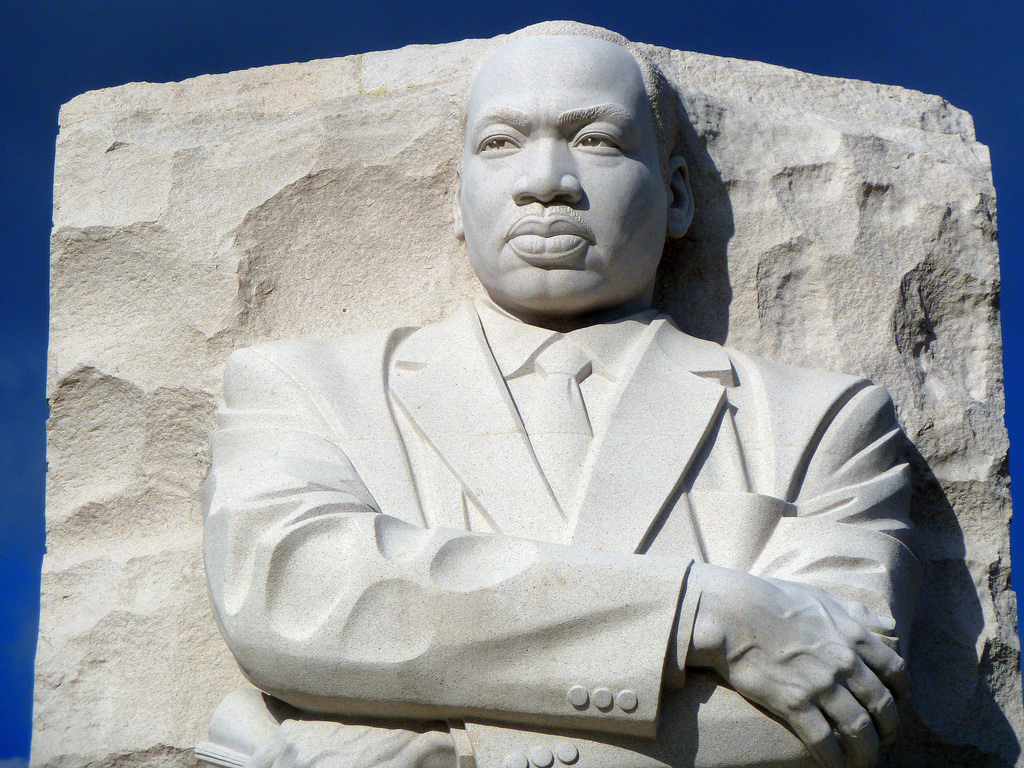 by Andre E. Johnson and Anthony J. Stone, Jr.
On April 4, 1968, on a balcony at the Lorraine Motel in Memphis, Tennessee in front of Room 306, an assassin shot and killed the nation’s prophet of non-violence. The previous night, not feeling the best and against his own wishes, Rev. Dr. Martin Luther King, Jr. reluctantly showed up at a rally supporting the striking sanitation workers at Mason Temple Church of God in Christ where he delivered a speech for the ages. King somehow mustered up enough strength to move the crowd that night, calling them to stand firm under the oppressive tactics of the Henry Loeb administration. He also called for them to turn up the pressure in their non-violence resistance. This meant massive economic boycotts. He asked them not to buy “Sealtest milk” and “Wonder Bread or Hart’s Bread.” It was time for the redistribution of the pain that the sanitation workers have only felt. “We are choosing these companies,” King declared, “because they haven’t been fair in their hiring policies, and we are choosing them because they can begin the process of saying they are going to support the needs and the rights of these men who are on strike. And then they can move on — downtown and tell Mayor Loeb to do what is right.”
He further called his audience that night to “strengthen Black institutions.” He wanted them to deposit all of their money in Tri-State Bank and called for a “bank in” movement in Memphis. “Put your money there,” he declared, “you have six or seven Black insurance companies here in the city of Memphis. Take out your insurance there. We want to have an ‘insurance-in.’” He proclaimed,
We don’t have to argue with anybody. We don’t have to curse and go around acting bad with our words. We don’t need any bricks and bottles. We don’t need any Molotov cocktails. We just need to go around to these stores, and to these massive industries in our country, and say, “God sent us by here, to say to you that you’re not treating his children right. And we’ve come by here to ask you to make the first item on your agenda fair treatment, where God’s children are concerned. Now, if you are not prepared to do that, we do have an agenda that we must follow. And our agenda calls for withdrawing economic support from you.
But on the next day, King laid dead on the balcony of the Lorraine Motel. Earlier that day, he had worked on his sermon for Sunday, April 7, which was Palm Sunday. Typically, on Palm Sunday, church audiences hear the sermon about Jesus coming into Jerusalem on the back of a donkey and shutting down all traffic. Christians call this the Triumphal Entry; where Jesus lead a processional in which folks waved palm branches and proclaimed, “Hosanna, Hosanna, blessed is he who comes in the name of the Lord!” Even for non-liturgical churches like many Black Baptist congregations, Palm Sunday is usually celebrated. However, King’s sermon was not your typical Palm Sunday variety. Though he lay dead, his associates found in his pocket the sermon notes he would have
preached that Sunday if he had lived. The sermon title: “Why America May Go to Hell.”
While King today is largely considered one of the greatest Americans to ever live, during his lifetime—and especially near the end of his life—King was one of the most hated men in America. The FBI named King “the most dangerous Negro in America.” According to a 1966 Gallop Poll, almost two-thirds of Americans had an unfavorable opinion of King—a twenty-six-point increase from 1963. Scholars note that hostility toward King increased shortly after the passage of the Civil Rights Acts of 1964 at the time when many white Americans believed that integration was moving too quickly. Furthermore, for much of the last year of his life, King spoke out against US political institutions for what he argued were immoralities such as the war in Vietnam, lack of acknowledgment and/or support for the economic downtrodden, and especially the institution of racism.
If this version of King comes as a surprise to many of his contemporary admirers, it may be because of the shift scholars have noticed in King’s rhetoric over time. According to Sunnemark, pre-1965 King had what he called a “common discourse.” For him, this common discourse of King was as “inviting as possible for as many as possible.” King meant this type of discourse to be non-offensive as the rhetoric was mostly about “recognition and affirmation.” When employed today, it works in the same way. “The vague generality,” writes Sunnemark, “means that King’s rhetoric can still be filled with meaning from different sources. It can still conform to a particular identity of traditional American ideology and self-understanding and its system of signification has become tied in with this identity.” In other words, this “vague generality” helps us to understand how both progressives and conservatives can easily appropriate King’s earlier rhetoric and discourse. Further, he maintains that this is how King has become frozen in time with his “I Have a Dream” speech. The speech, argues Sunnemark, has become a signifier of righteousness which means people can use it in a “wide range of circumstances for a variety of means.”
However, King’s later rhetoric is not available for use in this manner, and it is this rhetoric that we examine. We especially focus on one of the main reasons that many celebrate King today—his seemingly or supposed color-blind, equality-based rhetoric. Along with Cook, we suggest that King, in the last year of his life, began “to understand the hegemony of repressive ideologies, and to deconstruct the limits they appear to set on the possibilities of change” and became “deeply committed to the reconstruction of a social reality based on a radically different assessment of human potential.” When examining King’s rhetoric during the last year of his life, one would note that several of
his last speeches addressed the fallacies of white hegemony; the political elitism and institutional racism of America; the Johnson administration and foreign policy (especially the war in Vietnam), and the redistribution of economic resources—poverty and the treatment of workers. However, we argue that the foundation of these arguments is King’s growing understanding of race and racism. In short, as a key component of these speeches, King focuses much more on race than modern admirers would have imagined.
We also note that for King to move rhetorically in this manner was not politically expedient. He had secured victories in getting the Johnson administration to pass the long-awaited Civil Rights and Voting Rights Acts of 1964 and 1965. King had an ally in the White House and, politically, it did not make sense for King to take such controversial positions. However, we submit that it only makes sense that he did begin to address America’s racism because King adopted a prophetic persona of a pessimistic prophet. More specifically, when we frame King as prophet, his rhetorical shift becomes understandable.
To highlight his prophetic pessimism, we examine King’s rhetoric during the last year of his life (April 4, 1967-April 3, 1968)—focusing specifically on the issues of race. In examining several texts of King, we attempt to highlight King’s directness and firmness when addressing the race issue; we also approach an analysis of the rhetoric used by King in his attempt to dismantle hegemonic politics and institutional racism. Specifically, we argue that while Martin Luther King was radically dismantling white hegemony; he was also becoming one of the most hated men in America.
Read the rest here.
Donate to the Work of R3
Like the work we do at Rhetoric Race and Religion? Please consider helping us continue to do this work. All donations are tax-deductible through Gifts of Life Ministries/G’Life Outreach, a 501 (3) tax-exempt organization, and our fiscal sponsor. Any donation helps. Just click here to support our work.
African American Prophetic Tradition
Previous Post

April 11, 2018
A Critique of #MLK's Theory of Non-Violence
Next Post
June 4, 2018 Special Issue: Communication, Religion, and Race in America
Browse Our Archives
Select a Category Amy Steele Andre E. Johnson Book Reviews/Series Brian Foulks Call for Chapters Carol Howard Merritt Classes Conferences Contributors Crystal St.Marie Lewis Daniel White Hodge Earle Fisher Eulogy Fredrick Robinson Guest Contributions Henry McNeal Turner Institutes Interviews Joseph Boston Katherine Whitfield Kimberly Peeler-Ringer Lectures/Roundtables Natalie Bullock Brown R3 Book Series R3 Contributor Rashad Grove Readers Reflections Symposiums Teaching Traci Ellis Travis Harris Uncategorized Video
Select a Month June 2020 February 2020 December 2019 November 2019 July 2019 June 2019 May 2019 October 2018 June 2018 May 2018 April 2018 March 2018 February 2018 January 2018 December 2017 November 2017 October 2017 September 2017 August 2017 July 2017 June 2017 May 2017 April 2017 March 2017 February 2017 January 2017 December 2016 November 2016 October 2016 September 2016 August 2016 July 2016 June 2016 May 2016 April 2016 March 2016 February 2016 January 2016 December 2015 November 2015 October 2015 September 2015 August 2015 July 2015 June 2015 May 2015 April 2015 March 2015 February 2015 January 2015 December 2014 November 2014 October 2014 September 2014 August 2014 July 2014 June 2014 May 2014 April 2014 March 2014 February 2014 January 2014 December 2013 November 2013 October 2013 September 2013 August 2013 July 2013 June 2013 May 2013 April 2013 March 2013 February 2013 January 2013 December 2012 November 2012 October 2012 September 2012 August 2012 July 2012 June 2012 May 2012 April 2012 March 2012 February 2012 January 2012 December 2011 November 2011 October 2011
Follow Us!
TAKE THE
Religious Wisdom Quiz
Jesus was baptized in the water of which river?
Select your answer to see how you score.
Nile Gihon Jordan Euphrates
Related posts from Rhetoric Race and Religion


Mother Emanuel, Black Pain and the Rhetoric of...

“Here I Am Send Me": The Rhetoric of...

New Book in R3 Book Series on #BLM...
TRENDING AT PATHEOS Progressive Christian

What Being a Modern-Day Apostle Means to Me
In my last column, I discussed the ins and outs of modern-day...

Did Ancient China Once Worship the God of...
Across human history, a common thread weaves through the origins of the...

Love Your Neighbor – Including Earth-Kin: Lev. 19,...
God’s command to love your neighbor means acting in an ethical and...

Lead a Church Study of “Jesus and Lao...
Guest writer Jack Thomas (The Irreverent Reverend) reflects on leading his church...

Pastoral Wisdom for Responding to Sermon Pushback
Getting sermon pushback on your social justice sermon? Learn practical, Proverbs-based strategies...

Principles for Understanding the Apostolic Ministry Today
Whenever people discover that my formal ministry title is "apostle," as in...
view all Progressive Christian blogs
Ad-Free & Subscriber Log-In Subscription Support
- About Us
- 2026 Calendar
- Videos
- Podcasts
- Library of World Religions
- Faith In Media Tracker
- Advertise With Us
- Write for Us
- Privacy Policy
- Terms of Service
- Do Not Sell My Data
- Contact Us
- Radiant Digital
- Manage Newsletter Subscriptions
- Unsubscribe From Notifications
- Sitemap
Copyright 2008-2026, Patheos. All rights reserved.
Subscription Support Ad-Free & Subscriber Log-In
Follow Patheos