
BuddhistCatholicContemplativeEvangelicalGeneral ChristianHinduJewishLatter-day SaintMuslimNew VisionsProgressive Christian
Beliefs
- Buddhist
- Catholic
- Contemplative
- Evangelical
- General Christian
- Hindu
- Jewish
- Latter-day Saint
- More Voices
- Muslim
- New Visions
- Pagan
- Progressive Christian
Topics
- Religion News
- Food and Religion
- Sports and Religion
- Religious Art
- Religious Music and Entertainment
- Religious Events
- History and Religion
- Style and Religion
- Politics and Religion
- Women in Religion
- Recreation Outdoors and Religion
- Business Finance and Religion
- Careers Workplace and Religion
- Education and Religion
- Family Parenting and Religion
- Health Fitness and Religion
- Home and Religion
- Relationships and Religion
- Technology and Religion
- Travel and Religion
Columnists
- Buddhist Columnists
- Business Finance and Religion Columnists
- Careers Workplace and Religion Columnists
- Catholic Columnists
- Contemplative Columnists
- Education and Religion Columnists
- Evangelists Columnists
- Family Parenting and Religion Columnists
- General Christian Columnists
- Health Fitness and Religion Columnists
- Hindu Columnists
- History and Religion Columnists
- Home and Religion Columnists
- Jewish Columnists
- More Voices Columnists
- Latter Day Columnists
- Muslim Columnists
- New Visions Columnists
- Nonreligious Columnists
- Pagan Columnists
- Politics and Religion Columnists
- Progressive Columnists
- Recreation Outdoors and Religion Columnists
- Relationships and Religion Columnists
- Religion News Columnists
- Religious Art Columnists
- Religious Events Columnists
- Religious Music and Entertainment Columnists
- Sports and Religion Columnists
- Style and Religion Columnists
- Technology and Religion Columnists
- Travel and Religion Columnists
- Women in Religion Columnists
Resource Library
- 2026 Calendar
- Library of World Religions
- The 100 Most Holy Places on Earth
- Patheos Answers
- Podcasts
- Videos
- Faith Leaders Database
- Anglican Episcopalian
- Bahai
- Baptist
- Buddhism
- Christianity
- Confucianism
- Eastern Orthodoxy
- Hinduism
- Holiness and Pentecostal
- ISKCON
- Islam
- Judaism
- Lutheran
- Methodist
- The Church of Jesus Christ of Latter-day Saints
- New Age
- Paganism
- Presbytarian and Reformed
- Protestantism
- Religion Behind the Scenes
- Roman Catholic
- Scientology
- Shia Islam
- Sikhism
- Sufism
- Sunni Islam
- Taoism
- Zen
- See all religions
Research Tools
 Ad-Free & Subscriber Log-In Subscription Support
Ad-Free & Subscriber Log-In Subscription Support
Follow Patheos 

- Trending:
- Forgiveness
- |
- Marriage
- |
- Consciousness
- |
- Death Penalty
- |
- Election
- |
- Halloween
 Rhetoric Race and Religion
- Home
- Progressive Christian
- Silence and Sexual Assault: Toward a Better Response from the Church
Silence and Sexual Assault: Toward a Better Response from the Church
Last updated on: February 2, 2018 at 5:43 pm by Guest Contributor
Silence and Sexual Assault: Toward a Better Response from the Church 2018-02-02T17:43:41-05:00 Guest Contributor
Patheos Explore the world's faith through different perspectives on religion and spirituality! Patheos has the views of the prevalent religions and spiritualities of the world.
 by Tom Fuerst
The church-at-large has been far too silent for far too long on the subject of sexual abuse. It’s what happens when church leadership, even in theoretically egalitarian denominations, is dominated by men. This is why I’m grateful for voices like those of Beth Moore, who in this article, seeks to explore one possible reason for our silence on this subject. I applaud Moore for speaking on this because I know it is quite personal to her and, in many ways, it runs contrary to the dominant (read: male) voices in her Evangelical circles.
That praise in place, I think there is a blind-spot in this article that minimizes Moore’s perspective in a time when we need it maximized. Moore asks, “I wonder if much of our silence, our squirming, and palpable discomfort, regarding the exposure of sexual abuses, is wrapped up in our guilt, shame or brokenness over our own sexual sins. After all, who among us hasn’t committed sexual sin whether in imagination or action?” This question functions as a sort of thesis sentence for the article. She’s asking us to consider if it’s our own sexual missteps that inhibit our ability to call out sexual assault.
The problem is, these seem to be two categorically different issues. Sexual abuse has no relationship to individual, privatized sexual decisions. By bringing them together, we see that Moore is still working with some of the individualistic leftovers that still plague the Evangelical discussion of sexual assault to this day.
Popularized in Evangelical circles in the 1990s, Moore is firmly embedded in Evangelical culture, particularly in its most conservative forms (Southern Baptists). Evangelical Christians tend to think about sin, particularly sexual sin, in more individualistic ways (which can be good and bad). Of course, Moore is bright and is fully capable of thinking her way out of cultural baggage. However, by understanding her long-time context, we can see here why she would default to speaking to this subject in a way that privatizes/personalizes it (“Do we ignore a church leader’s sexual harassment because we slept with people in college?”). My claim, however, is that this is really a non-issue. How is someone’s history of consensual sex (even if outside the bounds of the church’s teachings) connected to the rampant, culture-wide violence of sexual assault? This is like asking, “Do I overlook the systemic greed that caused the housing market crash in 2008 because I once bought a pair of shoes I didn’t need?”What needs to be addressed in this cultural conversation has nothing to do with individual sexual history, and should focus more on why we have a culture that systematically inhibits victims from telling their truth. This is the kind of thing Paul is getting at in Romans 1, where he ties group injustices – including sexual injustices – to larger systems of idolatry. For Paul, the problem is not just individuals sinning individually. Rather, sin is a system that leads to the degradation of our bodies, a system that protects abusers (“approves of them”), and leads to group destruction. Yes, of course, individuals are involved. But individuals are held captive to a larger system. And that is where my critique of Moore lies.
In straining at the gnat of individual sin, Moore misses the camel of male privilege that has blinded the church to how truly entrenched this problem is. She misses the opportunity to unmask the system of patriarchy and male privilege. For many of her readers, her authoritative voice will be the first time they hear such a thing from a trusted, biblically-grounded person. Many of them survive in church cultures where abuse is so normalized they don’t even call it abuse, they call it “biblical.” A quick Google search reveals hundreds of women testifying to their churches giving them theological imperatives to submit to their abusive husbands. What God-loving woman would want to go against something her church leaders have deemed biblical? The entire system seems set up to foster abuse. It is, therefore, not just a matter of individual sexual sin or individual motivation for covering up sexual abuse.
Thus, in our missing the point, in our default refusal to believe women, it has taken a movement outside the church (#MeToo)to prophetically critique a problem inside the church (#ChurchToo).
I’m Wesleyan because I believe we offer a unique perspective here, albeit one that looks better in theory than anything we’ve managed to accomplish on the ground. For even within Wesleyan movements, women are sidelined, assumed to be inferior leaders/speakers, etc., thus limiting the appointments they can access, thereby silencing their influence, denying their stories, and limiting the structural changes women can bring about to make church and society safer for future generations of young women (and men) . Moore is right, we need a concerted, group effort that speaks to the issue and tells predators that the church is not a safe place for them. But she offers no real ideas on how to do this that go beyond her assumption that sexual sin and shame lie behind our silence. Sermons from the pulpit are a great and necessary start, but that doesn’t change anything structurally, and the pastor cannot be the only voice pushing for this.
What would need to happen for structural change to take place?
Something Moore is possibly unwilling to say (or at least unwilling to say publicly): A radical commitment to women in leadership in churches. A radical overhaul of how we approach gendered situations wherein men are the primary judges of truth and accountability. A radical commitment to having women tell their stories (when/if they’re ready). A radical commitment to re-evaluate male-centeredness of many churches, seeking concrete ways to ensure that future generations of churches have women-as-women ministers, leaders, visioneers, truth-tellers, and prophets. We need women helping us develop safe sanctuaries policies, and we need men and women brave enough to challenge their pastors and leaders about apathy toward protecting the most vulnerable in our churches. In other words, even in egalitarian churches, we have a deep need to rethink our processes and align them with what we say we already believe when we confess that women are equal to men in every way.
Wesleyans, we have an opportunity to say something here. Yes, we can encourage the voices like those of Beth Moore. But let’s go beyond that; let’s model what a truly egalitarian church would look like. Let’s dismantle the boy’s club at the top of our denominational hierarchies. Let’s reevaluate and do something about the lack of female seminary presidents and professors. Let’s ask who our denominational documents are designed to protect in matters of sexual assault allegations or even in every-day patriarchy. Let’s believe women when they tell us what they’ve endured. And, as Moore says, let’s be aware of how our own individual sin impacts our silence. But more than that, let’s be more sensitive to our how our church and denominational structures reinforce silence. And from there, let’s offer an alternative, Christ-centered, women-affirming, truth-telling way. We should be leading the cultural conversation in this. Maybe we are stuck in fear of our past sexual sins, as Moore suggests. More likely, we’re just afraid of it would cost us to be truly Wesleyan and deal with these matters gospel-centered way.
I don’t know. Maybe Moore would agree with everything I just wrote. Maybe she hates patriarchy like I do. If so, I think now is a good time to start saying it. My friend Sara Stanton tells me her Twitter feed is going in the right direction. I hope it is. We need voices like hers.
Tom Fuerst is the Associate Teaching Pastor at Christ United Methodist Church in Memphis, Tennessee and a graduate student in Communication at the University of Memphis. He is also the author of Underdogs and Outsiders: A Bible Study on the Untold Stories of Advent.
Donate to the Work of R3
Like the work we do at Rhetoric Race and Religion? Please consider helping us continue to do this work. All donations are tax-deductible through Gifts of Life Ministries/G’Life Outreach, a 501 (3) tax-exempt organization, and our fiscal sponsor. Any donation helps. Just click here to support our work.
Next Post

February 18, 2018 #MLK, #BLM and the Rhetoric of Confrontation
Browse Our Archives
Select a Category Amy Steele Andre E. Johnson Book Reviews/Series Brian Foulks Call for Chapters Carol Howard Merritt Classes Conferences Contributors Crystal St.Marie Lewis Daniel White Hodge Earle Fisher Eulogy Fredrick Robinson Guest Contributions Henry McNeal Turner Institutes Interviews Joseph Boston Katherine Whitfield Kimberly Peeler-Ringer Lectures/Roundtables Natalie Bullock Brown R3 Book Series R3 Contributor Rashad Grove Readers Reflections Symposiums Teaching Traci Ellis Travis Harris Uncategorized Video
Select a Month June 2020 February 2020 December 2019 November 2019 July 2019 June 2019 May 2019 October 2018 June 2018 May 2018 April 2018 March 2018 February 2018 January 2018 December 2017 November 2017 October 2017 September 2017 August 2017 July 2017 June 2017 May 2017 April 2017 March 2017 February 2017 January 2017 December 2016 November 2016 October 2016 September 2016 August 2016 July 2016 June 2016 May 2016 April 2016 March 2016 February 2016 January 2016 December 2015 November 2015 October 2015 September 2015 August 2015 July 2015 June 2015 May 2015 April 2015 March 2015 February 2015 January 2015 December 2014 November 2014 October 2014 September 2014 August 2014 July 2014 June 2014 May 2014 April 2014 March 2014 February 2014 January 2014 December 2013 November 2013 October 2013 September 2013 August 2013 July 2013 June 2013 May 2013 April 2013 March 2013 February 2013 January 2013 December 2012 November 2012 October 2012 September 2012 August 2012 July 2012 June 2012 May 2012 April 2012 March 2012 February 2012 January 2012 December 2011 November 2011 October 2011
Follow Us!
TAKE THE
Religious Wisdom Quiz
Who was the king who arranged for Hezekiah's scribes to compile additional Proverbs?
Select your answer to see how you score.
Jeroboam Hezekiah Solomon Ahab
Related posts from Rhetoric Race and Religion

Why Christian Nationalism Betrays the Gospel

The Fallacy of Racial Reconciliation
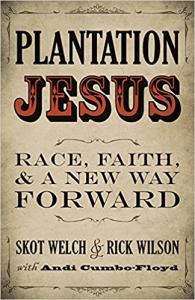
Plantation Jesus: Race, Faith and a New Way...

TRENDING AT PATHEOS Progressive Christian

What Being a Modern-Day Apostle Means to Me
In my last column, I discussed the ins and outs of modern-day...

Did Ancient China Once Worship the God of...
Across human history, a common thread weaves through the origins of the...

Love Your Neighbor – Including Earth-Kin: Lev. 19,...
God’s command to love your neighbor means acting in an ethical and...

Lead a Church Study of “Jesus and Lao...
Guest writer Jack Thomas (The Irreverent Reverend) reflects on leading his church...

Pastoral Wisdom for Responding to Sermon Pushback
Getting sermon pushback on your social justice sermon? Learn practical, Proverbs-based strategies...

Principles for Understanding the Apostolic Ministry Today
Whenever people discover that my formal ministry title is "apostle," as in...
view all Progressive Christian blogs
Ad-Free & Subscriber Log-In Subscription Support
- About Us
- 2026 Calendar
- Videos
- Podcasts
- Library of World Religions
- Faith In Media Tracker
- Advertise With Us
- Write for Us
- Privacy Policy
- Terms of Service
- Do Not Sell My Data
- Contact Us
- Radiant Digital
- Manage Newsletter Subscriptions
- Unsubscribe From Notifications
- Sitemap
Copyright 2008-2026, Patheos. All rights reserved.
Subscription Support Ad-Free & Subscriber Log-In
Follow Patheos