
BuddhistCatholicContemplativeEvangelicalGeneral ChristianHinduJewishLatter-day SaintMuslimNew VisionsProgressive Christian
Beliefs
- Buddhist
- Catholic
- Contemplative
- Evangelical
- General Christian
- Hindu
- Jewish
- Latter-day Saint
- More Voices
- Muslim
- New Visions
- Pagan
- Progressive Christian
Topics
- Religion News
- Food and Religion
- Sports and Religion
- Religious Art
- Religious Music and Entertainment
- Religious Events
- History and Religion
- Style and Religion
- Politics and Religion
- Women in Religion
- Recreation Outdoors and Religion
- Business Finance and Religion
- Careers Workplace and Religion
- Education and Religion
- Family Parenting and Religion
- Health Fitness and Religion
- Home and Religion
- Relationships and Religion
- Technology and Religion
- Travel and Religion
Columnists
- Buddhist Columnists
- Business Finance and Religion Columnists
- Careers Workplace and Religion Columnists
- Catholic Columnists
- Contemplative Columnists
- Education and Religion Columnists
- Evangelists Columnists
- Family Parenting and Religion Columnists
- General Christian Columnists
- Health Fitness and Religion Columnists
- Hindu Columnists
- History and Religion Columnists
- Home and Religion Columnists
- Jewish Columnists
- More Voices Columnists
- Latter Day Columnists
- Muslim Columnists
- New Visions Columnists
- Nonreligious Columnists
- Pagan Columnists
- Politics and Religion Columnists
- Progressive Columnists
- Recreation Outdoors and Religion Columnists
- Relationships and Religion Columnists
- Religion News Columnists
- Religious Art Columnists
- Religious Events Columnists
- Religious Music and Entertainment Columnists
- Sports and Religion Columnists
- Style and Religion Columnists
- Technology and Religion Columnists
- Travel and Religion Columnists
- Women in Religion Columnists
Resource Library
- 2026 Calendar
- Library of World Religions
- The 100 Most Holy Places on Earth
- Patheos Answers
- Podcasts
- Videos
- Faith Leaders Database
- Anglican Episcopalian
- Bahai
- Baptist
- Buddhism
- Christianity
- Confucianism
- Eastern Orthodoxy
- Hinduism
- Holiness and Pentecostal
- ISKCON
- Islam
- Judaism
- Lutheran
- Methodist
- The Church of Jesus Christ of Latter-day Saints
- New Age
- Paganism
- Presbytarian and Reformed
- Protestantism
- Religion Behind the Scenes
- Roman Catholic
- Scientology
- Shia Islam
- Sikhism
- Sufism
- Sunni Islam
- Taoism
- Zen
- See all religions
Research Tools
 Ad-Free & Subscriber Log-In Subscription Support
Ad-Free & Subscriber Log-In Subscription Support
Follow Patheos 

- Trending:
- Forgiveness
- |
- Marriage
- |
- Consciousness
- |
- Death Penalty
- |
- Election
- |
- Halloween
 Rhetoric Race and Religion
- Home
- Progressive Christian
- Rhetoric and Religion in the 21st Century
Rhetoric and Religion in the 21st Century
Last updated on: January 8, 2018 at 8:15 pm by blog admin
Rhetoric and Religion in the 21st Century 2018-01-08T20:15:18-05:00 blog admin
Patheos Explore the world's faith through different perspectives on religion and spirituality! Patheos has the views of the prevalent religions and spiritualities of the world.
[W]e are today witnessing the return of religion. As the French writer and statesman André Malraux predicted, the twenty-first century would be religious. This is why it is important—and perhaps why it is the duty of us academics and intellectuals—to find new ways of thinking about religion in a world where unthinking and depraved uses of religion can be dangerous. We should not forget, however, that for many linking rhetoric and religion remains new and daring.-Laurent Pernot, “The Rhetoric of Religion”
Since Pernot’s call more than a decade ago, scholarship on religion and rhetoric has experienced a renaissance in the field of rhetoric and composition studies. Researchers have extended the field’s interest to the dynamic relationship between rhetorical perspectives and religious beliefs, discourses, and practices. This rich body of scholarship has produced a burgeoning subfield that is now placing religious questions at the center of rhetoric and writing scholarship. As a result, the field has gained important insights into many of the complex ways rhetoric and religion intersect, e.g., in the context of rhetorical activism, rhetorical education, and composition practices. This promising body of research, however, is only a starting point for exploring the rich and various links among rhetoric and religion in our pluralistic, 21st-century context.
As Pernot noted in his 2005 address, the connections between rhetoric and religion “are numerous and complex” and lead to “many paths of research” (254). This gathering is an opportunity both to extend current work on religion and rhetoric and to imagine new possibilities for such work. What, for example, might forging research partnerships among scholars of Jewish rhetorics, mindfulness, and Jesuit rhetorics make possible? What insights might be gained through research that works at the intersections of religious, LGBTQ, feminist, or Native American rhetorics? What generative lines of inquiry might be pursued by scholars interested in Islamic rhetorics, ethics, or liberation theology?
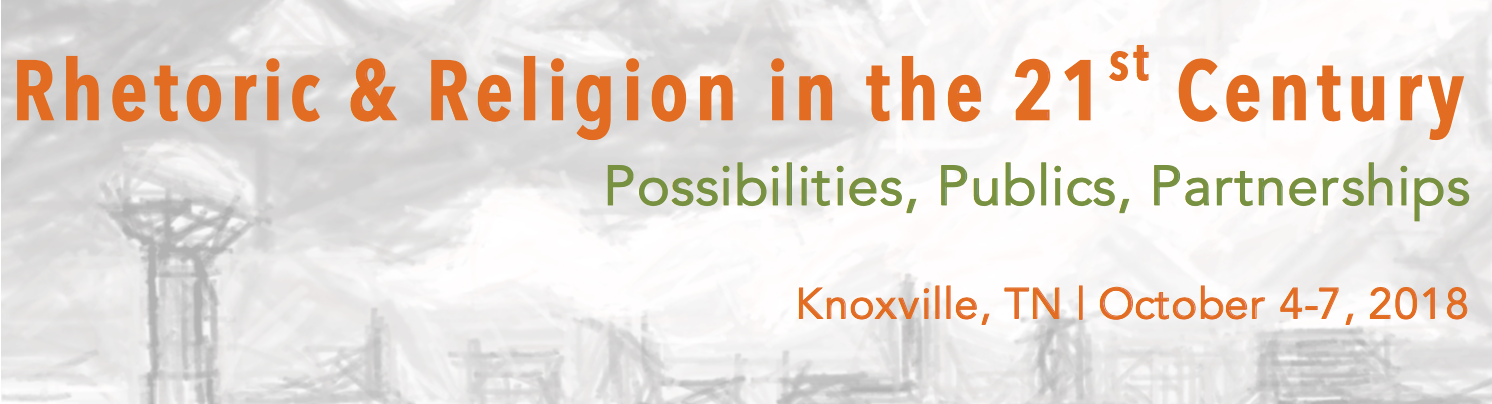
Given the growing interest in this area of rhetorical study, the time is ripe for scholars to gather and share the research that will shape the future of rhetoric, writing, and religion. The Rhetoric and Religious Traditions Standing Group is therefore pleased to announce the second Conference on Rhetoric and Religion in Knoxville, Tennessee on October 4-7, 2018.
Scholars are invited to submit individual paper and panel proposals focusing on any project related to rhetoric and religion. Scholars might, for example, examine intersections between work on religious rhetorics and other subfields of rhetoric and composition (e.g., multilingual writing, multimodal composition, writing-related transfer, rhetorics of disability). Or presenters might discuss the ways scholarship on religion and rhetoric might be invigorated by studying spiritual traditions and practices of particular groups (e.g., Native Americans, African Americans). Other researchers might interrogate the ways terms such as “secular,” “sacred,” “religious,” “ethical,” “moral,” “faith,” and “tradition” have functioned in scholarship on religion and rhetoric. Other still might examine the ways work on rhetoric and religion might explore key cultural concerns in our current moment, including how issues like immigration, secularization, the rise of “nones” and “seekers” change the way religion is experienced and expressed. We invite a variety of topics, including those that focus on particular religious faiths, new methodologies of research, various religious and spiritual practices, approaches to religion and rhetorical education, and possibilities for religion and civic engagement. We are particularly interested in presentations that speak across communities and traditions.
To that end, we also invite scholars working at the intersections of literature and religion to submit proposals. Given the strong historical and theoretical connections between literary study and rhetorical study, we would particularly welcome contributions from colleagues studying the connections between literary traditions, critical theory, and religion.
We view this conference in a number of ways: a means of exploring the various relationships among religious rhetorics in our pluralistic context; an opportunity for scholars to engage with the diverse approaches available for studying, teaching, and inventing religious rhetorics in our present moment; and an occasion to consider ways that scholarly work on religion and rhetoric can speak to emerging trends in our current cultural context. In coming together to examine such concerns, this gathering will serve as a vital occasion through which scholars of rhetoric and religion can shape the field’s future courses of inquiry, teaching, and public engagement.
At the website, you will find a list of seminars we’re featuring as part of the conference, seminars ranging from Arab-Islamic Rhetorics and Buddhist Rhetorics to Religion and Public Rhetorics and Feminist Historiography and Religion. We’re pretty excited about the lineup of keynote speakers and seminar leaders, which currently includes the following:
– Martin J. Medhurst, Baylor University
– Andre E. Johnson, University of Memphis
– Patricia Bizzell, College of the Holy Cross
– John C. Brereton, Boston Athenaeum
– Beth Daniell, Kennesaw State University
– Rasha Diab, University of Texas
– John Duffy, University of Notre Dame
– Janice W. Fernheimer, University of Kentucky
– Cinthia L. Gannett, Fairfield University
– TJ Geiger II, Baylor University
– Lisa King, University of Tennessee
– Kurt Spellmeyer, Rutgers University
– Elizabeth Vander Lei, Calvin College
– Lisa Zimmerelli, Loyola University Maryland
To download a PDF of the full Call for Papers, please click here.
Donate to the Work of R3
Like the work we do at Rhetoric Race and Religion? Please consider helping us continue to do this work. All donations are tax-deductible through Gifts of Life Ministries/G’Life Outreach, a 501(c) (3) tax-exempt organization, and our fiscal sponsor. Any donation helps. Just click here to support our work.
Previous Post

January 1, 2018
Can We Forgive Roy Moore?
Browse Our Archives
Select a Category Amy Steele Andre E. Johnson Book Reviews/Series Brian Foulks Call for Chapters Carol Howard Merritt Classes Conferences Contributors Crystal St.Marie Lewis Daniel White Hodge Earle Fisher Eulogy Fredrick Robinson Guest Contributions Henry McNeal Turner Institutes Interviews Joseph Boston Katherine Whitfield Kimberly Peeler-Ringer Lectures/Roundtables Natalie Bullock Brown R3 Book Series R3 Contributor Rashad Grove Readers Reflections Symposiums Teaching Traci Ellis Travis Harris Uncategorized Video
Select a Month June 2020 February 2020 December 2019 November 2019 July 2019 June 2019 May 2019 October 2018 June 2018 May 2018 April 2018 March 2018 February 2018 January 2018 December 2017 November 2017 October 2017 September 2017 August 2017 July 2017 June 2017 May 2017 April 2017 March 2017 February 2017 January 2017 December 2016 November 2016 October 2016 September 2016 August 2016 July 2016 June 2016 May 2016 April 2016 March 2016 February 2016 January 2016 December 2015 November 2015 October 2015 September 2015 August 2015 July 2015 June 2015 May 2015 April 2015 March 2015 February 2015 January 2015 December 2014 November 2014 October 2014 September 2014 August 2014 July 2014 June 2014 May 2014 April 2014 March 2014 February 2014 January 2014 December 2013 November 2013 October 2013 September 2013 August 2013 July 2013 June 2013 May 2013 April 2013 March 2013 February 2013 January 2013 December 2012 November 2012 October 2012 September 2012 August 2012 July 2012 June 2012 May 2012 April 2012 March 2012 February 2012 January 2012 December 2011 November 2011 October 2011
Follow Us!
TAKE THE
Religious Wisdom Quiz
What does "Pentecost" mean in Greek?
Select your answer to see how you score.
Fiftieth Seventh Fortieth First
Related posts from Rhetoric Race and Religion

Mother Emanuel, Black Pain and the Rhetoric of...

New Book in R3 Book Series on #BLM...

Dislocations and Shutdowns: #MLK, #BLM and the Rhetoric...
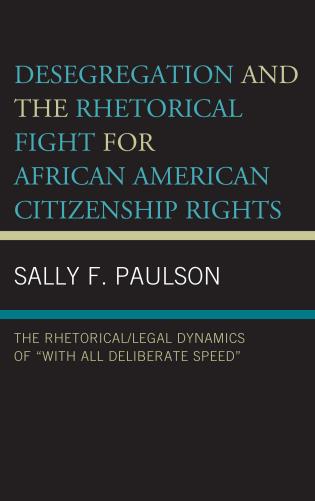
New Book in R3 Book Series on Desegregation...
TRENDING AT PATHEOS Progressive Christian

What Being a Modern-Day Apostle Means to Me
In my last column, I discussed the ins and outs of modern-day...

Did Ancient China Once Worship the God of...
Across human history, a common thread weaves through the origins of the...

Love Your Neighbor – Including Earth-Kin: Lev. 19,...
God’s command to love your neighbor means acting in an ethical and...

Lead a Church Study of “Jesus and Lao...
Guest writer Jack Thomas (The Irreverent Reverend) reflects on leading his church...

Pastoral Wisdom for Responding to Sermon Pushback
Getting sermon pushback on your social justice sermon? Learn practical, Proverbs-based strategies...

Principles for Understanding the Apostolic Ministry Today
Whenever people discover that my formal ministry title is "apostle," as in...
view all Progressive Christian blogs
Ad-Free & Subscriber Log-In Subscription Support
- About Us
- 2026 Calendar
- Videos
- Podcasts
- Library of World Religions
- Faith In Media Tracker
- Advertise With Us
- Write for Us
- Privacy Policy
- Terms of Service
- Do Not Sell My Data
- Contact Us
- Radiant Digital
- Manage Newsletter Subscriptions
- Unsubscribe From Notifications
- Sitemap
Copyright 2008-2026, Patheos. All rights reserved.
Subscription Support Ad-Free & Subscriber Log-In
Follow Patheos