
BuddhistCatholicContemplativeEvangelicalGeneral ChristianHinduJewishLatter-day SaintMuslimNew VisionsProgressive Christian
Beliefs
- Buddhist
- Catholic
- Contemplative
- Evangelical
- General Christian
- Hindu
- Jewish
- Latter-day Saint
- More Voices
- Muslim
- New Visions
- Pagan
- Progressive Christian
Topics
- Religion News
- Food and Religion
- Sports and Religion
- Religious Art
- Religious Music and Entertainment
- Religious Events
- History and Religion
- Style and Religion
- Politics and Religion
- Women in Religion
- Recreation Outdoors and Religion
- Business Finance and Religion
- Careers Workplace and Religion
- Education and Religion
- Family Parenting and Religion
- Health Fitness and Religion
- Home and Religion
- Relationships and Religion
- Technology and Religion
- Travel and Religion
Columnists
- Buddhist Columnists
- Business Finance and Religion Columnists
- Careers Workplace and Religion Columnists
- Catholic Columnists
- Contemplative Columnists
- Education and Religion Columnists
- Evangelists Columnists
- Family Parenting and Religion Columnists
- General Christian Columnists
- Health Fitness and Religion Columnists
- Hindu Columnists
- History and Religion Columnists
- Home and Religion Columnists
- Jewish Columnists
- More Voices Columnists
- Latter Day Columnists
- Muslim Columnists
- New Visions Columnists
- Nonreligious Columnists
- Pagan Columnists
- Politics and Religion Columnists
- Progressive Columnists
- Recreation Outdoors and Religion Columnists
- Relationships and Religion Columnists
- Religion News Columnists
- Religious Art Columnists
- Religious Events Columnists
- Religious Music and Entertainment Columnists
- Sports and Religion Columnists
- Style and Religion Columnists
- Technology and Religion Columnists
- Travel and Religion Columnists
- Women in Religion Columnists
Resource Library
- 2026 Calendar
- Library of World Religions
- The 100 Most Holy Places on Earth
- Patheos Answers
- Podcasts
- Videos
- Faith Leaders Database
- Anglican Episcopalian
- Bahai
- Baptist
- Buddhism
- Christianity
- Confucianism
- Eastern Orthodoxy
- Hinduism
- Holiness and Pentecostal
- ISKCON
- Islam
- Judaism
- Lutheran
- Methodist
- The Church of Jesus Christ of Latter-day Saints
- New Age
- Paganism
- Presbytarian and Reformed
- Protestantism
- Religion Behind the Scenes
- Roman Catholic
- Scientology
- Shia Islam
- Sikhism
- Sufism
- Sunni Islam
- Taoism
- Zen
- See all religions
Research Tools
 Ad-Free & Subscriber Log-In Subscription Support
Ad-Free & Subscriber Log-In Subscription Support
Follow Patheos 

- Trending:
- Forgiveness
- |
- Marriage
- |
- Consciousness
- |
- Death Penalty
- |
- Election
- |
- Halloween
 Rhetoric Race and Religion
- Home
- Progressive Christian
- “To Make the World So Damn Uncomfortable”: W.E.B. Du Bois and the African American Prophetic Tradition
“To Make the World So Damn Uncomfortable”: W.E.B. Du Bois and the African American Prophetic Tradition
Last updated on: January 31, 2018 at 12:37 pm by Andre E. Johnson
“To Make the World So Damn Uncomfortable”: W.E.B. Du Bois and the African American Prophetic Tradition 2018-01-31T12:37:57-05:00 Andre E. Johnson
Patheos Explore the world's faith through different perspectives on religion and spirituality! Patheos has the views of the prevalent religions and spiritualities of the world.
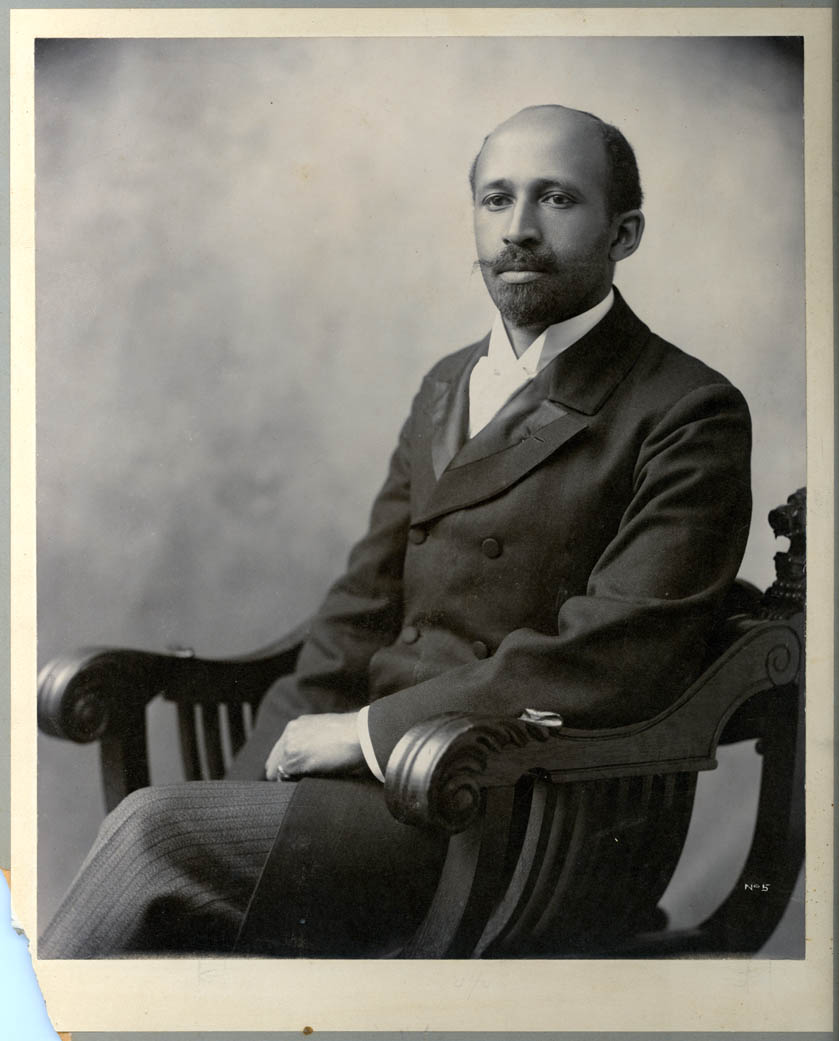 In the December 1918 issue of The Crisis magazine, W.E.B. Du Bois celebrated the end of the First World War with a loud and enthusiastic call for the right of all Americans to vote. Du Bois wrote, “Now that the war is over, we have but one word and one thought—the Ballot. We want that ballot safeguarded by every reasonable and decent limitation, impartially applied; but it can no longer be limited by race and sex (p. 62). Du Bois not only advocated for the right to vote but also called for African Americans to utilize their right to vote and participate in democracy as fully-fledged citizens of the United States of America.
Almost forty years later, however, Du Bois’ attitude of voting had changed. In the October 20, 1956, issue of the Nation, Du Bois lamented,
I shall not go to the polls. I have not registered. I believe that democracy has so far disappeared in the United States that no “two evils” exist. There is but one evil party with two names, and it will be elected despite all I can do or say…. I have no advice for others in this election. Are you voting Democratic? Well and good; all I ask is why? Are you voting for Eisenhower and his smooth team of bright ghostwriters? Again, why? Will your helpless vote either way support or restore democracy to America?….Is the answer the election of 1956? I will be no party to it and that will make little difference. You will take large part and bravely march to the polls, and that also will make no difference (par. 4, 8, 10).
While many scholars have examined the life and legacy of Du Bois across disciplinary lines and using multiple methods, important aspects of Du Bois’ use of rhetoric have yet to be studied or accounted for, which is surprising given the copious amount of written and spoken material we have by Du Bois. Anyone studying Du Bois and his use of rhetoric would have to wade through an abundance of material. For example, the Du Bois corpus consists of not only speeches and essays, but also short stories, poems, novels, editorials, and sermons. While there have been volumes devoted to the writings and speeches of Du Bois, there has not been one volume devoted to an analysis of those writings. Moreover, outside of a few dissertations and conference proceedings and articles, Du Bois’ use of rhetoric has surprisingly not garnered much attention.
In addition, the few treatments of Du Bois’ rhetoric do not examine his use of religious rhetoric. Previous scholarship about Du Bois has downplayed the role of religion in his life, which has in turn influenced rhetorical studies. Biographers have argued that Du Bois was so hostile to religion that others examining Du Bois followed suit and have, thus, rarely examined him through the lens of religion. This, however, as scholars such as Zuckerman (2000) and Blum (2007) note, was far from the truth. Du Bois, far from being hostile to religion, was deeply committed to a rational understanding of religious views and though many saw his practice of religion as not ascribing to societal norms, Du Bois found comfort in his construction of religion.
His familiarity with the religious tradition led Du Bois to use prophetic rhetoric as a mode of discourse. In the May 1914 issue of The Crisis magazine, Du Bois penned a response to Rev. Charles Dole, who believed that The Crisis and Du Bois were not patient enough for change to happen regarding the civil rights of African Americans. Du Bois published Mr. Dole’s letter and, in the same issue, offered a response. Du Bois grounded his response to “Mr. Dole’s notion of gradualism” in the Hebrew prophets of the Bible. “When the Hebrew prophets cried aloud, there were respectable persons by the score who said: “Unfortunate Exaggeration, Unnecessary Feeling, and Ungodly Bitterness! Yet the jeremiads were needed to redeem a people (p. 24). In writing about the progression that many believed humanity made during this time, Du Bois reminded his friend that this progress was made possible by the
[S]oul-torn strength of those who can never sit still and silent while the disinherited and the dammed clog our gutters and gasp their lives out on our front porches. These are men who go down in the blood and dust of battle. They say ugly things to an ugly world. They spew the lukewarm fence straddlers out of their mounts, like God of old; they cry aloud and spare not; they shout from the housetops, and they make this world so damned uncomfortable with its nasty burden of evil that it tries to get the good and does get better (p. 26)
He closed his editorial by reminding Mr. Dole that with the “sainted spirits of such as these The Crisis would weakly but earnestly stand and cry in the world’s four corners of the way, and it claims no man as friend who dare not stand and cry with it” (p. 26).
By equating The Crisis and his own role as editor in the same spirit of the biblical Hebrew prophets, Du Bois saw his position as more than just an editor and writer of editorials. That is, he saw his role as editor as one divinely given to him, one that he must answer and accept. Du Bois cast himself in the role of a prophet and throughout his life, by using prophetic rhetoric and adopting prophetic personas, he reached out and attempted to persuade his audiences.
In this essay, I briefly examine the prophetic rhetoric of W.E.B. Du Bois. By examining his editorials while editor of The Crisis and other writings, I argue that Du Bois employed different types of prophetic discourse grounded primarily within the African American Prophetic Tradition (AAPT). For purposes of this essay, I specifically highlight Du Bois’ use of mission-oriented prophecy as a way to call African Americans to a divine mission of social uplift. In so doing, my aim is three-fold. First, I seek to build upon the fledgling rhetorical scholarship on Du Bois. Second, following Zuckerman and Blum, I seek to (re)introduce to readers and (re)claim Du Bois as a religious rhetor. Finally, I seek to add to the scholarship on prophetic rhetoric.
Read the rest here.
Donate to the Work of R3
Like the work we do at Rhetoric Race and Religion? Please consider helping us continue to do this work. All donations are tax-deductible through Gifts of Life Ministries/G’Life Outreach, a 501(c) (3) tax-exempt organization, and our fiscal sponsor. Any donation helps. Just click here to support our work.
African American Prophetic Tradition
Previous Post

January 8, 2018
Rhetoric and Religion in the 21st Century
Next Post
February 2, 2018 Silence and Sexual Assault: Toward a Better Response from the Church
Browse Our Archives
Select a Category Amy Steele Andre E. Johnson Book Reviews/Series Brian Foulks Call for Chapters Carol Howard Merritt Classes Conferences Contributors Crystal St.Marie Lewis Daniel White Hodge Earle Fisher Eulogy Fredrick Robinson Guest Contributions Henry McNeal Turner Institutes Interviews Joseph Boston Katherine Whitfield Kimberly Peeler-Ringer Lectures/Roundtables Natalie Bullock Brown R3 Book Series R3 Contributor Rashad Grove Readers Reflections Symposiums Teaching Traci Ellis Travis Harris Uncategorized Video
Select a Month June 2020 February 2020 December 2019 November 2019 July 2019 June 2019 May 2019 October 2018 June 2018 May 2018 April 2018 March 2018 February 2018 January 2018 December 2017 November 2017 October 2017 September 2017 August 2017 July 2017 June 2017 May 2017 April 2017 March 2017 February 2017 January 2017 December 2016 November 2016 October 2016 September 2016 August 2016 July 2016 June 2016 May 2016 April 2016 March 2016 February 2016 January 2016 December 2015 November 2015 October 2015 September 2015 August 2015 July 2015 June 2015 May 2015 April 2015 March 2015 February 2015 January 2015 December 2014 November 2014 October 2014 September 2014 August 2014 July 2014 June 2014 May 2014 April 2014 March 2014 February 2014 January 2014 December 2013 November 2013 October 2013 September 2013 August 2013 July 2013 June 2013 May 2013 April 2013 March 2013 February 2013 January 2013 December 2012 November 2012 October 2012 September 2012 August 2012 July 2012 June 2012 May 2012 April 2012 March 2012 February 2012 January 2012 December 2011 November 2011 October 2011
Follow Us!
TAKE THE
Religious Wisdom Quiz
I sent an army of singers before my army, and God set ambushes against our enemies. Who am I?
Select your answer to see how you score.
Hezekiah David Jehoshaphat Asa
Related posts from Rhetoric Race and Religion


Dislocations and Shutdowns: #MLK, #BLM and the Rhetoric...

From the Mountain Top and Beyond: The Rhetoric...

Special Issue: Communication, Religion, and Race in America
TRENDING AT PATHEOS Progressive Christian

What Being a Modern-Day Apostle Means to Me
In my last column, I discussed the ins and outs of modern-day...

Did Ancient China Once Worship the God of...
Across human history, a common thread weaves through the origins of the...

Love Your Neighbor – Including Earth-Kin: Lev. 19,...
God’s command to love your neighbor means acting in an ethical and...

Lead a Church Study of “Jesus and Lao...
Guest writer Jack Thomas (The Irreverent Reverend) reflects on leading his church...

Pastoral Wisdom for Responding to Sermon Pushback
Getting sermon pushback on your social justice sermon? Learn practical, Proverbs-based strategies...

Principles for Understanding the Apostolic Ministry Today
Whenever people discover that my formal ministry title is "apostle," as in...
view all Progressive Christian blogs
Ad-Free & Subscriber Log-In Subscription Support
- About Us
- 2026 Calendar
- Videos
- Podcasts
- Library of World Religions
- Faith In Media Tracker
- Advertise With Us
- Write for Us
- Privacy Policy
- Terms of Service
- Do Not Sell My Data
- Contact Us
- Radiant Digital
- Manage Newsletter Subscriptions
- Unsubscribe From Notifications
- Sitemap
Copyright 2008-2026, Patheos. All rights reserved.
Subscription Support Ad-Free & Subscriber Log-In
Follow Patheos