
BuddhistCatholicContemplativeEvangelicalGeneral ChristianHinduJewishLatter-day SaintMuslimNew VisionsProgressive Christian
Beliefs
- Buddhist
- Catholic
- Contemplative
- Evangelical
- General Christian
- Hindu
- Jewish
- Latter-day Saint
- More Voices
- Muslim
- New Visions
- Pagan
- Progressive Christian
Topics
- Religion News
- Food and Religion
- Sports and Religion
- Religious Art
- Religious Music and Entertainment
- Religious Events
- History and Religion
- Style and Religion
- Politics and Religion
- Women in Religion
- Recreation Outdoors and Religion
- Business Finance and Religion
- Careers Workplace and Religion
- Education and Religion
- Family Parenting and Religion
- Health Fitness and Religion
- Home and Religion
- Relationships and Religion
- Technology and Religion
- Travel and Religion
Columnists
- Buddhist Columnists
- Business Finance and Religion Columnists
- Careers Workplace and Religion Columnists
- Catholic Columnists
- Contemplative Columnists
- Education and Religion Columnists
- Evangelists Columnists
- Family Parenting and Religion Columnists
- General Christian Columnists
- Health Fitness and Religion Columnists
- Hindu Columnists
- History and Religion Columnists
- Home and Religion Columnists
- Jewish Columnists
- More Voices Columnists
- Latter Day Columnists
- Muslim Columnists
- New Visions Columnists
- Nonreligious Columnists
- Pagan Columnists
- Politics and Religion Columnists
- Progressive Columnists
- Recreation Outdoors and Religion Columnists
- Relationships and Religion Columnists
- Religion News Columnists
- Religious Art Columnists
- Religious Events Columnists
- Religious Music and Entertainment Columnists
- Sports and Religion Columnists
- Style and Religion Columnists
- Technology and Religion Columnists
- Travel and Religion Columnists
- Women in Religion Columnists
Resource Library
- 2026 Calendar
- Library of World Religions
- The 100 Most Holy Places on Earth
- Patheos Answers
- Podcasts
- Videos
- Faith Leaders Database
- Anglican Episcopalian
- Bahai
- Baptist
- Buddhism
- Christianity
- Confucianism
- Eastern Orthodoxy
- Hinduism
- Holiness and Pentecostal
- ISKCON
- Islam
- Judaism
- Lutheran
- Methodist
- The Church of Jesus Christ of Latter-day Saints
- New Age
- Paganism
- Presbytarian and Reformed
- Protestantism
- Religion Behind the Scenes
- Roman Catholic
- Scientology
- Shia Islam
- Sikhism
- Sufism
- Sunni Islam
- Taoism
- Zen
- See all religions
Research Tools
 Ad-Free & Subscriber Log-In Subscription Support
Ad-Free & Subscriber Log-In Subscription Support
Follow Patheos 

- Trending:
- Forgiveness
- |
- Marriage
- |
- Consciousness
- |
- Death Penalty
- |
- Election
- |
- Halloween
 Rhetoric Race and Religion
- Home
- Progressive Christian
- Donald Trump, Religious Freedom, and the African American vote
Donald Trump, Religious Freedom, and the African American vote
Last updated on: December 19, 2017 at 10:08 am by Andre E. Johnson
Donald Trump, Religious Freedom, and the African American vote 2017-12-19T10:08:37-05:00 Andre E. Johnson
Patheos Explore the world's faith through different perspectives on religion and spirituality! Patheos has the views of the prevalent religions and spiritualities of the world.
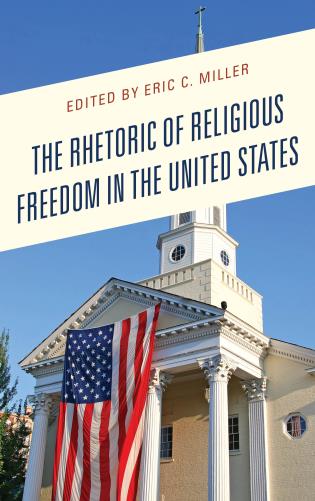 from The Rhetoric of Religious Freedom in the United States, edited by Eric C. Miller. (Lexington Books, 2017).
Abstract:
In this chapter, I examine Donald Trump’s rhetoric of religious freedom specifically aimed at appealing to black voters. I first examine briefly two speeches given to predominately-white audiences. In those speeches, while arguably focusing his appeal on economics and jobs, he did it by creating a dystopian view of the African American community. It was this dystopian view and his promise to “fix it” that helped him strengthen his suburban white base. However, when Trump appeared in black space and with a majority black audience, his approach and appeal was different. Still grounded in economics and jobs, Trump also included strong religious appeals. Moreover, examining Trump’s rhetoric in Black Spaces, I argue that while the appeal for better economics and job creation was still a major aim, Trump also appealed to religious freedom and the historical significance of the black church in hopes at inviting African Americans to consider his candidacy.
Introduction
During the 2016 presidential campaign, Donald J. Trump’s appeal to white evangelical voters received sustained attention from press and pundits. Less discussed was Trump’s outreach to African Americans. For Trump and his campaign, black voters became important, I argue, for two reasons. First, Trump needed to appeal to African Americans to shore up votes from suburban white women, a constituency that might withhold support from a candidate who appeared racist. Second, while Trump was never competitive for the majority of African American votes, he could get some-perhaps enough to switch a state or two in his favor. Terence Jeffrey has noted that George W. Bush’s 2004 victory came from the 16 percent support he received from African Americans in Ohio-enough for him to carry the state and win the election.
For Trump, however, the road to African American endorsement would not be smooth. When the campaign started to appeal to African Americans, Trump polled only 1 to 3 percent with black voters. There were several reasons for this. For one, Trump had for years made headlines as the nation’s most prominent “birther, ” having consisitently maintained that President Obama was not born in America and demanded that the first African American president show his papers as an American citizen. He was slow to denounce the support of former Ku Klux Klan leader and devout white nationalist David Duke. His slogan, “make America Great Again,” sounded to many African Americans like an invitation to go back to the days of segregation and Jim Crow. Then there were the constant attacks on the Black Lives Matter movement, his attacks on Mexicans and Muslims and other non-white people, his stated intent to be the law and order candidate,” and his continued–throughly debunked-instance that the black men accused in the Central Park Five case were guilty. Thus, Trump faced a rhetorical hurdle in appealing to black voters.
In this chapter, I examine Trump’s strategy for clearing this hurdle, with reference to the goals mentioned above. I first examine two speeches give to predominately white audiences. In these speeches, while arguably focusing his appeal on economics and jobs, Trump crafted a dystopian view of the African American community before promising to “fix it”-an appeal designed to strengthen his suburban white base. I then consider Trump’s first campaign speech in the black space of an African American church, noting important differences. Still grounded in economics and jobs, this speech included religious appeals and expressed reference for African American traditions. I argue that these appeals to religious freedom and the historical significance of the black church were crafted to invite African Americans to consider his candidacy. Finally, I offer some implications and conclusions. First, however, I begin with Trump’s attempt to solidify the base of the Republican Party-white evangelicals.
Read the rest here.
Donate to the Work of R3
Like the work we do at Rhetoric Race and Religion? Please consider helping us continue to do this work. All donations are tax-deductible through Gifts of Life Ministries/G’Life Outreach, a 501(c)(3) tax-exempt organization, and our fiscal sponsor. Any donation helps. Just click here to support our work.
Previous Post

December 3, 2017
Morality and Work Place Ethics
Next Post
December 14, 2017 When the Illusionists Believe They’re Performing Real Magic
Browse Our Archives
Select a Category Amy Steele Andre E. Johnson Book Reviews/Series Brian Foulks Call for Chapters Carol Howard Merritt Classes Conferences Contributors Crystal St.Marie Lewis Daniel White Hodge Earle Fisher Eulogy Fredrick Robinson Guest Contributions Henry McNeal Turner Institutes Interviews Joseph Boston Katherine Whitfield Kimberly Peeler-Ringer Lectures/Roundtables Natalie Bullock Brown R3 Book Series R3 Contributor Rashad Grove Readers Reflections Symposiums Teaching Traci Ellis Travis Harris Uncategorized Video
Select a Month June 2020 February 2020 December 2019 November 2019 July 2019 June 2019 May 2019 October 2018 June 2018 May 2018 April 2018 March 2018 February 2018 January 2018 December 2017 November 2017 October 2017 September 2017 August 2017 July 2017 June 2017 May 2017 April 2017 March 2017 February 2017 January 2017 December 2016 November 2016 October 2016 September 2016 August 2016 July 2016 June 2016 May 2016 April 2016 March 2016 February 2016 January 2016 December 2015 November 2015 October 2015 September 2015 August 2015 July 2015 June 2015 May 2015 April 2015 March 2015 February 2015 January 2015 December 2014 November 2014 October 2014 September 2014 August 2014 July 2014 June 2014 May 2014 April 2014 March 2014 February 2014 January 2014 December 2013 November 2013 October 2013 September 2013 August 2013 July 2013 June 2013 May 2013 April 2013 March 2013 February 2013 January 2013 December 2012 November 2012 October 2012 September 2012 August 2012 July 2012 June 2012 May 2012 April 2012 March 2012 February 2012 January 2012 December 2011 November 2011 October 2011
Follow Us!
TAKE THE
Religious Wisdom Quiz
True or False: Balaam's donkey spoke to him.
Select your answer to see how you score.
TRUE FALSE
Related posts from Rhetoric Race and Religion

“Here I Am Send Me": The Rhetoric of...

Dislocations and Shutdowns: #MLK, #BLM and the Rhetoric...

From the Mountain Top and Beyond: The Rhetoric...
TRENDING AT PATHEOS Progressive Christian

What Being a Modern-Day Apostle Means to Me
In my last column, I discussed the ins and outs of modern-day...

Did Ancient China Once Worship the God of...
Across human history, a common thread weaves through the origins of the...

Love Your Neighbor – Including Earth-Kin: Lev. 19,...
God’s command to love your neighbor means acting in an ethical and...

Lead a Church Study of “Jesus and Lao...
Guest writer Jack Thomas (The Irreverent Reverend) reflects on leading his church...

Pastoral Wisdom for Responding to Sermon Pushback
Getting sermon pushback on your social justice sermon? Learn practical, Proverbs-based strategies...

Principles for Understanding the Apostolic Ministry Today
Whenever people discover that my formal ministry title is "apostle," as in...
view all Progressive Christian blogs
Ad-Free & Subscriber Log-In Subscription Support
- About Us
- 2026 Calendar
- Videos
- Podcasts
- Library of World Religions
- Faith In Media Tracker
- Advertise With Us
- Write for Us
- Privacy Policy
- Terms of Service
- Do Not Sell My Data
- Contact Us
- Radiant Digital
- Manage Newsletter Subscriptions
- Unsubscribe From Notifications
- Sitemap
Copyright 2008-2026, Patheos. All rights reserved.
Subscription Support Ad-Free & Subscriber Log-In
Follow Patheos