
BuddhistCatholicContemplativeEvangelicalGeneral ChristianHinduJewishLatter-day SaintMuslimNew VisionsProgressive Christian
Beliefs
- Buddhist
- Catholic
- Contemplative
- Evangelical
- General Christian
- Hindu
- Jewish
- Latter-day Saint
- More Voices
- Muslim
- New Visions
- Pagan
- Progressive Christian
Topics
- Religion News
- Food and Religion
- Sports and Religion
- Religious Art
- Religious Music and Entertainment
- Religious Events
- History and Religion
- Style and Religion
- Politics and Religion
- Women in Religion
- Recreation Outdoors and Religion
- Business Finance and Religion
- Careers Workplace and Religion
- Education and Religion
- Family Parenting and Religion
- Health Fitness and Religion
- Home and Religion
- Relationships and Religion
- Technology and Religion
- Travel and Religion
Columnists
- Buddhist Columnists
- Business Finance and Religion Columnists
- Careers Workplace and Religion Columnists
- Catholic Columnists
- Contemplative Columnists
- Education and Religion Columnists
- Evangelists Columnists
- Family Parenting and Religion Columnists
- General Christian Columnists
- Health Fitness and Religion Columnists
- Hindu Columnists
- History and Religion Columnists
- Home and Religion Columnists
- Jewish Columnists
- More Voices Columnists
- Latter Day Columnists
- Muslim Columnists
- New Visions Columnists
- Nonreligious Columnists
- Pagan Columnists
- Politics and Religion Columnists
- Progressive Columnists
- Recreation Outdoors and Religion Columnists
- Relationships and Religion Columnists
- Religion News Columnists
- Religious Art Columnists
- Religious Events Columnists
- Religious Music and Entertainment Columnists
- Sports and Religion Columnists
- Style and Religion Columnists
- Technology and Religion Columnists
- Travel and Religion Columnists
- Women in Religion Columnists
Resource Library
- 2026 Calendar
- Library of World Religions
- The 100 Most Holy Places on Earth
- Patheos Answers
- Podcasts
- Videos
- Faith Leaders Database
- Anglican Episcopalian
- Bahai
- Baptist
- Buddhism
- Christianity
- Confucianism
- Eastern Orthodoxy
- Hinduism
- Holiness and Pentecostal
- ISKCON
- Islam
- Judaism
- Lutheran
- Methodist
- The Church of Jesus Christ of Latter-day Saints
- New Age
- Paganism
- Presbytarian and Reformed
- Protestantism
- Religion Behind the Scenes
- Roman Catholic
- Scientology
- Shia Islam
- Sikhism
- Sufism
- Sunni Islam
- Taoism
- Zen
- See all religions
Research Tools
 Ad-Free & Subscriber Log-In Subscription Support
Ad-Free & Subscriber Log-In Subscription Support
Follow Patheos 

- Trending:
- Forgiveness
- |
- Marriage
- |
- Consciousness
- |
- Death Penalty
- |
- Election
- |
- Halloween
 Rhetoric Race and Religion
- Home
- Progressive Christian
- No Half Savior: Jarena Lee’s Autobiography as Prophetic Rhetoric
No Half Savior: Jarena Lee’s Autobiography as Prophetic Rhetoric
Last updated on: September 25, 2017 at 1:56 pm by Guest Contributor
No Half Savior: Jarena Lee’s Autobiography as Prophetic Rhetoric 2017-09-25T13:56:16-05:00 Guest Contributor
Patheos Explore the world's faith through different perspectives on religion and spirituality! Patheos has the views of the prevalent religions and spiritualities of the world.
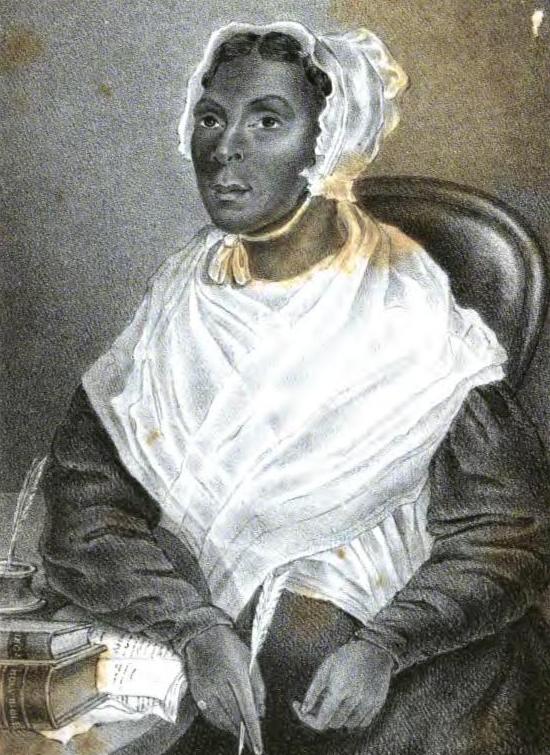
Gaines, Steven Tramel. No Half Savior: Jarena Lee’s Autobiography as Prophetic Rhetoric. Carolinas Communication Annual. Vol. XXXIII, 2017
The tradition of prophetic rhetoric stretches back to ancient Hebrew literature, and James Darsey’s The Prophetic Tradition and Radical Rhetoric in America provides a fresh foundation for the study of prophetic rhetoric in the United States of America. Darsey’s book focuses on white men, and more recent scholarly literature further expands our understanding of prophetic rhetoric. For example, Kerith Woodyard urges the tradition to consider women who communicate prophetically, while Andre E. Johnson and Christopher Z. Hobson explore speeches and writings by African American men. This essay combines those expansions to investigate prophetic rhetoric in a text by Jarena Lee, an African American woman.
“One of the first African American women known to have preached the gospel in the thirteen colonies,” Jarena Lee “is regarded as the first woman preacher in the African Methodist Episcopal (AME) Church.” She was born on February 11, 1783, in Cape May, New Jersey. Her parents were poor, and her maiden name is unknown. She worked as a domestic servant for over a decade, in which she learned to read and write. Following spiritual experiences in which she received her call to preach, she informed her bishop, AME founder Richard Allen, of her calling, which he resisted. Years later, when Allen finally heard Lee preach, he affirmed her calling but did not ordain her to the ministry of preaching. Instead, he limited her to speaking outside the main meetings of the religious establishment. Despite this marginalization, Lee’s preaching ministry included countless miles, chronic illness, ecstatic results, and danger as she spoke in slave states. Her journal, in which she argued for her right to preach, first appeared in 1836, was printed again in 1839 and was widely distributed.
This essay claims that Jarena Lee’s spiritual autobiography, especially the section in which she explained her right to preach, functioned as prophetic rhetoric within her religious community. Prophetic rhetoric calls for change and anchors that call in foundations that the communicator and her audience treat as sacred (i.e. deeply treasured). The “sacred” may or may not be overtly religious, but for Lee it was. She grounded her narrative and arguments in the Bible, theology, church tradition, and spiritual experiences. That engagement with religious foundations distinguishes the autobiography as a spiritual one. In noting Lee’s autobiography’s prophetic elements, I make four contributions to the field. First, I demonstrate that the genre of spiritual autobiography has value as a site of prophetic rhetoric. Second, I heed Woodyard’s call to decrease the white patriarchy of the canon of prophetic rhetoric. Third, I expand the field’s contextual scope. Recent scholars of prophetic rhetoric have focused on communication from a religious community to a larger society, and I consider communication that both originates in and addresses a religious community. Fourth, I consider hermeneutical dimensions of prophetic rhetoric at an intersection of race, sex, and class. In making those contributions, I offer three sections in this essay’s body. The first section briefly explains spiritual autobiography, describes Jarena Lee’s spiritual autobiography and begins to shift into
In noting Lee’s autobiography’s prophetic elements, I make four contributions to the field. First, I demonstrate that the genre of spiritual autobiography has value as a site of prophetic rhetoric. Second, I heed Woodyard’s call to decrease the white patriarchy of the canon of prophetic rhetoric. Third, I expand the field’s contextual scope. Recent scholars of prophetic rhetoric have focused on communication from a religious community to a larger society, and I consider communication that both originates in and addresses a religious community. Fourth, I consider hermeneutical dimensions of prophetic rhetoric at an intersection of race, sex, and class. In making those contributions, I offer three sections in this essay’s body. The first section briefly explains spiritual autobiography, describes Jarena Lee’s spiritual autobiography and begins to shift into analysis. The second introduces a theoretical foundation for the study of prophetic rhetoric and analyzes Lee’s words through that lens. The third explores the influences of race, sex, and class on Lee’s interpretation of ancient texts deemed sacred by her community.
Read the rest of the essay here.
Steven Tramel Gaines preaches for Cordova Community Church and is a PhD student at the University of Memphis, researching rhetoric, race, and religion.
Donate to the Work of R3
Like the work, we do at Rhetoric Race and Religion? Please consider helping us continue to do this work. All donations are tax-deductible through Gifts of Life Ministries/G’Life Outreach, a 501(c)(3) tax-exempt organization, and our fiscal sponsor. Any donation helps. Just click here to support our work.
Previous Post

September 25, 2017
How to Protest the Right Way
Next Post

September 26, 2017 How Theology Helped Me Connect the Dots
Browse Our Archives
Select a Category Amy Steele Andre E. Johnson Book Reviews/Series Brian Foulks Call for Chapters Carol Howard Merritt Classes Conferences Contributors Crystal St.Marie Lewis Daniel White Hodge Earle Fisher Eulogy Fredrick Robinson Guest Contributions Henry McNeal Turner Institutes Interviews Joseph Boston Katherine Whitfield Kimberly Peeler-Ringer Lectures/Roundtables Natalie Bullock Brown R3 Book Series R3 Contributor Rashad Grove Readers Reflections Symposiums Teaching Traci Ellis Travis Harris Uncategorized Video
Select a Month June 2020 February 2020 December 2019 November 2019 July 2019 June 2019 May 2019 October 2018 June 2018 May 2018 April 2018 March 2018 February 2018 January 2018 December 2017 November 2017 October 2017 September 2017 August 2017 July 2017 June 2017 May 2017 April 2017 March 2017 February 2017 January 2017 December 2016 November 2016 October 2016 September 2016 August 2016 July 2016 June 2016 May 2016 April 2016 March 2016 February 2016 January 2016 December 2015 November 2015 October 2015 September 2015 August 2015 July 2015 June 2015 May 2015 April 2015 March 2015 February 2015 January 2015 December 2014 November 2014 October 2014 September 2014 August 2014 July 2014 June 2014 May 2014 April 2014 March 2014 February 2014 January 2014 December 2013 November 2013 October 2013 September 2013 August 2013 July 2013 June 2013 May 2013 April 2013 March 2013 February 2013 January 2013 December 2012 November 2012 October 2012 September 2012 August 2012 July 2012 June 2012 May 2012 April 2012 March 2012 February 2012 January 2012 December 2011 November 2011 October 2011
Follow Us!
TAKE THE
Religious Wisdom Quiz
Which king of Judah destroyed Nehushtan, the bronze serpent?
Select your answer to see how you score.
Manasseh Josiah Uzziah Hezekiah
Related posts from Rhetoric Race and Religion

Why Christian Nationalism Betrays the Gospel
The Most Dangerous Negro in America
Race, Shrinking Whiteness, and Four Qualities of the...

Silence and Sexual Assault: Toward a Better Response...
TRENDING AT PATHEOS Progressive Christian

What Being a Modern-Day Apostle Means to Me
In my last column, I discussed the ins and outs of modern-day...

Did Ancient China Once Worship the God of...
Across human history, a common thread weaves through the origins of the...

Love Your Neighbor – Including Earth-Kin: Lev. 19,...
God’s command to love your neighbor means acting in an ethical and...

Lead a Church Study of “Jesus and Lao...
Guest writer Jack Thomas (The Irreverent Reverend) reflects on leading his church...

Pastoral Wisdom for Responding to Sermon Pushback
Getting sermon pushback on your social justice sermon? Learn practical, Proverbs-based strategies...

Principles for Understanding the Apostolic Ministry Today
Whenever people discover that my formal ministry title is "apostle," as in...
view all Progressive Christian blogs
Ad-Free & Subscriber Log-In Subscription Support
- About Us
- 2026 Calendar
- Videos
- Podcasts
- Library of World Religions
- Faith In Media Tracker
- Advertise With Us
- Write for Us
- Privacy Policy
- Terms of Service
- Do Not Sell My Data
- Contact Us
- Radiant Digital
- Manage Newsletter Subscriptions
- Unsubscribe From Notifications
- Sitemap
Copyright 2008-2026, Patheos. All rights reserved.
Subscription Support Ad-Free & Subscriber Log-In
Follow Patheos