
BuddhistCatholicContemplativeEvangelicalGeneral ChristianHinduJewishLatter-day SaintMuslimNew VisionsProgressive Christian
Beliefs
- Buddhist
- Catholic
- Contemplative
- Evangelical
- General Christian
- Hindu
- Jewish
- Latter-day Saint
- More Voices
- Muslim
- New Visions
- Pagan
- Progressive Christian
Topics
- Religion News
- Food and Religion
- Sports and Religion
- Religious Art
- Religious Music and Entertainment
- Religious Events
- History and Religion
- Style and Religion
- Politics and Religion
- Women in Religion
- Recreation Outdoors and Religion
- Business Finance and Religion
- Careers Workplace and Religion
- Education and Religion
- Family Parenting and Religion
- Health Fitness and Religion
- Home and Religion
- Relationships and Religion
- Technology and Religion
- Travel and Religion
Columnists
- Buddhist Columnists
- Business Finance and Religion Columnists
- Careers Workplace and Religion Columnists
- Catholic Columnists
- Contemplative Columnists
- Education and Religion Columnists
- Evangelists Columnists
- Family Parenting and Religion Columnists
- General Christian Columnists
- Health Fitness and Religion Columnists
- Hindu Columnists
- History and Religion Columnists
- Home and Religion Columnists
- Jewish Columnists
- More Voices Columnists
- Latter Day Columnists
- Muslim Columnists
- New Visions Columnists
- Nonreligious Columnists
- Pagan Columnists
- Politics and Religion Columnists
- Progressive Columnists
- Recreation Outdoors and Religion Columnists
- Relationships and Religion Columnists
- Religion News Columnists
- Religious Art Columnists
- Religious Events Columnists
- Religious Music and Entertainment Columnists
- Sports and Religion Columnists
- Style and Religion Columnists
- Technology and Religion Columnists
- Travel and Religion Columnists
- Women in Religion Columnists
Resource Library
- 2026 Calendar
- Library of World Religions
- The 100 Most Holy Places on Earth
- Patheos Answers
- Podcasts
- Videos
- Faith Leaders Database
- Anglican Episcopalian
- Bahai
- Baptist
- Buddhism
- Christianity
- Confucianism
- Eastern Orthodoxy
- Hinduism
- Holiness and Pentecostal
- ISKCON
- Islam
- Judaism
- Lutheran
- Methodist
- The Church of Jesus Christ of Latter-day Saints
- New Age
- Paganism
- Presbytarian and Reformed
- Protestantism
- Religion Behind the Scenes
- Roman Catholic
- Scientology
- Shia Islam
- Sikhism
- Sufism
- Sunni Islam
- Taoism
- Zen
- See all religions
Research Tools
 Ad-Free & Subscriber Log-In Subscription Support
Ad-Free & Subscriber Log-In Subscription Support
Follow Patheos 

- Trending:
- Forgiveness
- |
- Marriage
- |
- Consciousness
- |
- Death Penalty
- |
- Election
- |
- Halloween
 Rhetoric Race and Religion
- Home
- Progressive Christian
- What Is Womanist Preaching?
What Is Womanist Preaching?
Last updated on: August 6, 2017 at 9:13 am by Guest Contributor
What Is Womanist Preaching? 2017-08-06T09:13:27-05:00 Guest Contributor
Patheos Explore the world's faith through different perspectives on religion and spirituality! Patheos has the views of the prevalent religions and spiritualities of the world.
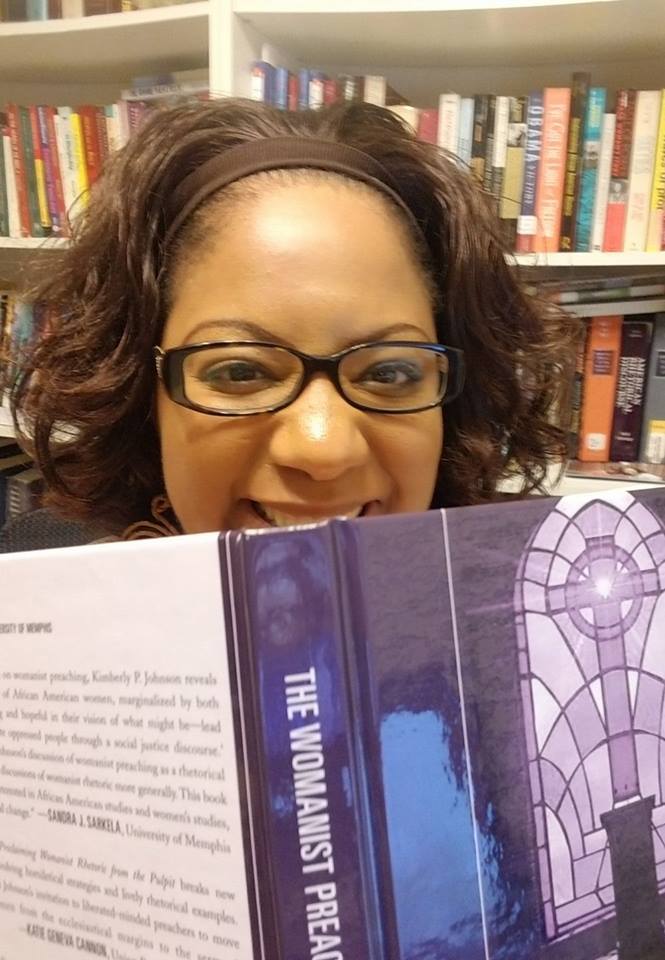 by Kimberly P. Johnson
The idea behind The Womanist Preacher: Proclaiming Womanist Rhetoric from the Pulpit evolved out of a conversation with Rev. Dr. Claudette A. Copeland on October 7, 2007. She had just finished preaching her sermon, “What Shall We Do For Our Sister?” at my home church, Mississippi Boulevard Christian Church, back when I lived in Memphis, Tennessee. I was one of the lay ministers at the church and my pastor, Dr. Frank Anthony Thomas, knew that I was studying womanist preaching/womanist rhetoric in my Ph.D. program at The University of Memphis, so he invited me to go out to dinner with the preacher and several others after the church service to a restaurant in the Madison Hotel. I should also mention that one of my Ph.D. committee members, Dr. Valerie Bridgeman, who happens to be a good friend of Dr. Copeland’s was at this dinner as well—there were about ten of us in total. I remember having that feeling of not only being spiritually fed after the church service, but feeling spiritually full, so to be able to sit and talk, or at least listen to the conversation taking place at the dinner table was an awesome experience. After the dinner was over, Valerie and I walked up to Dr. Copeland and I asked her if she considers herself to be a womanist. She said that she did, but that she did not think that her preaching adequately communicates womanist discourse. That is when I began to wonder if she can identify as a womanist and yet have difficulty projecting womanist rhetoric in the preaching moment, who is to say that other womanists do not share this same struggle? Her response is what prompted me to investigate the rhetoric of womanist preaching.
One might ask, what is womanist preaching? Womanist preaching is a homiletical art form situated in the African American female experience that seeks to bring about healing, liberation, and wholeness to all oppressed people through its social justice message. This form of preaching is necessary because African American women have been marginalized for so long, not just in society, but even within the sacred walls of the church. Too many times women have gone to church and gotten assaulted by the sin of sexism that was at the forefront of the sermonic message. I wanted to understand how does womanist preaching eradicate this problem for women? Plus, as an ordained minister, I wanted to understand how womanist preaching attempts to transform/adapt the tenets of womanist thought to make it rhetorically viable in the church; and what rhetorical strategies womanist preachers were using in their sermons to uplift, heal, and empower African American women.
The Womanist Preacher: Proclaiming Womanist Rhetoric from the Pulpit takes a close look at womanist preaching to discover what is rhetorically going on in these types of sermons. This book examines the sermons of five womanist preachers: Elaine M. Flake, Gina M. Stewart, Cheryl Kirk-Duggan, Melva L. Sampson, and the aforementioned, Claudette A. Copeland. The sermons are categorized by Stacey Floyd-Thomas’ phrased tenets that are used to represent Alice Walker’s four tenets of “womanism” —radical subjectivity, traditional communalism, redemptive self-love, and critical engagement. I apply Floyd-Thomas’s conceptual framework and use a close textual analysis to uncover what the preachers are actually doing in order to determine whether or not the sermons really do transform/adapt womanist thought. What I discovered is that radical subjectivity sermons speak truth to power by re-imaging a victim into a victor. Traditional communalism sermons call people back to their original beliefs and values. Redemptive self-love sermons honor those who unashamedly love themselves regardless by re-imaging villains into heroines. And, critical engagement sermons culturally critique the dominant normative views of society to help devise a plan that will fix societal problems.
The purpose of this book is to bring awareness to the rhetorical art form that exists in womanist preaching and womanist rhetoric because womanism has severely been under articulated within the academic disciplines. Therefore, it is absolutely essential that womanist rhetoric be studied, identified, and codified.
To purchase your copy, click here.
Kimberly P. Johnson (PhD, University of Memphis, 2010) is an Assistant Professor of Communication Studies at Tennessee State University. She specializes in the areas of Political, Religious, and African American Rhetoric, Rhetorical Criticism, Cultural Criticism and Womanism. Dr. Johnson has presented her research at professional communication associations such as: National Communication Association, Rhetoric Society of America, Southern States Communication Association, and Tennessee Communication Association. Prior to teaching in academia, Dr. Johnson worked in ministry as an Associate Pastor, Associate Minister, Children’s Ministry Director, Children’s Pastor, and Church Consultant.
Donate to the Work of R3
Like the work we do at Rhetoric Race and Religion? Please consider helping us continue to do this work. All donations are tax-deductible through Gifts of Life Ministries/G’Life Outreach, a 501(c)(3) tax exempt organization, and our fiscal sponsor. Any donation helps. Just click here to support our work.
Previous Post

August 3, 2017
Welcome to R3: Andrea Hanna
Next Post

August 10, 2017 Introducing the #HMTProject
Browse Our Archives
Select a Category Amy Steele Andre E. Johnson Book Reviews/Series Brian Foulks Call for Chapters Carol Howard Merritt Classes Conferences Contributors Crystal St.Marie Lewis Daniel White Hodge Earle Fisher Eulogy Fredrick Robinson Guest Contributions Henry McNeal Turner Institutes Interviews Joseph Boston Katherine Whitfield Kimberly Peeler-Ringer Lectures/Roundtables Natalie Bullock Brown R3 Book Series R3 Contributor Rashad Grove Readers Reflections Symposiums Teaching Traci Ellis Travis Harris Uncategorized Video
Select a Month June 2020 February 2020 December 2019 November 2019 July 2019 June 2019 May 2019 October 2018 June 2018 May 2018 April 2018 March 2018 February 2018 January 2018 December 2017 November 2017 October 2017 September 2017 August 2017 July 2017 June 2017 May 2017 April 2017 March 2017 February 2017 January 2017 December 2016 November 2016 October 2016 September 2016 August 2016 July 2016 June 2016 May 2016 April 2016 March 2016 February 2016 January 2016 December 2015 November 2015 October 2015 September 2015 August 2015 July 2015 June 2015 May 2015 April 2015 March 2015 February 2015 January 2015 December 2014 November 2014 October 2014 September 2014 August 2014 July 2014 June 2014 May 2014 April 2014 March 2014 February 2014 January 2014 December 2013 November 2013 October 2013 September 2013 August 2013 July 2013 June 2013 May 2013 April 2013 March 2013 February 2013 January 2013 December 2012 November 2012 October 2012 September 2012 August 2012 July 2012 June 2012 May 2012 April 2012 March 2012 February 2012 January 2012 December 2011 November 2011 October 2011
Follow Us!
TAKE THE
Religious Wisdom Quiz
In Colossians, Paul says that Christ is the head of what?
Select your answer to see how you score.
The body, the church The apostles All creation The believers
Related posts from Rhetoric Race and Religion

Why Christian Nationalism Betrays the Gospel
Race, Shrinking Whiteness, and Four Qualities of the...

Silence and Sexual Assault: Toward a Better Response...

TRENDING AT PATHEOS Progressive Christian

What Being a Modern-Day Apostle Means to Me
In my last column, I discussed the ins and outs of modern-day...

Did Ancient China Once Worship the God of...
Across human history, a common thread weaves through the origins of the...

Love Your Neighbor – Including Earth-Kin: Lev. 19,...
God’s command to love your neighbor means acting in an ethical and...

Lead a Church Study of “Jesus and Lao...
Guest writer Jack Thomas (The Irreverent Reverend) reflects on leading his church...

Pastoral Wisdom for Responding to Sermon Pushback
Getting sermon pushback on your social justice sermon? Learn practical, Proverbs-based strategies...

Principles for Understanding the Apostolic Ministry Today
Whenever people discover that my formal ministry title is "apostle," as in...
view all Progressive Christian blogs
Ad-Free & Subscriber Log-In Subscription Support
- About Us
- 2026 Calendar
- Videos
- Podcasts
- Library of World Religions
- Faith In Media Tracker
- Advertise With Us
- Write for Us
- Privacy Policy
- Terms of Service
- Do Not Sell My Data
- Contact Us
- Radiant Digital
- Manage Newsletter Subscriptions
- Unsubscribe From Notifications
- Sitemap
Copyright 2008-2026, Patheos. All rights reserved.
Subscription Support Ad-Free & Subscriber Log-In
Follow Patheos