
BuddhistCatholicContemplativeEvangelicalGeneral ChristianHinduJewishLatter-day SaintMuslimNew VisionsProgressive Christian
Beliefs
- Buddhist
- Catholic
- Contemplative
- Evangelical
- General Christian
- Hindu
- Jewish
- Latter-day Saint
- More Voices
- Muslim
- New Visions
- Pagan
- Progressive Christian
Topics
- Religion News
- Food and Religion
- Sports and Religion
- Religious Art
- Religious Music and Entertainment
- Religious Events
- History and Religion
- Style and Religion
- Politics and Religion
- Women in Religion
- Recreation Outdoors and Religion
- Business Finance and Religion
- Careers Workplace and Religion
- Education and Religion
- Family Parenting and Religion
- Health Fitness and Religion
- Home and Religion
- Relationships and Religion
- Technology and Religion
- Travel and Religion
Columnists
- Buddhist Columnists
- Business Finance and Religion Columnists
- Careers Workplace and Religion Columnists
- Catholic Columnists
- Contemplative Columnists
- Education and Religion Columnists
- Evangelists Columnists
- Family Parenting and Religion Columnists
- General Christian Columnists
- Health Fitness and Religion Columnists
- Hindu Columnists
- History and Religion Columnists
- Home and Religion Columnists
- Jewish Columnists
- More Voices Columnists
- Latter Day Columnists
- Muslim Columnists
- New Visions Columnists
- Nonreligious Columnists
- Pagan Columnists
- Politics and Religion Columnists
- Progressive Columnists
- Recreation Outdoors and Religion Columnists
- Relationships and Religion Columnists
- Religion News Columnists
- Religious Art Columnists
- Religious Events Columnists
- Religious Music and Entertainment Columnists
- Sports and Religion Columnists
- Style and Religion Columnists
- Technology and Religion Columnists
- Travel and Religion Columnists
- Women in Religion Columnists
Resource Library
- 2026 Calendar
- Library of World Religions
- The 100 Most Holy Places on Earth
- Patheos Answers
- Podcasts
- Videos
- Faith Leaders Database
- Anglican Episcopalian
- Bahai
- Baptist
- Buddhism
- Christianity
- Confucianism
- Eastern Orthodoxy
- Hinduism
- Holiness and Pentecostal
- ISKCON
- Islam
- Judaism
- Lutheran
- Methodist
- The Church of Jesus Christ of Latter-day Saints
- New Age
- Paganism
- Presbytarian and Reformed
- Protestantism
- Religion Behind the Scenes
- Roman Catholic
- Scientology
- Shia Islam
- Sikhism
- Sufism
- Sunni Islam
- Taoism
- Zen
- See all religions
Research Tools
 Ad-Free & Subscriber Log-In Subscription Support
Ad-Free & Subscriber Log-In Subscription Support
Follow Patheos 

- Trending:
- Forgiveness
- |
- Marriage
- |
- Consciousness
- |
- Death Penalty
- |
- Election
- |
- Halloween
 Rhetoric Race and Religion
- Home
- Progressive Christian
- Dear White Church Leaders: A Letter from a White Minister
Dear White Church Leaders: A Letter from a White Minister
Last updated on: August 18, 2017 at 9:03 am by Guest Contributor
Dear White Church Leaders: A Letter from a White Minister 2017-08-18T09:03:48-05:00 Guest Contributor
Patheos Explore the world's faith through different perspectives on religion and spirituality! Patheos has the views of the prevalent religions and spiritualities of the world.
 by Steven Gaines
Dear White Church Leaders,
After what happened recently in Charlottesville, I call us to reflection and action. The second without the first is irresponsible, and the first without the second is ineffective.
Reflection
Reflection in this case must include two kinds: observation and introspection. Because whites experience confusion about some terms, I begin with a few observations.
Observation 1: Race
For many years people assumed that race was biological, but Peter Horne rightly points out that race is cultural instead of biological:
Although we think of racial differences in terms of physical features such as skin color, eye lid folds… those physical differences are genetically insignificant. I have found that when we talk about different races, we most often refer to social and cultural differences rather than physical distinctions.
When I first heard that race is socially constructed but real, I struggled to make sense of the statement. Gradually I noticed that many social constructions (race, gender, and others) are experienced as real. Social constructions influence how people speak, act, and think in relation to each other.
Observation 2: Racism
Acknowledging the widespread existence of “prejudice; hate; discrimination; bigotry; intolerance; and arrogance” among individuals, Horne writes the following about racism:
Traditional (White) dictionaries define this word in relation to an individual’s sense of superiority over another because of race, or their hatred or prejudice toward others because of race…. Many African-Americans include an additional word in their definition that makes a vital adjustment to the conversation. That word is “power.” By this understanding of the term racism is a sense of superiority over a minority population with the power and authority to implement policies and systems that honor the superior and suppress and oppress the inferior…. Racism exists in systems, policies and institutions representing the majority (White) population who have the power and authority to implement and maintain those systems.
Interpersonal racism and social/systemic/structural racism are different things. Whites tend to acknowledge interpersonal racism more easily than systemic racism. The interpersonal kind involves individuals’ attitudes, words, and actions in relationship with other individuals. Systemic racism involves structural inequalities in society.
Observation 3: White Privilege
Horne explains white privilege:
White privilege is difficult to define and describe. A quick glance at Wikipedia reveals 8 definitions submitted by contributors. At its core, this term refers to the concept that within US society a person of white skin colour experiences inherent advantages over those with darker skin colours. These advantages will not necessarily be the consequence of intentional preference, but nonetheless they exist.
Because many whites have a hard time accepting this observation, Horne provides two examples.
Observation 4: White Supremacy
The term “white supremacy” means at least two things. First, it refers to a socio-politico-economic system that sustains white privilege. Second, the term refers to an ideology that assumes the rightness of white privilege. White supremacy includes but is more than its extremes such as the Ku Klux Klan. White supremacy is a form of individual and systemic racism and operates in obvious and subtle forms.
Observation 5: White Fragility
White fragility is white people’s discomfort with discussions about race and racism. Robin DiAngelo explains:
White people in North America live in a social environment that protects and insulates them from race-based stress. This insulated environment of racial protection builds white expectations for racial comfort while at the same time lowering the ability to tolerate racial stress, leading to what I refer to as White Fragility. White Fragility is a state in which even a minimum amount of racial stress becomes intolerable, triggering a range of defensive moves. These moves include the outward display of emotions such as anger, fear, and guilt, and behaviors such as argumentation, silence, and leaving the stress-inducing situation. These behaviors, in turn, function to reinstate white racial equilibrium.
This fragility is why white church leaders are less likely than black church leaders to speak out against racial injustice. Furthermore, when white church leaders do speak against such injustice, they tend to do so less directly than some of their black counterparts do. In addition to white leaders’ own fragility, pastoral leadership requires them to consider their congregants’ fragility even when prophetically calling for social/ecclesial change.
Observation 6: Sin
Race, white privilege, and white fragility are realities in my culture. Although Christian communication might contribute to an eventual decrease of the privilege and fragility, such proclamation must oppose the sins of racism (individual and systemic) and white supremacy (ideological and structural).
In 1968, shortly after the assassination of Martin Luther King Jr., John Allen Chalk explained that “racism threatens the very heart of Christianity, strikes at the root of all Biblical truth, and directly violates Christian faith.” He continued, “Tenets of racism… conflict with the teachings of the God of the Bible,” and added that racism counters the biblical view of the church as including “all kinds of [people]… all nations.” Chalk played on the Great Commission: “Racism would modify Christ’s words to mean, ‘Go ye therefore and teach your own kind,’ or even worse, ‘Go ye therefore and teach all nations, making sure to keep them in their place.’”
In addition to these observations, this letter calls white church leaders to three levels of introspection. Because of white fragility, all three can be difficult. But they are needed.
Introspection 1: Individual
We need to look deeply into our own souls to discover how we, as individuals, have contributed to racism and white supremacy. Instead of supporting racial inequality (intentionally or unintentionally, actively or passively), we must resist it.
Introspection 2: Congregational
We need to lead our congregations in considering how they, as communities, have contributed to racial injustice. In a sermon responding to King’s assassination, John Scott combined individual and congregational introspection: “If we did not object, we have a responsibility, if we have not spoken out clearly and specifically. I had more than one opportunity to object and I didn’t do it.”
Introspection 3: Denominational
We need to lead our denominations in considering their contributions to racial inequality. Although recent statements have condemned white supremacist actions, we need denominational confessions of injustice. One example for others to follow is Reconciliation Reconsidered: Advancing the National Conversation on Race in Churches of Christ.
Action
Reflection through observation and introspection must lead to action.
Jemar Tisby writes:
White Christians will inevitably ask, “But what do we do?” This question perpetuates the problem. People of color did not create white supremacy; white people did. To ask a racial minority how to solve a problem they didn’t create and one under which they suffer only adds to their burdens.
But he continues, “There are no straightforward, plug-and-play solutions. Despite all the unique situations in churches across the country, some general principles for battling white supremacy apply.”
He offers four suggestions. First, “Admit the American church was built on white supremacy.” The second is related to my above comments: “Confess and repent of past sins.” Third, “Commit to responding to white supremacy with the vigor that the problem requires.” Finally, “Listen to black people.”
We white church leaders can appreciate Tisby’s “general principles,” but we need also to heed his observation that the responsibility is ours. We whites must do the work of prayerfully discerning how to resist injustice in the spirit of the biblical prophets. Here are two beginning points.
Action 1: Theology
In many segments of white Christianity, we have operated from apolitical theologies that assume a spiritual-worldly dichotomy, arising more from Plato than from the Bible. Such theology frequently uses kingdom language. It goes something like this: Jesus inaugurated the Kingdom of God, which will be fulfilled at the end of time; and in the meantime the church’s job is to nurture local communities of that kingdom and not to get involved with the concerns of worldly kingdoms, such as the US government.
However, we should consider the ministry of Jesus. He preached and demonstrated the Kingdom of God as a way of life characterized by love, justice, peace, and so forth. As Kathy Pulley said in her 1984 Easter sermon, Jesus “came to the disenfranchised and those on the margins of society.” (Think of Luke 4:18 and 7:22.).
And his ministry was political. Anchored in Hebrew scriptures that confronted political powers, Jesus was willing to oppose his people’s leaders, to call them out about injustice, and even to call them hypocrites. And his title as Son of God was a direct opposition to Roman emperors who claimed the same title.
Action 2: Engagement
As we reconsider our theologies, we also must commit to being actively engaged with social justice efforts in our respective communities. This is kingdom work, and there are many ways to get involved.
We should consider our personalities and skills, pay attention to opportunities in our communities, and discern how to support justice efforts. Some of us will be organizers. Some will be speakers. Some will be researchers and writers. Some will simply show up at events.
But all of us should inform our congregations of opportunities to participate in justice efforts. To do so, we must stay connected beyond our congregations and denominations. We must be connected to our communities: read the news, keep a “finger on the pulse” of social media, subscribe to receive notices from local organizations like Black Lives Matter, Showing Up for Racial Justice, and other groups such as, in my city, the Memphis Interfaith Coalition for Action and Hope.
And let’s remind ourselves and our congregations that, when we show up for these events, we should do so as learners rather than experts. We should show up not to evaluate, judge, or critique activist efforts. Instead, we should show up to support and learn, with a willingness to be challenged and offended.
For more ideas, consult this document from the Episcopal Church.
Conclusion
John Allen Chalk said, “Traditional Christianity has failed to answer the challenge of racism…. Where racism flourishes Christianity dies. And where Christ rules the hearts and lives of [people] racism is destroyed.”
After reflection, we commit to action. How will you participate?
Your brother in Christ,
Steven Gaines
Steven Tramel Gaines preaches for Cordova Community Church and is a PhD student at the University of Memphis, researching rhetoric, race, and religion.
Donate to the Work of R3
Like the work we do at Rhetoric Race and Religion? Please consider helping us continue to do this work. All donations are tax-deductible through Gifts of Life Ministries/G’Life Outreach, a 501(c)(3) tax exempt organization, and our fiscal sponsor. Any donation helps. Just click here to support our work.
Previous Post

August 13, 2017
#WhiteSupremacy and Higher Ed
Next Post

August 15, 2017 History Told Rightly
Browse Our Archives
Select a Category Amy Steele Andre E. Johnson Book Reviews/Series Brian Foulks Call for Chapters Carol Howard Merritt Classes Conferences Contributors Crystal St.Marie Lewis Daniel White Hodge Earle Fisher Eulogy Fredrick Robinson Guest Contributions Henry McNeal Turner Institutes Interviews Joseph Boston Katherine Whitfield Kimberly Peeler-Ringer Lectures/Roundtables Natalie Bullock Brown R3 Book Series R3 Contributor Rashad Grove Readers Reflections Symposiums Teaching Traci Ellis Travis Harris Uncategorized Video
Select a Month June 2020 February 2020 December 2019 November 2019 July 2019 June 2019 May 2019 October 2018 June 2018 May 2018 April 2018 March 2018 February 2018 January 2018 December 2017 November 2017 October 2017 September 2017 August 2017 July 2017 June 2017 May 2017 April 2017 March 2017 February 2017 January 2017 December 2016 November 2016 October 2016 September 2016 August 2016 July 2016 June 2016 May 2016 April 2016 March 2016 February 2016 January 2016 December 2015 November 2015 October 2015 September 2015 August 2015 July 2015 June 2015 May 2015 April 2015 March 2015 February 2015 January 2015 December 2014 November 2014 October 2014 September 2014 August 2014 July 2014 June 2014 May 2014 April 2014 March 2014 February 2014 January 2014 December 2013 November 2013 October 2013 September 2013 August 2013 July 2013 June 2013 May 2013 April 2013 March 2013 February 2013 January 2013 December 2012 November 2012 October 2012 September 2012 August 2012 July 2012 June 2012 May 2012 April 2012 March 2012 February 2012 January 2012 December 2011 November 2011 October 2011
Follow Us!
TAKE THE
Religious Wisdom Quiz
What does "Bethel" mean in Hebrew?
Select your answer to see how you score.
City of Light House of God Holy Ground God's Dwelling
Related posts from Rhetoric Race and Religion

Why Christian Nationalism Betrays the Gospel

From the Mountain Top and Beyond: The Rhetoric...
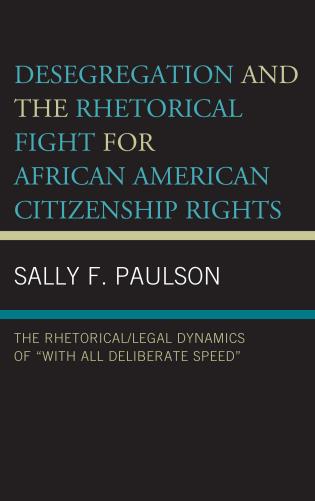
New Book in R3 Book Series on Desegregation...

Special Issue: Communication, Religion, and Race in America
TRENDING AT PATHEOS Progressive Christian

What Being a Modern-Day Apostle Means to Me
In my last column, I discussed the ins and outs of modern-day...

Did Ancient China Once Worship the God of...
Across human history, a common thread weaves through the origins of the...

Love Your Neighbor – Including Earth-Kin: Lev. 19,...
God’s command to love your neighbor means acting in an ethical and...

Lead a Church Study of “Jesus and Lao...
Guest writer Jack Thomas (The Irreverent Reverend) reflects on leading his church...

Pastoral Wisdom for Responding to Sermon Pushback
Getting sermon pushback on your social justice sermon? Learn practical, Proverbs-based strategies...

Principles for Understanding the Apostolic Ministry Today
Whenever people discover that my formal ministry title is "apostle," as in...
view all Progressive Christian blogs
Ad-Free & Subscriber Log-In Subscription Support
- About Us
- 2026 Calendar
- Videos
- Podcasts
- Library of World Religions
- Faith In Media Tracker
- Advertise With Us
- Write for Us
- Privacy Policy
- Terms of Service
- Do Not Sell My Data
- Contact Us
- Radiant Digital
- Manage Newsletter Subscriptions
- Unsubscribe From Notifications
- Sitemap
Copyright 2008-2026, Patheos. All rights reserved.
Subscription Support Ad-Free & Subscriber Log-In
Follow Patheos