
BuddhistCatholicContemplativeEvangelicalGeneral ChristianHinduJewishLatter-day SaintMuslimNew VisionsProgressive Christian
Beliefs
- Buddhist
- Catholic
- Contemplative
- Evangelical
- General Christian
- Hindu
- Jewish
- Latter-day Saint
- More Voices
- Muslim
- New Visions
- Pagan
- Progressive Christian
Topics
- Religion News
- Food and Religion
- Sports and Religion
- Religious Art
- Religious Music and Entertainment
- Religious Events
- History and Religion
- Style and Religion
- Politics and Religion
- Women in Religion
- Recreation Outdoors and Religion
- Business Finance and Religion
- Careers Workplace and Religion
- Education and Religion
- Family Parenting and Religion
- Health Fitness and Religion
- Home and Religion
- Relationships and Religion
- Technology and Religion
- Travel and Religion
Columnists
- Buddhist Columnists
- Business Finance and Religion Columnists
- Careers Workplace and Religion Columnists
- Catholic Columnists
- Contemplative Columnists
- Education and Religion Columnists
- Evangelists Columnists
- Family Parenting and Religion Columnists
- General Christian Columnists
- Health Fitness and Religion Columnists
- Hindu Columnists
- History and Religion Columnists
- Home and Religion Columnists
- Jewish Columnists
- More Voices Columnists
- Latter Day Columnists
- Muslim Columnists
- New Visions Columnists
- Nonreligious Columnists
- Pagan Columnists
- Politics and Religion Columnists
- Progressive Columnists
- Recreation Outdoors and Religion Columnists
- Relationships and Religion Columnists
- Religion News Columnists
- Religious Art Columnists
- Religious Events Columnists
- Religious Music and Entertainment Columnists
- Sports and Religion Columnists
- Style and Religion Columnists
- Technology and Religion Columnists
- Travel and Religion Columnists
- Women in Religion Columnists
Resource Library
- 2026 Calendar
- Library of World Religions
- The 100 Most Holy Places on Earth
- Patheos Answers
- Podcasts
- Videos
- Faith Leaders Database
- Anglican Episcopalian
- Bahai
- Baptist
- Buddhism
- Christianity
- Confucianism
- Eastern Orthodoxy
- Hinduism
- Holiness and Pentecostal
- ISKCON
- Islam
- Judaism
- Lutheran
- Methodist
- The Church of Jesus Christ of Latter-day Saints
- New Age
- Paganism
- Presbytarian and Reformed
- Protestantism
- Religion Behind the Scenes
- Roman Catholic
- Scientology
- Shia Islam
- Sikhism
- Sufism
- Sunni Islam
- Taoism
- Zen
- See all religions
Research Tools
 Ad-Free & Subscriber Log-In Subscription Support
Ad-Free & Subscriber Log-In Subscription Support
Follow Patheos 

- Trending:
- Forgiveness
- |
- Marriage
- |
- Consciousness
- |
- Death Penalty
- |
- Election
- |
- Halloween
 Rhetoric Race and Religion
- Home
- Progressive Christian
- Where Are Our Brush Harbors Today??
Where Are Our Brush Harbors Today??
Last updated on: August 1, 2017 at 11:55 am by Guest Contributor
Where Are Our Brush Harbors Today?? 2017-08-01T11:55:08-05:00 Guest Contributor
Patheos Explore the world's faith through different perspectives on religion and spirituality! Patheos has the views of the prevalent religions and spiritualities of the world.
 by Alphonso Saville
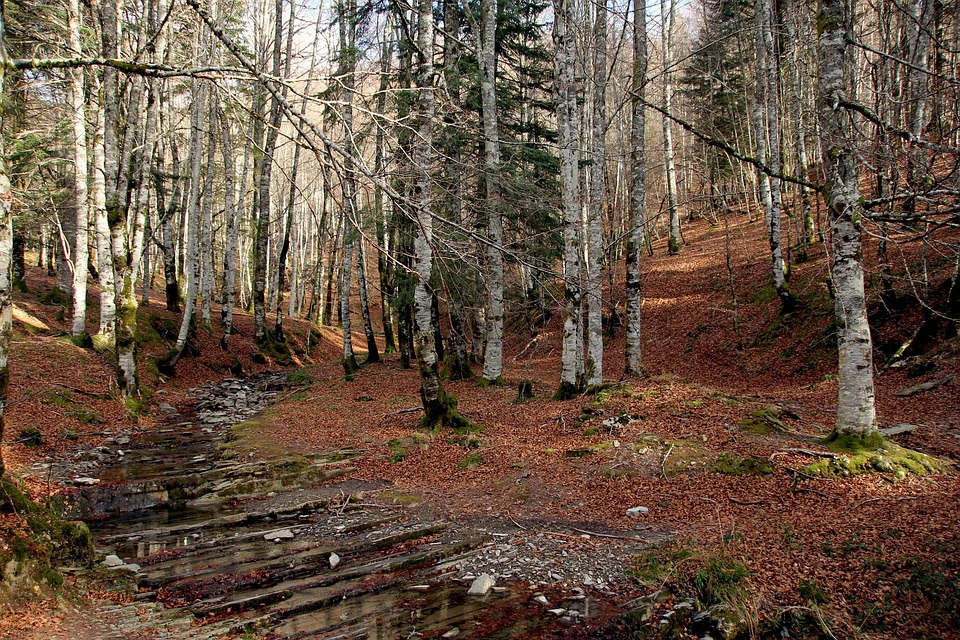
In Toni Morrison’s Beloved, when Sethe, the novel’s main character, determines that “it was time to lay it all down,” she heads to the woods to find the Clearing. It is there, she recalls, that Baby Suggs, the unchurched preacher, exhorted her community to love themselves, their bodies, and one another. The Clearing, described as “a wide-open place cut deep in the woods nobody knew for what at the end of a path known only to deer and whoever cleared the land,” is a literary depiction of a brush harbor, or hush harbor, and is foundational to the historical development of Black religion in America.
As historian Janet Cornelius explains, “hush harbors were meeting places, usually secret, which slaves created outside the plantation quarters.” The natural elements—rivers, forests, swamps, and caves—have housed sacred meeting spaces for religious observance throughout the course of human history. Secluded wilderness space had a particular appeal to North America’s early Black inhabitants. During the colonial and antebellum eras, black people’s movement was legally restricted in states like Virginia and South Carolina. For example, in many states legal statutes prohibited enslaved blacks from leaving plantations without their masters’ written permission. But, as historian Anthony Kaye explains, despite such restrictions, enslaved blacks formed neighborhood communities that stretched the boundaries of plantation society. Slave neighborhoods extended beyond individual plantations to include wilderness areas like the one Morrison describes. These brush harbor sanctuaries exhibit how Black people used uncultivated space to form religious communities when their inalienable right to free religious expression was not constitutionally protected.
The transformation that takes place in the brush harbor parallels several stories of the Old and New Testaments. A host of biblical prophets undergo spiritual transformation and renewal in the wilderness. When Moses flees to the wilderness, Yahweh appears and commissions him to demand Israel’s liberation from slavery. Jesus fasts and prays in the wilderness for forty days to and exhibits the strength needed to overcome evil at the outset of his public ministry. From these biblical and historical examples, we see that brush harbor temples provided the sacred space where one’s humanity was affirmed and one’s right to religious liberty could be realized. The Black Church, slavery’s invisible institution, was one of the first protectors of religious liberty in American history.
The spiritual significance of brush harbors in early African American religion is profound. As depicted in Morrison’s Beloved, brush harbors housed the rituals and practices of the “invisible institution” in black religious history. In these makeshift, tree-covered temples, black religious practitioners enacted rituals of spiritual transformation and reaffirmed the belief that they were equal stakeholders in the cosmic order of creation. In the secluded sanctuaries of Georgia, South Carolina, Virginia, Maryland and countless other North American territories, they discovered that the discriminatory rules of American society were not operative. The brush harbors of the Black Church North American provided a physical and conceptual space in which free and enslaved Blacks could assemble to freely exercise their religious imagination. As Baby Suggs surmises in Morrison’s Beloved, “Here, in this here place, we flesh; flesh that weeps, laughs; flesh that dances on bare feet in grass. Love it. Love it hard.”
Where are we finding the power to deal with the evils of today? Where are our brush harbors today??
Alphonso F. Saville, IV is a scholar, educator, and artist. His research explores American religious history, African American religious literature, and religious freedom in contemporary American society. His poetic works are showcased via Twitter and Instagram. You can follow Dr. Saville @drphonsarelli.
Donate to the Work of R3
Like the work we do at Rhetoric Race and Religion? Please consider helping us continue to do this work. All donations are tax-deductible through Gifts of Life Ministries/G’Life Outreach, a 501(c)(3) tax exempt organization, and our fiscal sponsor. Any donation helps. Just click here to support our work.

Next Post

August 1, 2017 How Big Is Your Preaching?
Browse Our Archives
Select a Category Amy Steele Andre E. Johnson Book Reviews/Series Brian Foulks Call for Chapters Carol Howard Merritt Classes Conferences Contributors Crystal St.Marie Lewis Daniel White Hodge Earle Fisher Eulogy Fredrick Robinson Guest Contributions Henry McNeal Turner Institutes Interviews Joseph Boston Katherine Whitfield Kimberly Peeler-Ringer Lectures/Roundtables Natalie Bullock Brown R3 Book Series R3 Contributor Rashad Grove Readers Reflections Symposiums Teaching Traci Ellis Travis Harris Uncategorized Video
Select a Month June 2020 February 2020 December 2019 November 2019 July 2019 June 2019 May 2019 October 2018 June 2018 May 2018 April 2018 March 2018 February 2018 January 2018 December 2017 November 2017 October 2017 September 2017 August 2017 July 2017 June 2017 May 2017 April 2017 March 2017 February 2017 January 2017 December 2016 November 2016 October 2016 September 2016 August 2016 July 2016 June 2016 May 2016 April 2016 March 2016 February 2016 January 2016 December 2015 November 2015 October 2015 September 2015 August 2015 July 2015 June 2015 May 2015 April 2015 March 2015 February 2015 January 2015 December 2014 November 2014 October 2014 September 2014 August 2014 July 2014 June 2014 May 2014 April 2014 March 2014 February 2014 January 2014 December 2013 November 2013 October 2013 September 2013 August 2013 July 2013 June 2013 May 2013 April 2013 March 2013 February 2013 January 2013 December 2012 November 2012 October 2012 September 2012 August 2012 July 2012 June 2012 May 2012 April 2012 March 2012 February 2012 January 2012 December 2011 November 2011 October 2011
Follow Us!
TAKE THE
Religious Wisdom Quiz
What does Proverbs say about quick-tempered people?
Select your answer to see how you score.
They cause trouble They are always respected They are wise They make peace
Related posts from Rhetoric Race and Religion

Why Christian Nationalism Betrays the Gospel

From the Mountain Top and Beyond: The Rhetoric...
New Book in R3 Book Series on Desegregation...

Special Issue: Communication, Religion, and Race in America
TRENDING AT PATHEOS Progressive Christian

What Being a Modern-Day Apostle Means to Me
In my last column, I discussed the ins and outs of modern-day...

Did Ancient China Once Worship the God of...
Across human history, a common thread weaves through the origins of the...

Love Your Neighbor – Including Earth-Kin: Lev. 19,...
God’s command to love your neighbor means acting in an ethical and...

Lead a Church Study of “Jesus and Lao...
Guest writer Jack Thomas (The Irreverent Reverend) reflects on leading his church...

Pastoral Wisdom for Responding to Sermon Pushback
Getting sermon pushback on your social justice sermon? Learn practical, Proverbs-based strategies...

Principles for Understanding the Apostolic Ministry Today
Whenever people discover that my formal ministry title is "apostle," as in...
view all Progressive Christian blogs
Ad-Free & Subscriber Log-In Subscription Support
- About Us
- 2026 Calendar
- Videos
- Podcasts
- Library of World Religions
- Faith In Media Tracker
- Advertise With Us
- Write for Us
- Privacy Policy
- Terms of Service
- Do Not Sell My Data
- Contact Us
- Radiant Digital
- Manage Newsletter Subscriptions
- Unsubscribe From Notifications
- Sitemap
Copyright 2008-2026, Patheos. All rights reserved.
Subscription Support Ad-Free & Subscriber Log-In
Follow Patheos