
BuddhistCatholicContemplativeEvangelicalGeneral ChristianHinduJewishLatter-day SaintMuslimNew VisionsProgressive Christian
Beliefs
- Buddhist
- Catholic
- Contemplative
- Evangelical
- General Christian
- Hindu
- Jewish
- Latter-day Saint
- More Voices
- Muslim
- New Visions
- Pagan
- Progressive Christian
Topics
- Religion News
- Food and Religion
- Sports and Religion
- Religious Art
- Religious Music and Entertainment
- Religious Events
- History and Religion
- Style and Religion
- Politics and Religion
- Women in Religion
- Recreation Outdoors and Religion
- Business Finance and Religion
- Careers Workplace and Religion
- Education and Religion
- Family Parenting and Religion
- Health Fitness and Religion
- Home and Religion
- Relationships and Religion
- Technology and Religion
- Travel and Religion
Columnists
- Buddhist Columnists
- Business Finance and Religion Columnists
- Careers Workplace and Religion Columnists
- Catholic Columnists
- Contemplative Columnists
- Education and Religion Columnists
- Evangelists Columnists
- Family Parenting and Religion Columnists
- General Christian Columnists
- Health Fitness and Religion Columnists
- Hindu Columnists
- History and Religion Columnists
- Home and Religion Columnists
- Jewish Columnists
- More Voices Columnists
- Latter Day Columnists
- Muslim Columnists
- New Visions Columnists
- Nonreligious Columnists
- Pagan Columnists
- Politics and Religion Columnists
- Progressive Columnists
- Recreation Outdoors and Religion Columnists
- Relationships and Religion Columnists
- Religion News Columnists
- Religious Art Columnists
- Religious Events Columnists
- Religious Music and Entertainment Columnists
- Sports and Religion Columnists
- Style and Religion Columnists
- Technology and Religion Columnists
- Travel and Religion Columnists
- Women in Religion Columnists
Resource Library
- 2026 Calendar
- Library of World Religions
- The 100 Most Holy Places on Earth
- Patheos Answers
- Podcasts
- Videos
- Faith Leaders Database
- Anglican Episcopalian
- Bahai
- Baptist
- Buddhism
- Christianity
- Confucianism
- Eastern Orthodoxy
- Hinduism
- Holiness and Pentecostal
- ISKCON
- Islam
- Judaism
- Lutheran
- Methodist
- The Church of Jesus Christ of Latter-day Saints
- New Age
- Paganism
- Presbytarian and Reformed
- Protestantism
- Religion Behind the Scenes
- Roman Catholic
- Scientology
- Shia Islam
- Sikhism
- Sufism
- Sunni Islam
- Taoism
- Zen
- See all religions
Research Tools
 Ad-Free & Subscriber Log-In Subscription Support
Ad-Free & Subscriber Log-In Subscription Support
Follow Patheos 

- Trending:
- Forgiveness
- |
- Marriage
- |
- Consciousness
- |
- Death Penalty
- |
- Election
- |
- Halloween
 Rhetoric Race and Religion
- Home
- Progressive Christian
- I’m Not Racist; I’m Nostalgic for Racial Terror
I’m Not Racist; I’m Nostalgic for Racial Terror
Last updated on: June 9, 2017 at 2:08 pm by Guest Contributor
I’m Not Racist; I’m Nostalgic for Racial Terror 2017-06-09T14:08:52-05:00 Guest Contributor
Patheos Explore the world's faith through different perspectives on religion and spirituality! Patheos has the views of the prevalent religions and spiritualities of the world.
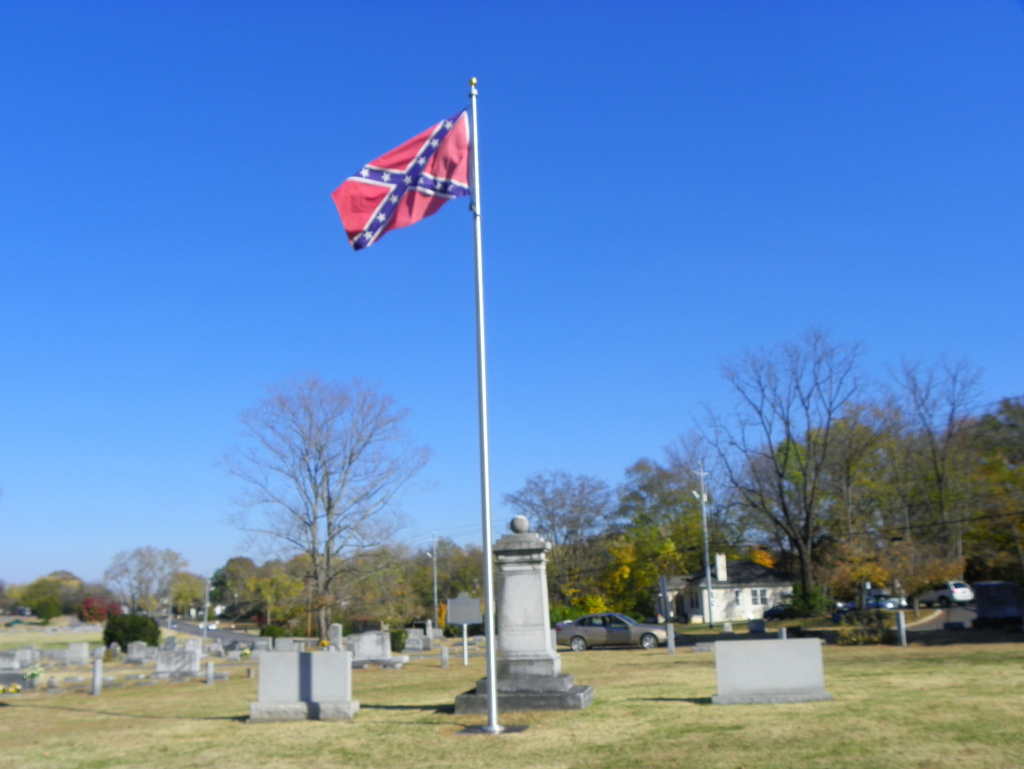 by George F. (Guy) McHendry Jr.
First published at Citizen Critics. We thank the editors for allowing us to cross post this piece.
For over a century a 16.5-foot-tall statue of Robert E. Lee towered over the city of New Orleans, standing as a symbol of the Confederate insurrection and various campaigns of racial terror throughout American history (slavery, Reconstruction, segregation, redlining, Jim Crow, and mass incarceration to name a few). This month the statue of Lee, and other Confederate markers, were removed. The debate over their removal represents a bitter fight over the meaning and import of the Confederate statues in the city.
Debates over the place of the Confederacy in American history often emphasize the perspectives and needs of the white majority that was spared slavery’s violence. These retellings take the rhetorical genre of nostalgia. Genres are predictable and reoccurring forms of speech that speakers can use in a variety of different contexts.
Defenders of Confederate monuments appeal to a particular kind of nostalgic rhetoric—one that longs for a past that never existed and that they never experienced.
Felling Monuments
New Orleans Mayor Mitch Landrieu spoke at lenAll Postsgth about the urgency of removing the monuments, articulating the events sanitized by statues that transform the Confederacy into heroic status:
New Orleans was America’s largest slave market: a port where hundreds of thousands of souls were bought, sold and shipped up the Mississippi River to lives of forced labor of misery of rape, of torture. America was the place where nearly 4000 of our fellow citizens were lynched, 540 alone in Louisiana; where the courts enshrined ‘separate but equal’; where Freedom riders coming to New Orleans were beaten to a bloody pulp.
Landrieu called this history “the searing truth.”
Bryan Stevenson, the Executive Director of the Equal Justice Initiative, which is planning a monument to the victims of lynching, described racial terror in the south in this way:
We lived through an era in America of racial terrorism, where thousands of African-Americans were burned alive and hung and murdered and beaten and mutilated, sometimes in the public square in front of thousands of people, who had the comfort of committing this terror with no risk of prosecution, no threat of arrest or adverse consequences.
Stevenson draws parallels to other nations who have engaged in similar state-sponsored terror, noting that places like Germany and Rwanda commemorates victims of historical wrongs, rather than their perpetrators.
In the last few years there has been a resurgence over questions around the meaning, status, and appropriateness of Confederate symbols, especially regarding flags and monuments. These debates have become flashpoints for racial tension in America. More than that, they also reveal a disconnect between our public rhetoric around slavery, the Civil War, and racism from the horrors of race-based violence.
Nostalgia is a Disease
We often think of nostalgia as a benign longing for the past, but rhetorics of nostalgia are often malicious. Svetlana Boym explains nostalgia, “comes from two Greek roots, nostos meaning ‘return home’ and algia ‘longing.’” Boym reveals that in the late 1600’s medical literature began to see nostalgia as a disease. Johannes Hofer believed “nostalgia was a demonstration of the patriotism of his compatriots who loved the charm of their native land to the point of sickness.” Nostalgia then emerges as deeply connected to one’s beliefs about their country.
Perception of loss is particularly important for understanding the emergence of nostalgic rhetorics. Boym argues it is, “…a longing for a home that no longer exists or has never existed. Nostalgia is a sentiment of loss and displacement, but it is also a romance with one’s own fantasy.” The Confederacy remembered in statues of generals, politicians, and landmarks of the Confederacy are the product of a white racist imagination that chooses to valorize the CSA without the burden of remembering America’s long history of racial terror.
Diseased Memory: Preserving the Confederacy
In response to the removal of monuments in New Orleans, Alabama Governor Kay Iven recently signed legislation prohibiting the “relocation, removal, alteration, renaming or other disturbance of any architecturally significant building, memorial building, memorial street or monument located on public property which has been in place for 40 or more years.”
This bill conjures a nostalgic version of the South where black voices were kept silent (by white terrorism). The bill’s sponsor, Republican State Sen. Gerald Allen of Tuscaloosa, argues, “Where does it end? Are all parts of American history subject to purging, until every Ivy League professor is satisfied and the American story has been re-written as nothing but a complete fraud and a betrayal of our founding values of life, liberty and the pursuit of happiness?”
Allen’s version of America did not, and does not exist. Notice a few rhetorical maneuvers Allen makes here:
First, he locates the desire to remove the monuments with Ivy League Professors. This shifts the desire to remove the statues from local communities (in particular communities of color in the south) to the hands of an intruding Northern aggressor. This erases the experiences of People of Color in the South, silencing them by legislation and reshaping the (white) south’s misdeeds as the fault of the North. Allen’s nostalgia for a time and place dominated by whiteness expels the experiences and needs of Black people from debates over the Confederacy.
Second, Allen’s assertion that removing the statues will make American history become “re-written as nothing but a complete fraud and a betrayal of our founding values” dismisses opposition to artifacts of the Confederacy as nothing more than “a wave of political correctness.” This suggests a retelling of American history where celebrating the Confederacy is proper and criticism is an attempt to alter the past. To return to Boym, Allen is constructing a “fantasy” for “…a home that…never existed.” Allen’s South, free of the complications of racial terror lets Confederate markers stand without controversy or complexity.
Allen and others like him long for a version of the past that never existed. There was no glorious past, there was however, a nation built on the back of state-sponsored violence. It should not be a surprise, however, that we are struggling with these issues at the present moment. The roots of the word disease imply it is a lack of ease—(dis)ease. Increasingly, it is more difficult for fantasies about the glorious Confederacy to hold together in the face of strong and powerful advocacy for the lingering horrors of slavery.
Greg Dickinson argues, “In a post-traditional period, a time of deepening memory crisis,
secured place becomes harder and harder to maintain, giving rise to nostalgia to cover the discomforts of the present.” Recent events, the election of an African-American president, the emergence of #BlackLivesMatter, and explicit white-national rhetorics during the 2016 elections are all symptoms that other voices are challenging the centrality of whiteness in America. I am not suggesting we have emerged in some kind of post-racial period, that would be a different fantasy. Instead, white identity is increasingly forced to face different identities and experiences; in response, some have responded with dangerous rhetorics steeped in Civil War nostalgia.
Monuments to the Confederacy are tributes to racial violence, defending them refuses the banality of their evil and emboldens the terror they represent.
George F. (Guy) McHendry, Jr. is an Assistant Professor in the Communication Studies department. He studies rhetoric and cultural studies within the discipline of communication. His research currently focuses on public performances of security in airports and the relationship between the public and the Transportation Security Administration. Guy is especially interested in how security and resistance is performed in airports and how those performances can dominate our ways of experiencing airports. When not in the classroom or working on an essay Guy can be found playing with his dogs, playing hockey, or trying out something new in the kitchen. For more information about Guy and his vitae, please visit his website at georgefmchendry.com.
Donate to the Work of R3
Like the work we do at Rhetoric Race and Religion? Please consider helping us continue to do this work. All donations are tax-deductible through Gifts of Life Ministries/G’Life Outreach, a 501(c)(3) tax exempt organization, and our fiscal sponsor. Any donation helps. Just click here to support our work.
Share
Previous Post

June 5, 2017
Call for Papers: American Society for the History of Rhetoric
Next Post

June 15, 2017 Call for Papers: Race, Religion, and Black Lives Matter
Browse Our Archives
Select a Category Amy Steele Andre E. Johnson Book Reviews/Series Brian Foulks Call for Chapters Carol Howard Merritt Classes Conferences Contributors Crystal St.Marie Lewis Daniel White Hodge Earle Fisher Eulogy Fredrick Robinson Guest Contributions Henry McNeal Turner Institutes Interviews Joseph Boston Katherine Whitfield Kimberly Peeler-Ringer Lectures/Roundtables Natalie Bullock Brown R3 Book Series R3 Contributor Rashad Grove Readers Reflections Symposiums Teaching Traci Ellis Travis Harris Uncategorized Video
Select a Month June 2020 February 2020 December 2019 November 2019 July 2019 June 2019 May 2019 October 2018 June 2018 May 2018 April 2018 March 2018 February 2018 January 2018 December 2017 November 2017 October 2017 September 2017 August 2017 July 2017 June 2017 May 2017 April 2017 March 2017 February 2017 January 2017 December 2016 November 2016 October 2016 September 2016 August 2016 July 2016 June 2016 May 2016 April 2016 March 2016 February 2016 January 2016 December 2015 November 2015 October 2015 September 2015 August 2015 July 2015 June 2015 May 2015 April 2015 March 2015 February 2015 January 2015 December 2014 November 2014 October 2014 September 2014 August 2014 July 2014 June 2014 May 2014 April 2014 March 2014 February 2014 January 2014 December 2013 November 2013 October 2013 September 2013 August 2013 July 2013 June 2013 May 2013 April 2013 March 2013 February 2013 January 2013 December 2012 November 2012 October 2012 September 2012 August 2012 July 2012 June 2012 May 2012 April 2012 March 2012 February 2012 January 2012 December 2011 November 2011 October 2011
Follow Us!
TAKE THE
Religious Wisdom Quiz
How many chapters are in the book of Luke?
Select your answer to see how you score.
28 24 20 22
Related posts from Rhetoric Race and Religion

Why Christian Nationalism Betrays the Gospel

Silence and Sexual Assault: Toward a Better Response...

When the Illusionists Believe They’re Performing Real Magic
TRENDING AT PATHEOS Progressive Christian

What Being a Modern-Day Apostle Means to Me
In my last column, I discussed the ins and outs of modern-day...

Did Ancient China Once Worship the God of...
Across human history, a common thread weaves through the origins of the...

Love Your Neighbor – Including Earth-Kin: Lev. 19,...
God’s command to love your neighbor means acting in an ethical and...

Lead a Church Study of “Jesus and Lao...
Guest writer Jack Thomas (The Irreverent Reverend) reflects on leading his church...

Pastoral Wisdom for Responding to Sermon Pushback
Getting sermon pushback on your social justice sermon? Learn practical, Proverbs-based strategies...

Principles for Understanding the Apostolic Ministry Today
Whenever people discover that my formal ministry title is "apostle," as in...
view all Progressive Christian blogs
Ad-Free & Subscriber Log-In Subscription Support
- About Us
- 2026 Calendar
- Videos
- Podcasts
- Library of World Religions
- Faith In Media Tracker
- Advertise With Us
- Write for Us
- Privacy Policy
- Terms of Service
- Do Not Sell My Data
- Contact Us
- Radiant Digital
- Manage Newsletter Subscriptions
- Unsubscribe From Notifications
- Sitemap
Copyright 2008-2026, Patheos. All rights reserved.
Subscription Support Ad-Free & Subscriber Log-In
Follow Patheos