
BuddhistCatholicContemplativeEvangelicalGeneral ChristianHinduJewishLatter-day SaintMuslimNew VisionsProgressive Christian
Beliefs
- Buddhist
- Catholic
- Contemplative
- Evangelical
- General Christian
- Hindu
- Jewish
- Latter-day Saint
- More Voices
- Muslim
- New Visions
- Pagan
- Progressive Christian
Topics
- Religion News
- Food and Religion
- Sports and Religion
- Religious Art
- Religious Music and Entertainment
- Religious Events
- History and Religion
- Style and Religion
- Politics and Religion
- Women in Religion
- Recreation Outdoors and Religion
- Business Finance and Religion
- Careers Workplace and Religion
- Education and Religion
- Family Parenting and Religion
- Health Fitness and Religion
- Home and Religion
- Relationships and Religion
- Technology and Religion
- Travel and Religion
Columnists
- Buddhist Columnists
- Business Finance and Religion Columnists
- Careers Workplace and Religion Columnists
- Catholic Columnists
- Contemplative Columnists
- Education and Religion Columnists
- Evangelists Columnists
- Family Parenting and Religion Columnists
- General Christian Columnists
- Health Fitness and Religion Columnists
- Hindu Columnists
- History and Religion Columnists
- Home and Religion Columnists
- Jewish Columnists
- More Voices Columnists
- Latter Day Columnists
- Muslim Columnists
- New Visions Columnists
- Nonreligious Columnists
- Pagan Columnists
- Politics and Religion Columnists
- Progressive Columnists
- Recreation Outdoors and Religion Columnists
- Relationships and Religion Columnists
- Religion News Columnists
- Religious Art Columnists
- Religious Events Columnists
- Religious Music and Entertainment Columnists
- Sports and Religion Columnists
- Style and Religion Columnists
- Technology and Religion Columnists
- Travel and Religion Columnists
- Women in Religion Columnists
Resource Library
- 2026 Calendar
- Library of World Religions
- The 100 Most Holy Places on Earth
- Patheos Answers
- Podcasts
- Videos
- Faith Leaders Database
- Anglican Episcopalian
- Bahai
- Baptist
- Buddhism
- Christianity
- Confucianism
- Eastern Orthodoxy
- Hinduism
- Holiness and Pentecostal
- ISKCON
- Islam
- Judaism
- Lutheran
- Methodist
- The Church of Jesus Christ of Latter-day Saints
- New Age
- Paganism
- Presbytarian and Reformed
- Protestantism
- Religion Behind the Scenes
- Roman Catholic
- Scientology
- Shia Islam
- Sikhism
- Sufism
- Sunni Islam
- Taoism
- Zen
- See all religions
Research Tools
 Ad-Free & Subscriber Log-In Subscription Support
Ad-Free & Subscriber Log-In Subscription Support
Follow Patheos 

- Trending:
- Forgiveness
- |
- Marriage
- |
- Consciousness
- |
- Death Penalty
- |
- Election
- |
- Halloween
 Rhetoric Race and Religion
- Home
- Progressive Christian
- Prophetic-Pastoral Balance: A Response to Eric Weed
Prophetic-Pastoral Balance: A Response to Eric Weed
Last updated on: February 8, 2017 at 9:27 am by Guest Contributor
Prophetic-Pastoral Balance: A Response to Eric Weed 2017-02-08T09:27:53-05:00 Guest Contributor
Patheos Explore the world's faith through different perspectives on religion and spirituality! Patheos has the views of the prevalent religions and spiritualities of the world.
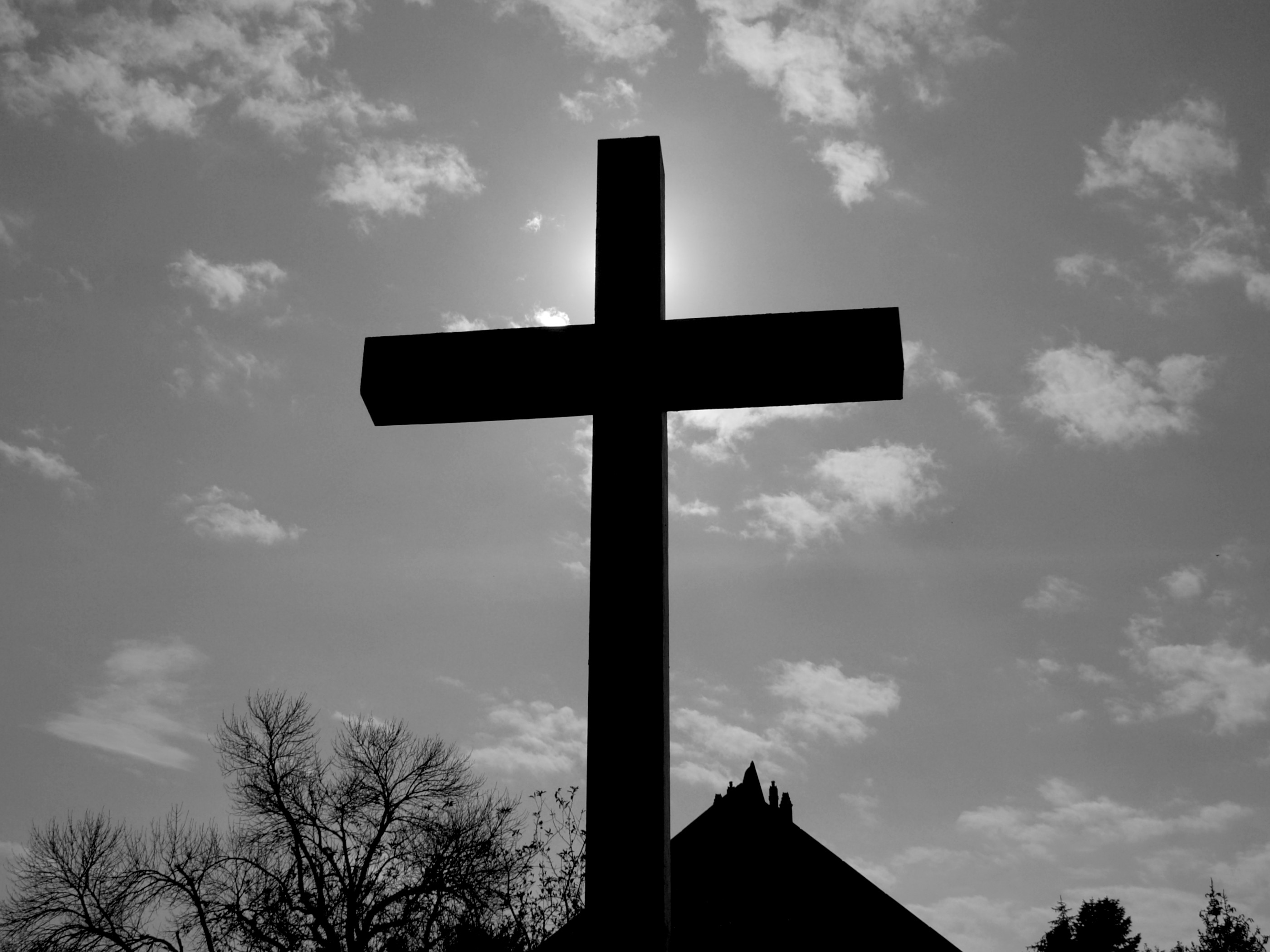 by Steven Tramel Gaines
Fear and anger grip my nation. Cries of protest arise from people who perceive injustices in executive actions. Supporters of those actions object to the protests and demean the cries of oppression.
As I said in a recent sermon, “We need to do something. We need to say something. Our consciences don’t allow us to sit quietly and passively while the world around us falls to pieces.”
Similarly, in a recent R3 post, Eric Weed wrote:
White theologians cannot stop by stepping outside the tower. The courage to engage American society also means that we must seek the affirmation of life by showing up. The courage to show up means to actively seek equality and justice and to stand with those whose being is questioned by the political and societal structures. This means affirming the rights of all in spite of the possible threat to ourselves. It means standing with colleagues, students, and strangers whose lives are under the constant existential assault to their personhood. The courage to show up means to speak out and seek to influence the political debate.
Weed and I share some convictions but differ in practice. He’s a theologian, and I’m a preacher in a local congregation. Our roles lead us to think, speak, write, and act from different perspectives and concerns.
Whereas he desires “to influence the political debate,” my primary ministerial commitment is preaching and teaching to nurture a specific group of people. My main ministerial goal is not to influence any government’s decisions. That doesn’t mean I shouldn’t or don’t speak and write prophetically (see Andre E. Johnson’s work on prophetic rhetoric). Instead, the prophetic in my ministry role must blend with the pastoral to contribute to the formation of a community striving to live out the Kingdom of God in an earthly kingdom that operates on different values.
In a recent NPR interview, Adam Hamilton said, “When you have a congregation like ours that’s divided on both sides of the political spectrum and conservative, progressive and a whole lot of people in between, the question is how do I continue to be pastor for all of these people? And how do I help them hear each other?”
He continued, “I want to help both sides be able to hear the legitimate and sometimes not necessarily legitimate concerns of the other. My aim is not to see 40 percent of my congregation walk away saying, ‘I don’t know if I want to come back.’ And I’ve said to pastors across the country . . . ‘It’s easy to irritate people. It’s harder to influence people.’”
That pastoral (nurturing) focus doesn’t prevent Hamilton from speaking prophetically (from a sacred foundation to call for change). In the NPR interview on February 3, he said that his next sermon would talk about what the Bible says about refugees and other marginalized people and would address these questions: “What does the Bible teach us about how we react to people who are in troubled situations? You know, what does it mean to be concerned for those who can’t speak up for themselves?”
It’s interesting that he planned that sermon for February 5 instead of January 29. (President Trump’s refugee ban happened on January 27.) The delay resulted not from Hamilton’s ignorance of current events or from his lack of concern. In the interview he explained, “I knew actually as of Friday night (Jan. 27) that I would be saying something, but I chose not to address it in church immediately after that on Sunday because I felt like I didn’t know enough yet. And I had people who were disappointed that I didn’t talk about it in church immediately after that.”
Too many preachers speak boldly out of ignorance, not taking the time to study, learn, pray, and contemplate. On the other hand, in fear of offending congregants, too many preachers avoid topics deemed “political.” Hamilton chose to invest the needed time and effort to learn and then to speak. He chose to respond to social issues without abandoning the pastoral responsibility of preparation.
The political diversity of Hamilton’s congregation necessitates his prophetic-pastoral balance. He said in the interview, “And our congregation is divided. We have some folks who are Trump supporters. We have folks who [are] not Trump supporters. The Trump supporters [are] like, ‘Please don’t talk politics every Sunday. Don’t bring your personal opinions into the sermon every week.’ And other folks are like, ‘Why aren’t you speaking out? Why aren’t you saying something?’”
The prophetic-pastoral balance is difficult.
How long should we wait and learn before speaking? At what point have we waited and learned so long that our words are no longer relevant?
To what extent should the prophetic limit the pastoral? And to what extent should the pastoral limit the prophetic?
How far should we go to call people to change and action? And how far should we go to maintain peace in diverse congregations?
No preacher can answer these questions for any other preachers. Different contexts require different choices.
In making these decisions, we preachers should prayerfully and studiously consider a mixture of cultural and congregational needs. And we should invest the requisite time and effort to prepare sermons that speak from sacred texts to help people experience the texts in ways that prompt conviction and change.
Steven Tramel Gaines ministers with Cordova Community Church in Memphis, TN. He is also a PhD student in rhetoric in the department of Communication at the University of Memphis.
Donate to the Work of R3
Like the work we do at Rhetoric Race and Religion? Please consider helping us continue to do this work. All donations are tax-deductible through Gifts of Life Ministries/G’Life Outreach, a 501(c)(3) tax exempt organization, and our fiscal sponsor. Any donation helps. Just click here to support our work.
Previous Post

January 31, 2017
The Blinding of White America
Next Post

February 15, 2017 Bread and Redemption
Browse Our Archives
Select a Category Amy Steele Andre E. Johnson Book Reviews/Series Brian Foulks Call for Chapters Carol Howard Merritt Classes Conferences Contributors Crystal St.Marie Lewis Daniel White Hodge Earle Fisher Eulogy Fredrick Robinson Guest Contributions Henry McNeal Turner Institutes Interviews Joseph Boston Katherine Whitfield Kimberly Peeler-Ringer Lectures/Roundtables Natalie Bullock Brown R3 Book Series R3 Contributor Rashad Grove Readers Reflections Symposiums Teaching Traci Ellis Travis Harris Uncategorized Video
Select a Month June 2020 February 2020 December 2019 November 2019 July 2019 June 2019 May 2019 October 2018 June 2018 May 2018 April 2018 March 2018 February 2018 January 2018 December 2017 November 2017 October 2017 September 2017 August 2017 July 2017 June 2017 May 2017 April 2017 March 2017 February 2017 January 2017 December 2016 November 2016 October 2016 September 2016 August 2016 July 2016 June 2016 May 2016 April 2016 March 2016 February 2016 January 2016 December 2015 November 2015 October 2015 September 2015 August 2015 July 2015 June 2015 May 2015 April 2015 March 2015 February 2015 January 2015 December 2014 November 2014 October 2014 September 2014 August 2014 July 2014 June 2014 May 2014 April 2014 March 2014 February 2014 January 2014 December 2013 November 2013 October 2013 September 2013 August 2013 July 2013 June 2013 May 2013 April 2013 March 2013 February 2013 January 2013 December 2012 November 2012 October 2012 September 2012 August 2012 July 2012 June 2012 May 2012 April 2012 March 2012 February 2012 January 2012 December 2011 November 2011 October 2011
Follow Us!
TAKE THE
Religious Wisdom Quiz
A plant grew overnight to shade me, then withered, making me angry enough to die. What lesson did God teach through this?
Select your answer to see how you score.
God's compassion for people Trust in God God's Patience with us Our need for Humility
Related posts from Rhetoric Race and Religion

Why Christian Nationalism Betrays the Gospel
The Most Dangerous Negro in America

A Critique of #MLK's Theory of Non-Violence

Silence and Sexual Assault: Toward a Better Response...
TRENDING AT PATHEOS Progressive Christian

What Being a Modern-Day Apostle Means to Me
In my last column, I discussed the ins and outs of modern-day...

Did Ancient China Once Worship the God of...
Across human history, a common thread weaves through the origins of the...

Love Your Neighbor – Including Earth-Kin: Lev. 19,...
God’s command to love your neighbor means acting in an ethical and...

Lead a Church Study of “Jesus and Lao...
Guest writer Jack Thomas (The Irreverent Reverend) reflects on leading his church...

Pastoral Wisdom for Responding to Sermon Pushback
Getting sermon pushback on your social justice sermon? Learn practical, Proverbs-based strategies...

Principles for Understanding the Apostolic Ministry Today
Whenever people discover that my formal ministry title is "apostle," as in...
view all Progressive Christian blogs
Ad-Free & Subscriber Log-In Subscription Support
- About Us
- 2026 Calendar
- Videos
- Podcasts
- Library of World Religions
- Faith In Media Tracker
- Advertise With Us
- Write for Us
- Privacy Policy
- Terms of Service
- Do Not Sell My Data
- Contact Us
- Radiant Digital
- Manage Newsletter Subscriptions
- Unsubscribe From Notifications
- Sitemap
Copyright 2008-2026, Patheos. All rights reserved.
Subscription Support Ad-Free & Subscriber Log-In
Follow Patheos