
BuddhistCatholicContemplativeEvangelicalGeneral ChristianHinduJewishLatter-day SaintMuslimNew VisionsProgressive Christian
Beliefs
- Buddhist
- Catholic
- Contemplative
- Evangelical
- General Christian
- Hindu
- Jewish
- Latter-day Saint
- More Voices
- Muslim
- New Visions
- Pagan
- Progressive Christian
Topics
- Religion News
- Food and Religion
- Sports and Religion
- Religious Art
- Religious Music and Entertainment
- Religious Events
- History and Religion
- Style and Religion
- Politics and Religion
- Women in Religion
- Recreation Outdoors and Religion
- Business Finance and Religion
- Careers Workplace and Religion
- Education and Religion
- Family Parenting and Religion
- Health Fitness and Religion
- Home and Religion
- Relationships and Religion
- Technology and Religion
- Travel and Religion
Columnists
- Buddhist Columnists
- Business Finance and Religion Columnists
- Careers Workplace and Religion Columnists
- Catholic Columnists
- Contemplative Columnists
- Education and Religion Columnists
- Evangelists Columnists
- Family Parenting and Religion Columnists
- General Christian Columnists
- Health Fitness and Religion Columnists
- Hindu Columnists
- History and Religion Columnists
- Home and Religion Columnists
- Jewish Columnists
- More Voices Columnists
- Latter Day Columnists
- Muslim Columnists
- New Visions Columnists
- Nonreligious Columnists
- Pagan Columnists
- Politics and Religion Columnists
- Progressive Columnists
- Recreation Outdoors and Religion Columnists
- Relationships and Religion Columnists
- Religion News Columnists
- Religious Art Columnists
- Religious Events Columnists
- Religious Music and Entertainment Columnists
- Sports and Religion Columnists
- Style and Religion Columnists
- Technology and Religion Columnists
- Travel and Religion Columnists
- Women in Religion Columnists
Resource Library
- 2026 Calendar
- Library of World Religions
- The 100 Most Holy Places on Earth
- Patheos Answers
- Podcasts
- Videos
- Faith Leaders Database
- Anglican Episcopalian
- Bahai
- Baptist
- Buddhism
- Christianity
- Confucianism
- Eastern Orthodoxy
- Hinduism
- Holiness and Pentecostal
- ISKCON
- Islam
- Judaism
- Lutheran
- Methodist
- The Church of Jesus Christ of Latter-day Saints
- New Age
- Paganism
- Presbytarian and Reformed
- Protestantism
- Religion Behind the Scenes
- Roman Catholic
- Scientology
- Shia Islam
- Sikhism
- Sufism
- Sunni Islam
- Taoism
- Zen
- See all religions
Research Tools
 Ad-Free & Subscriber Log-In Subscription Support
Ad-Free & Subscriber Log-In Subscription Support
Follow Patheos 

- Trending:
- Forgiveness
- |
- Marriage
- |
- Consciousness
- |
- Death Penalty
- |
- Election
- |
- Halloween
 Rhetoric Race and Religion
- Home
- Progressive Christian
- #MLK: A Pessimistic Prophet?
#MLK: A Pessimistic Prophet?
Last updated on: January 15, 2017 at 9:17 pm by Andre E. Johnson
#MLK: A Pessimistic Prophet? 2017-01-15T21:17:49-05:00 Andre E. Johnson
Patheos Explore the world's faith through different perspectives on religion and spirituality! Patheos has the views of the prevalent religions and spiritualities of the world.
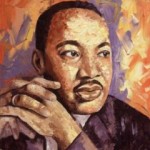
 While we are celebrating and commemorating the life and legacy of Rev. Dr. Martin Luther King Jr., let us remember that King’s rhetorical trajectory shifted from an optimistic prophet to a pessimistic one. This is what we will examine in the class I will teach this semester, From Riverside to the River City: The Prophetic Pessimism of Martin Luther King Jr. In this class, we will focus on the more radical King by examining his prophetic rhetoric during the last year of his life. More specifically, we examine King within the African American prophetic tradition placing special emphasis on his prophetic pessimism. Below are a few quotes from speeches and sermons that we will read in the class.
“My third reason moves to an even deeper level of awareness, for it grows out of my experience in the ghettos of the North over the last three years — especially the last three summers. As I have walked among the desperate, rejected, and angry young men, I have told them that Molotov cocktails and rifles would not solve their problems. I have tried to offer them my deepest compassion while maintaining my conviction that social change comes most meaningfully through nonviolent action. But they ask — and rightly so — what about Vietnam? They ask if our own nation wasn’t using massive doses of violence to solve its problems, to bring about the changes it wanted. Their questions hit home, and I knew that I could never again raise my voice against the violence of the oppressed in the ghettos without having first spoken clearly to the greatest purveyor of violence in the world today — my own government. For the sake of those boys, for the sake of this government, for the sake of the hundreds of thousands trembling under our violence, I cannot be silent.”-Beyond Vietnam, April 4, 1967
“And this leads me to say something about another discussion that we hear a great deal, and that is the so-called “white backlash.” I would like to honestly say to you that the white backlash is merely a new name for an old phenomenon. It’s not something that just came into being because shouts of Black Power, or because Negroes engaged in riots in Watts, for instance. The fact is that the state of California voted a Fair Housing bill out of existence before anybody shouted Black Power, or before anybody rioted in Watts.
It may well be that shouts of Black Power and riots in Watts and the Harlems and the other areas, are the consequences of the white backlash rather than the cause of them. What it is necessary to see is that there has never been a single solid monistic determined commitment on the part of the vast majority of white Americans on the whole question of Civil Rights and on the whole question of racial equality. This is something that truth impels all men of good will to admit.”–The Other America, April 14, 1967
“And I’m going to still need your prayer, I’m going to still need your support. Because the period that we face now is more difficult than any we’ve faced in the past. But this morning I did not come to Mount Pisgah to give a civil rights address; I have to do a lot of that; I have to make numerous civil rights speeches. But before I was a civil rights leader, I was a preacher of the gospel. This was my first calling and it still remains my greatest commitment. You know, actually all that I do in civil rights I do because I consider it a part of my ministry. I have no other ambitions in life but to achieve excellence in the Christian ministry. I don’t plan to run for any political office. I don’t plan to do anything but remain a preacher.
And what I’m doing in this struggle, along with many others, grows out of my feeling that the preacher must be concerned about the whole man. Not merely his soul, but his body. It’s all right to talk about heaven. I talk about it because I believe firmly in immortality. But you’ve got to talk about the earth. It’s all right to talk about long white robes over yonder, but I want a suit and some shoes to wear down here. It’s all right to talk about the streets flowing with milk and honey in heaven, but I want some food to eat down here. It’s even all right to talk about the new Jerusalem. But one day we must begin to talk about the new Chicago, the new Atlanta, the new New York, the new America.
And any religion that professes to be concerned about the souls of men and is not concerned about the slums that cripple the souls—the economic conditions that stagnate the soul and the city governments that may damn the soul—is a dry, dead, do-nothing religion in need of new blood.–Why Jesus Called a Man a Fool, August 27, 1967
I came to see this in a personal experience here in Chicago last summer. In all the speaking I have done in the United States before varied audiences, including some hostile whites, the only time I have ever been booed was one night in our regular weekly mass meetings by some angry young men of our movement. Now I went home that night with an ugly feeling. Selfishly I thought of my suffering and sacrifices over the last twelve years. Why would they boo one so close to them? But as I lay awake thinking. I finally came to myself. And I could not for the life of me have less impatience and understanding for those young men. For twelve years, I and others like me, have held out radiant promises of progress. I had preached to them about my dream. I had lectured to them about, the not to distant day when they would have freedom, all here, now. I had urged them to have faith in America and in white society. Their hopes had soared. They were now booing me because they felt that we were unable to deliver on our promises. They were booing because we had urged them to have faith in people who had too often proved to be unfaithful. They were now hostile because they were watching the dream that they had so readily accepted, turn into a frustrating nightmare.– The Three Evils of Society, August 31, 1967
The first thing I would like to mention is that there must be a recognition on the part of everybody in this nation that America is still a racist country. Now however unpleasant that sounds, it is the truth. And we will never solve the problem of racism until there is a recognition of the fact that racism still stands at the center of so much of our nation and we must see racism for what it is. It is the nymph of an inferior people. It is the notion that one group has all of the knowledge, all of the insights, all of the purity, all of the work, all of the dignity. And another group is worthless, on a lower level of humanity, inferior. To put it in philosophical language, racism is not based on some empirical generalization which, after some studies, would come to conclusion that these people are behind because of environmental conditions. Racism is based on an ontological affirmation. It is the notion that the very being of a people is inferior.-The Other America, March 14, 1968
Andre E. Johnson is the Managing Editor and Founder of R3
Donate to the Work of R3
Like the work we do at Rhetoric Race and Religion? Please consider helping us continue to do this work. All donations are tax-deductible through Gifts of Life Ministries/G’Life Outreach, a 501(c)(3) tax exempt organization, and our fiscal sponsor. Any donation helps. Just click here to support our work.
Previous Post

January 6, 2017
Resistance and the Black Faith Tradition
Next Post
January 18, 2017 I Had a Dream Too
Browse Our Archives
Select a Category Amy Steele Andre E. Johnson Book Reviews/Series Brian Foulks Call for Chapters Carol Howard Merritt Classes Conferences Contributors Crystal St.Marie Lewis Daniel White Hodge Earle Fisher Eulogy Fredrick Robinson Guest Contributions Henry McNeal Turner Institutes Interviews Joseph Boston Katherine Whitfield Kimberly Peeler-Ringer Lectures/Roundtables Natalie Bullock Brown R3 Book Series R3 Contributor Rashad Grove Readers Reflections Symposiums Teaching Traci Ellis Travis Harris Uncategorized Video
Select a Month June 2020 February 2020 December 2019 November 2019 July 2019 June 2019 May 2019 October 2018 June 2018 May 2018 April 2018 March 2018 February 2018 January 2018 December 2017 November 2017 October 2017 September 2017 August 2017 July 2017 June 2017 May 2017 April 2017 March 2017 February 2017 January 2017 December 2016 November 2016 October 2016 September 2016 August 2016 July 2016 June 2016 May 2016 April 2016 March 2016 February 2016 January 2016 December 2015 November 2015 October 2015 September 2015 August 2015 July 2015 June 2015 May 2015 April 2015 March 2015 February 2015 January 2015 December 2014 November 2014 October 2014 September 2014 August 2014 July 2014 June 2014 May 2014 April 2014 March 2014 February 2014 January 2014 December 2013 November 2013 October 2013 September 2013 August 2013 July 2013 June 2013 May 2013 April 2013 March 2013 February 2013 January 2013 December 2012 November 2012 October 2012 September 2012 August 2012 July 2012 June 2012 May 2012 April 2012 March 2012 February 2012 January 2012 December 2011 November 2011 October 2011
Follow Us!
TAKE THE
Religious Wisdom Quiz
What was Jesus' earthly profession?
Select your answer to see how you score.
Shepherd Fisherman Carpenter Tentmaker
Related posts from Rhetoric Race and Religion


Dislocations and Shutdowns: #MLK, #BLM and the Rhetoric...

From the Mountain Top and Beyond: The Rhetoric...

Special Issue: Communication, Religion, and Race in America
TRENDING AT PATHEOS Progressive Christian

What Being a Modern-Day Apostle Means to Me
In my last column, I discussed the ins and outs of modern-day...

Did Ancient China Once Worship the God of...
Across human history, a common thread weaves through the origins of the...

Love Your Neighbor – Including Earth-Kin: Lev. 19,...
God’s command to love your neighbor means acting in an ethical and...

Lead a Church Study of “Jesus and Lao...
Guest writer Jack Thomas (The Irreverent Reverend) reflects on leading his church...

Pastoral Wisdom for Responding to Sermon Pushback
Getting sermon pushback on your social justice sermon? Learn practical, Proverbs-based strategies...

Principles for Understanding the Apostolic Ministry Today
Whenever people discover that my formal ministry title is "apostle," as in...
view all Progressive Christian blogs
Ad-Free & Subscriber Log-In Subscription Support
- About Us
- 2026 Calendar
- Videos
- Podcasts
- Library of World Religions
- Faith In Media Tracker
- Advertise With Us
- Write for Us
- Privacy Policy
- Terms of Service
- Do Not Sell My Data
- Contact Us
- Radiant Digital
- Manage Newsletter Subscriptions
- Unsubscribe From Notifications
- Sitemap
Copyright 2008-2026, Patheos. All rights reserved.
Subscription Support Ad-Free & Subscriber Log-In
Follow Patheos