
BuddhistCatholicContemplativeEvangelicalGeneral ChristianHinduJewishLatter-day SaintMuslimNew VisionsProgressive Christian
Beliefs
- Buddhist
- Catholic
- Contemplative
- Evangelical
- General Christian
- Hindu
- Jewish
- Latter-day Saint
- More Voices
- Muslim
- New Visions
- Pagan
- Progressive Christian
Topics
- Religion News
- Food and Religion
- Sports and Religion
- Religious Art
- Religious Music and Entertainment
- Religious Events
- History and Religion
- Style and Religion
- Politics and Religion
- Women in Religion
- Recreation Outdoors and Religion
- Business Finance and Religion
- Careers Workplace and Religion
- Education and Religion
- Family Parenting and Religion
- Health Fitness and Religion
- Home and Religion
- Relationships and Religion
- Technology and Religion
- Travel and Religion
Columnists
- Buddhist Columnists
- Business Finance and Religion Columnists
- Careers Workplace and Religion Columnists
- Catholic Columnists
- Contemplative Columnists
- Education and Religion Columnists
- Evangelists Columnists
- Family Parenting and Religion Columnists
- General Christian Columnists
- Health Fitness and Religion Columnists
- Hindu Columnists
- History and Religion Columnists
- Home and Religion Columnists
- Jewish Columnists
- More Voices Columnists
- Latter Day Columnists
- Muslim Columnists
- New Visions Columnists
- Nonreligious Columnists
- Pagan Columnists
- Politics and Religion Columnists
- Progressive Columnists
- Recreation Outdoors and Religion Columnists
- Relationships and Religion Columnists
- Religion News Columnists
- Religious Art Columnists
- Religious Events Columnists
- Religious Music and Entertainment Columnists
- Sports and Religion Columnists
- Style and Religion Columnists
- Technology and Religion Columnists
- Travel and Religion Columnists
- Women in Religion Columnists
Resource Library
- 2026 Calendar
- Library of World Religions
- The 100 Most Holy Places on Earth
- Patheos Answers
- Podcasts
- Videos
- Faith Leaders Database
- Anglican Episcopalian
- Bahai
- Baptist
- Buddhism
- Christianity
- Confucianism
- Eastern Orthodoxy
- Hinduism
- Holiness and Pentecostal
- ISKCON
- Islam
- Judaism
- Lutheran
- Methodist
- The Church of Jesus Christ of Latter-day Saints
- New Age
- Paganism
- Presbytarian and Reformed
- Protestantism
- Religion Behind the Scenes
- Roman Catholic
- Scientology
- Shia Islam
- Sikhism
- Sufism
- Sunni Islam
- Taoism
- Zen
- See all religions
Research Tools
 Ad-Free & Subscriber Log-In Subscription Support
Ad-Free & Subscriber Log-In Subscription Support
Follow Patheos 

- Trending:
- Forgiveness
- |
- Marriage
- |
- Consciousness
- |
- Death Penalty
- |
- Election
- |
- Halloween
 Rhetoric Race and Religion
- Home
- Progressive Christian
- “Have I Lost My Mind?”: On Hearing the Call to Go
“Have I Lost My Mind?”: On Hearing the Call to Go
Last updated on: September 18, 2016 at 10:07 pm by Andre E. Johnson
“Have I Lost My Mind?”: On Hearing the Call to Go 2016-09-18T22:07:44-05:00 Andre E. Johnson
Patheos Explore the world's faith through different perspectives on religion and spirituality! Patheos has the views of the prevalent religions and spiritualities of the world.
 by Andre E. Johnson
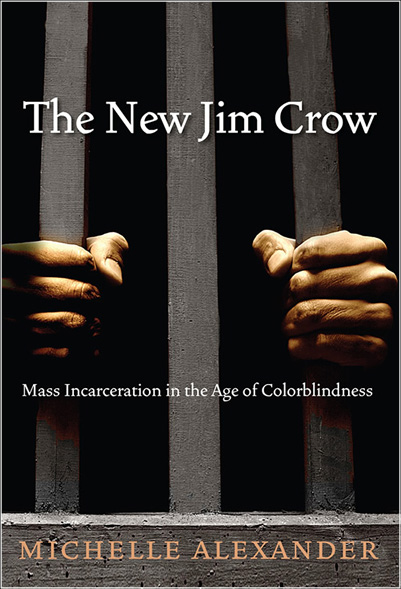
When I first read Michelle Alexander’s book, The New Jim Crow, I immediately assigned it for my classes and told anybody who would listen to me that Chapter 3 alone was worth buying the book. In chapter 3, Alexander demonstrated how the entire criminal justice system is stance against poor people of color—especially African Americans. After reading how the justices ruled in McCleskey v. Kemp , the decision that effectively eliminated challenges to racial bias claims in jurisprudence, one can understand how the court led the way to the incarceration of many black and brown people.
However, there was something else that moved me about the book. It was Alexander’s realization (or should I say awakening) about the criminal justice system. In the introduction to the book, Alexander shared with her readers how she came to write this book. She writes that she first encountered a new racial system when a sign caught her attention: THE DRUG WAR IS THE NEW JIM CROW. While she acknowledged that the criminal justice system was “racist in many ways,” she, as a lawyer about to start a new job with the ACLU, dismissed the sign. She believed that it did not help for people to make an “absurd comparison” because “people will just think you’re crazy.” Again, she assumed that the “criminal justice system had problems of racial bias, much in the same way that all major institutions in our society [were] plagued with problems associated with conscious and unconscious bias.”
However, after her stint at the ACLU, her position radically changed. As she wrote in the Introduction of her book:
By the time I left the ACLU, I had come to suspect that I was wrong about the criminal justice system. It was not just another institution infected with racial bias but rather a different beast entirely. The activists who posted the sign on the telephone pole were not crazy; nor were the smattering of lawyers and advocates around the country who were beginning to connect the dots between our current system of mass incarceration and earlier forms of social control. Quite belatedly, I came to see that mass incarceration in the United States had, in fact, emerged as a stunningly comprehensive and well-disguised system of racialized social control that functions in a manner strikingly similar to Jim Crow. In my experience, people who have been incarcerated rarely have difficulty identifying the parallels between these systems of social control. Once they are released, they are often denied the right to vote, excluded from juries, and relegated to a racially segregated and subordinated existence. Through a web of laws, regulations, and informal rules, all of which are powerfully reinforced by social stigma, they are confined to the margins of mainstream society and denied access to the mainstream economy. They are legally denied the ability to obtain employment, housing, and public benefits—much as African Americans were once forced into a segregated, second-class citizenship in the Jim Crow era.
When I facilitated a study of the book, we focused our attention here and asked, “What did it mean for a person to come to grips with a new reality?” Many in our book study new exactly where Alexander was coming from because at one time, many of them did not believe that the system was so sinister. The reason why they were part of our study was because they wanted a better understanding of the criminal justice system and hoped that the book would help with that.
Others however, were frustrated that someone who was part of the system did not understand how the system REALLY worked. Some of the people that were a part of our book study were those same types of people who were in the streets proclaiming that the “drug war” was the New Crow. They saw and lived it every day. They were also the ones at our church meeting to discuss about the injustice of the drug war and how it robbed citizens of their rights. In short, some in the group, while pleased that Alexander now saw the drug war as they did, lamented the fact that it took a while for her to get there.
I saw, however, something else in Alexander’s mea culpa. A better way to put this is that I heard something else. I saw and heard a person, who after seeing a new reality, had to wrestle with and come to grips with what she knew to be truth. I told the group that Alexander had an epiphany of sorts—akin to a religious experience—that helped her see what she may have not seen before. Therefore, after some major reflection, questioning, probing from others and remembering the voices she dismissed along the way who tried to reflect truth, she accepted and affirmed the truth.
I also said at that time that the book was therapeutic for her and I would not be surprised if we see her make some major moves in this area. At the time, I felt that after reading the book, I was reading someone struggling with call—someone who knew she had much work to do that went way beyond just book promotion—someone who knew that her current position was no longer tenable and someone wrestling with the next step in her life. In short, she had caught hold of something that she could not shake away.
So it did not surprise me when I read that she was leaving her job as a law professor at Ohio State University and joining the faculty at Union Theological Seminary as a Visiting Professor. In her Facebook post that announced the decision she wrote about the need to “stretch” herself and “moving” out of her “comfort zones.” She wrote that she felt “compelled to change course” and “walk away from the law.” In wrestling with her decision to resign her position as Law professor to “teach and study at a seminary,” Alexander wrote:
There is no easy answer to this question, and there are times I worry that I have completely lost my mind. Who am I to teach or study at a seminary? I was not raised in a church. And I have generally found more questions than answers in my own religious or spiritual pursuits. But I also know there is something much greater at stake in justice work than we often acknowledge. Solving the crises we face isn’t simply a matter of having the right facts, graphs, policy analyses, or funding. And I no longer believe we can “win” justice simply by filing lawsuits, flexing our political muscles or boosting voter turnout. Yes, we absolutely must do that work, but none of it — not even working for some form of political revolution — will ever be enough on its own. Without a moral or spiritual awakening, we will remain forever trapped in political games fueled by fear, greed and the hunger for power.
As a pastor of an urban church with members “on paper,” and/or “in the system,” and as a professor at a university and seminary, I hear Michelle Alexander. I hear her as a person who has on occasion asked “Have I lost my everlasting mind?” I hear her as one who is after 18 years in ministry (15 as pastor) and over 10 years teaching, who has asked the question that Moses asked so long ago, “Who am I?” I hear her as a person who was not raised in the church but somehow still discerned call and eventually went and served. I hear her as one who still have questions myself and sometimes even cry out with the psalmist, “How long Lord, how long?” I hear Michelle Alexander, but more importantly, I am glad she heard that still voice inside of her—the one that beckons us not only to come, but also go. I just wish more would hear and serve.
Andre E. Johnson is the Founder and Managing Editor of R3
Donate to the Work of R3
Like the work we do at Rhetoric Race and Religion? Please consider helping us continue to do this work. All donations are tax-deductible through Gifts of Life Ministries/G’Life Outreach, a 501(c)(3) tax exempt organization, and our fiscal sponsor. Any donation helps. Just click here to support our work.
Previous Post

September 18, 2016
The Struggle In Becoming a New Person
Next Post

September 21, 2016 To Be Black and Woke
Browse Our Archives
Select a Category Amy Steele Andre E. Johnson Book Reviews/Series Brian Foulks Call for Chapters Carol Howard Merritt Classes Conferences Contributors Crystal St.Marie Lewis Daniel White Hodge Earle Fisher Eulogy Fredrick Robinson Guest Contributions Henry McNeal Turner Institutes Interviews Joseph Boston Katherine Whitfield Kimberly Peeler-Ringer Lectures/Roundtables Natalie Bullock Brown R3 Book Series R3 Contributor Rashad Grove Readers Reflections Symposiums Teaching Traci Ellis Travis Harris Uncategorized Video
Select a Month June 2020 February 2020 December 2019 November 2019 July 2019 June 2019 May 2019 October 2018 June 2018 May 2018 April 2018 March 2018 February 2018 January 2018 December 2017 November 2017 October 2017 September 2017 August 2017 July 2017 June 2017 May 2017 April 2017 March 2017 February 2017 January 2017 December 2016 November 2016 October 2016 September 2016 August 2016 July 2016 June 2016 May 2016 April 2016 March 2016 February 2016 January 2016 December 2015 November 2015 October 2015 September 2015 August 2015 July 2015 June 2015 May 2015 April 2015 March 2015 February 2015 January 2015 December 2014 November 2014 October 2014 September 2014 August 2014 July 2014 June 2014 May 2014 April 2014 March 2014 February 2014 January 2014 December 2013 November 2013 October 2013 September 2013 August 2013 July 2013 June 2013 May 2013 April 2013 March 2013 February 2013 January 2013 December 2012 November 2012 October 2012 September 2012 August 2012 July 2012 June 2012 May 2012 April 2012 March 2012 February 2012 January 2012 December 2011 November 2011 October 2011
Follow Us!
TAKE THE
Religious Wisdom Quiz
What is "the beginning of knowledge," according to Proverbs?
Select your answer to see how you score.
Humility Fear of the Lord Riches Power
Related posts from Rhetoric Race and Religion


Dislocations and Shutdowns: #MLK, #BLM and the Rhetoric...

From the Mountain Top and Beyond: The Rhetoric...

Special Issue: Communication, Religion, and Race in America
TRENDING AT PATHEOS Progressive Christian

What Being a Modern-Day Apostle Means to Me
In my last column, I discussed the ins and outs of modern-day...

Did Ancient China Once Worship the God of...
Across human history, a common thread weaves through the origins of the...

Love Your Neighbor – Including Earth-Kin: Lev. 19,...
God’s command to love your neighbor means acting in an ethical and...

Lead a Church Study of “Jesus and Lao...
Guest writer Jack Thomas (The Irreverent Reverend) reflects on leading his church...

Pastoral Wisdom for Responding to Sermon Pushback
Getting sermon pushback on your social justice sermon? Learn practical, Proverbs-based strategies...

Principles for Understanding the Apostolic Ministry Today
Whenever people discover that my formal ministry title is "apostle," as in...
view all Progressive Christian blogs
Ad-Free & Subscriber Log-In Subscription Support
- About Us
- 2026 Calendar
- Videos
- Podcasts
- Library of World Religions
- Faith In Media Tracker
- Advertise With Us
- Write for Us
- Privacy Policy
- Terms of Service
- Do Not Sell My Data
- Contact Us
- Radiant Digital
- Manage Newsletter Subscriptions
- Unsubscribe From Notifications
- Sitemap
Copyright 2008-2026, Patheos. All rights reserved.
Subscription Support Ad-Free & Subscriber Log-In
Follow Patheos