
BuddhistCatholicContemplativeEvangelicalGeneral ChristianHinduJewishLatter-day SaintMuslimNew VisionsProgressive Christian
Beliefs
- Buddhist
- Catholic
- Contemplative
- Evangelical
- General Christian
- Hindu
- Jewish
- Latter-day Saint
- More Voices
- Muslim
- New Visions
- Pagan
- Progressive Christian
Topics
- Religion News
- Food and Religion
- Sports and Religion
- Religious Art
- Religious Music and Entertainment
- Religious Events
- History and Religion
- Style and Religion
- Politics and Religion
- Women in Religion
- Recreation Outdoors and Religion
- Business Finance and Religion
- Careers Workplace and Religion
- Education and Religion
- Family Parenting and Religion
- Health Fitness and Religion
- Home and Religion
- Relationships and Religion
- Technology and Religion
- Travel and Religion
Columnists
- Buddhist Columnists
- Business Finance and Religion Columnists
- Careers Workplace and Religion Columnists
- Catholic Columnists
- Contemplative Columnists
- Education and Religion Columnists
- Evangelists Columnists
- Family Parenting and Religion Columnists
- General Christian Columnists
- Health Fitness and Religion Columnists
- Hindu Columnists
- History and Religion Columnists
- Home and Religion Columnists
- Jewish Columnists
- More Voices Columnists
- Latter Day Columnists
- Muslim Columnists
- New Visions Columnists
- Nonreligious Columnists
- Pagan Columnists
- Politics and Religion Columnists
- Progressive Columnists
- Recreation Outdoors and Religion Columnists
- Relationships and Religion Columnists
- Religion News Columnists
- Religious Art Columnists
- Religious Events Columnists
- Religious Music and Entertainment Columnists
- Sports and Religion Columnists
- Style and Religion Columnists
- Technology and Religion Columnists
- Travel and Religion Columnists
- Women in Religion Columnists
Resource Library
- 2026 Calendar
- Library of World Religions
- The 100 Most Holy Places on Earth
- Patheos Answers
- Podcasts
- Videos
- Faith Leaders Database
- Anglican Episcopalian
- Bahai
- Baptist
- Buddhism
- Christianity
- Confucianism
- Eastern Orthodoxy
- Hinduism
- Holiness and Pentecostal
- ISKCON
- Islam
- Judaism
- Lutheran
- Methodist
- The Church of Jesus Christ of Latter-day Saints
- New Age
- Paganism
- Presbytarian and Reformed
- Protestantism
- Religion Behind the Scenes
- Roman Catholic
- Scientology
- Shia Islam
- Sikhism
- Sufism
- Sunni Islam
- Taoism
- Zen
- See all religions
Research Tools
 Ad-Free & Subscriber Log-In Subscription Support
Ad-Free & Subscriber Log-In Subscription Support
Follow Patheos 

- Trending:
- Forgiveness
- |
- Marriage
- |
- Consciousness
- |
- Death Penalty
- |
- Election
- |
- Halloween
 Rhetoric Race and Religion
- Home
- Progressive Christian
- Preaching to End White Supremacy
Preaching to End White Supremacy
Last updated on: July 14, 2016 at 9:41 am by Guest Contributor
Preaching to End White Supremacy 2016-07-14T09:41:00-05:00 Guest Contributor
Patheos Explore the world's faith through different perspectives on religion and spirituality! Patheos has the views of the prevalent religions and spiritualities of the world.
 by Steven Tramel Gaines
“Do you really believe white racism exists?”
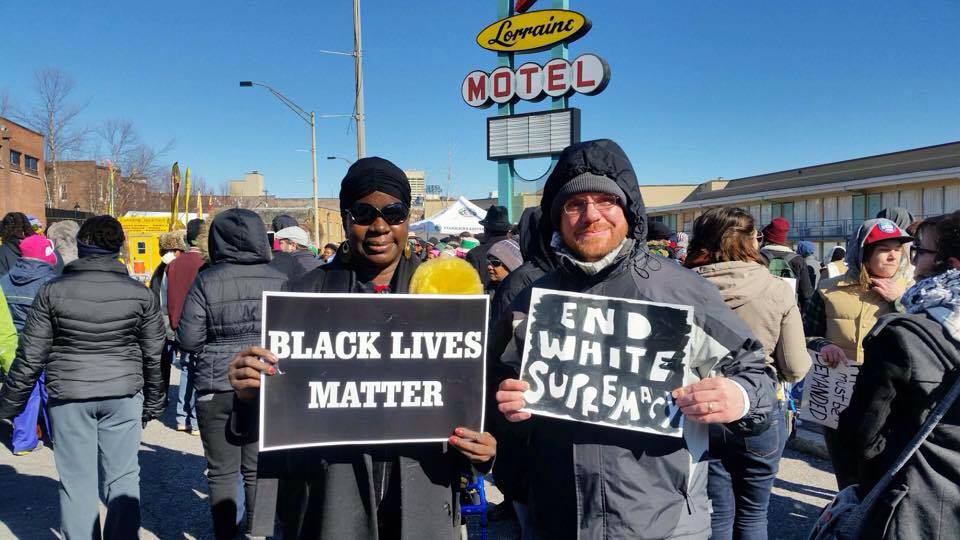
A BLM activist asked me that question as we ended our march at the site of Dr. King’s martyrdom.
After an awkward pause, I responded with something like this: “If you’re asking if I think many white people are racist, yes.” (Surely she had understood “white racism” as racism enacted against whites.)
Her friend asked to see my sign again. I showed it to her. The sign said, “End white supremacy.”
She smiled and exclaimed, “Oh, we thought it said, ‘End white racism.’” Then she wanted to take a picture of her friend and me.
I posted it as my Facebook cover pic. It got mixed responses, mostly from white friends. All the negative comments and some of the positive ones responded not to my sign (“End white supremacy”) but to the other sign in the picture (“Black lives matter”).
That was in January. This week I shared on Facebook a link to an article about white fragility. The responses were similar. Some of the commentators seemed to accept the reality of white fragility. Objectors unanimously redirected the conversation instead of dealing with the issue at hand.
Why are we whites more likely to argue about which actions are appropriate and whether racism exists? Why are we less likely to admit white supremacy as the cause of racial inequality? At least part of the answer is white fragility, which often hides behind language of color-blindness.
Last week’s events shed painful light on claims of color-blindness. Those events challenge the assumption that black citizens’ oppression is due to their own failures. Those events show that racial inequalities are currently real and undeniable.
And at least some national news sources’ public discussions expose an ignorance (or an ignoring) of centuries of history. In this historical context of continual racial oppression enacted by the legally powerful, is the recent violence any surprise?
When racial strife ends life, the cause is more than any single incident. The cause is deeply rooted in our history, deeply rooted in our humanity.
Our history prevents surprise but should not prevent tears and must not escape the attention of our culture’s leaders, including those in religious communities.
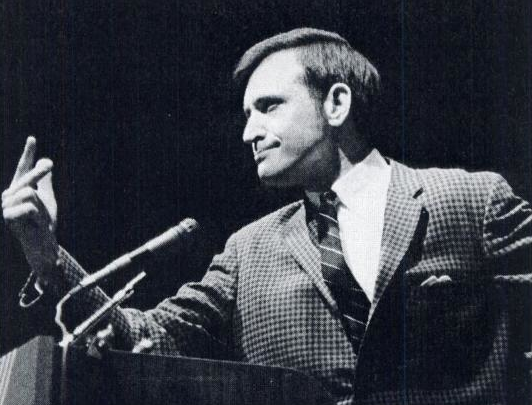
 Recently I presented a conference paper about radio sermons against racism in the summer of 1968. John Allen Chalk, a white preacher, addressed a predominately white audience in the aftermath of the Lorraine Motel tragedy.
According to Chalk, white racism says that “the Negro belongs to a distinct race,” that “the Negro race has no common ancestry with other human beings.”
White racism says that “the black [person] is a distinct biological species that falls somewhere between white [people] and apes” and that “all white [people] in America are part of one common racial group” that is “superior.”
And white racism says that “regardless of personal ability and achievement, every Negro is more similar to all other Negroes than to a person of comparable skills and intelligence who happens to be a member of the white race.”
Chalk preached that “racism threatens the very heart of Christianity, strikes at the root of all Biblical truth, and directly violates Christian faith.”
He said, “Tenets of racism… conflict with the teachings of the God of the Bible.”
Chalk added that racism counters the biblical view of the church as including “all kinds of [people]… all nations.”
He played on the Great Commission: “Racism would modify Christ’s words to mean, ‘Go ye therefore and teach your own kind,’ or even worse, ‘Go ye therefore and teach all nations, making sure to keep them in their place.’”
He continued, “Racism’s future depends on my attitudes and yours. Will you oppose racism in a loving, courageous manner?”
Apparently assuming the answer to that question was not certain, he proclaimed, “One thing is certain: A day of judgment has dawned on America as a nation.”
He said, “Traditional Christianity has failed to answer the challenge of racism…. Where racism flourishes Christianity dies. And where Christ rules the hearts and lives of [people] racism is destroyed.”
Recent events continue trauma that is centuries old, and I pray that more religious leaders will follow John Allen Chalk’s example. They might receive hate mail as he did, but that’s nothing compared to the deaths that continuously plague our culture.
Religious speech isn’t all that’s needed. Laws and policing practices and more need to change. But religious leaders must stand against injustice and speak for peace and love. Preachers need to play their parts in equipping religious communities to live as peoples of justice and mercy.
Whatever the risks, we must keep the faith. We must proclaim the truth.
We white preachers must admit white supremacy and work to end it.
Steven Tramel Gaines ministers with Cordova Community Church in Memphis, TN. As the first Michael and Suzanne Osborn Fellow for the Study of Rhetoric and Public Address at the University of Memphis, he teaches communication courses and is a PhD student researching rhetoric, race, religion, and gender. He is a graduate of Abilene Christian University and Harding School of Theology. You may follow him on Twitter (@steventgaines) and go to his ministry website to contribute to his work.
Donate to the Work of R3
Like the work we do at Rhetoric Race and Religion? Please consider helping us continue to do this work. All donations are tax-deductible through Gifts of Life Ministries/G’Life Outreach, a 501(c)(3) tax exempt organization, and our fiscal sponsor. Any donation helps. Just click here to support our work.
Previous Post

July 11, 2016
#BlackLivesMatter: Memphis March
Next Post

July 21, 2016 With Body, Voice and Signs: Reflections of the Memphis March
Browse Our Archives
Select a Category Amy Steele Andre E. Johnson Book Reviews/Series Brian Foulks Call for Chapters Carol Howard Merritt Classes Conferences Contributors Crystal St.Marie Lewis Daniel White Hodge Earle Fisher Eulogy Fredrick Robinson Guest Contributions Henry McNeal Turner Institutes Interviews Joseph Boston Katherine Whitfield Kimberly Peeler-Ringer Lectures/Roundtables Natalie Bullock Brown R3 Book Series R3 Contributor Rashad Grove Readers Reflections Symposiums Teaching Traci Ellis Travis Harris Uncategorized Video
Select a Month June 2020 February 2020 December 2019 November 2019 July 2019 June 2019 May 2019 October 2018 June 2018 May 2018 April 2018 March 2018 February 2018 January 2018 December 2017 November 2017 October 2017 September 2017 August 2017 July 2017 June 2017 May 2017 April 2017 March 2017 February 2017 January 2017 December 2016 November 2016 October 2016 September 2016 August 2016 July 2016 June 2016 May 2016 April 2016 March 2016 February 2016 January 2016 December 2015 November 2015 October 2015 September 2015 August 2015 July 2015 June 2015 May 2015 April 2015 March 2015 February 2015 January 2015 December 2014 November 2014 October 2014 September 2014 August 2014 July 2014 June 2014 May 2014 April 2014 March 2014 February 2014 January 2014 December 2013 November 2013 October 2013 September 2013 August 2013 July 2013 June 2013 May 2013 April 2013 March 2013 February 2013 January 2013 December 2012 November 2012 October 2012 September 2012 August 2012 July 2012 June 2012 May 2012 April 2012 March 2012 February 2012 January 2012 December 2011 November 2011 October 2011
Follow Us!
TAKE THE
Religious Wisdom Quiz
Who anointed Jesus with expensive perfume?
Select your answer to see how you score.
Martha Salome Peter Mary
Related posts from Rhetoric Race and Religion

Why Christian Nationalism Betrays the Gospel

New Book in R3 Book Series on #BLM...

Dislocations and Shutdowns: #MLK, #BLM and the Rhetoric...
White Supremacy in the Age of Trump
TRENDING AT PATHEOS Progressive Christian

What Being a Modern-Day Apostle Means to Me
In my last column, I discussed the ins and outs of modern-day...

Did Ancient China Once Worship the God of...
Across human history, a common thread weaves through the origins of the...

Love Your Neighbor – Including Earth-Kin: Lev. 19,...
God’s command to love your neighbor means acting in an ethical and...

Lead a Church Study of “Jesus and Lao...
Guest writer Jack Thomas (The Irreverent Reverend) reflects on leading his church...

Pastoral Wisdom for Responding to Sermon Pushback
Getting sermon pushback on your social justice sermon? Learn practical, Proverbs-based strategies...

Principles for Understanding the Apostolic Ministry Today
Whenever people discover that my formal ministry title is "apostle," as in...
view all Progressive Christian blogs
Ad-Free & Subscriber Log-In Subscription Support
- About Us
- 2026 Calendar
- Videos
- Podcasts
- Library of World Religions
- Faith In Media Tracker
- Advertise With Us
- Write for Us
- Privacy Policy
- Terms of Service
- Do Not Sell My Data
- Contact Us
- Radiant Digital
- Manage Newsletter Subscriptions
- Unsubscribe From Notifications
- Sitemap
Copyright 2008-2026, Patheos. All rights reserved.
Subscription Support Ad-Free & Subscriber Log-In
Follow Patheos