
BuddhistCatholicContemplativeEvangelicalGeneral ChristianHinduJewishLatter-day SaintMuslimNew VisionsProgressive Christian
Beliefs
- Buddhist
- Catholic
- Contemplative
- Evangelical
- General Christian
- Hindu
- Jewish
- Latter-day Saint
- More Voices
- Muslim
- New Visions
- Pagan
- Progressive Christian
Topics
- Religion News
- Food and Religion
- Sports and Religion
- Religious Art
- Religious Music and Entertainment
- Religious Events
- History and Religion
- Style and Religion
- Politics and Religion
- Women in Religion
- Recreation Outdoors and Religion
- Business Finance and Religion
- Careers Workplace and Religion
- Education and Religion
- Family Parenting and Religion
- Health Fitness and Religion
- Home and Religion
- Relationships and Religion
- Technology and Religion
- Travel and Religion
Columnists
- Buddhist Columnists
- Business Finance and Religion Columnists
- Careers Workplace and Religion Columnists
- Catholic Columnists
- Contemplative Columnists
- Education and Religion Columnists
- Evangelists Columnists
- Family Parenting and Religion Columnists
- General Christian Columnists
- Health Fitness and Religion Columnists
- Hindu Columnists
- History and Religion Columnists
- Home and Religion Columnists
- Jewish Columnists
- More Voices Columnists
- Latter Day Columnists
- Muslim Columnists
- New Visions Columnists
- Nonreligious Columnists
- Pagan Columnists
- Politics and Religion Columnists
- Progressive Columnists
- Recreation Outdoors and Religion Columnists
- Relationships and Religion Columnists
- Religion News Columnists
- Religious Art Columnists
- Religious Events Columnists
- Religious Music and Entertainment Columnists
- Sports and Religion Columnists
- Style and Religion Columnists
- Technology and Religion Columnists
- Travel and Religion Columnists
- Women in Religion Columnists
Resource Library
- 2026 Calendar
- Library of World Religions
- The 100 Most Holy Places on Earth
- Patheos Answers
- Podcasts
- Videos
- Faith Leaders Database
- Anglican Episcopalian
- Bahai
- Baptist
- Buddhism
- Christianity
- Confucianism
- Eastern Orthodoxy
- Hinduism
- Holiness and Pentecostal
- ISKCON
- Islam
- Judaism
- Lutheran
- Methodist
- The Church of Jesus Christ of Latter-day Saints
- New Age
- Paganism
- Presbytarian and Reformed
- Protestantism
- Religion Behind the Scenes
- Roman Catholic
- Scientology
- Shia Islam
- Sikhism
- Sufism
- Sunni Islam
- Taoism
- Zen
- See all religions
Research Tools
 Ad-Free & Subscriber Log-In Subscription Support
Ad-Free & Subscriber Log-In Subscription Support
Follow Patheos 

- Trending:
- Forgiveness
- |
- Marriage
- |
- Consciousness
- |
- Death Penalty
- |
- Election
- |
- Halloween
 Rhetoric Race and Religion
- Home
- Progressive Christian
- Remembering Professor Ray Gavins
Remembering Professor Ray Gavins
Last updated on: May 30, 2016 at 10:50 am by Guest Contributor
Remembering Professor Ray Gavins 2016-05-30T10:50:33-05:00 Guest Contributor
Patheos Explore the world's faith through different perspectives on religion and spirituality! Patheos has the views of the prevalent religions and spiritualities of the world.
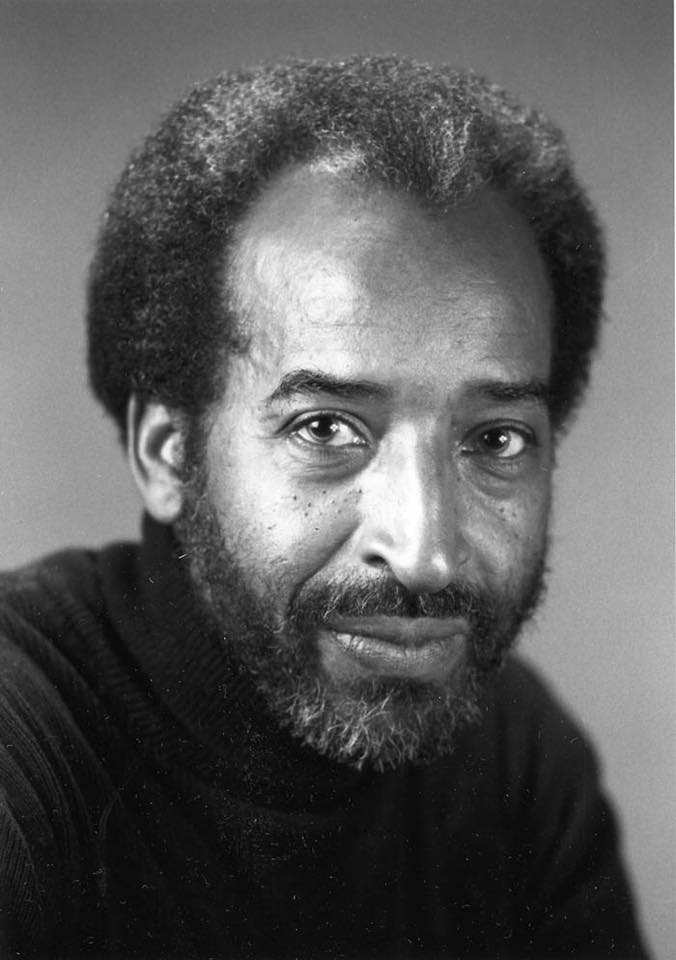 By Charles McKinney
Ray Gavins began making a difference in my life exactly five years before I actually took a class from him. This was because my mentor at Morehouse, Marcellus Barksdale, studied under Ray when he was a graduate student at Duke. Ray helped shape Dr. B’s exploration of the freedom struggle in Monroe, North Carolina – the home of Robert Williams. Ray Gavins – a man who’d been the first black student in the department of history at the University of Virginia from 1964 to 1970, would helped guide my mentor Dr. Barksdale through Duke. Barksdale finished his doctorate in 1977, making him only the second black student to finish in Duke’s history program. Eight years later, I started at Morehouse. Five years after that, I would be one of seven black graduate students (out of a class of twenty-one) entering that same program. Twenty years later, I would become the first African American faculty member to earn tenure in the History Department at Rhodes College. So goes the Circle of Academic Life…
When I arrived at Duke, I didn’t feel ready. I didn’t think I’d read the right books, I didn’t know the names of the right theorists, and I couldn’t write my way out of a paper bag. In his own way, Ray reached out to me. He was a proud graduate of Virginia Union; he could hardly contain his glee whenever they would beat my beloved Morehouse in either football or basketball (“I see that Virginia Union defeated Morehouse last night” – big smile). The connection was intentional; Ray let me know that he too had attended an HBCU, and that our journeys weren’t all that dissimilar. He also modeled for others and me an unrepentant, unparalleled mastery of the historical literature. You will never be able to convince me that Ray Gavins did not read every book ever written about black life and history over the past sixty years. Nope. Nyet. I’m not having it. The man possessed an encyclopedic knowledge of African American history. And he expected us to follow suit. Hey ya’ll – remember the utter horror we felt the first time we saw one of Ray’s syllabi? The “suggested additional reading” section of the thing was 6-7 SINGLE SPACED PAGES. Seriously – who does that? Well, Ray Gavins, that’s who. Ray set an incredibly high bar for all of us, and it’s one of the reasons we can shine. Let’s be clear: by no means did I always meet Ray’s high standards. More than once, I would get a paper back with his meticulous hand writing splashed – no, placed – all over the place. Notes about structure, argument, phrasing and sources – dear God, the sources. Ray had every expectation that I could be excellent if I wanted to be so. That was up to me.
I don’t know that I’ve ever met another scholar as thorough and meticulous as Ray Gavins. At my dissertation defense, I weathered some heavyweight questions about theoretical frameworks and such from my chair, Bill Chafe, and from Charles Payne, who brought a sociologist’s eye to the historical enterprise. When it was Ray’s turn to go in, he said, “Chuck, if you would turn your attention to footnote fifty-four in chapter three…” Wait – is he getting ready to ask me about a FOOTNOTE?! Why, yes, yes he is. Ray talked about this footnote for the better part of what felt like three days before asking me to respond to his query. So, Ray’s exploration of my research began with footnote fifty-four in chapter three, and radiated out from there. Classic Ray.
Ray’s quiet demeanor masked an iron determination. He wrote history that was thoroughly researched and utterly fearless. White supremacy and the “coerced poverty and desolation” it wrought were frequent topics, alongside the power, vision and will of black women and men who stood in the face of Jim Crow. He was a pioneer and a warrior who wore his battle scars lightly, though I also know he struggled with high blood pressure. The battles always take their toll on us.
Several years ago, I wrote an article for the North Carolina Historical Review. The article went on to win an award – for which I’m thankful. But the highlight of that experience was sending a draft of that article to Ray, and getting a note back that said, “Chuck – this is solid work. Well done.” THAT was the true award, the one that matters
Those of us who studied with Ray Gavins, we are part of a legacy – a legacy of struggle, a legacy of survival, and perhaps most important – a legacy of excellence. Ray Gavins made me *possible*. As I said to some students in another venue, if I’ve moved anyone to understand the transformative nature of African American History, it’s because of people like Ray Gavins who played such a gigantic role in my life.
Rod Clare went to see Ray a few days before he died. His son was there, and the O’Jays were playing on the box – Ray loved the O’Jays. Rod whispered in Ray’s ear – telling him thank you for all that he’s done for us, and for the community at large. I’m so thankful to Rod for telling Ray what I have to hope he already knew – that we love and appreciate him.
Thanks, Ray – for so very much.
Charles McKinney, PhD, is an associate professor of history and the Neville Frierson Bryan Chair of Africana Studies at Rhodes College in Memphis, Tennessee
Donate to the Work of R3
Like the work we do at Rhetoric Race and Religion? Please consider helping us continue to do this work. All donations are tax-deductible through Gifts of Life Ministries/G’Life Outreach, a 501(c)(3) tax exempt organization, and our fiscal sponsor. Any donation helps. Just click here to support our work.
Previous Post

May 30, 2016
Book Review: Race and Political Theology
Next Post

May 30, 2016 Day Two: Memories of a Massacre: Memphis in 1866 Symposium
Browse Our Archives
Select a Category Amy Steele Andre E. Johnson Book Reviews/Series Brian Foulks Call for Chapters Carol Howard Merritt Classes Conferences Contributors Crystal St.Marie Lewis Daniel White Hodge Earle Fisher Eulogy Fredrick Robinson Guest Contributions Henry McNeal Turner Institutes Interviews Joseph Boston Katherine Whitfield Kimberly Peeler-Ringer Lectures/Roundtables Natalie Bullock Brown R3 Book Series R3 Contributor Rashad Grove Readers Reflections Symposiums Teaching Traci Ellis Travis Harris Uncategorized Video
Select a Month June 2020 February 2020 December 2019 November 2019 July 2019 June 2019 May 2019 October 2018 June 2018 May 2018 April 2018 March 2018 February 2018 January 2018 December 2017 November 2017 October 2017 September 2017 August 2017 July 2017 June 2017 May 2017 April 2017 March 2017 February 2017 January 2017 December 2016 November 2016 October 2016 September 2016 August 2016 July 2016 June 2016 May 2016 April 2016 March 2016 February 2016 January 2016 December 2015 November 2015 October 2015 September 2015 August 2015 July 2015 June 2015 May 2015 April 2015 March 2015 February 2015 January 2015 December 2014 November 2014 October 2014 September 2014 August 2014 July 2014 June 2014 May 2014 April 2014 March 2014 February 2014 January 2014 December 2013 November 2013 October 2013 September 2013 August 2013 July 2013 June 2013 May 2013 April 2013 March 2013 February 2013 January 2013 December 2012 November 2012 October 2012 September 2012 August 2012 July 2012 June 2012 May 2012 April 2012 March 2012 February 2012 January 2012 December 2011 November 2011 October 2011
Follow Us!
TAKE THE
Religious Wisdom Quiz
Who betrayed Jesus for thirty pieces of silver?
Select your answer to see how you score.
James Saul Judas Peter
Related posts from Rhetoric Race and Religion

White Policing of Black Emotions

Day One: Memories of a Massacre: Memphis in...

The President's Eulogy for the Honorable Reverend Clementa...

#CharlestonShooting: Race and Religion
TRENDING AT PATHEOS Progressive Christian

What Being a Modern-Day Apostle Means to Me
In my last column, I discussed the ins and outs of modern-day...

Did Ancient China Once Worship the God of...
Across human history, a common thread weaves through the origins of the...

Love Your Neighbor – Including Earth-Kin: Lev. 19,...
God’s command to love your neighbor means acting in an ethical and...

Lead a Church Study of “Jesus and Lao...
Guest writer Jack Thomas (The Irreverent Reverend) reflects on leading his church...

Pastoral Wisdom for Responding to Sermon Pushback
Getting sermon pushback on your social justice sermon? Learn practical, Proverbs-based strategies...

Principles for Understanding the Apostolic Ministry Today
Whenever people discover that my formal ministry title is "apostle," as in...
view all Progressive Christian blogs
Ad-Free & Subscriber Log-In Subscription Support
- About Us
- 2026 Calendar
- Videos
- Podcasts
- Library of World Religions
- Faith In Media Tracker
- Advertise With Us
- Write for Us
- Privacy Policy
- Terms of Service
- Do Not Sell My Data
- Contact Us
- Radiant Digital
- Manage Newsletter Subscriptions
- Unsubscribe From Notifications
- Sitemap
Copyright 2008-2026, Patheos. All rights reserved.
Subscription Support Ad-Free & Subscriber Log-In
Follow Patheos