
BuddhistCatholicContemplativeEvangelicalGeneral ChristianHinduJewishLatter-day SaintMuslimNew VisionsProgressive Christian
Beliefs
- Buddhist
- Catholic
- Contemplative
- Evangelical
- General Christian
- Hindu
- Jewish
- Latter-day Saint
- More Voices
- Muslim
- New Visions
- Pagan
- Progressive Christian
Topics
- Religion News
- Food and Religion
- Sports and Religion
- Religious Art
- Religious Music and Entertainment
- Religious Events
- History and Religion
- Style and Religion
- Politics and Religion
- Women in Religion
- Recreation Outdoors and Religion
- Business Finance and Religion
- Careers Workplace and Religion
- Education and Religion
- Family Parenting and Religion
- Health Fitness and Religion
- Home and Religion
- Relationships and Religion
- Technology and Religion
- Travel and Religion
Columnists
- Buddhist Columnists
- Business Finance and Religion Columnists
- Careers Workplace and Religion Columnists
- Catholic Columnists
- Contemplative Columnists
- Education and Religion Columnists
- Evangelists Columnists
- Family Parenting and Religion Columnists
- General Christian Columnists
- Health Fitness and Religion Columnists
- Hindu Columnists
- History and Religion Columnists
- Home and Religion Columnists
- Jewish Columnists
- More Voices Columnists
- Latter Day Columnists
- Muslim Columnists
- New Visions Columnists
- Nonreligious Columnists
- Pagan Columnists
- Politics and Religion Columnists
- Progressive Columnists
- Recreation Outdoors and Religion Columnists
- Relationships and Religion Columnists
- Religion News Columnists
- Religious Art Columnists
- Religious Events Columnists
- Religious Music and Entertainment Columnists
- Sports and Religion Columnists
- Style and Religion Columnists
- Technology and Religion Columnists
- Travel and Religion Columnists
- Women in Religion Columnists
Resource Library
- 2026 Calendar
- Library of World Religions
- The 100 Most Holy Places on Earth
- Patheos Answers
- Podcasts
- Videos
- Faith Leaders Database
- Anglican Episcopalian
- Bahai
- Baptist
- Buddhism
- Christianity
- Confucianism
- Eastern Orthodoxy
- Hinduism
- Holiness and Pentecostal
- ISKCON
- Islam
- Judaism
- Lutheran
- Methodist
- The Church of Jesus Christ of Latter-day Saints
- New Age
- Paganism
- Presbytarian and Reformed
- Protestantism
- Religion Behind the Scenes
- Roman Catholic
- Scientology
- Shia Islam
- Sikhism
- Sufism
- Sunni Islam
- Taoism
- Zen
- See all religions
Research Tools
 Ad-Free & Subscriber Log-In Subscription Support
Ad-Free & Subscriber Log-In Subscription Support
Follow Patheos 

- Trending:
- Forgiveness
- |
- Marriage
- |
- Consciousness
- |
- Death Penalty
- |
- Election
- |
- Halloween
 Rhetoric Race and Religion
- Home
- Progressive Christian
- Rendering Unto Caesar: Black Churches Remain Sites of Political Opportunism
Rendering Unto Caesar: Black Churches Remain Sites of Political Opportunism
Last updated on: March 12, 2016 at 8:53 am by Earle Fisher
Rendering Unto Caesar: Black Churches Remain Sites of Political Opportunism 2016-03-12T08:53:40-05:00 Earle Fisher
Patheos Explore the world's faith through different perspectives on religion and spirituality! Patheos has the views of the prevalent religions and spiritualities of the world.
 by Earle Fisher
First Posted in the Tri-State Defender
We see it every election cycle. They fly in at the last minute. They survey the spiritual landscape for the “hot spots.” They send word to the most persuasive personnel and mount the pulpit with promises and powerful tropes of solidarity. The savviest ones study a scripture or two and toss in some conventional theology to ease any skepticism among the congregation. They tally their votes. They move on to the next chocolate city. Rinse and repeat.
The black church is no stranger to the strands of tension between preachers, prophets, politicians and the parishioners with whom they have a relationship. Managing this sacred space takes discernment and discipline. Faith and politics are inseparable in today’s world. One’s faith tradition always impacts their electability and often influences their political affiliations. At the same time, those faith leaders that refuse to pay attention to the illusive intersections of church and state are doomed to become pawns in the chess game of campaign coordination.
I deeply believe that if our theology doesn’t take into account the social and political realities, our theology is irrelevant. Shouts, dances, whoops, hollers, and even budgets do not safeguard against black political exploitation. And to add insult to inspirational injury, our ministerial platform, which provides access to black bodies, is far too often ground zero for convenient political opportunism.
Most politicians (especially non-black ones) see black churches, primarily, as stomping grounds for access to black votes. Nothing more. Nothing less. Consider how many times white politicians visit black churches when there is not an election on the horizon. How many white politicians have a black pastor? How many of them are frequent and faithful members of predominately black churches? These are the critical questions that must be considered when they petition our people for support under the auspices of racial and religious solidarity. To be fair, black politicians can be equally manipulative and ought to be subject to equitable scrutiny.
I do not object to political candidates visiting or even being invited to the sanctuaries of our churches during worship service. I have had them in mine and they are more than welcome to return. But I do not endorse candidates. I do, however, try to provide our people with adequate access to engage candidates on the merits and specifics of their platform. I believe it is our responsibility to faithfully manage our public encounters with political figures, especially on Sunday mornings. We must be wise as serpents and gentle as doves to ensure we are not exposing our congregants to wolves in shepherd’s clothing.
Politicians are savvy. They are good at manipulating platforms for their personal benefit. Endorsements can come indirectly. As one wise pastor told me, “Sometimes the medium is the message.” Too often, people of faith – even pastoral leaders – are star struck. And in the age of social media, photo ops and Sunday selfies can easily become campaign support by proxy. Nowhere in the bible do we see Jesus on the stump with Caesar.
As a pastor, I dare not try to police another pastor’s pulpit. People are at liberty to do what they want and as they feel led by the God they serve. My aspiration is to raise a social consciousness and political perspective that preserves the sanctity of the black church.
In the 2008 campaign season, during a democratic presidential debate, Wolf Blitzer asked candidates John Edwards, Hillary Clinton and Barack Obama “If Dr. Martin Luther King were alive today…why do you think he would or why should he endorse you?” The soon-to-be President Obama replied, “Well, I don’t think Dr. King would endorse any of us. I think what he would call upon the American people to do is to hold us accountable…” POTUS is right. I think this is a fundamental responsibility and role of the black church’s role in politics. We must cultivate a political consciousness that empowers us to be the consciousness of the community.
We need prophetic voices to condition our community to demand policies that meet our needs from the people who keep posturing for our votes. We need more than pretty promises draped in religious rhetoric. I want to challenge our faith communities to develop a “black faith agenda” that we can collectively rally behind. I’m willing to contribute to it. Comprehensive agendas have more political power than the majority of Sunday sermons. Maybe we should trade in some of our pacified preaching for some prophetic political organizing.
Earle Fisher is a R3 Contributor
Donate to the Work of R3
Like the work we do at Rhetoric Race and Religion? Please consider helping us continue to do this work. All donations are tax-deductible through Gifts of Life Ministries/G’Life Outreach, a 501(c)(3) tax exempt organization, and our fiscal sponsor. Any donation helps. Just click here to support our work.
Previous Post

March 10, 2016
What Do You Do When Your Pastor Supports #DonaldTrump?
Next Post

March 12, 2016 An Open Letter to Donald Trump Supporters: Seek Forgiveness and Healing
Browse Our Archives
Select a Category Amy Steele Andre E. Johnson Book Reviews/Series Brian Foulks Call for Chapters Carol Howard Merritt Classes Conferences Contributors Crystal St.Marie Lewis Daniel White Hodge Earle Fisher Eulogy Fredrick Robinson Guest Contributions Henry McNeal Turner Institutes Interviews Joseph Boston Katherine Whitfield Kimberly Peeler-Ringer Lectures/Roundtables Natalie Bullock Brown R3 Book Series R3 Contributor Rashad Grove Readers Reflections Symposiums Teaching Traci Ellis Travis Harris Uncategorized Video
Select a Month June 2020 February 2020 December 2019 November 2019 July 2019 June 2019 May 2019 October 2018 June 2018 May 2018 April 2018 March 2018 February 2018 January 2018 December 2017 November 2017 October 2017 September 2017 August 2017 July 2017 June 2017 May 2017 April 2017 March 2017 February 2017 January 2017 December 2016 November 2016 October 2016 September 2016 August 2016 July 2016 June 2016 May 2016 April 2016 March 2016 February 2016 January 2016 December 2015 November 2015 October 2015 September 2015 August 2015 July 2015 June 2015 May 2015 April 2015 March 2015 February 2015 January 2015 December 2014 November 2014 October 2014 September 2014 August 2014 July 2014 June 2014 May 2014 April 2014 March 2014 February 2014 January 2014 December 2013 November 2013 October 2013 September 2013 August 2013 July 2013 June 2013 May 2013 April 2013 March 2013 February 2013 January 2013 December 2012 November 2012 October 2012 September 2012 August 2012 July 2012 June 2012 May 2012 April 2012 March 2012 February 2012 January 2012 December 2011 November 2011 October 2011
Follow Us!
TAKE THE
Religious Wisdom Quiz
Who was the prophet that confronted King David about his sin with Bathsheba?
Select your answer to see how you score.
Isaiah Nathan Samuel Elijah
Related posts from Rhetoric Race and Religion

From the Mountain Top and Beyond: The Rhetoric...
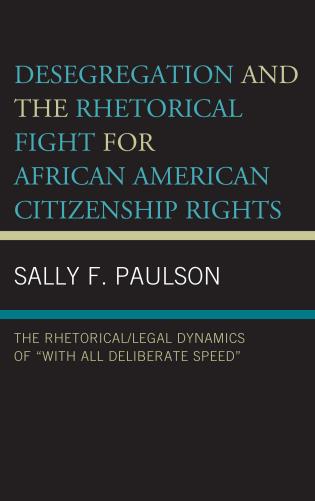
New Book in R3 Book Series on Desegregation...

Special Issue: Communication, Religion, and Race in America

A Critique of #MLK's Theory of Non-Violence
TRENDING AT PATHEOS Progressive Christian

What Being a Modern-Day Apostle Means to Me
In my last column, I discussed the ins and outs of modern-day...

Did Ancient China Once Worship the God of...
Across human history, a common thread weaves through the origins of the...

Love Your Neighbor – Including Earth-Kin: Lev. 19,...
God’s command to love your neighbor means acting in an ethical and...

Lead a Church Study of “Jesus and Lao...
Guest writer Jack Thomas (The Irreverent Reverend) reflects on leading his church...

Pastoral Wisdom for Responding to Sermon Pushback
Getting sermon pushback on your social justice sermon? Learn practical, Proverbs-based strategies...

Principles for Understanding the Apostolic Ministry Today
Whenever people discover that my formal ministry title is "apostle," as in...
view all Progressive Christian blogs
Ad-Free & Subscriber Log-In Subscription Support
- About Us
- 2026 Calendar
- Videos
- Podcasts
- Library of World Religions
- Faith In Media Tracker
- Advertise With Us
- Write for Us
- Privacy Policy
- Terms of Service
- Do Not Sell My Data
- Contact Us
- Radiant Digital
- Manage Newsletter Subscriptions
- Unsubscribe From Notifications
- Sitemap
Copyright 2008-2026, Patheos. All rights reserved.
Subscription Support Ad-Free & Subscriber Log-In
Follow Patheos