
BuddhistCatholicContemplativeEvangelicalGeneral ChristianHinduJewishLatter-day SaintMuslimNew VisionsProgressive Christian
Beliefs
- Buddhist
- Catholic
- Contemplative
- Evangelical
- General Christian
- Hindu
- Jewish
- Latter-day Saint
- More Voices
- Muslim
- New Visions
- Pagan
- Progressive Christian
Topics
- Religion News
- Food and Religion
- Sports and Religion
- Religious Art
- Religious Music and Entertainment
- Religious Events
- History and Religion
- Style and Religion
- Politics and Religion
- Women in Religion
- Recreation Outdoors and Religion
- Business Finance and Religion
- Careers Workplace and Religion
- Education and Religion
- Family Parenting and Religion
- Health Fitness and Religion
- Home and Religion
- Relationships and Religion
- Technology and Religion
- Travel and Religion
Columnists
- Buddhist Columnists
- Business Finance and Religion Columnists
- Careers Workplace and Religion Columnists
- Catholic Columnists
- Contemplative Columnists
- Education and Religion Columnists
- Evangelists Columnists
- Family Parenting and Religion Columnists
- General Christian Columnists
- Health Fitness and Religion Columnists
- Hindu Columnists
- History and Religion Columnists
- Home and Religion Columnists
- Jewish Columnists
- More Voices Columnists
- Latter Day Columnists
- Muslim Columnists
- New Visions Columnists
- Nonreligious Columnists
- Pagan Columnists
- Politics and Religion Columnists
- Progressive Columnists
- Recreation Outdoors and Religion Columnists
- Relationships and Religion Columnists
- Religion News Columnists
- Religious Art Columnists
- Religious Events Columnists
- Religious Music and Entertainment Columnists
- Sports and Religion Columnists
- Style and Religion Columnists
- Technology and Religion Columnists
- Travel and Religion Columnists
- Women in Religion Columnists
Resource Library
- 2026 Calendar
- Library of World Religions
- The 100 Most Holy Places on Earth
- Patheos Answers
- Podcasts
- Videos
- Faith Leaders Database
- Anglican Episcopalian
- Bahai
- Baptist
- Buddhism
- Christianity
- Confucianism
- Eastern Orthodoxy
- Hinduism
- Holiness and Pentecostal
- ISKCON
- Islam
- Judaism
- Lutheran
- Methodist
- The Church of Jesus Christ of Latter-day Saints
- New Age
- Paganism
- Presbytarian and Reformed
- Protestantism
- Religion Behind the Scenes
- Roman Catholic
- Scientology
- Shia Islam
- Sikhism
- Sufism
- Sunni Islam
- Taoism
- Zen
- See all religions
Research Tools
 Ad-Free & Subscriber Log-In Subscription Support
Ad-Free & Subscriber Log-In Subscription Support
Follow Patheos 

- Trending:
- Forgiveness
- |
- Marriage
- |
- Consciousness
- |
- Death Penalty
- |
- Election
- |
- Halloween
 Rhetoric Race and Religion
- Home
- Progressive Christian
- Why Did White Mobs Burn Black Churches in the Memphis Massacre
Why Did White Mobs Burn Black Churches in the Memphis Massacre
Last updated on: March 31, 2016 at 7:18 am by Guest Contributor
Why Did White Mobs Burn Black Churches in the Memphis Massacre 2016-03-31T07:18:19-05:00 Guest Contributor
Patheos Explore the world's faith through different perspectives on religion and spirituality! Patheos has the views of the prevalent religions and spiritualities of the world.
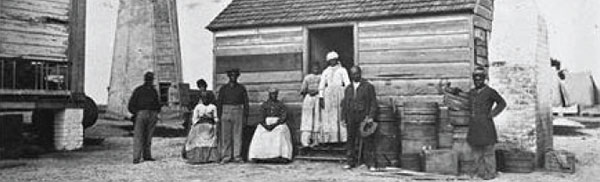 This post is part of the Memories of a Massacre Project: Memphis in 1866. This project is designed to bring to public attention the massacre that rattled Reconstruction-era Memphis in May 1866.
The white mob that held Memphis in terror for three terrible days in May 1866 targeted black churches for destruction. They burned wood frame buildings and ruined even a large brick church building. According to the Congressional inquiry into the massacre, the mob destroyed every black church in Memphis. The Congressional report recounted the testimony of preachers from African American churches whose lives had been threatened by white residents during and after the massacre.
Why would the white mob deliberately target black churches during the Memphis massacre? What did these churches represent – both to formerly enslaved Memphians and to white Memphians? How did black churches support African Americans’ struggle for civil and political rights in the post-emancipation South?
Slave Religion & Emancipation
Christianity had a long, complex history among American slaves. Historian Albert Raboteau’s classic Slave Religion: The “Invisible Institution” in the Antebellum South charted this history nearly forty years ago. He showed that despite slaveholders’ efforts to teach a version of Christianity centered on obedience to masters, slaves created complex religious cultures combining African religious retentions and Christian practices. Raboteau concluded with the observation of African American theologian Howard Thurman that, “By some amazing but vastly creative spiritual insight, the slave undertook the redemption of a religion that the master had profaned in his midst.” On the eve of emancipation, slave religion had become a vital cultural force, insisting on the humanity of those caught in the dehumanizing system of slavery. As spirituals – the theological writings of slaves – maintained, the God who brought the Israelites out of slavery in Egypt, destroyed the walls of Jericho, and protected Daniel in the lion’s den would upend the social order to free American slaves from bondage. Enslaved Christians worked for and longed for that divinely directed emancipation.
When the Civil War came to the Mid-South, black Christians recognized it as an opportunity for their exodus from slavery. On a West Tennessee farm, Isaac Lane, a slave preacher who would later found Lane College, led prayer meetings of fellow slaves praying that the Civil War would bring emancipation. Local whites badly beat Lane when they learned of his prayer meetings. This violence testified to the strong potential for liberation that white southerners recognized in black Christianity.
With emancipation, African Americans rapidly formed their own churches. Antebellum southern churches had contained several hundred thousand enslaved members. Once free, these black Christians left white-controlled churches, much to the surprise of white Christians who did not understand why former slaves would not want to remain as second class members in segregated balconies. Freed people across rural areas and towns built rough church buildings almost overnight, despite the poverty they endured. These churches hosted day, night, and Sunday schools for black adults and children, often with support from northern missionary groups.
Churches supported black southerners’ claims for civil and political rights as citizens at a time when those rights were deeply contested. For that support, black churches earned white southerners’ criticism – and violence.
Black Churches and Citizenship
After emancipation, there were many unanswered questions about African Americans’ place in the newly reunited nation. What civil or political rights could they exercise? Would free blacks be equal citizens with white Americans? Black churches supported African Americans’ claims for civil and political rights by hosting political gatherings and mass meetings and by allowing black southerners to claim an important common identity with local whites as fellow Christians.
In the infamous Dred Scott decision in 1857, the U.S. Supreme Court had ruled that people of African descent, whether slave or free, were not citizens of the United States. The Fourteenth Amendment would overrule that decision, declaring that all persons born in the U.S. were citizens, but that amendment would only be ratified two years after the Memphis Massacre. Even if it were granted, what citizenship meant was also uncertain. Women’s presence as citizens who could not vote showed that citizenship did not guarantee equal political rights. TheCongressional Report on the Memphis Massacre talked of the “citizens” of Memphis as its longtime white residents. The document implicitly excluded newly-arrived northern whites and black residents when it spoke of the “citizens” who shaped public opinion in Memphis. Both access to citizenship and the rights that came with citizenship proved a shifting ground in the post-emancipation South.
Because citizenship was such an uncertain category, identity as Christians became all the more important for black Memphians – and other former slaves – as they sought to assert their civil and political rights. Insisting that they were fellow Christians with their white neighbors was an important way for black Memphians to assert themselves as equal to whites. While racial identity was a fixed, rigid category, religious identity could change. Southern preachers had long stressed that Christian conversion was available to all, whether slave or free, black or white. The more fully that black residents could insist that Christian identity should signify who belonged in Memphis, the more they could put themselves in that category of belonging. Religious identity gave black Memphians a malleable category to use instead of the fixed categories of race that excluded them from whiteness and from citizenship.
In making these claims, Memphis’ black community drew upon the widely accepted valued of Christian identity and behavior. As Major Gen. George Stoneman worked to restore order after the massacre, he wrote that Memphians must “govern themselves as a law-abiding and Christian community.” Missionary teachers from northern states interviewed after the massacre explained that they were working for the “education and Christianization” of black Memphians. The 1866 report makes clear that Christian behavior was a widely accepted goal. Black Memphians’ insistence that their Christian identity made them worthy of civil and political rights alongside white residents proved a savvy, effective strategy. But these efforts were also a consistent interpretation of generations of black Christianity.
In May 1866, black churches were full of Memphians who had long prayed that the God who had brought the ancient Israelites out of slavery in Egypt would free them from the horrors of the South’s peculiar institution. The churches held schools, community meetings, and political rallies in addition to their religious services. Churches helped black Memphians try to claim an equal status as fellow Christians with white southerners.
The white mob that targeted black churches during the Memphis massacre would not have done so by chance or by mistake. White Memphians knew that black churches occupied a central place in the black community’s quest for civil and political rights. Destroying all of Memphis’ black churches showed the mob’s effort to destroy the black community’s hope, their schools, their political advocacy, and their meeting places.
Fortunately, the mob did not have the final word. Within months, black churches would be rebuilt and would again be filled day and night with schools and religious services. They would continue to serve as centers for community organizing and political action. And they would continue to insist that black and white Memphians, as fellow Christians, deserved equal civil and political rights.
Elizabeth L. Jemison, a native Memphian, is Assistant Professor of Religion at Clemson University. She holds a Ph.D. from Harvard University and an A.B. from Princeton University. She is writing a book about black and white Christians in the post-emancipation Mississippi River Valley, currently titled Southern Redemption: Religion, Race, and Politics from Emancipation to Segregation.
Donate to the Work of R3
Like the work we do at Rhetoric Race and Religion? Please consider helping us continue to do this work. All donations are tax-deductible through Gifts of Life Ministries/G’Life Outreach, a 501(c)(3) tax exempt organization, and our fiscal sponsor. Any donation helps. Just click here to support our work.
Previous Post
March 25, 2016
Easter Is Not Easy
Next Post

April 4, 2016 Top Ten Posts for March 2016
Browse Our Archives
Select a Category Amy Steele Andre E. Johnson Book Reviews/Series Brian Foulks Call for Chapters Carol Howard Merritt Classes Conferences Contributors Crystal St.Marie Lewis Daniel White Hodge Earle Fisher Eulogy Fredrick Robinson Guest Contributions Henry McNeal Turner Institutes Interviews Joseph Boston Katherine Whitfield Kimberly Peeler-Ringer Lectures/Roundtables Natalie Bullock Brown R3 Book Series R3 Contributor Rashad Grove Readers Reflections Symposiums Teaching Traci Ellis Travis Harris Uncategorized Video
Select a Month June 2020 February 2020 December 2019 November 2019 July 2019 June 2019 May 2019 October 2018 June 2018 May 2018 April 2018 March 2018 February 2018 January 2018 December 2017 November 2017 October 2017 September 2017 August 2017 July 2017 June 2017 May 2017 April 2017 March 2017 February 2017 January 2017 December 2016 November 2016 October 2016 September 2016 August 2016 July 2016 June 2016 May 2016 April 2016 March 2016 February 2016 January 2016 December 2015 November 2015 October 2015 September 2015 August 2015 July 2015 June 2015 May 2015 April 2015 March 2015 February 2015 January 2015 December 2014 November 2014 October 2014 September 2014 August 2014 July 2014 June 2014 May 2014 April 2014 March 2014 February 2014 January 2014 December 2013 November 2013 October 2013 September 2013 August 2013 July 2013 June 2013 May 2013 April 2013 March 2013 February 2013 January 2013 December 2012 November 2012 October 2012 September 2012 August 2012 July 2012 June 2012 May 2012 April 2012 March 2012 February 2012 January 2012 December 2011 November 2011 October 2011
Follow Us!
TAKE THE
Religious Wisdom Quiz
How many people did Jesus feed with five loaves of bread and two fish?
Select your answer to see how you score.
1,000 500 5,000 2,500
Related posts from Rhetoric Race and Religion

Why Christian Nationalism Betrays the Gospel

From the Mountain Top and Beyond: The Rhetoric...
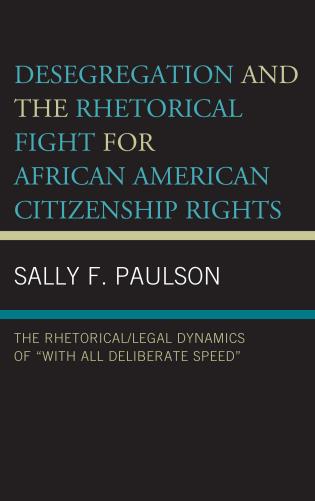
New Book in R3 Book Series on Desegregation...

Special Issue: Communication, Religion, and Race in America
TRENDING AT PATHEOS Progressive Christian

What Being a Modern-Day Apostle Means to Me
In my last column, I discussed the ins and outs of modern-day...

Did Ancient China Once Worship the God of...
Across human history, a common thread weaves through the origins of the...

Love Your Neighbor – Including Earth-Kin: Lev. 19,...
God’s command to love your neighbor means acting in an ethical and...

Lead a Church Study of “Jesus and Lao...
Guest writer Jack Thomas (The Irreverent Reverend) reflects on leading his church...

Pastoral Wisdom for Responding to Sermon Pushback
Getting sermon pushback on your social justice sermon? Learn practical, Proverbs-based strategies...

Principles for Understanding the Apostolic Ministry Today
Whenever people discover that my formal ministry title is "apostle," as in...
view all Progressive Christian blogs
Ad-Free & Subscriber Log-In Subscription Support
- About Us
- 2026 Calendar
- Videos
- Podcasts
- Library of World Religions
- Faith In Media Tracker
- Advertise With Us
- Write for Us
- Privacy Policy
- Terms of Service
- Do Not Sell My Data
- Contact Us
- Radiant Digital
- Manage Newsletter Subscriptions
- Unsubscribe From Notifications
- Sitemap
Copyright 2008-2026, Patheos. All rights reserved.
Subscription Support Ad-Free & Subscriber Log-In
Follow Patheos