
BuddhistCatholicContemplativeEvangelicalGeneral ChristianHinduJewishLatter-day SaintMuslimNew VisionsProgressive Christian
Beliefs
- Buddhist
- Catholic
- Contemplative
- Evangelical
- General Christian
- Hindu
- Jewish
- Latter-day Saint
- More Voices
- Muslim
- New Visions
- Pagan
- Progressive Christian
Topics
- Religion News
- Food and Religion
- Sports and Religion
- Religious Art
- Religious Music and Entertainment
- Religious Events
- History and Religion
- Style and Religion
- Politics and Religion
- Women in Religion
- Recreation Outdoors and Religion
- Business Finance and Religion
- Careers Workplace and Religion
- Education and Religion
- Family Parenting and Religion
- Health Fitness and Religion
- Home and Religion
- Relationships and Religion
- Technology and Religion
- Travel and Religion
Columnists
- Buddhist Columnists
- Business Finance and Religion Columnists
- Careers Workplace and Religion Columnists
- Catholic Columnists
- Contemplative Columnists
- Education and Religion Columnists
- Evangelists Columnists
- Family Parenting and Religion Columnists
- General Christian Columnists
- Health Fitness and Religion Columnists
- Hindu Columnists
- History and Religion Columnists
- Home and Religion Columnists
- Jewish Columnists
- More Voices Columnists
- Latter Day Columnists
- Muslim Columnists
- New Visions Columnists
- Nonreligious Columnists
- Pagan Columnists
- Politics and Religion Columnists
- Progressive Columnists
- Recreation Outdoors and Religion Columnists
- Relationships and Religion Columnists
- Religion News Columnists
- Religious Art Columnists
- Religious Events Columnists
- Religious Music and Entertainment Columnists
- Sports and Religion Columnists
- Style and Religion Columnists
- Technology and Religion Columnists
- Travel and Religion Columnists
- Women in Religion Columnists
Resource Library
- 2026 Calendar
- Library of World Religions
- The 100 Most Holy Places on Earth
- Patheos Answers
- Podcasts
- Videos
- Faith Leaders Database
- Anglican Episcopalian
- Bahai
- Baptist
- Buddhism
- Christianity
- Confucianism
- Eastern Orthodoxy
- Hinduism
- Holiness and Pentecostal
- ISKCON
- Islam
- Judaism
- Lutheran
- Methodist
- The Church of Jesus Christ of Latter-day Saints
- New Age
- Paganism
- Presbytarian and Reformed
- Protestantism
- Religion Behind the Scenes
- Roman Catholic
- Scientology
- Shia Islam
- Sikhism
- Sufism
- Sunni Islam
- Taoism
- Zen
- See all religions
Research Tools
 Ad-Free & Subscriber Log-In Subscription Support
Ad-Free & Subscriber Log-In Subscription Support
Follow Patheos 

- Trending:
- Forgiveness
- |
- Marriage
- |
- Consciousness
- |
- Death Penalty
- |
- Election
- |
- Halloween
 Rhetoric Race and Religion
- Home
- Progressive Christian
- #BlackTruthMatters: The Disregard and Recovery of Black Truth
#BlackTruthMatters: The Disregard and Recovery of Black Truth
Last updated on: February 24, 2016 at 9:18 am by blog admin
#BlackTruthMatters: The Disregard and Recovery of Black Truth 2016-02-24T09:18:20-05:00 blog admin
Patheos Explore the world's faith through different perspectives on religion and spirituality! Patheos has the views of the prevalent religions and spiritualities of the world.

This post is part of the Memories of a Massacre Project: Memphis in 1866. This project is designed to bring to public attention the massacre that rattled Reconstruction-era Memphis in May 1866. For more information, click here.
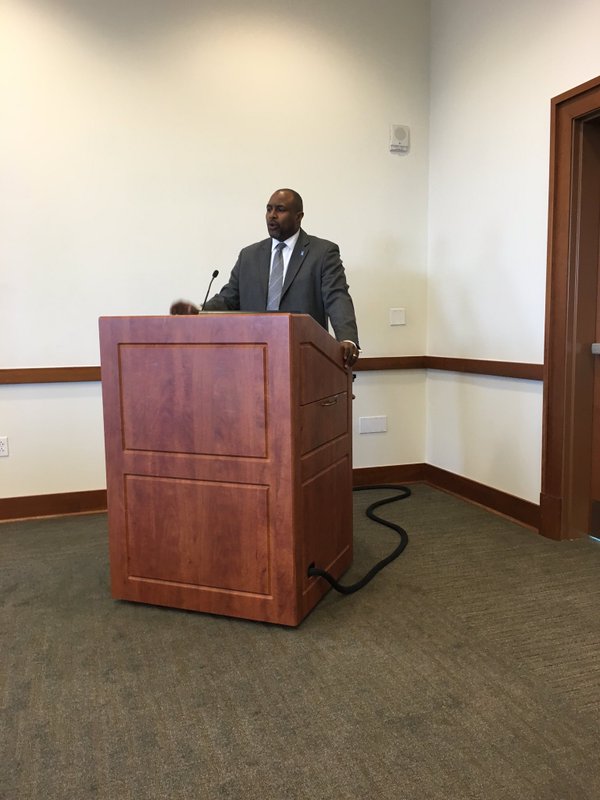
Below is a portion of the text of the talk that Dr. Andre E. Johnson gave on Tuesday February 16, 2016 as part of Black History Month at the University of Memphis. The lecture was also part of the Memories of a Massacre: Memphis in 1866 Project. To listen the talk, click here.
On Thursday, December 10, 2015, a jury found former Police Officer Daniel Holtzclaw guilty of multiple counts of rape — first and second degree — as well as sexual battery, procuring lewd exhibition, and forcible oral sodomy. Except for Roland Martin of News One Now and a faithful cadre of folks on Twitter and other social media outlets providing us updates, this case where 13 women came forward to testify against this man, went largely unnoticed. On an episode of the Melissa Harris Perry show, commentator Joy Reid acknowledged the media’s disregard toward this case. It just did not seem important to cover the story of a police officer who in fact was a serial rapist in the time when people all on Twitter were connecting this to the Black Lives Matter movement.
However, for those following this case, you know that this almost did not happen. During the trial, the prosecution argued that Holtzclaw selected his “victims” based on their inherent believable. In short, these women that Holtzclaw raped were women that society tended not to believe anyway. Indeed, before this case gain any traction, several of these women and some not part of the 13 attempted to tell officials about their dealing with Holtzclaw. They simply were not believed. It wasn’t until Mrs. Jannie Ligons, a 57 year-old grandmother of 12 testified against Holtzclaw that officials began a serious investigation…..
But enter Black Lives Matter. The movement birth after the Zimmerman verdict of not guilty, aims at affirming all black lives period. No matter condition or position; no matter one’s situation or infatuation, Black Lives Matter. According to Alicia Garza:
BlackLivesMatter doesn’t mean your life isn’t important–it means that Black lives, which are seen as without value within White supremacy, are important to your liberation. Given the disproportionate impact state violence has on Black lives, we understand that when Black people in this country get free, the benefits will be wide reaching and transformative for society as a whole. When we are able to end hyper-criminalization and sexualization of Black people and end the poverty, control, and surveillance of Black people, every single person in this world has a better shot at getting and staying free. When Black people get free, everybody gets free.
In achieving this freedom one way it happens is by way of testimony and the sharing of Black 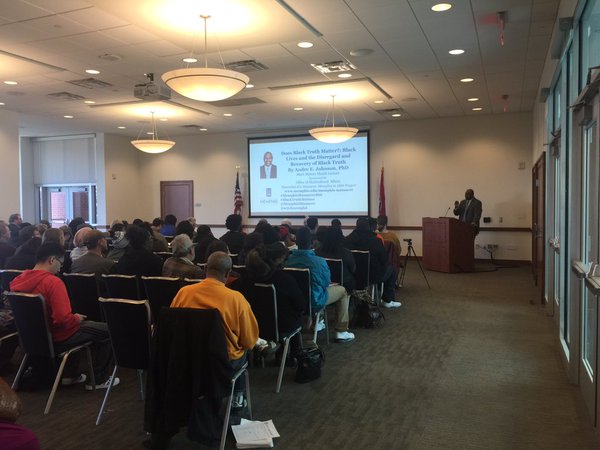 Truth. While the Black Lives matter movement operates on many different levels from protest, to research, to teach ins, to even electoral politics, at its core, it has always been a safe space for the sharing of one’s testimony. It has been the place where one could tell a story of one’s interaction with police, or at work, or at home and not have others questioning your story or looking disapprovingly upon you. It’s been the place where one could go and be whoever they were created to be and find the love that the wider society does not give. In short, it’s been the space where Black Truth has been affirmed.
It’s a space where Black Truth and testimony come to live because wider society has always viewed black truth as suspect. Black truth and testimony has always been questioned and viewed as inaccurate. It’s almost as if truth and Blackness could not coincide together–that Black truth was somehow tainted because of the conditions Black folks found themselves. For a long period in this country black testimony was not given in courts and black people could not testify in any case against a white person. This of course led to the banning of black people from juries and from courtrooms period unless they were in the role of defendants.
However, there was a time when Black truth seemed to matter–at least for a moment. There was this one time, back in 1866 right here in Memphis, Tennessee that some black folks came forward to testify about an atrocity that had happened to them May 1-3. Not long after the vestiges of slavery and still dealing with some form of PTSD, these brave women and men came forward and foreshadowed others would come later bearing Black truth in their bosom and as fire shut in their bones.
Shortly after the massacre, a congressional committee arrived in Memphis to investigate the massacre. During their investigation and interview process, the committee discovered that 46 black people died, 285 people injured, over 100 houses and other property belonging to African Americans burned. (And BTW, we don’t have the time to talk about the Black wealth that was lost and the serious need for a conversation centering on reparations). However, also part of the massacre was the rape of (at least) 5 black women.
The crowning acts of atrocity and diabolism committed during these terrible nights were the ravishing of five different colored women by these fiends in human shape, independent of other attempts at rape. The details of these outrages are of too shocking and disgusting character to be given at length in this report, and reference must be had to the testimony of the parties. It is a singular fact, that while this mob was breathing vengeance against the negroes and shooting them down like dogs, yet when they found unprotected colored women they at once “conquered their prejudices,” and proceeded to violate them under circumstances of the most licentious brutality.
One of the testimonies came from Frances Thompson, who “had been enslaved and was cripple, using crutches because she had cancer on her foot.”
On Tuesday night seven men, two of whom were policemen, came to her house. She knew the two to be policemen by their stars. They were all Irishmen. They first demanded that she should get supper for them, which she did. After supper the wretches threw all the provisions that were in the house which had not been consumed out into the bayou. They then laid hold of Frances, hitting her on the side of the face and kicking her…….The woman was then violated by four of the men and so beaten and bruised that she lay in bed for three days. They were in the house nearly four hours, and when they left they said they intended “to burn up the last God damned nigger, and drive all the Yankees out of town.
Another case is that of Rebecca Ann Bloom who was ravished on the night of May 2nd. According to testimony:
She was in bed with her husband, when five men broke open her door and came into her house. They professed to have authority to arrest Mr. Bloom, and threatened to take him to the station-house unless he should pay them twenty-five dollars. Not having the money, he went out to raise it, and while absent one of the men assaulted the wife and threatened to kill her if she did not let him do as he wished. Brandishing his knife, and swearing she must submit to his wishes, he accomplished his brutal purpose.
Then there was the case of Lucy Tibbs.
A party of seven men broke into her house on Tuesday night and demanded to know where her husband was. She had with her two little children of the ages of five and two years, respectively. She implored them not to do anything to her, as she was just there with her “two little children.” While the others of the party were plundering the house, one man threatened to kill her if she did not submit to his wishes and although another man, discovering her situation, interfered, and told him to let that woman alone that she was not in situation for doing that, the brute did not desist, but succeeded in violating her person in the presence of the other six men. She was obliged to submit, as the house was full of men, and she thought they would kill her, as they had stabbed a woman the previous night in her neighborhood.
In listing the atrocities that the white mob committed, the report concludes that
Hardly any crime seems to have been omitted. There were burglary, robbery, arson, mayhem, rape. assassination, and murder, committed under circumstances of the most revolting atrocity, the details of which in every case are fully set out in the testimony. In many cases negroes were murdered and their bodies remained on the ground for forty-eight hours, and had reached stage of decomposition before they were buried; the relatives and friends of the murdered parties being afraid to appear on the street to claim the dead bodies, and the authorities permitted them to remain longer than they would have permitted the body of dead dog to remain on the street.
 It was these and other testimonies that made it in the Congressional Report. As Stephen Ash argued in his book “A Massacre in Memphis,” that the Massacre “provoked the US government to take extraordinary measures to protect freed people.” The 1866 midterm elections ushered in Republican majorities in both the House and Senate that struck down President Andrew Johnson’s Reconstruction measures. Under “Congressional Reconstruction,” the federal government imposed temporary federal military rule on the recalcitrant southern states, states had to adopt new state constitutions that granted black men the right to vote, and they must agree to ratify the 14th amendment. In the debates that ensued, the story of the Memphis Massacre and the testimony of black folk figured prominently in their decision making. This led to the first attempt at a bi-racial democracy that scholars now say produced some good outcomes.
What lessons can we learn as we navigate our own treacherous waters in our own time? This is what we hope to figure out together as we continue to study the Memphis Massacre together. During the Memories of a Massacre: Memphis in 1866 project, we will have a series of discussions and lectures all leading up to the Symposium in May. So stay tuned for that.
However, it is Black History Month and during Black History Month, there is always a lot of talk about what we can do to work together and to solve issues that face us. Well, the way for me that it starts with the recovery of Black Truth and as much as it is disregarded, we must recover it and then, dare I say, believe it. In short, Black Truth Matters!
So I live us with some questions to wrestle with. What would it look like today if Black truth was taken seriously by society? What would it look like if we actually believe the folks who tell us time and time again about being harassed, about being beaten, about being set up? For example, what would it look like to have a serious Congressional investigation where the people of Flint, Michigan can testify that they knew something was wrong with the water way before it became news? Indeed, what would that look like if Black Truth Mattered?
Thank You
For more information on the Memories of a Massacre: Memphis in 1866 Project, click here
Donate to the Work of R3
Like the work we do at Rhetoric Race and Religion? Please consider helping us continue to do this work. All donations are tax-deductible through Gifts of Life Ministries/G’Life Outreach, a 501(c)(3) tax exempt organization, and our fiscal sponsor. Any donation helps. Just click here to support our work.
Previous Post

February 11, 2016
#MemphisMassacre1866: The Time That Memphis Burned
Next Post

February 24, 2016 Not Always In My Favor, But Always For My Good
Browse Our Archives
Select a Category Amy Steele Andre E. Johnson Book Reviews/Series Brian Foulks Call for Chapters Carol Howard Merritt Classes Conferences Contributors Crystal St.Marie Lewis Daniel White Hodge Earle Fisher Eulogy Fredrick Robinson Guest Contributions Henry McNeal Turner Institutes Interviews Joseph Boston Katherine Whitfield Kimberly Peeler-Ringer Lectures/Roundtables Natalie Bullock Brown R3 Book Series R3 Contributor Rashad Grove Readers Reflections Symposiums Teaching Traci Ellis Travis Harris Uncategorized Video
Select a Month June 2020 February 2020 December 2019 November 2019 July 2019 June 2019 May 2019 October 2018 June 2018 May 2018 April 2018 March 2018 February 2018 January 2018 December 2017 November 2017 October 2017 September 2017 August 2017 July 2017 June 2017 May 2017 April 2017 March 2017 February 2017 January 2017 December 2016 November 2016 October 2016 September 2016 August 2016 July 2016 June 2016 May 2016 April 2016 March 2016 February 2016 January 2016 December 2015 November 2015 October 2015 September 2015 August 2015 July 2015 June 2015 May 2015 April 2015 March 2015 February 2015 January 2015 December 2014 November 2014 October 2014 September 2014 August 2014 July 2014 June 2014 May 2014 April 2014 March 2014 February 2014 January 2014 December 2013 November 2013 October 2013 September 2013 August 2013 July 2013 June 2013 May 2013 April 2013 March 2013 February 2013 January 2013 December 2012 November 2012 October 2012 September 2012 August 2012 July 2012 June 2012 May 2012 April 2012 March 2012 February 2012 January 2012 December 2011 November 2011 October 2011
Follow Us!
TAKE THE
Religious Wisdom Quiz
Which Psalm expresses confession: "Against you, you only, have I sinned"?
Select your answer to see how you score.
Psalm 24 Psalm 100 Psalm 73 Psalm 51
Related posts from Rhetoric Race and Religion

A Critique of #MLK's Theory of Non-Violence
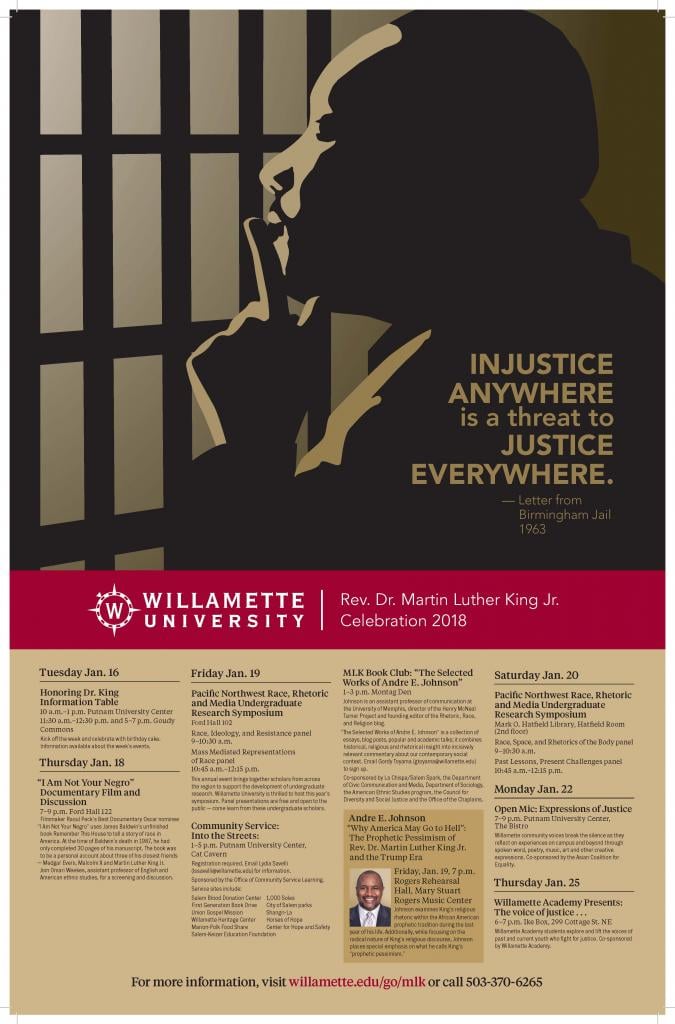
#MLK Celebration: "Why America May Go To Hell"
Talking Politics: Russia, Religion, and Race
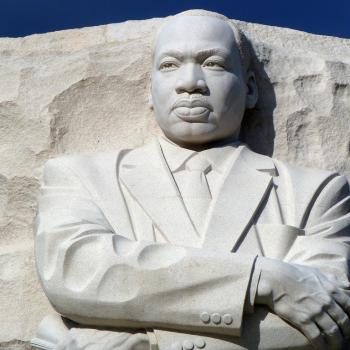
The Prophetic Pessimism of #MLK
TRENDING AT PATHEOS Progressive Christian

What Being a Modern-Day Apostle Means to Me
In my last column, I discussed the ins and outs of modern-day...

Did Ancient China Once Worship the God of...
Across human history, a common thread weaves through the origins of the...

Love Your Neighbor – Including Earth-Kin: Lev. 19,...
God’s command to love your neighbor means acting in an ethical and...

Lead a Church Study of “Jesus and Lao...
Guest writer Jack Thomas (The Irreverent Reverend) reflects on leading his church...

Pastoral Wisdom for Responding to Sermon Pushback
Getting sermon pushback on your social justice sermon? Learn practical, Proverbs-based strategies...

Principles for Understanding the Apostolic Ministry Today
Whenever people discover that my formal ministry title is "apostle," as in...
view all Progressive Christian blogs
Ad-Free & Subscriber Log-In Subscription Support
- About Us
- 2026 Calendar
- Videos
- Podcasts
- Library of World Religions
- Faith In Media Tracker
- Advertise With Us
- Write for Us
- Privacy Policy
- Terms of Service
- Do Not Sell My Data
- Contact Us
- Radiant Digital
- Manage Newsletter Subscriptions
- Unsubscribe From Notifications
- Sitemap
Copyright 2008-2026, Patheos. All rights reserved.
Subscription Support Ad-Free & Subscriber Log-In
Follow Patheos