
BuddhistCatholicContemplativeEvangelicalGeneral ChristianHinduJewishLatter-day SaintMuslimNew VisionsProgressive Christian
Beliefs
- Buddhist
- Catholic
- Contemplative
- Evangelical
- General Christian
- Hindu
- Jewish
- Latter-day Saint
- More Voices
- Muslim
- New Visions
- Pagan
- Progressive Christian
Topics
- Religion News
- Food and Religion
- Sports and Religion
- Religious Art
- Religious Music and Entertainment
- Religious Events
- History and Religion
- Style and Religion
- Politics and Religion
- Women in Religion
- Recreation Outdoors and Religion
- Business Finance and Religion
- Careers Workplace and Religion
- Education and Religion
- Family Parenting and Religion
- Health Fitness and Religion
- Home and Religion
- Relationships and Religion
- Technology and Religion
- Travel and Religion
Columnists
- Buddhist Columnists
- Business Finance and Religion Columnists
- Careers Workplace and Religion Columnists
- Catholic Columnists
- Contemplative Columnists
- Education and Religion Columnists
- Evangelists Columnists
- Family Parenting and Religion Columnists
- General Christian Columnists
- Health Fitness and Religion Columnists
- Hindu Columnists
- History and Religion Columnists
- Home and Religion Columnists
- Jewish Columnists
- More Voices Columnists
- Latter Day Columnists
- Muslim Columnists
- New Visions Columnists
- Nonreligious Columnists
- Pagan Columnists
- Politics and Religion Columnists
- Progressive Columnists
- Recreation Outdoors and Religion Columnists
- Relationships and Religion Columnists
- Religion News Columnists
- Religious Art Columnists
- Religious Events Columnists
- Religious Music and Entertainment Columnists
- Sports and Religion Columnists
- Style and Religion Columnists
- Technology and Religion Columnists
- Travel and Religion Columnists
- Women in Religion Columnists
Resource Library
- 2026 Calendar
- Library of World Religions
- The 100 Most Holy Places on Earth
- Patheos Answers
- Podcasts
- Videos
- Faith Leaders Database
- Anglican Episcopalian
- Bahai
- Baptist
- Buddhism
- Christianity
- Confucianism
- Eastern Orthodoxy
- Hinduism
- Holiness and Pentecostal
- ISKCON
- Islam
- Judaism
- Lutheran
- Methodist
- The Church of Jesus Christ of Latter-day Saints
- New Age
- Paganism
- Presbytarian and Reformed
- Protestantism
- Religion Behind the Scenes
- Roman Catholic
- Scientology
- Shia Islam
- Sikhism
- Sufism
- Sunni Islam
- Taoism
- Zen
- See all religions
Research Tools
 Ad-Free & Subscriber Log-In Subscription Support
Ad-Free & Subscriber Log-In Subscription Support
Follow Patheos 

- Trending:
- Forgiveness
- |
- Marriage
- |
- Consciousness
- |
- Death Penalty
- |
- Election
- |
- Halloween
 Rhetoric Race and Religion
- Home
- Progressive Christian
- #400Days Later: The Killing of #LaQuanMcDonald
#400Days Later: The Killing of #LaQuanMcDonald
Last updated on: December 11, 2015 at 4:47 pm by Fredrick Robinson
#400Days Later: The Killing of #LaQuanMcDonald 2015-12-11T16:47:53-05:00 Fredrick Robinson
Patheos Explore the world's faith through different perspectives on religion and spirituality! Patheos has the views of the prevalent religions and spiritualities of the world.
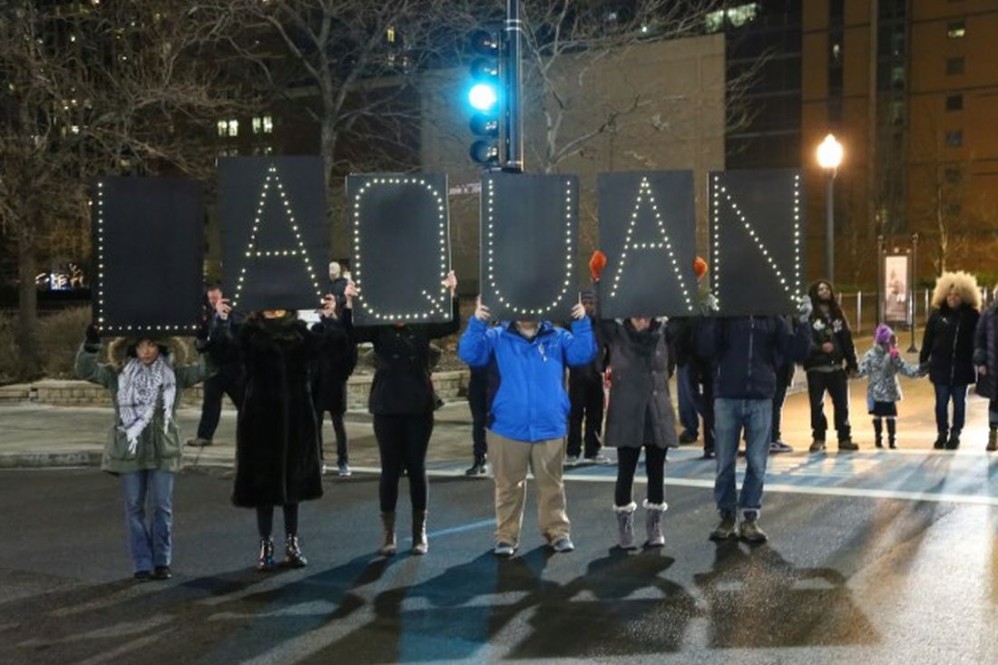
By now you have probably seen the harrowing footage of Officer Jason Van Dyke emptying his firearm into 17-year-old Laquan McDonald’s body. Sixteen shots in all were fired. The bullets tore through his scalp, back, neck, arms, elbow, hands, legs and torso—in some cases eliciting puffs of smoke.
Because of the alarming nature of the recording, the Chicago City Council unanimously approved a $5 million settlement to the family even before they filed a lawsuit. The whole fiasco—the 13-month delay in charging Officer Van Dyke as well as in releasing of the video—screams Black lives DON’T matter.
And yet, INCREDULOUSLY, some people are trying to insert the tired Black-on-Black violence trope into this conversation.
“We should be more focused on what we are doing to each other than on what a few police are doing,” a colleague told me after watching the footage. “If Black lives really mattered, protestors would be placing more attention on the fact that we are killing ourselves.”
Unfortunately, this ruse refuses to die. Even Spike Lee echoed it (not regarding the shooting of Laquan) in an interview promoting his new movie, Chi-Raq. Though my friend meant well, her sentiments are misguided. How many times must it be pointed out that violence tends to be intraracial? However, it is only when it comes to Blacks that it is used in a politically manipulative (and racist) way. Nobody decries White-on-White violence.
What would these “we-don’t-do-enough-about-Black-on-Black-crime” spokespeople propose as a solution? An enactment of longer and more punitive sentences? Sending in the National Guard as journalist Roland Martin suggested last year? A more aggressive war on drugs? More preaching “just say no” to violence? Or a number of other bankrupt approaches that have already been tried?
It baffles me that we are surprised that inner cities—places where poverty, despair, serial unemployment, broken homes, the lack of quality education, drug activity and systemic neglect are common companions—experience higher levels of violence?
It is designed that way.
These are thrown-away communities whose residents know they are not wanted, valued or respected by the larger society. It’s communicated to them daily—on the dead-end jobs they work, at substandard grocery stores in their communities, through the actions of clerks who watch them like hawks as they shop, as well as thousands of other micro-aggressions they experience. Not to mention their interactions with the police and the violence they witness.
Most feel trapped in a civic nightmare from which there appears to be no exit. In such a toxic environment of human dysfunction, it’s no wonder that violence erupts.
Author and psychiatrist Sandra L. Bloom’s prophetic statement—before it was hijacked and watered down by pop culture—that “hurt people hurt people” is germane to this discussion. Over the years, her research has provided key insights into how traumatic experiences in childhood impact and shape future behavior.
If children witness abuse, violence and trauma—including state violence against Black bodies by the police (as many Blacks in inner cities do)—or experience it on a consistent basis, they learn to be violent and come to see violence as an effective means of solving problems.
Consider the excellent work done by Dr. John A. Rich in his book, Wrong Place, Wrong Time: Trauma And Violence In The Lives Of Young Black Men. He explores the ways many inner city youth—because of the trauma of violence they are constantly exposed to—learn to use it for their own self-interest.
Denied viable paths to success and personal achievement, Rich contends they are forced to come up with their own ways of mattering in the world. The same way members of the larger society use school, family and jobs to build their identities, they use violence.
Amos N. Wilson, author of Black-on-Black Violence: The Psychodynamics of Black Self-Annihilation In Service of White Domination would agree*.*
“Deeds of violence in our society are performed largely by those trying to establish their self-esteem, to defend their self-image, and to demonstrate that they, too are significant,” he writes “As we make people powerless we promote their violence rather than its control.”
The trauma that Rich, Wilson and Bloom speak of is perhaps what drove Laquan out into the streets the night of his death wielding a four-inch knife. According to a Chicago Sun-Times article by Mary Mitchell, life for him was no crystal stair—and it was of no fault of his own.
A ward of the state at the time of his death, he had been bounced from foster home to foster home because of allegations of abuse. While in two foster homes, he was sexually assaulted, and the state never did anything about it. His grandmother, one of the few people on whom he could rely, passed away last year.
Even in the midst of all of this, Laquan tried to do the right thing. He was in school, held down a job, and was on track to graduate.
But scholars say it is not unusual that youth who experience the kinds of disappointments that Laquan did sometimes get into trouble. Maybe that explains the knife he was wielding or the PCP that was allegedly in his system. None of that, however, justifies his brutal murder.
To paraphrase Victor Hugo, it’s not enough to criticize individuals who commit crimes in the dark, you have to go after those who created the darkness. And across America and in Chicago it is dark due to white supremacy, callous neglect, and a system of capitalism that eats its most vulnerable citizens.
In the words of Dr. Leslie Callahan, pastor of Philadelphia’s St. Paul Baptist church, “the whole system is guilty as hell.”
Indeed, situations like this one in Chicago is a case study in why the Black community is filled with distrust.
The fact that it took 400 days to arrest Officer Van Dyke screams Black lives don’t matter.
The fact that he would have never been arrested had reporters not sued under the Freedom of Information Act forcing the release of the video screams Black lives don’t matter.
And the fact that some folks still try to make Black-on-Black violence more egregious than state-sponsored execution by police officers who are sworn to serve and protect screams Black lives don’t matter—in this case, alas—even to some Blacks.
As a theologian, I believe God is challenging America to do better.
No doubt, God weeps over the violence in Chicago. But God is not fooled. God knows how oppression suffocates, destroys and disfigures. God knows how the image of Black lives as irredeemable and hopelessly violent causes officers like Van Dyke to shoot first and cover up evidence of misdeeds later.
Through the dysfunction seen in places like Chicago, God isn’t calling on the nation to judge and put down those on the margins, God is INDICTING the nation.
While we decry the violence committed by those on the margins, God decries the violence committed by the nation’s callous disregard and neglect of oppressed communities.
God is reminding us that poverty is violence. White supremacy is violence. Racism is violence. Locking people in cages of hopelessness is violence.
Until America recognizes how greed, racism, and White supremacy choke out the lives of too many of its citizens she will continue to be the chief agent of Black death—whether at the hands of cops, the system, or Blacks themselves.
I’ll say it again: The whole system is guilty as hell.
Fredrick Robinson is a contributor for R3
Previous Post
November 25, 2015
Why I Am Boycotting Christmas
Next Post
November 28, 2015 White Conservative Christian Terror
Browse Our Archives
Select a Category Amy Steele Andre E. Johnson Book Reviews/Series Brian Foulks Call for Chapters Carol Howard Merritt Classes Conferences Contributors Crystal St.Marie Lewis Daniel White Hodge Earle Fisher Eulogy Fredrick Robinson Guest Contributions Henry McNeal Turner Institutes Interviews Joseph Boston Katherine Whitfield Kimberly Peeler-Ringer Lectures/Roundtables Natalie Bullock Brown R3 Book Series R3 Contributor Rashad Grove Readers Reflections Symposiums Teaching Traci Ellis Travis Harris Uncategorized Video
Select a Month June 2020 February 2020 December 2019 November 2019 July 2019 June 2019 May 2019 October 2018 June 2018 May 2018 April 2018 March 2018 February 2018 January 2018 December 2017 November 2017 October 2017 September 2017 August 2017 July 2017 June 2017 May 2017 April 2017 March 2017 February 2017 January 2017 December 2016 November 2016 October 2016 September 2016 August 2016 July 2016 June 2016 May 2016 April 2016 March 2016 February 2016 January 2016 December 2015 November 2015 October 2015 September 2015 August 2015 July 2015 June 2015 May 2015 April 2015 March 2015 February 2015 January 2015 December 2014 November 2014 October 2014 September 2014 August 2014 July 2014 June 2014 May 2014 April 2014 March 2014 February 2014 January 2014 December 2013 November 2013 October 2013 September 2013 August 2013 July 2013 June 2013 May 2013 April 2013 March 2013 February 2013 January 2013 December 2012 November 2012 October 2012 September 2012 August 2012 July 2012 June 2012 May 2012 April 2012 March 2012 February 2012 January 2012 December 2011 November 2011 October 2011
Follow Us!
TAKE THE
Religious Wisdom Quiz
Which prophet's book names the birthplace of the Messiah?
Select your answer to see how you score.
Micah Jonah Amos Obadiah
Related posts from Rhetoric Race and Religion

Dislocations and Shutdowns: #MLK, #BLM and the Rhetoric...

From the Mountain Top and Beyond: The Rhetoric...
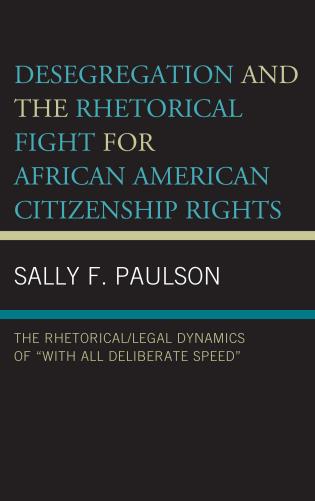
New Book in R3 Book Series on Desegregation...

Special Issue: Communication, Religion, and Race in America
TRENDING AT PATHEOS Progressive Christian

Why Christians Have a Sacred Duty to Vote:...
The Bible offers strong support for the sacred duty to vote. Here...

What Being a Modern-Day Apostle Means to Me
In my last column, I discussed the ins and outs of modern-day...

Did Ancient China Once Worship the God of...
Across human history, a common thread weaves through the origins of the...

Love Your Neighbor – Including Earth-Kin: Lev. 19,...
God’s command to love your neighbor means acting in an ethical and...

Lead a Church Study of “Jesus and Lao...
Guest writer Jack Thomas (The Irreverent Reverend) reflects on leading his church...

Principles for Understanding the Apostolic Ministry Today
Whenever people discover that my formal ministry title is "apostle," as in...
view all Progressive Christian blogs
Ad-Free & Subscriber Log-In Subscription Support
- About Us
- 2026 Calendar
- Videos
- Podcasts
- Library of World Religions
- Faith In Media Tracker
- Advertise With Us
- Write for Us
- Privacy Policy
- Terms of Service
- Do Not Sell My Data
- Contact Us
- Radiant Digital
- Manage Newsletter Subscriptions
- Unsubscribe From Notifications
- Sitemap
Copyright 2008-2026, Patheos. All rights reserved.
Subscription Support Ad-Free & Subscriber Log-In
Follow Patheos