
BuddhistCatholicContemplativeEvangelicalGeneral ChristianHinduJewishLatter-day SaintMuslimNew VisionsProgressive Christian
Beliefs
- Buddhist
- Catholic
- Contemplative
- Evangelical
- General Christian
- Hindu
- Jewish
- Latter-day Saint
- More Voices
- Muslim
- New Visions
- Pagan
- Progressive Christian
Topics
- Religion News
- Food and Religion
- Sports and Religion
- Religious Art
- Religious Music and Entertainment
- Religious Events
- History and Religion
- Style and Religion
- Politics and Religion
- Women in Religion
- Recreation Outdoors and Religion
- Business Finance and Religion
- Careers Workplace and Religion
- Education and Religion
- Family Parenting and Religion
- Health Fitness and Religion
- Home and Religion
- Relationships and Religion
- Technology and Religion
- Travel and Religion
Columnists
- Buddhist Columnists
- Business Finance and Religion Columnists
- Careers Workplace and Religion Columnists
- Catholic Columnists
- Contemplative Columnists
- Education and Religion Columnists
- Evangelists Columnists
- Family Parenting and Religion Columnists
- General Christian Columnists
- Health Fitness and Religion Columnists
- Hindu Columnists
- History and Religion Columnists
- Home and Religion Columnists
- Jewish Columnists
- More Voices Columnists
- Latter Day Columnists
- Muslim Columnists
- New Visions Columnists
- Nonreligious Columnists
- Pagan Columnists
- Politics and Religion Columnists
- Progressive Columnists
- Recreation Outdoors and Religion Columnists
- Relationships and Religion Columnists
- Religion News Columnists
- Religious Art Columnists
- Religious Events Columnists
- Religious Music and Entertainment Columnists
- Sports and Religion Columnists
- Style and Religion Columnists
- Technology and Religion Columnists
- Travel and Religion Columnists
- Women in Religion Columnists
Resource Library
- 2026 Calendar
- Library of World Religions
- The 100 Most Holy Places on Earth
- Patheos Answers
- Podcasts
- Videos
- Faith Leaders Database
- Anglican Episcopalian
- Bahai
- Baptist
- Buddhism
- Christianity
- Confucianism
- Eastern Orthodoxy
- Hinduism
- Holiness and Pentecostal
- ISKCON
- Islam
- Judaism
- Lutheran
- Methodist
- The Church of Jesus Christ of Latter-day Saints
- New Age
- Paganism
- Presbytarian and Reformed
- Protestantism
- Religion Behind the Scenes
- Roman Catholic
- Scientology
- Shia Islam
- Sikhism
- Sufism
- Sunni Islam
- Taoism
- Zen
- See all religions
Research Tools
 Ad-Free & Subscriber Log-In Subscription Support
Ad-Free & Subscriber Log-In Subscription Support
Follow Patheos 

- Trending:
- Forgiveness
- |
- Marriage
- |
- Consciousness
- |
- Death Penalty
- |
- Election
- |
- Halloween
 Rhetoric Race and Religion
- Home
- Progressive Christian
- God is a Brown Girl Too
God is a Brown Girl Too
Last updated on: October 12, 2015 at 7:00 am by Kimberly Peeler-Ringer
God is a Brown Girl Too 2015-10-09T08:37:37-05:00 Kimberly Peeler-Ringer
Patheos Explore the world's faith through different perspectives on religion and spirituality! Patheos has the views of the prevalent religions and spiritualities of the world.
 Since dismantling patriarchy is one of my approaches to reading the Scriptures, I thought it best to talk a bit about what it is and why I position myself against it. Patriarchy, in its simplest terms, is the privileging of maleness. Patriarchy is also a system that functions much like racism in that there are institutional and embedded structures that oppress women through social, political and economic practices. The United States reflects a culture that values maleness.
A recent study in The Washington Post reports that white men make up about 31% of the entire population of the United States, yet are 65% of all elected officials. In other words, white men occupy more than half of the seats of power in this country. That breaks down to white men having eight times the political power nonwhite women do. Another study reports that 83% of this country’s elected prosecutors are white males. Only 1% of U.S. prosecutors are women of color. The lawmakers and law enforcers of this country are primarily white males. And like the country we live in, the Bible itself reflects a culture that privileges maleness. An example of this is the woman caught in adultery in John 8
The act of adultery requires at least two persons, right? But whomever it was that she was committing adultery with was apparently let off with a warning since it was only she who was brought before Jesus. And maleness is also privileged in the genealogy references in the Bible, such as Genesis 6:10 that tells us Noah had three sons, again, presumably, all by himself, since their mother(s) is not mentioned.
A lot of Black women occupy pews in churches that privilege maleness, and even teach and uphold certain cultural norms from an ancient culture that some argue relegate women to “second class” status. Like the decision makers in American law and order are primarily white males, many churches have men in the positions of power despite the fact that women are the overwhelming majority group of many congregations.
Let’s break that down even further: single Black women are a large percentage of black church membership. But I have not encountered many single Black female Christians who were happy and content with the so-called “singles’ ministries” of the churches they attend. The lack of attention to this large segment of the church renders them invisible. Add to that the erasing effect stereotypes have upon Black female humanity and I think becomes clear why some brown girls have considered leaving the church when the sexism got to be too much.
I do not believe God is sexist. I do not believe that men have something in common with God that women do not. I believe Jesus practiced a discipleship of equals. And we can choose to read the Bible in ways that recover the oft-silenced voice of the Feminine Divine. Here is an example of that.
The fifteenth chapter of Luke begins with Jesus at odds with religious leaders and he uses a trilogy of parables to show them and us that God values everybody. All three of these teachings focus on various states of lostness: a lost sheep, a lost coin, and a lost son. In all three parables, the person who lost something is a representation of God’s diligence: God as the shepherd who will drop all to find the one lost sheep, God as the father filled with compassion who rushes to greet his lost son upon his return home, and God as the woman who lit a lamp and swept her home until she found her lost coin. Clearly, religion, the Bible, and culture mutually influence each other, because we often skip right over this image of God as female. Resisting patriarchy and making a different choice about the lens through which we view the Scriptures empowers us to reshape how we think about ourselves. And yes,God is a brown girl too.
Read more at The Church Feminist
Previous Post

October 9, 2015
Getting to Write and Getting it Right: A Re-Write on #DarriusStewart
Next Post

October 12, 2015 Life After Prison: How the Church Can Help
Browse Our Archives
Select a Category Amy Steele Andre E. Johnson Book Reviews/Series Brian Foulks Call for Chapters Carol Howard Merritt Classes Conferences Contributors Crystal St.Marie Lewis Daniel White Hodge Earle Fisher Eulogy Fredrick Robinson Guest Contributions Henry McNeal Turner Institutes Interviews Joseph Boston Katherine Whitfield Kimberly Peeler-Ringer Lectures/Roundtables Natalie Bullock Brown R3 Book Series R3 Contributor Rashad Grove Readers Reflections Symposiums Teaching Traci Ellis Travis Harris Uncategorized Video
Select a Month June 2020 February 2020 December 2019 November 2019 July 2019 June 2019 May 2019 October 2018 June 2018 May 2018 April 2018 March 2018 February 2018 January 2018 December 2017 November 2017 October 2017 September 2017 August 2017 July 2017 June 2017 May 2017 April 2017 March 2017 February 2017 January 2017 December 2016 November 2016 October 2016 September 2016 August 2016 July 2016 June 2016 May 2016 April 2016 March 2016 February 2016 January 2016 December 2015 November 2015 October 2015 September 2015 August 2015 July 2015 June 2015 May 2015 April 2015 March 2015 February 2015 January 2015 December 2014 November 2014 October 2014 September 2014 August 2014 July 2014 June 2014 May 2014 April 2014 March 2014 February 2014 January 2014 December 2013 November 2013 October 2013 September 2013 August 2013 July 2013 June 2013 May 2013 April 2013 March 2013 February 2013 January 2013 December 2012 November 2012 October 2012 September 2012 August 2012 July 2012 June 2012 May 2012 April 2012 March 2012 February 2012 January 2012 December 2011 November 2011 October 2011
Follow Us!
TAKE THE
Religious Wisdom Quiz
What did Jesus say about judging people?
Select your answer to see how you score.
Judge not Judge fairly Judge justly Judge yourself only
Related posts from Rhetoric Race and Religion

The Fallacy of Racial Reconciliation
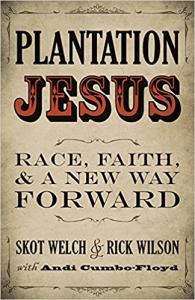
Plantation Jesus: Race, Faith and a New Way...

Silence and Sexual Assault: Toward a Better Response...
TRENDING AT PATHEOS Progressive Christian

What Being a Modern-Day Apostle Means to Me
In my last column, I discussed the ins and outs of modern-day...

Did Ancient China Once Worship the God of...
Across human history, a common thread weaves through the origins of the...

Love Your Neighbor – Including Earth-Kin: Lev. 19,...
God’s command to love your neighbor means acting in an ethical and...

Lead a Church Study of “Jesus and Lao...
Guest writer Jack Thomas (The Irreverent Reverend) reflects on leading his church...

Pastoral Wisdom for Responding to Sermon Pushback
Getting sermon pushback on your social justice sermon? Learn practical, Proverbs-based strategies...

Principles for Understanding the Apostolic Ministry Today
Whenever people discover that my formal ministry title is "apostle," as in...
view all Progressive Christian blogs
Ad-Free & Subscriber Log-In Subscription Support
- About Us
- 2026 Calendar
- Videos
- Podcasts
- Library of World Religions
- Faith In Media Tracker
- Advertise With Us
- Write for Us
- Privacy Policy
- Terms of Service
- Do Not Sell My Data
- Contact Us
- Radiant Digital
- Manage Newsletter Subscriptions
- Unsubscribe From Notifications
- Sitemap
Copyright 2008-2026, Patheos. All rights reserved.
Subscription Support Ad-Free & Subscriber Log-In
Follow Patheos