
BuddhistCatholicContemplativeEvangelicalGeneral ChristianHinduJewishLatter-day SaintMuslimNew VisionsProgressive Christian
Beliefs
- Buddhist
- Catholic
- Contemplative
- Evangelical
- General Christian
- Hindu
- Jewish
- Latter-day Saint
- More Voices
- Muslim
- New Visions
- Pagan
- Progressive Christian
Topics
- Religion News
- Food and Religion
- Sports and Religion
- Religious Art
- Religious Music and Entertainment
- Religious Events
- History and Religion
- Style and Religion
- Politics and Religion
- Women in Religion
- Recreation Outdoors and Religion
- Business Finance and Religion
- Careers Workplace and Religion
- Education and Religion
- Family Parenting and Religion
- Health Fitness and Religion
- Home and Religion
- Relationships and Religion
- Technology and Religion
- Travel and Religion
Columnists
- Buddhist Columnists
- Business Finance and Religion Columnists
- Careers Workplace and Religion Columnists
- Catholic Columnists
- Contemplative Columnists
- Education and Religion Columnists
- Evangelists Columnists
- Family Parenting and Religion Columnists
- General Christian Columnists
- Health Fitness and Religion Columnists
- Hindu Columnists
- History and Religion Columnists
- Home and Religion Columnists
- Jewish Columnists
- More Voices Columnists
- Latter Day Columnists
- Muslim Columnists
- New Visions Columnists
- Nonreligious Columnists
- Pagan Columnists
- Politics and Religion Columnists
- Progressive Columnists
- Recreation Outdoors and Religion Columnists
- Relationships and Religion Columnists
- Religion News Columnists
- Religious Art Columnists
- Religious Events Columnists
- Religious Music and Entertainment Columnists
- Sports and Religion Columnists
- Style and Religion Columnists
- Technology and Religion Columnists
- Travel and Religion Columnists
- Women in Religion Columnists
Resource Library
- 2026 Calendar
- Library of World Religions
- The 100 Most Holy Places on Earth
- Patheos Answers
- Podcasts
- Videos
- Faith Leaders Database
- Anglican Episcopalian
- Bahai
- Baptist
- Buddhism
- Christianity
- Confucianism
- Eastern Orthodoxy
- Hinduism
- Holiness and Pentecostal
- ISKCON
- Islam
- Judaism
- Lutheran
- Methodist
- The Church of Jesus Christ of Latter-day Saints
- New Age
- Paganism
- Presbytarian and Reformed
- Protestantism
- Religion Behind the Scenes
- Roman Catholic
- Scientology
- Shia Islam
- Sikhism
- Sufism
- Sunni Islam
- Taoism
- Zen
- See all religions
Research Tools
 Ad-Free & Subscriber Log-In Subscription Support
Ad-Free & Subscriber Log-In Subscription Support
Follow Patheos 

- Trending:
- Forgiveness
- |
- Marriage
- |
- Consciousness
- |
- Death Penalty
- |
- Election
- |
- Halloween
 Rhetoric Race and Religion
- Home
- Progressive Christian
- The Argument *Against* the Multicultural Church
The Argument *Against* the Multicultural Church
Last updated on: June 30, 2015 at 3:55 pm by Guest Contributor
The Argument *Against* the Multicultural Church 2015-06-30T15:55:12-05:00 Guest Contributor
Patheos Explore the world's faith through different perspectives on religion and spirituality! Patheos has the views of the prevalent religions and spiritualities of the world.

First published at By Their Strange Fruit
Our God is a multicultural God. We see this in the Trinity. We see it in whom God chose to write the scriptures. We see it in the people Jesus spent His time with. We see it in the early church. We see it in verses like 1 Corinthians 12:12-31 and Revelations 7:9. To worship in such a setting is a great blessing that reveals the fullness of who our God is. I believe in the multicultural Church.
But like so many of God’s blessings, we often don’t deserve it. We fall short. We mess it up. When a white man violated the sacred space of Emanuel AME Church in Charleston, he boldly demonstrated why God’s vision for the multicultural church is still so far from our grasp. His violence reminded Black Christians that nowhere is safe, not even their church home. What he did was unconscionable. But in many smaller ways, white Christians send a similar message every single day.
You see, one of the best arguments I’ve heard against the multicultural church is the need for sanctified space for those of God’s people who are oppressed, marginalized, or in the minority. All through the week people of color are under the white gaze, immersed in white culture, navigating white power. This takes a great social, emotional, and spiritual toll, and it is important to have a reprieve–a day of rest– if only once per week, in which to fellowship and worship with folks that share your lived experiences.
Historically, the Black church has been such a refuge, allowing for this essential, sacred communion. It’s where folks can be themselves, worship as they desire, talk about what is relevant, raise up brilliant leaders…all apart from the oppressive gaze of white supremacy. Indeed it is its role in such subversion that is one of the reasons why Emanuel AME was such a symbolic and grievous target.
And the importance of such a setting is also a strong argument against the multicultural church. If we, as the Body of Christ, are to come together in diverse and unified worship, it will require tremendous and disproportionate sacrifice on the part of Christians of color.
The multicultural church comes at a great cost for the oppressed and the marginalized, much greater than for those coming from power and privilege. To be sure, white folks will have to sacrifice their comfort and preference to be a part of multicultural worship. But in contrast, Christians of color end up sacrificing their rest, their privacy, their autonomy, their self-care, their safety, their sanity, indeed sometimes their very humanity.
The multicultural church is a wonderful vision, but on June 17th, 2015, nine beautiful saints paid the ultimate price for it. By the grace that Christ taught, into their holy space a stranger was welcomed. And he killed them.
While it may not always result in direct and immediate death, the ongoing oppression of people of color (even and especially in houses of worship) is emotional, spiritual, and physical violence acted upon them. The consequences are long lasting. The need for sanctuary is real. Thus, there is a strong argument for mono-ethnic and mono-racial churches.
If churches do enter into a journey of multicultural worship, it is essential that safe refuge be available for congregants of color. This is also why it is important that when such endeavors are undertaken, they not ultimately be headed by white pastors and leaders (and they so often are). It’s why we must hedge toward the marginalized culture in planning worship services and events, rather than compromising squarely in the middle. Because there is no ‘happy medium’ when one group is so disproportionately abused.
After tragedies like these, I often hear it suggested that white Christians go visit Black churches for a Sunday or two as an act of reconciliation. But please consider that this act may be perceived as an invasion rather than as a gesture of love. Worship can begin to feel instead like cultural tourism, one that once again centers whiteness for its own edification and entertainment.
No doubt, it is good to displace one’s self from majority and comfort. It is good to be led by preachers and teachers of color. If invited, please do join a choir or bible study that affords these opportunities. If invited, please do go with your friend to their Black church. If invited, please do embark on the complex journey that is multicultural worship.
But I reject the notion that that white people’s colonization of Black space is the path to God’s multicultural justice and reconciliation. Indeed, too often it is simply a means of assuaging our guilt, a sacred culture co-opted for white people’s own sense of redemption.
A similar principle applies privileged folks’ moving into hard-living neighborhoods, often with a sense of saviorism that is difficult to combat. I say this, knowing the popular values of relocation and incarnation, and having myself moved to the block several years ago. Sometimes it’s good. Sometimes it works. But these are often acts of colonization, rather than of reconciliation (see also, Christena Cleveland’s ‘Urban Church Planting Plantations‘)
Studies show that most multicultural churches tend to be culturally more white than anything else. As power and “default” biases creep into our sanctuaries, racial hegemony kicks in (things to notice: how often does the choir sing? how is the offering collected? How long is the service? How long are the songs? What is the style of preaching?). Too often we are simply perpetuating the cultural dominance of the world around us under the guise of reconciliation.
I do love the multicultural Church. I believe it is ultimately where God is calling us as a Body to be. But at what cost? And for whom? We must indeed be prepared to make great sacrifices if this experiment on earth is to succeed. White people will need to sacrifice greatly. But it will always be Christians of color that bear the greatest burden. For Emmanuel AME the hope of a reconciled world cost them their lives.
Katelin Hansen is the editor of By Their Strange Fruit; a blog devoted to facilitating justice and reconciliation across racial divides from a Christian perspective.
Previous Post

June 29, 2015
The President's Eulogy for the Honorable Reverend Clementa Pinckney
Next Post

June 30, 2015 Faith and Forgiveness: Obama's Political Theology
Browse Our Archives
Select a Category Amy Steele Andre E. Johnson Book Reviews/Series Brian Foulks Call for Chapters Carol Howard Merritt Classes Conferences Contributors Crystal St.Marie Lewis Daniel White Hodge Earle Fisher Eulogy Fredrick Robinson Guest Contributions Henry McNeal Turner Institutes Interviews Joseph Boston Katherine Whitfield Kimberly Peeler-Ringer Lectures/Roundtables Natalie Bullock Brown R3 Book Series R3 Contributor Rashad Grove Readers Reflections Symposiums Teaching Traci Ellis Travis Harris Uncategorized Video
Select a Month June 2020 February 2020 December 2019 November 2019 July 2019 June 2019 May 2019 October 2018 June 2018 May 2018 April 2018 March 2018 February 2018 January 2018 December 2017 November 2017 October 2017 September 2017 August 2017 July 2017 June 2017 May 2017 April 2017 March 2017 February 2017 January 2017 December 2016 November 2016 October 2016 September 2016 August 2016 July 2016 June 2016 May 2016 April 2016 March 2016 February 2016 January 2016 December 2015 November 2015 October 2015 September 2015 August 2015 July 2015 June 2015 May 2015 April 2015 March 2015 February 2015 January 2015 December 2014 November 2014 October 2014 September 2014 August 2014 July 2014 June 2014 May 2014 April 2014 March 2014 February 2014 January 2014 December 2013 November 2013 October 2013 September 2013 August 2013 July 2013 June 2013 May 2013 April 2013 March 2013 February 2013 January 2013 December 2012 November 2012 October 2012 September 2012 August 2012 July 2012 June 2012 May 2012 April 2012 March 2012 February 2012 January 2012 December 2011 November 2011 October 2011
Follow Us!
TAKE THE
Religious Wisdom Quiz
What attitude does Jesus teach toward children?
Select your answer to see how you score.
Send them away Welcome them Ignore them Teach them to fight
Related posts from Rhetoric Race and Religion

From the Mountain Top and Beyond: The Rhetoric...
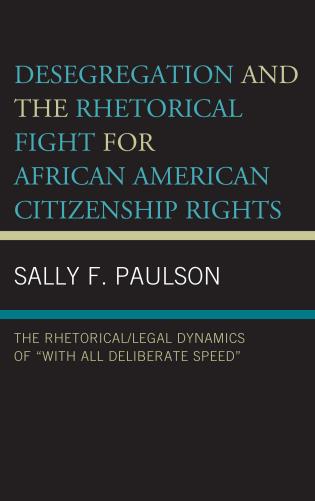
New Book in R3 Book Series on Desegregation...

Special Issue: Communication, Religion, and Race in America

The Fallacy of Racial Reconciliation
TRENDING AT PATHEOS Progressive Christian

What Being a Modern-Day Apostle Means to Me
In my last column, I discussed the ins and outs of modern-day...

Did Ancient China Once Worship the God of...
Across human history, a common thread weaves through the origins of the...

Love Your Neighbor – Including Earth-Kin: Lev. 19,...
God’s command to love your neighbor means acting in an ethical and...

Lead a Church Study of “Jesus and Lao...
Guest writer Jack Thomas (The Irreverent Reverend) reflects on leading his church...

Pastoral Wisdom for Responding to Sermon Pushback
Getting sermon pushback on your social justice sermon? Learn practical, Proverbs-based strategies...

Principles for Understanding the Apostolic Ministry Today
Whenever people discover that my formal ministry title is "apostle," as in...
view all Progressive Christian blogs
Ad-Free & Subscriber Log-In Subscription Support
- About Us
- 2026 Calendar
- Videos
- Podcasts
- Library of World Religions
- Faith In Media Tracker
- Advertise With Us
- Write for Us
- Privacy Policy
- Terms of Service
- Do Not Sell My Data
- Contact Us
- Radiant Digital
- Manage Newsletter Subscriptions
- Unsubscribe From Notifications
- Sitemap
Copyright 2008-2026, Patheos. All rights reserved.
Subscription Support Ad-Free & Subscriber Log-In
Follow Patheos