
BuddhistCatholicContemplativeEvangelicalGeneral ChristianHinduJewishLatter-day SaintMuslimNew VisionsProgressive Christian
Beliefs
- Buddhist
- Catholic
- Contemplative
- Evangelical
- General Christian
- Hindu
- Jewish
- Latter-day Saint
- More Voices
- Muslim
- New Visions
- Pagan
- Progressive Christian
Topics
- Religion News
- Food and Religion
- Sports and Religion
- Religious Art
- Religious Music and Entertainment
- Religious Events
- History and Religion
- Style and Religion
- Politics and Religion
- Women in Religion
- Recreation Outdoors and Religion
- Business Finance and Religion
- Careers Workplace and Religion
- Education and Religion
- Family Parenting and Religion
- Health Fitness and Religion
- Home and Religion
- Relationships and Religion
- Technology and Religion
- Travel and Religion
Columnists
- Buddhist Columnists
- Business Finance and Religion Columnists
- Careers Workplace and Religion Columnists
- Catholic Columnists
- Contemplative Columnists
- Education and Religion Columnists
- Evangelists Columnists
- Family Parenting and Religion Columnists
- General Christian Columnists
- Health Fitness and Religion Columnists
- Hindu Columnists
- History and Religion Columnists
- Home and Religion Columnists
- Jewish Columnists
- More Voices Columnists
- Latter Day Columnists
- Muslim Columnists
- New Visions Columnists
- Nonreligious Columnists
- Pagan Columnists
- Politics and Religion Columnists
- Progressive Columnists
- Recreation Outdoors and Religion Columnists
- Relationships and Religion Columnists
- Religion News Columnists
- Religious Art Columnists
- Religious Events Columnists
- Religious Music and Entertainment Columnists
- Sports and Religion Columnists
- Style and Religion Columnists
- Technology and Religion Columnists
- Travel and Religion Columnists
- Women in Religion Columnists
Resource Library
- 2026 Calendar
- Library of World Religions
- The 100 Most Holy Places on Earth
- Patheos Answers
- Podcasts
- Videos
- Faith Leaders Database
- Anglican Episcopalian
- Bahai
- Baptist
- Buddhism
- Christianity
- Confucianism
- Eastern Orthodoxy
- Hinduism
- Holiness and Pentecostal
- ISKCON
- Islam
- Judaism
- Lutheran
- Methodist
- The Church of Jesus Christ of Latter-day Saints
- New Age
- Paganism
- Presbytarian and Reformed
- Protestantism
- Religion Behind the Scenes
- Roman Catholic
- Scientology
- Shia Islam
- Sikhism
- Sufism
- Sunni Islam
- Taoism
- Zen
- See all religions
Research Tools
 Ad-Free & Subscriber Log-In Subscription Support
Ad-Free & Subscriber Log-In Subscription Support
Follow Patheos 

- Trending:
- Forgiveness
- |
- Marriage
- |
- Consciousness
- |
- Death Penalty
- |
- Election
- |
- Halloween
 Rhetoric Race and Religion
- Home
- Progressive Christian
- Faith and Forgiveness: Obama’s Political Theology
Faith and Forgiveness: Obama’s Political Theology
Last updated on: June 30, 2015 at 5:03 pm by Guest Contributor
Faith and Forgiveness: Obama’s Political Theology 2015-06-30T17:03:35-05:00 Guest Contributor
Patheos Explore the world's faith through different perspectives on religion and spirituality! Patheos has the views of the prevalent religions and spiritualities of the world.
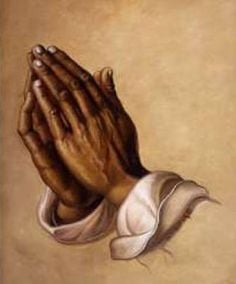
The eulogy delivered by President Obama Friday morning at Emanuel African Episcopal Church in Charleston was an important moment in American public life. However, the most critical notes sounded by Obama was not the rendition of Amazing Grace or the performative cues that signaled his involvement and ease in the tradition of the Black Church. Rather it was his break with the prevailing and often unspoken theological aspects of American political life that conceal the dynamics of racial and social injustice.
In recent weeks a wide range of responses to the heart wrenching acts of forgiveness by the families of State Senator Rev. Clementa Pinckney, Cynthia Hurd, Tywanza Sanders, Sharonda Coleman-Singleton, Myra Thompson, Ethel Lance, Susie Jackson, Rev. Daniel Simmons, and Rev. DePayne Middleton-Doctor. Scholars such as Dr. Stacey Patton have opened up a much-needed dialogue on the politics of forgiveness challenging “…the almost reflexive demand of forgiveness, especially for those dealing with death by racism, is about protecting whiteness, and America as a whole.” I have often argued that American expects forgiveness from blacks for racial sins that are un-confessed. My concern here is not the personal aspect of forgiveness by the families, but rather the way such acts are recruited and refashioned by a political theology that maintains the status quo of racial injustice through forms of sacrifice.
The legal aspect of this theme was explored by the late legal scholar Derrick Bell’s Silent Covenants. Covering a large swath of American history, Bell describes two perennial forms of racial reform he describes as covenants. The first are racial-sacrifice covenants where costly differences between groups of whites were reconciled through the involuntary sacrifice of black rights and interests. The second are interest-convergence covenants where black rights are protected if they can be demonstrated to advance white interests. Religious scholars such as Charles Long have argued that these are repetitions of the America’s original compromise over slavery that represent the religious depth of American public life. Long’s point is important, as slavery was not only our ‘original sin’ but also its political dynamics are source of renewal for America in moments of crisis. A renewal he argued facilitated by the skillful use of and engagement with public piety and symbols. This was in full view in the response of South Carolina’s Senator Lindsey Graham to Obama’s eulogy and this position on the confederate flag.
As calls for the removal of the flag in the wake of the horrific murders at “Mother Emanuel,” Graham stood firm claiming that the flag “works here.” With the political (and corporate) winds shifting, Graham stood by Governor Nikki Haley as she called for the flags removal. However, Graham’s interview on Meet the Press was particularly telling. When asked about his opinion about the funeral service, Graham praised Obama’s words about Rev. Clementa Pinckney as an individual. However he balked at any broader political meaning of his death stating, “I guess when we started talking about God’s grace and embracing the Democratic agenda across the board, he sort of loss me there.”
Lost on Graham was Obama’s articulation of grace that refused to let America as a political community off the hook for this act of racial violence. Obama squarely invoked the history of racial violence, racial subjugation, systemic oppression, voting rights, unjust public school systems, unconscious racial bias, and collective salvation. More importantly, he argued that we don’t need “more talk.” Far too often in the face of racial violence and unrest we retreat from messiness of public life in order to have more “conversations around the kitchen table.” Moreover, Obama warned that symbolic gestures without addressing the social reality they symbolize is to reject the forgiveness offered by the families. The eulogy echoed the question familiar to those who welcomed Dylan Roof into their bible study, should black grace be given so that black death and suffering abound? The eulogy struck at the lifeline of a political theology that perpetuates anti-black racism by severing the relationship between guilt and repentance, confession and forgiveness. This was the grace that Graham could not accept. A grace that calls for new life grounded in creation of a just society.
It’s tempting to either over or underestimate the role of the confederate flag. Symbols have the power to leverage the historical meanings that fuel and motivate our actions. When asked why it took nine deaths to change his mind about the flag, Graham said, “the people of the A.M.E. church, the families of the victims changed everything by their grace, by their love, by their forgiveness…”–not the fact that their loved ones were shot to death in their own house of worship or the white nationalism associated with the attack. In Graham’s political theology black forgiveness can legitimate the removal of the confederate flag as a symbol, but it can’t repudiate racial injustices it symbolizes.
I’m not naïve as to the limits of what can be accomplished through a single speech. However, in the midst of the celebrations and critiques of Obama’s cultural performance, let’s not miss the to move to reconfigure America’s political theology. A move arguably impossible without the deep historical, religious and cultural memories and meanings embedded within “Mother Emanuel.” May the events at Emanuel A.M.E move us towards a political theology in which black life is valued as much as black grace.
Rev. Dr. Christophe Ringer is an Assistant Professor of Theological Ethics and Society at Chicago Theological Seminary
Previous Post

June 29, 2015
The Argument *Against* the Multicultural Church
Next Post

June 30, 2015 The Right Reverend President and the Concern of Cheap Grace
Browse Our Archives
Select a Category Amy Steele Andre E. Johnson Book Reviews/Series Brian Foulks Call for Chapters Carol Howard Merritt Classes Conferences Contributors Crystal St.Marie Lewis Daniel White Hodge Earle Fisher Eulogy Fredrick Robinson Guest Contributions Henry McNeal Turner Institutes Interviews Joseph Boston Katherine Whitfield Kimberly Peeler-Ringer Lectures/Roundtables Natalie Bullock Brown R3 Book Series R3 Contributor Rashad Grove Readers Reflections Symposiums Teaching Traci Ellis Travis Harris Uncategorized Video
Select a Month June 2020 February 2020 December 2019 November 2019 July 2019 June 2019 May 2019 October 2018 June 2018 May 2018 April 2018 March 2018 February 2018 January 2018 December 2017 November 2017 October 2017 September 2017 August 2017 July 2017 June 2017 May 2017 April 2017 March 2017 February 2017 January 2017 December 2016 November 2016 October 2016 September 2016 August 2016 July 2016 June 2016 May 2016 April 2016 March 2016 February 2016 January 2016 December 2015 November 2015 October 2015 September 2015 August 2015 July 2015 June 2015 May 2015 April 2015 March 2015 February 2015 January 2015 December 2014 November 2014 October 2014 September 2014 August 2014 July 2014 June 2014 May 2014 April 2014 March 2014 February 2014 January 2014 December 2013 November 2013 October 2013 September 2013 August 2013 July 2013 June 2013 May 2013 April 2013 March 2013 February 2013 January 2013 December 2012 November 2012 October 2012 September 2012 August 2012 July 2012 June 2012 May 2012 April 2012 March 2012 February 2012 January 2012 December 2011 November 2011 October 2011
Follow Us!
TAKE THE
Religious Wisdom Quiz
What does "Gideon" mean in Hebrew?
Select your answer to see how you score.
God is my Strength Warrior Hewer Redeemer
Related posts from Rhetoric Race and Religion

Why Christian Nationalism Betrays the Gospel

From the Mountain Top and Beyond: The Rhetoric...
New Book in R3 Book Series on Desegregation...

Special Issue: Communication, Religion, and Race in America
TRENDING AT PATHEOS Progressive Christian

What Being a Modern-Day Apostle Means to Me
In my last column, I discussed the ins and outs of modern-day...

Did Ancient China Once Worship the God of...
Across human history, a common thread weaves through the origins of the...

Love Your Neighbor – Including Earth-Kin: Lev. 19,...
God’s command to love your neighbor means acting in an ethical and...

Lead a Church Study of “Jesus and Lao...
Guest writer Jack Thomas (The Irreverent Reverend) reflects on leading his church...

Pastoral Wisdom for Responding to Sermon Pushback
Getting sermon pushback on your social justice sermon? Learn practical, Proverbs-based strategies...

Principles for Understanding the Apostolic Ministry Today
Whenever people discover that my formal ministry title is "apostle," as in...
view all Progressive Christian blogs
Ad-Free & Subscriber Log-In Subscription Support
- About Us
- 2026 Calendar
- Videos
- Podcasts
- Library of World Religions
- Faith In Media Tracker
- Advertise With Us
- Write for Us
- Privacy Policy
- Terms of Service
- Do Not Sell My Data
- Contact Us
- Radiant Digital
- Manage Newsletter Subscriptions
- Unsubscribe From Notifications
- Sitemap
Copyright 2008-2026, Patheos. All rights reserved.
Subscription Support Ad-Free & Subscriber Log-In
Follow Patheos