
BuddhistCatholicContemplativeEvangelicalGeneral ChristianHinduJewishLatter-day SaintMuslimNew VisionsProgressive Christian
Beliefs
- Buddhist
- Catholic
- Contemplative
- Evangelical
- General Christian
- Hindu
- Jewish
- Latter-day Saint
- More Voices
- Muslim
- New Visions
- Pagan
- Progressive Christian
Topics
- Religion News
- Food and Religion
- Sports and Religion
- Religious Art
- Religious Music and Entertainment
- Religious Events
- History and Religion
- Style and Religion
- Politics and Religion
- Women in Religion
- Recreation Outdoors and Religion
- Business Finance and Religion
- Careers Workplace and Religion
- Education and Religion
- Family Parenting and Religion
- Health Fitness and Religion
- Home and Religion
- Relationships and Religion
- Technology and Religion
- Travel and Religion
Columnists
- Buddhist Columnists
- Business Finance and Religion Columnists
- Careers Workplace and Religion Columnists
- Catholic Columnists
- Contemplative Columnists
- Education and Religion Columnists
- Evangelists Columnists
- Family Parenting and Religion Columnists
- General Christian Columnists
- Health Fitness and Religion Columnists
- Hindu Columnists
- History and Religion Columnists
- Home and Religion Columnists
- Jewish Columnists
- More Voices Columnists
- Latter Day Columnists
- Muslim Columnists
- New Visions Columnists
- Nonreligious Columnists
- Pagan Columnists
- Politics and Religion Columnists
- Progressive Columnists
- Recreation Outdoors and Religion Columnists
- Relationships and Religion Columnists
- Religion News Columnists
- Religious Art Columnists
- Religious Events Columnists
- Religious Music and Entertainment Columnists
- Sports and Religion Columnists
- Style and Religion Columnists
- Technology and Religion Columnists
- Travel and Religion Columnists
- Women in Religion Columnists
Resource Library
- 2026 Calendar
- Library of World Religions
- The 100 Most Holy Places on Earth
- Patheos Answers
- Podcasts
- Videos
- Faith Leaders Database
- Anglican Episcopalian
- Bahai
- Baptist
- Buddhism
- Christianity
- Confucianism
- Eastern Orthodoxy
- Hinduism
- Holiness and Pentecostal
- ISKCON
- Islam
- Judaism
- Lutheran
- Methodist
- The Church of Jesus Christ of Latter-day Saints
- New Age
- Paganism
- Presbytarian and Reformed
- Protestantism
- Religion Behind the Scenes
- Roman Catholic
- Scientology
- Shia Islam
- Sikhism
- Sufism
- Sunni Islam
- Taoism
- Zen
- See all religions
Research Tools
 Ad-Free & Subscriber Log-In Subscription Support
Ad-Free & Subscriber Log-In Subscription Support
Follow Patheos 

- Trending:
- Forgiveness
- |
- Marriage
- |
- Consciousness
- |
- Death Penalty
- |
- Election
- |
- Halloween
 Rhetoric Race and Religion
- Home
- Progressive Christian
- Deconstructing Patriarchy, One Ritual at a Time
Deconstructing Patriarchy, One Ritual at a Time
Last updated on: June 4, 2015 at 10:28 am by Carol Howard Merritt
Deconstructing Patriarchy, One Ritual at a Time 2015-06-04T10:28:05-05:00 Carol Howard Merritt
Patheos Explore the world's faith through different perspectives on religion and spirituality! Patheos has the views of the prevalent religions and spiritualities of the world.
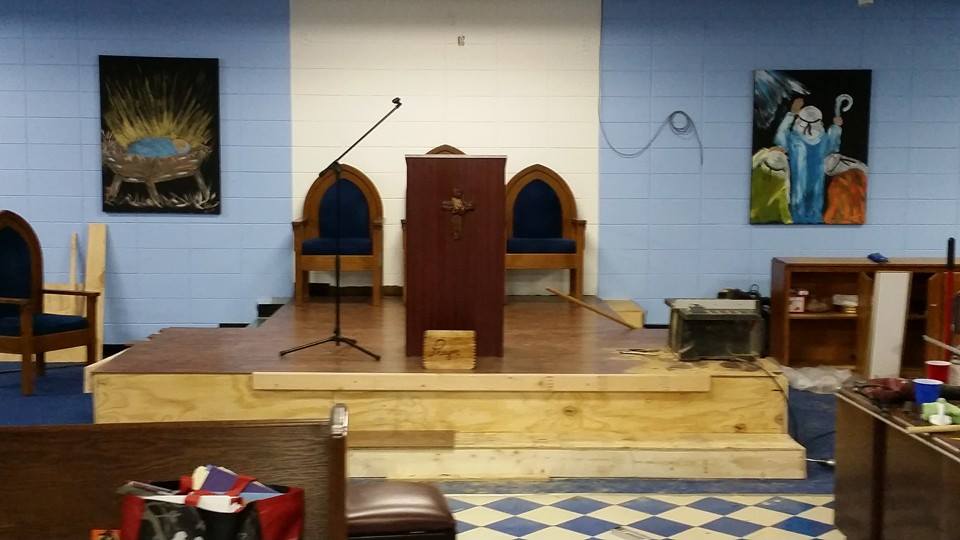
I love weddings. I even like the parts pastors aren’t supposed to enjoy—the flowers, dresses, hair, and make-up. People have their heads full of Kate Middleton, as they dreamed of being a princess for the day. They ended up pouring a fortune into a ceremony that could easily morph a simple religious ceremony into a frenzied, commercialized ball of stress.
The couple had to down Valium to enjoy it, and they knew that they must extract pleasure from every minute of it because they bought all of the suggested extras that the wedding coordinator had to offer. Then they figured in the photographer’s ultra-pack of memories. And they fell for the pretentions of friends who grew up in the Junior League and regularly checked wedding invitations to see if they had the right watermark. Now they would never be able to afford the down payment on a house.
As I sat with Alisha and Corey, the anxious couple, I realized that I loved weddings because it was also chance for me to deconstruct the rituals and attempt untangle our traditions from patriarchy. From the very moment that the fiancée slips that glittery stop sign on her finger, marking her as claimed property, while the guy’s digits remain suspiciously naked, weddings can resemble a decorous chattel rounding.
There might be a reason our ceremonies having the feel of a real estate transaction. The Bible has many passages that see women as a husband’s property. Of course, “her price is far above rubies,” but why is she wearing a price tag in the first place? Even that touchstone of our faith, the Ten Commandments, said that you should not covet your neighbor’s ox, donkey, or wife. Not only are the commandments written particularly for men but they also place women on the same level as the livestock.
Of course, our ideas of women have evolved since Moses sauntered down off the mountaintop with those two stone tablets. Not only that, but religion doesn’t hold exclusive rights on patriarchy. It existed in larger culture. Also, we shouldn’t be anachronistic—taking our attitudes toward gender and expecting some ancient culture to live up to our liberated notions. In the Bible, there are many conflicting concepts, particularly about gender, so I turn to the ones that support the dignity and equality of women: “In Jesus Christ, there is no Jew or Greek, slave or free, male or female.” Grasping on to that reality, we can be aware of how the poisons of a patriarchal culture seep into our practices. Judging from our weddings, this property transfer seems ubiquitous.
“Here’s the prayer book I’ll be using,” I said, opening up my well-worn copy of liturgies. “Let’s go through the ceremony together.” We read through the service, filling in the details of the choreography to see what the couple wanted and to give them an opportunity to think about the theology and meaning of the words. We talked through traditions like Lighting the Unity Candle, where two small tapers came together to spark one larger pillar. “What do you think about there just being one large candle? What does that mean?” I needled. “Does that make sense to you? What do the little candles represent? Are they you or are they your families? Are you planning to blow those out? You can’t blow those out.”
I tried to present as many alternative options as possible, as we walked through the rituals, “Do you want to want Corey’s attendants to be waiting at the front of the church or do you want the attendants to walk down the aisle together?” They liked the look of the waiting groomsmen.
“Traditionally, a father ‘gives away’ a bride. But it looks like you’ve been living independently for a decade,” I laughed as I turned to Alisha. “You are your own woman, so we think of this part as a blessing of the whole family, instead of some sort of transaction from a patriarch to the husband.”
I knew Alisha had been estranged from her father, so I asked, “Do you want to walk down the aisle with your mom or a friend? Or you can process alone. I understand if you want someone who loves and supports you to be beside you, but don’t think that person has to be your dad.”
Sometimes when I asked this, the bride looked at me as if I suddenly turned into a frog right there in front of her. She could get so seeped in wedding etiquette that she can’t see any of the demeaning meaning behind the protocol. But Alisha suddenly washed in relief, “I haven’t seen my dad in ten years. I asked him to give me away, but he’s been making this huge deal about it. I’m not even sure if he’ll actually show up for the wedding. He keeps threatening not to come and I’m having nightmares that he’s going to ruin the whole thing. You think we can do this without someone giving me away?”
“Absolutely,” I assured her. “We will choose some liturgy that uplifts communal support of your covenant, instead of a bridal ‘give-away.’”
We turned the prayer book again and read the words that state the purpose of marriage:
God gave us marriage…
for the birth and nurture of children.
“What do you think about those lines? Do you think that’s true?”
As the couple talked about the purpose of marriage and negotiated what they ought to do, I wondered if a lot of these traditions would change when same-gender weddings became common. Right now, the roles of the two people joining into this relationship hardly seemed equal. What would happen to the bachelor parties where the groom-to-be was expected to sow the last of his wild oats and the wedding shower where the bride collected recipes?
Many presiders pronounce the couple “man and wife,” instead of husband and wife and the pastor turns to the man and says, “you may kiss the bride” instead of “you may kiss each other.” Perhaps the weirdest practice is when the woman has her faux garter removed so it can be thrown into the crowd of single men. It reminded me of women who throw their underwear at Tom Jones during his concerts. Why would one of the first acts of a husband be to throw his wife’s lingerie to his friends?
I thought about that ancient admonition for a husband to “cleave to his wife” from Genesis. The word cleave is interesting. Though the original Hebrew language didn’t convey this, our English word has a dual meaning. “Cleave” means to adhere and attach. It also had the exact opposite meaning, when it was used to hew and hack.
Even with all of the odd customs and stress, I loved weddings. When Alisha and Corey’s day came and everyone gathered, I knew why. Corey’s brother struggled to make it, in spite of his work schedule and traveling issues. Alisha’s mom swallowed her pain when her ex-husband arrived with his girlfriend-of-the-month whose plunging get-up looked like she got the invitations for the cocktail party mixed up with the one for the religious ceremony. Then I watched as the mother-of-the-bride cracked a smile when the girlfriend almost spilled out of her dress while climbing into the pew. Extraordinary grace, I thought as I noticed the mother’s face releasing the slit-eyed hatred and exchanging it for broad-smiled amusement.
Corey’s uncle was drunk, smelling flammable with his profuse sweat, yet he popped his mints and mopped his forehead in his attempt not to show it. Everyone worked diligently to be on their best behavior for Alisha and Corey, succeeding in various degrees. As the sanctuary filled with people, the bodies added to the smell of melting wax, floral bouquets, and overwrought cologne.
I hardly knew these people, but during the sermon, I felt overwhelmed by the imperfect love gathered in that sanctuary. “It’s really not fair,” I said. “I have the best view of this wedding, because I get to see everyone. Corey and Alisha, can you turn around?” They turned to witness the tender faces that support them in their covenant with God and one another, breathing in the love and care surrounding them.
I was standing in a precious place. I often had a chance to be in the midst of baptisms, weddings, and funerals, gathering people from around the world to commemorate these life-altering events before God. That’s what the best of our marital traditions do. They do not allow the assumption of one soul into another. They didn’t witness to a bride price exchange. Instead, they summoned two strong rivers, in all of their vitality and independence, their origins and histories, and allowed them to converge.
As we inhaled the emotion and the tears began to flow, God was there. As the Maid of Honor pulled a Kleenex out of her cleavage and handed it to the bride, I couldn’t help but laugh in the excess joy. All of the stress and drama—and even a bit of the money—was worth it.
Carol also blogs at Tribal Church
Previous Post

June 3, 2015
Do It Even If You're Afraid!
Next Post

June 4, 2015 R3 Contributor: Carol Howard Merritt
Browse Our Archives
Select a Category Amy Steele Andre E. Johnson Book Reviews/Series Brian Foulks Call for Chapters Carol Howard Merritt Classes Conferences Contributors Crystal St.Marie Lewis Daniel White Hodge Earle Fisher Eulogy Fredrick Robinson Guest Contributions Henry McNeal Turner Institutes Interviews Joseph Boston Katherine Whitfield Kimberly Peeler-Ringer Lectures/Roundtables Natalie Bullock Brown R3 Book Series R3 Contributor Rashad Grove Readers Reflections Symposiums Teaching Traci Ellis Travis Harris Uncategorized Video
Select a Month June 2020 February 2020 December 2019 November 2019 July 2019 June 2019 May 2019 October 2018 June 2018 May 2018 April 2018 March 2018 February 2018 January 2018 December 2017 November 2017 October 2017 September 2017 August 2017 July 2017 June 2017 May 2017 April 2017 March 2017 February 2017 January 2017 December 2016 November 2016 October 2016 September 2016 August 2016 July 2016 June 2016 May 2016 April 2016 March 2016 February 2016 January 2016 December 2015 November 2015 October 2015 September 2015 August 2015 July 2015 June 2015 May 2015 April 2015 March 2015 February 2015 January 2015 December 2014 November 2014 October 2014 September 2014 August 2014 July 2014 June 2014 May 2014 April 2014 March 2014 February 2014 January 2014 December 2013 November 2013 October 2013 September 2013 August 2013 July 2013 June 2013 May 2013 April 2013 March 2013 February 2013 January 2013 December 2012 November 2012 October 2012 September 2012 August 2012 July 2012 June 2012 May 2012 April 2012 March 2012 February 2012 January 2012 December 2011 November 2011 October 2011
Follow Us!
TAKE THE
Religious Wisdom Quiz
Who led the first group of exiles back to Jerusalem to rebuild the Temple?
Select your answer to see how you score.
Ezra Nehemiah Haggai Zerubbabel
Related posts from Rhetoric Race and Religion

The Fallacy of Racial Reconciliation
Plantation Jesus: Race, Faith and a New Way...

Silence and Sexual Assault: Toward a Better Response...
TRENDING AT PATHEOS Progressive Christian

Why Christians Have a Sacred Duty to Vote:...
The Bible offers strong support for the sacred duty to vote. Here...

What Being a Modern-Day Apostle Means to Me
In my last column, I discussed the ins and outs of modern-day...

Did Ancient China Once Worship the God of...
Across human history, a common thread weaves through the origins of the...

Love Your Neighbor – Including Earth-Kin: Lev. 19,...
God’s command to love your neighbor means acting in an ethical and...

Lead a Church Study of “Jesus and Lao...
Guest writer Jack Thomas (The Irreverent Reverend) reflects on leading his church...

Principles for Understanding the Apostolic Ministry Today
Whenever people discover that my formal ministry title is "apostle," as in...
view all Progressive Christian blogs
Ad-Free & Subscriber Log-In Subscription Support
- About Us
- 2026 Calendar
- Videos
- Podcasts
- Library of World Religions
- Faith In Media Tracker
- Advertise With Us
- Write for Us
- Privacy Policy
- Terms of Service
- Do Not Sell My Data
- Contact Us
- Radiant Digital
- Manage Newsletter Subscriptions
- Unsubscribe From Notifications
- Sitemap
Copyright 2008-2026, Patheos. All rights reserved.
Subscription Support Ad-Free & Subscriber Log-In
Follow Patheos