
BuddhistCatholicContemplativeEvangelicalGeneral ChristianHinduJewishLatter-day SaintMuslimNew VisionsProgressive Christian
Beliefs
- Buddhist
- Catholic
- Contemplative
- Evangelical
- General Christian
- Hindu
- Jewish
- Latter-day Saint
- More Voices
- Muslim
- New Visions
- Pagan
- Progressive Christian
Topics
- Religion News
- Food and Religion
- Sports and Religion
- Religious Art
- Religious Music and Entertainment
- Religious Events
- History and Religion
- Style and Religion
- Politics and Religion
- Women in Religion
- Recreation Outdoors and Religion
- Business Finance and Religion
- Careers Workplace and Religion
- Education and Religion
- Family Parenting and Religion
- Health Fitness and Religion
- Home and Religion
- Relationships and Religion
- Technology and Religion
- Travel and Religion
Columnists
- Buddhist Columnists
- Business Finance and Religion Columnists
- Careers Workplace and Religion Columnists
- Catholic Columnists
- Contemplative Columnists
- Education and Religion Columnists
- Evangelists Columnists
- Family Parenting and Religion Columnists
- General Christian Columnists
- Health Fitness and Religion Columnists
- Hindu Columnists
- History and Religion Columnists
- Home and Religion Columnists
- Jewish Columnists
- More Voices Columnists
- Latter Day Columnists
- Muslim Columnists
- New Visions Columnists
- Nonreligious Columnists
- Pagan Columnists
- Politics and Religion Columnists
- Progressive Columnists
- Recreation Outdoors and Religion Columnists
- Relationships and Religion Columnists
- Religion News Columnists
- Religious Art Columnists
- Religious Events Columnists
- Religious Music and Entertainment Columnists
- Sports and Religion Columnists
- Style and Religion Columnists
- Technology and Religion Columnists
- Travel and Religion Columnists
- Women in Religion Columnists
Resource Library
- 2026 Calendar
- Library of World Religions
- The 100 Most Holy Places on Earth
- Patheos Answers
- Podcasts
- Videos
- Faith Leaders Database
- Anglican Episcopalian
- Bahai
- Baptist
- Buddhism
- Christianity
- Confucianism
- Eastern Orthodoxy
- Hinduism
- Holiness and Pentecostal
- ISKCON
- Islam
- Judaism
- Lutheran
- Methodist
- The Church of Jesus Christ of Latter-day Saints
- New Age
- Paganism
- Presbytarian and Reformed
- Protestantism
- Religion Behind the Scenes
- Roman Catholic
- Scientology
- Shia Islam
- Sikhism
- Sufism
- Sunni Islam
- Taoism
- Zen
- See all religions
Research Tools
 Ad-Free & Subscriber Log-In Subscription Support
Ad-Free & Subscriber Log-In Subscription Support
Follow Patheos 

- Trending:
- Forgiveness
- |
- Marriage
- |
- Consciousness
- |
- Death Penalty
- |
- Election
- |
- Halloween
 Rhetoric Race and Religion
- Home
- Progressive Christian
- #CharlestonShooting: Why I Want Us to Stop Praying for a While
#CharlestonShooting: Why I Want Us to Stop Praying for a While
Last updated on: June 18, 2015 at 3:27 pm by Guest Contributor
#CharlestonShooting: Why I Want Us to Stop Praying for a While 2015-06-18T15:27:07-05:00 Guest Contributor
Patheos Explore the world's faith through different perspectives on religion and spirituality! Patheos has the views of the prevalent religions and spiritualities of the world.
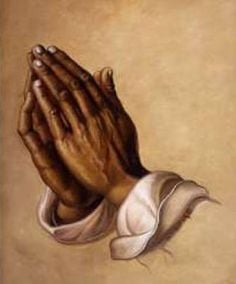
First posted on Window of Religion
I’m certain you’ve heard the news by now. Nine Black people were murdered last night at Emanuel African Methodist Episcopal (AME) church in Charleston, South Carolina. The gunman, a White man, reportedly attended Bible study and prayed with his victims before launching into tirade about how Black people are “taking over the country” and “raping white women.” He opened fire on the congregants, killing most of those in attendance, including the Rev. Senator Clementa Pinckney.
I’ve mostly been glued to the coverage of this event over the past 18 hours, both via social media and cable news. I fell asleep for a short while last night knowing that yet another horrendous, racially-motivated act had been carried out against my people in the land that I call “home”. And then I awakened, immediately remembering the pain and frustration of the night before. I can’t describe the extraordinary sadness, bewilderment and longing for justice I feel. I can only say that all of those emotions seem to have seeped beyond my psyche into my bones. The pain has collected in my flesh. I’m numb sometimes, and then I feel the radiating emotional anguish down in my joints all over again.
When the pain subsides, I’m able to process the overwhelming anger mixed with palpable fear— anger that so few people are listening to the cries of the racially targeted and oppressed, and fear that an incident like the one in Charleston will happen again. Unquestioningly, I know that this feeling in the pit of my gut is terror in every sense of the word.
The timing of the shooting was such that I was unable to speak with anyone face-to-face about what I was feeling before taking to social media for solace and human interaction. As a religion blogger, I naturally follow a large number of religious figures online, including clergy, writers, and other thinkers. I noticed that most of them were asking that we all pray; that we petition for divine intervention into America’s problems with white supremacy and racism; that we ask God to help us overcome our addiction to firearms.
I’ve watched my twitter timeline fill with calls for prayer today, all while deeply realizing how profoundly we are missing the mark. To be quite candid, it seems to me that we don’t need to talk with God about white supremacy, racism or gun control. We need, instead, to be talking with one another.
Over the past several hours, I’ve wondered what might happen if people of faith transformed their churches into spaces where conversations about race and ethnicity were not taboo. What would happen if white churches intentionally dug in deep to educate themselves about racism (which is different from discrimination), instead of disengaging when conversations get tough? Who could we become if we boldly turned our attention to having tough conversations with one another?
I continue in this day of sadness and bewilderment with a heavy heart and with the conviction that we religious folks may, perhaps, need a moratorium on our talks with God— for a short time at least. We need, instead, to start talking openly, honestly and without fear to one another about how people in our generation continue to participate in the oppressive phenomenon known as racism. We need to talk with one another about what it means for people of color to live in terror, what it means for a church like the historic Emmanuel AME to lose its sense of sanctuary, and what it means when outrage against events like these only lasts as long as the news cycle will allow.
I understand, my religious friends and colleagues, how desperately you desire to pray, given the tragic nature of last night’s events. However, I have run out of prayers and only desire to ask you: Will you instead talk face-to-face with someone about white supremacy and racism? Are you willing to start a conversation about what the world needs in order to move forward in peace?
Is it possible that our prayers for God to somehow “fix” the world seem unheard because we don’t yet see ourselves as the answers to those prayers? And if so, how do we change our faulty perspective?
Writer Crystal S. Lewis describes herself as “incurably curious,” and says curiosity is in itself a calling, not a curse. Her interests include the intersections of religion, theology, human rights, social justice, secularization and the world in which we live. An advocate for inter-religious dialogue, Crystal earned her Master of Theological Studies (MTS) degree (focus: World Religions) at Wesley Theological Seminary and a graduate certificate in Muslim/Christian Dialogue via the Washington Theological Consortium. She lives in Washington, DC. Feel free to follow Crystal on Twitter and Facebook.
Previous Post
June 18, 2015
#CharlestonShooting: Being a Neighbor in the Midst of Terror
Next Post
June 18, 2015 #CharlestonShooting: A Reader
Browse Our Archives
Select a Category Amy Steele Andre E. Johnson Book Reviews/Series Brian Foulks Call for Chapters Carol Howard Merritt Classes Conferences Contributors Crystal St.Marie Lewis Daniel White Hodge Earle Fisher Eulogy Fredrick Robinson Guest Contributions Henry McNeal Turner Institutes Interviews Joseph Boston Katherine Whitfield Kimberly Peeler-Ringer Lectures/Roundtables Natalie Bullock Brown R3 Book Series R3 Contributor Rashad Grove Readers Reflections Symposiums Teaching Traci Ellis Travis Harris Uncategorized Video
Select a Month June 2020 February 2020 December 2019 November 2019 July 2019 June 2019 May 2019 October 2018 June 2018 May 2018 April 2018 March 2018 February 2018 January 2018 December 2017 November 2017 October 2017 September 2017 August 2017 July 2017 June 2017 May 2017 April 2017 March 2017 February 2017 January 2017 December 2016 November 2016 October 2016 September 2016 August 2016 July 2016 June 2016 May 2016 April 2016 March 2016 February 2016 January 2016 December 2015 November 2015 October 2015 September 2015 August 2015 July 2015 June 2015 May 2015 April 2015 March 2015 February 2015 January 2015 December 2014 November 2014 October 2014 September 2014 August 2014 July 2014 June 2014 May 2014 April 2014 March 2014 February 2014 January 2014 December 2013 November 2013 October 2013 September 2013 August 2013 July 2013 June 2013 May 2013 April 2013 March 2013 February 2013 January 2013 December 2012 November 2012 October 2012 September 2012 August 2012 July 2012 June 2012 May 2012 April 2012 March 2012 February 2012 January 2012 December 2011 November 2011 October 2011
Follow Us!
TAKE THE
Religious Wisdom Quiz
Who was the ruler of Egypt during Joseph's time?
Select your answer to see how you score.
Pharaoh Cyrus Caesar Nebuchadnezzar
Related posts from Rhetoric Race and Religion

From the Mountain Top and Beyond: The Rhetoric...
New Book in R3 Book Series on Desegregation...

Special Issue: Communication, Religion, and Race in America

A Critique of #MLK's Theory of Non-Violence
TRENDING AT PATHEOS Progressive Christian

Why Christians Have a Sacred Duty to Vote:...
The Bible offers strong support for the sacred duty to vote. Here...

What Being a Modern-Day Apostle Means to Me
In my last column, I discussed the ins and outs of modern-day...

Did Ancient China Once Worship the God of...
Across human history, a common thread weaves through the origins of the...

Love Your Neighbor – Including Earth-Kin: Lev. 19,...
God’s command to love your neighbor means acting in an ethical and...

Lead a Church Study of “Jesus and Lao...
Guest writer Jack Thomas (The Irreverent Reverend) reflects on leading his church...

Principles for Understanding the Apostolic Ministry Today
Whenever people discover that my formal ministry title is "apostle," as in...
view all Progressive Christian blogs
Ad-Free & Subscriber Log-In Subscription Support
- About Us
- 2026 Calendar
- Videos
- Podcasts
- Library of World Religions
- Faith In Media Tracker
- Advertise With Us
- Write for Us
- Privacy Policy
- Terms of Service
- Do Not Sell My Data
- Contact Us
- Radiant Digital
- Manage Newsletter Subscriptions
- Unsubscribe From Notifications
- Sitemap
Copyright 2008-2026, Patheos. All rights reserved.
Subscription Support Ad-Free & Subscriber Log-In
Follow Patheos