
BuddhistCatholicContemplativeEvangelicalGeneral ChristianHinduJewishLatter-day SaintMuslimNew VisionsProgressive Christian
Beliefs
- Buddhist
- Catholic
- Contemplative
- Evangelical
- General Christian
- Hindu
- Jewish
- Latter-day Saint
- More Voices
- Muslim
- New Visions
- Pagan
- Progressive Christian
Topics
- Religion News
- Food and Religion
- Sports and Religion
- Religious Art
- Religious Music and Entertainment
- Religious Events
- History and Religion
- Style and Religion
- Politics and Religion
- Women in Religion
- Recreation Outdoors and Religion
- Business Finance and Religion
- Careers Workplace and Religion
- Education and Religion
- Family Parenting and Religion
- Health Fitness and Religion
- Home and Religion
- Relationships and Religion
- Technology and Religion
- Travel and Religion
Columnists
- Buddhist Columnists
- Business Finance and Religion Columnists
- Careers Workplace and Religion Columnists
- Catholic Columnists
- Contemplative Columnists
- Education and Religion Columnists
- Evangelists Columnists
- Family Parenting and Religion Columnists
- General Christian Columnists
- Health Fitness and Religion Columnists
- Hindu Columnists
- History and Religion Columnists
- Home and Religion Columnists
- Jewish Columnists
- More Voices Columnists
- Latter Day Columnists
- Muslim Columnists
- New Visions Columnists
- Nonreligious Columnists
- Pagan Columnists
- Politics and Religion Columnists
- Progressive Columnists
- Recreation Outdoors and Religion Columnists
- Relationships and Religion Columnists
- Religion News Columnists
- Religious Art Columnists
- Religious Events Columnists
- Religious Music and Entertainment Columnists
- Sports and Religion Columnists
- Style and Religion Columnists
- Technology and Religion Columnists
- Travel and Religion Columnists
- Women in Religion Columnists
Resource Library
- 2026 Calendar
- Library of World Religions
- The 100 Most Holy Places on Earth
- Patheos Answers
- Podcasts
- Videos
- Faith Leaders Database
- Anglican Episcopalian
- Bahai
- Baptist
- Buddhism
- Christianity
- Confucianism
- Eastern Orthodoxy
- Hinduism
- Holiness and Pentecostal
- ISKCON
- Islam
- Judaism
- Lutheran
- Methodist
- The Church of Jesus Christ of Latter-day Saints
- New Age
- Paganism
- Presbytarian and Reformed
- Protestantism
- Religion Behind the Scenes
- Roman Catholic
- Scientology
- Shia Islam
- Sikhism
- Sufism
- Sunni Islam
- Taoism
- Zen
- See all religions
Research Tools
 Ad-Free & Subscriber Log-In Subscription Support
Ad-Free & Subscriber Log-In Subscription Support
Follow Patheos 

- Trending:
- Forgiveness
- |
- Marriage
- |
- Consciousness
- |
- Death Penalty
- |
- Election
- |
- Halloween
 Rhetoric Race and Religion
- Home
- Progressive Christian
- The Church and the #BlackLivesMatter Movement-Pt. 4
The Church and the #BlackLivesMatter Movement-Pt. 4
Last updated on: June 1, 2015 at 6:57 am by Katherine Whitfield
The Church and the #BlackLivesMatter Movement-Pt. 4 2015-06-01T06:57:36-05:00 Katherine Whitfield
Patheos Explore the world's faith through different perspectives on religion and spirituality! Patheos has the views of the prevalent religions and spiritualities of the world.
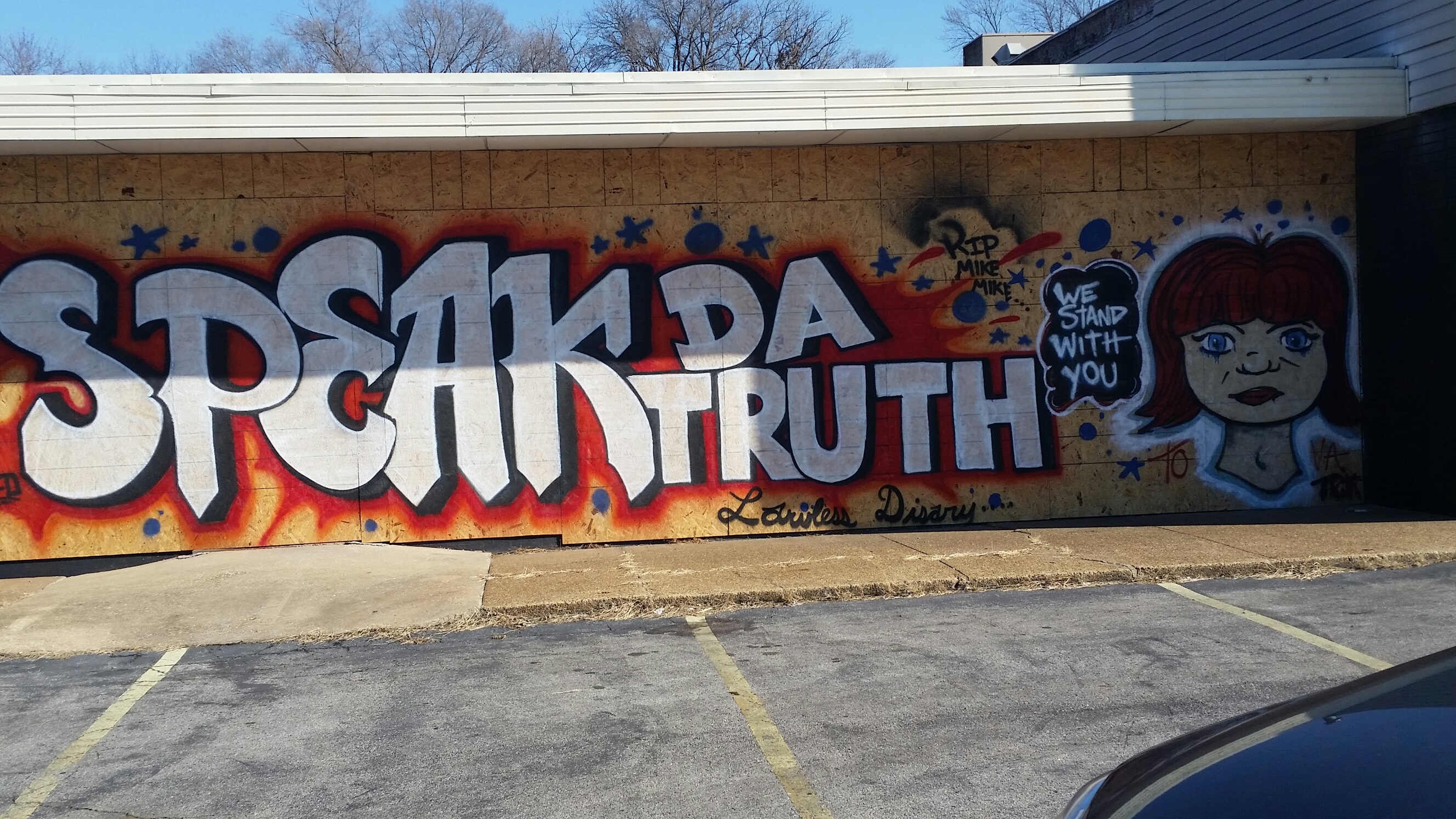
Zora Neale Hurston conducts an in-depth analysis of the relationship between folklore and the black church in The Sanctified Church. Of the black church, Hurston writes, “The truth is, that the religious service is a conscious art expression” (81). Conscious art expression holds a seminal place in the Black Lives Matter movement, as well, from protest songs, chants and creative arts workshops to the poetry and prose pouring forth from those who are on the ground praying with their feet.
Of preachers, Hurston notes a clear distinction between “lecturing” and “preaching,” declaring that preachers “must exhibit the poetic power to move listeners to new and deeper levels of spiritual awareness” (Evans 146). Again, the stirring words shared by many who are closely connected to the movement – both as public proclamations and as rallying cries for the tired troops – seems to align with the language attributed to the function of preaching within the black church.
But above all else, the frenzy, or the “shout,” is beautifully paralleled in the words and actions of the protesters. Hurston describes shouting within the context of black church as “an emotional explosion, responsive to rhythm. It is called forth by: (1) sung rhythm; (2) spoken rhythm; (3) humming rhythm; (4) the foot-patting or hand-clapping that imitates very closely the tom-tom” (91). This language rings profoundly true for me of the “shouting” I experienced both in my own very brief experience participating in one of the protest actions, and in the stories told to us by those leading the movement.
For example, one of the movement leaders, Reverend Osagyefo Sekou, told the story to a group of students in Ferguson of an evening when protesters took refuge at a local coffee shop, Mokabe’s, and found themselves blocked in on all sides by members of law enforcement. Under Sekou’s instruction, the protesters began patting on their chests in unison to the rhythm of the beating human heart. They acted from the very depths of “an emotional explosion, responsive to rhythm,” and their controlled but powerful frenzy was enough to disperse the crowd of officers. From the rhythm of the frenzy, peace sprang forth. And, as Hurston so eloquently states, “Shouting…is absolutely individualistic, [but] it thrives in concert…for the rhythm is increasing with each shouter who communicated his fervor to someone else” (91).
R. Drew Smith outlines in his essay a more contemporary analysis of the functions served by the modern black church. Even dating back to the abolishment of slavery, the contemporary black church has been known and lauded for addressing not just the spiritual needs of its congregants, but the emotional, mental, physical and moral needs, as well (Why, Lord? 40). In Smith’s estimate, the black church still fulfills many of those same functions today. He notes that black churches are often viewed by their respective communities as spiritual springboards, refuges and social resources (228). The notion of spiritual springboard implies a place where one’s soul might be refreshed, as does the concept of refuge – both spiritually and socially. Smith states, “Black churches served as spiritual refuges, but black churches, on several levels, have also provided psychic and social refuge from the dehumanizing and destructive forces of white racism” (231).
The black church as social resource reflects an understanding of the church as an extension of the family: a network of individuals who can look to one another for fellowship, food, business advice, communal care of the church’s children, political conversation, educational and artistic opportunities to develop and further creative gifts, and, in general, an overarching sense of communitas (Smith 233). Cultural anthropologist Victor Turner asserts that “one feature of communitas is the liberation from the normal social stratifications” (Evans 147), and the contemporary black church provides this liberated “safe space” – a modern-day hush harbor – for African Americans buckling under the stressful weight of life in a white-centric and prejudiced society.
I perceive similarities between the modern black church and the Black Lives Matter movement in all three of these arenas, for surely the movement offers an opportunity for the refreshing of one’s soul by giving rise to the cries of the disenfranchised and downtrodden. The notion of a spiritual and, particularly, a social refuge is evidenced not just in the act of gathering together, but in the outpouring of support and solidarity from like-minded citizens all around the globe. While sometimes the “actions” are dangerous and conducted outside of “safe haven” spaces (perhaps far from anyone’s idea of refuge), the Black Lives Matter community, in its inclusivity and strength, offers a sense of refuge and belonging, I believe, for all who align themselves with the movement.
In an age where we are starving to engage with one another in authentic community, the Black Lives Matter movement is a place where anyone who chooses to stand up for righteousness is met with the understanding, “You belong here.” Provision of social resources is a logical extension of this sense of communal belonging. Protesters are fed. Their medical needs are tended to. They are called by name. They share with, and care for, even those whom they do not know by name. Protesters raise their voices together in outcry, in song, in prayer and in thanksgiving. They are encouraged to participate in special gatherings and “self-care events” held to promote educational opportunities, physical wellness, preventive health care awareness, and perhaps most importantly, personal stress-relief activities, such as massages, meditation and mindfulness training.
They are the Ekklesia – a spiritual personhood bound together in love, free-flowing, informal, and assembled for the purpose of proclaiming and acting out one simple, undeniable element of Gospel truth. They proclaim that the lives of black men, women, and children matter, and that the age of shalom will never truly come until this truth is acknowledged and reflected in the deepest threads of our nation’s social fabric.
In this overview, I have attempted to make a case for the Black Lives Matter movement as an extension of the black church by establishing connections between the movement, the earliest Christian church, the Invisible Institution and the contemporary black church. I believe the structure, nuances and grassroots radicalism of the movement situate it as a more accurate lived illustration of the teachings of Jesus Christ than do many of our nation’s more formal religious institutions.
Albert Cleage observes “that when movements assume institutional form, their original dynamic is usually lost” (J. Evans 154); perhaps this dilution of the believers’ original dynamic makes up the gap that exists between “church” and “ekklesia.” When considering whether those driving the Black Lives Matter movement forward consider their work as an extension of the church, we have heard testimonials that some protesters believe God is silent, at best, and dead, at worst, while others believe that God is the force of liberating justice sanctioning and sustaining the entire movement.
I know that I felt the Kingdom of God unfolding all around me during my week spending time with the activists in Ferguson. I found God in the streets, in the synagogue, in the warehouse rally, in the classroom, in the coffee shop, and in the eyes, hands and feet of everyone who opened their hearts to us. I saw the imago Dei shining brightly in the young men and women who have been beaten down, harassed, threatened, arrested, fined, tear gassed, and told that they are “less than” because they are young, or black, or gay, or women, or uneducated, or poor, or fatherless, or all of the above. The ekklesia is happening all around us, and church is taking place far beyond the walls of the formal building with the steeple.
I believe that God has a tattoo on Her face. Cleage writes that “worship is the coming together of a committed people [seeking] direction, power, and inspiration as the chosen people of God” (Evans 155). In seminary, and in Ferguson, I have found my authentic, beloved community of worshippers. Like the disciples two thousand years ago, they are the ekklesia – and they have a story to tell, to any who will listen and believe.
Works Cited
Brunner, Emil. Dogmatics: The Christian Doctrine of the Church, Faith, and Consummation. Trans. David
Cairns. Vol. 3. Philadelphia: Westminster, 1960. Print.
Evans, Jr., James H. We Have Been Believers: An African American Systematic Theology. Ed. Stephen G.
Ray, Jr. 2nd ed. Minneapolis: Fortress Press, 2012. Print.
Evans, Rachel Held. “Want millennials back in the pews? Stop trying to make church ‘cool.’” The
Washington Post 30 Apr. 2015: n. pag. Web. 2 May 2015.
Felder, Cain Hope. “Cultural Ideology, Afrocentrism and Biblical Interpretation.” Black Theology: A
Documentary History, 1980-1992. Ed. Gayraud S. Wilmore and James H. Cone. New York: Orbis Books, 1992. 184-195. Print.
—. “Race, Racism, and the Biblical Narratives.” Stony the Road We Trod: African American Biblical Interpretation. Ed. Cain Hope Felder. Minneapolis: Fortress Press, 1991. 127-145. Print.
Grossman, Cathy Lynn. “Losing their religion: More women join the unspiritual set.” The Washington Post 20 Feb. 2015: n. pag. Web. 2 May 2015.
Hopkins, Dwight N. and George C. L. Cummings, eds. Cut Loose Your Stammering Tongue: Black
Theology in the Slave Narratives. New York: Orbis Books, 1991. Print.
Hurston, Zora Neale. The Sanctified Church. Berkeley: Turtle Island, 1981. Print.
Norris, Kathleen. “Words and the Word: Poet on Pilgrimage.” The Christian Century 114.13 (1997): 381-9. Print.
Pinn, Anthony B. Why, Lord? Suffering and Evil in Black Theology. New York: Continuum, 1995. Print.
Smith, R. Drew. “The Church in African American Theology.” The Oxford Handbook of African American Theology. Ed. Katie G. Cannon and Anthony B. Pinn. New York: Oxford UP, 2014. 228-241. Print.
Read part 1, part 2, and part 3
Previous Post

May 29, 2015
God, Gays and the Gospel
Next Post
June 1, 2015 White Gods and Black Devils: The Rhetoric of Bishop Henry McNeal Turner-Pt. 1
Browse Our Archives
Select a Category Amy Steele Andre E. Johnson Book Reviews/Series Brian Foulks Call for Chapters Carol Howard Merritt Classes Conferences Contributors Crystal St.Marie Lewis Daniel White Hodge Earle Fisher Eulogy Fredrick Robinson Guest Contributions Henry McNeal Turner Institutes Interviews Joseph Boston Katherine Whitfield Kimberly Peeler-Ringer Lectures/Roundtables Natalie Bullock Brown R3 Book Series R3 Contributor Rashad Grove Readers Reflections Symposiums Teaching Traci Ellis Travis Harris Uncategorized Video
Select a Month June 2020 February 2020 December 2019 November 2019 July 2019 June 2019 May 2019 October 2018 June 2018 May 2018 April 2018 March 2018 February 2018 January 2018 December 2017 November 2017 October 2017 September 2017 August 2017 July 2017 June 2017 May 2017 April 2017 March 2017 February 2017 January 2017 December 2016 November 2016 October 2016 September 2016 August 2016 July 2016 June 2016 May 2016 April 2016 March 2016 February 2016 January 2016 December 2015 November 2015 October 2015 September 2015 August 2015 July 2015 June 2015 May 2015 April 2015 March 2015 February 2015 January 2015 December 2014 November 2014 October 2014 September 2014 August 2014 July 2014 June 2014 May 2014 April 2014 March 2014 February 2014 January 2014 December 2013 November 2013 October 2013 September 2013 August 2013 July 2013 June 2013 May 2013 April 2013 March 2013 February 2013 January 2013 December 2012 November 2012 October 2012 September 2012 August 2012 July 2012 June 2012 May 2012 April 2012 March 2012 February 2012 January 2012 December 2011 November 2011 October 2011
Follow Us!
TAKE THE
Religious Wisdom Quiz
Which branch of Christianity believes in the doctrine of transubstantiation?
Select your answer to see how you score.
Evangelicals Orthodox Catholics Protestants
Related posts from Rhetoric Race and Religion

A Critique of #MLK's Theory of Non-Violence

The Fallacy of Racial Reconciliation
Plantation Jesus: Race, Faith and a New Way...

Silence and Sexual Assault: Toward a Better Response...
TRENDING AT PATHEOS Progressive Christian

What Being a Modern-Day Apostle Means to Me
In my last column, I discussed the ins and outs of modern-day...

Did Ancient China Once Worship the God of...
Across human history, a common thread weaves through the origins of the...

Love Your Neighbor – Including Earth-Kin: Lev. 19,...
God’s command to love your neighbor means acting in an ethical and...

Lead a Church Study of “Jesus and Lao...
Guest writer Jack Thomas (The Irreverent Reverend) reflects on leading his church...

Pastoral Wisdom for Responding to Sermon Pushback
Getting sermon pushback on your social justice sermon? Learn practical, Proverbs-based strategies...

Principles for Understanding the Apostolic Ministry Today
Whenever people discover that my formal ministry title is "apostle," as in...
view all Progressive Christian blogs
Ad-Free & Subscriber Log-In Subscription Support
- About Us
- 2026 Calendar
- Videos
- Podcasts
- Library of World Religions
- Faith In Media Tracker
- Advertise With Us
- Write for Us
- Privacy Policy
- Terms of Service
- Do Not Sell My Data
- Contact Us
- Radiant Digital
- Manage Newsletter Subscriptions
- Unsubscribe From Notifications
- Sitemap
Copyright 2008-2026, Patheos. All rights reserved.
Subscription Support Ad-Free & Subscriber Log-In
Follow Patheos