
BuddhistCatholicContemplativeEvangelicalGeneral ChristianHinduJewishLatter-day SaintMuslimNew VisionsProgressive Christian
Beliefs
- Buddhist
- Catholic
- Contemplative
- Evangelical
- General Christian
- Hindu
- Jewish
- Latter-day Saint
- More Voices
- Muslim
- New Visions
- Pagan
- Progressive Christian
Topics
- Religion News
- Food and Religion
- Sports and Religion
- Religious Art
- Religious Music and Entertainment
- Religious Events
- History and Religion
- Style and Religion
- Politics and Religion
- Women in Religion
- Recreation Outdoors and Religion
- Business Finance and Religion
- Careers Workplace and Religion
- Education and Religion
- Family Parenting and Religion
- Health Fitness and Religion
- Home and Religion
- Relationships and Religion
- Technology and Religion
- Travel and Religion
Columnists
- Buddhist Columnists
- Business Finance and Religion Columnists
- Careers Workplace and Religion Columnists
- Catholic Columnists
- Contemplative Columnists
- Education and Religion Columnists
- Evangelists Columnists
- Family Parenting and Religion Columnists
- General Christian Columnists
- Health Fitness and Religion Columnists
- Hindu Columnists
- History and Religion Columnists
- Home and Religion Columnists
- Jewish Columnists
- More Voices Columnists
- Latter Day Columnists
- Muslim Columnists
- New Visions Columnists
- Nonreligious Columnists
- Pagan Columnists
- Politics and Religion Columnists
- Progressive Columnists
- Recreation Outdoors and Religion Columnists
- Relationships and Religion Columnists
- Religion News Columnists
- Religious Art Columnists
- Religious Events Columnists
- Religious Music and Entertainment Columnists
- Sports and Religion Columnists
- Style and Religion Columnists
- Technology and Religion Columnists
- Travel and Religion Columnists
- Women in Religion Columnists
Resource Library
- 2026 Calendar
- Library of World Religions
- The 100 Most Holy Places on Earth
- Patheos Answers
- Podcasts
- Videos
- Faith Leaders Database
- Anglican Episcopalian
- Bahai
- Baptist
- Buddhism
- Christianity
- Confucianism
- Eastern Orthodoxy
- Hinduism
- Holiness and Pentecostal
- ISKCON
- Islam
- Judaism
- Lutheran
- Methodist
- The Church of Jesus Christ of Latter-day Saints
- New Age
- Paganism
- Presbytarian and Reformed
- Protestantism
- Religion Behind the Scenes
- Roman Catholic
- Scientology
- Shia Islam
- Sikhism
- Sufism
- Sunni Islam
- Taoism
- Zen
- See all religions
Research Tools
 Ad-Free & Subscriber Log-In Subscription Support
Ad-Free & Subscriber Log-In Subscription Support
Follow Patheos 

- Trending:
- Forgiveness
- |
- Marriage
- |
- Consciousness
- |
- Death Penalty
- |
- Election
- |
- Halloween
 Rhetoric Race and Religion
- Home
- Progressive Christian
- The Church and the #BlackLivesMatter Movement-Pt. 3
The Church and the #BlackLivesMatter Movement-Pt. 3
Last updated on: May 25, 2015 at 9:14 am by Katherine Whitfield
The Church and the #BlackLivesMatter Movement-Pt. 3 2015-05-25T09:14:25-05:00 Katherine Whitfield
Patheos Explore the world's faith through different perspectives on religion and spirituality! Patheos has the views of the prevalent religions and spiritualities of the world.
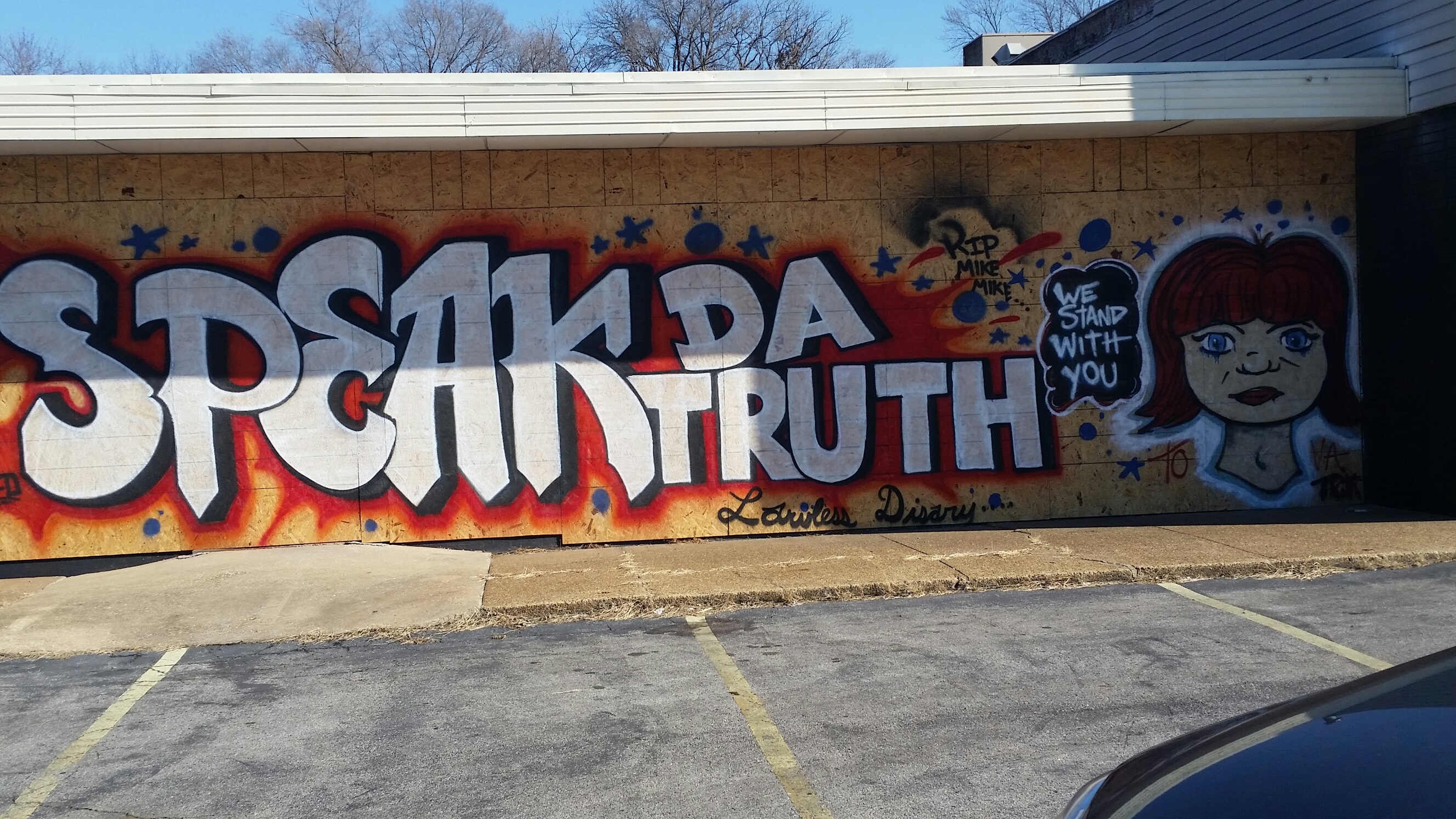
Read part 1 here and part 2 here
Much like the secret gathering spaces of the early Christian church, members of the Invisible Institution – the subversive underground church of enslaved African peoples – would congregate in the woods, sometimes known as the “bush arbor” or the “hush harbor,” in the hidden places and spaces tucked away from the damning gaze of their white oppressors. Meetings of the Invisible Institution granted the slaves enough “theological freedom” to create songs, scriptural interpretations and even worship styles imbued with an understanding of God as liberator, not oppressor (Why, Lord? 23-5).
Evans attributes the profound import of scripture within both the slave church and the modern black church to the revelatory sense of relevance and redemption culled from the biblical texts and ascribed to the black tradition. Of the earliest African American Christians, James Evans writes, “If the Middle Passage and slavery obscured their history as Africans, they found in the biblical story a sense of themselves as remembered by God. This aspect of the life of the Black Church is the reason for its tendency toward engagement with the world and social witness” (141).
Similarities between the Invisible Institution and the Black Lives Matter movement are widespread. Both could be construed as grassroots, African American-led responses to systemic white oppression and rampant institutional sin. Granted, members of the slave church gathered in the secrecy of the woods, most often under the cover of darkness, while the Black Lives Matter protesters frequently assemble in highly public spaces to demonstrate during daylight hours. However, actions of both the church and the movement were, and typically are, orchestrated in secret, in conversation and collaboration only with those individuals who are trustworthy and demonstrated “supporters” of the cause. In both instances, the primary intended outcome of the gatherings is liberation from oppression.
For the enslaved, liberation was necessary both physically, to grant them freedom from bondage, and spiritually, to undercut the imposition of a foreign religion, touting a false biblical witness to promote cheerful earthly servitude while promising glory “on the other side.” For the protestors, physical liberation is necessary for the multitude of disproportionately and often unjustly incarcerated African American men (and women). Economic liberation is necessary to address disproportionate income and wealth ratios along the color line, both by way of reparations and through establishment of equitable compensation practices, regardless of race or gender. Social liberation is necessary to spark a paradigm shift in the country’s pervasive cultural perception of black as “less than” white, and to promote a balancing of the scales in the distribution of resources for education and health care.
Finally, liberation for the soul is necessary to begin tending the wounds incurred through centuries of emotional, mental and spiritual scarring as a result of poor, negligent, cruel and even torturous treatment at the hands of the white race. In both instances, the central focus of the African American-led collective is to subvert the dominant oppressive forces of the age – religious subjugation and enslavement in the early 19th century, and racist government infrastructures in the 21st century.
The first-century Christian church fits this model, as well, as its pronounced allegiance to the radical teachings of Christ positioned it in direct opposition to the will and mandates of the Roman Empire. Involvement in each of these three institutions – the early Christian church, the slave church and the Black Lives Matter movement – meant the possibility of personal harm, harm of loved ones, loss of liberty and even loss of one’s life.
In the volume Cut Loose Your Stammering Tongue: Black Theology in the Slave Narratives, constructive theologian, author and University of Chicago Divinity School professor Dwight N. Hopkins outlines the sociological implications of the Invisible Institution in language that heavily mirrors the implications of the Black Lives Matter movement. According to Hopkins, the religious experiences depicted by members of the slave church differed from “traditional” white religious encounters in at least two distinct ways: “First, African American slaves pictured a political dimension in their theology…second, slaves’ religious thought accented an original cultural expression” (3). Of these alternative theological interpretations Hopkins concludes, “Thus the ‘Invisible Institution’ symbolized both a cultural statement of slave theology and a liberated space in which slaves controlled the political power to develop their theology” (9).
The Black Lives Matter movement is undoubtedly a pronounced cultural statement of a call for liberation, and an occupation by the people of a liberated space in which protestors aim to influence the political powers. Just as class operates as one of the defining factors influencing the unjust conditions that sparked the Black Lives Matter campaign, Hopkins observes that “this subversiveness in black chattels’ paradigm of theological anthropology grew out of their use of the intellect from the poor’s perspective” (31). And much like enslaved believers in the Invisible Institution exercised freedom of religion through original cultural expression, members of the Black Lives Matter movement intentionally employ the use of counter-culture language, imagery, slang, apparel, chants, songs and dedication of sacred space (such as the street memorials to Michael Brown and Freddie Gray) to “mark” the movement, and to ensure the movement’s relatability and accessibility to an angry, disenfranchised population. Authentic participation in the movement means aligning oneself with the perspective and plight of all those who are impoverished, unemployed, imprisoned, underpaid, disrespected, dismissed and undervalued because of discrimination on the basis of skin color.
In my next post, I will shift our focus to the contemporary black church. In so doing, I will compare interpretations of the modern institution set forth by author and womanist Zora Neale Hurston, who explores the relationship between folklore and the black church in her cultural anthropological work, The Sanctified Church, and by professor of Urban Ministry R. Drew Smith in his essay, “The Church in African American Theology,” exploring similarities between the modern church and the movement. Drawing upon Hurston’s work, close comparisons may be identified between the Black Lives Matter movement and, again, W.E.B. Du Bois’ “‘marks’ of the Black Church: the music, the preaching, and the frenzy” (J. Evans 144).
Previous Post
May 22, 2015
New Book Series: Religion and Race
Next Post

May 29, 2015 God, Gays and the Gospel
Browse Our Archives
Select a Category Amy Steele Andre E. Johnson Book Reviews/Series Brian Foulks Call for Chapters Carol Howard Merritt Classes Conferences Contributors Crystal St.Marie Lewis Daniel White Hodge Earle Fisher Eulogy Fredrick Robinson Guest Contributions Henry McNeal Turner Institutes Interviews Joseph Boston Katherine Whitfield Kimberly Peeler-Ringer Lectures/Roundtables Natalie Bullock Brown R3 Book Series R3 Contributor Rashad Grove Readers Reflections Symposiums Teaching Traci Ellis Travis Harris Uncategorized Video
Select a Month June 2020 February 2020 December 2019 November 2019 July 2019 June 2019 May 2019 October 2018 June 2018 May 2018 April 2018 March 2018 February 2018 January 2018 December 2017 November 2017 October 2017 September 2017 August 2017 July 2017 June 2017 May 2017 April 2017 March 2017 February 2017 January 2017 December 2016 November 2016 October 2016 September 2016 August 2016 July 2016 June 2016 May 2016 April 2016 March 2016 February 2016 January 2016 December 2015 November 2015 October 2015 September 2015 August 2015 July 2015 June 2015 May 2015 April 2015 March 2015 February 2015 January 2015 December 2014 November 2014 October 2014 September 2014 August 2014 July 2014 June 2014 May 2014 April 2014 March 2014 February 2014 January 2014 December 2013 November 2013 October 2013 September 2013 August 2013 July 2013 June 2013 May 2013 April 2013 March 2013 February 2013 January 2013 December 2012 November 2012 October 2012 September 2012 August 2012 July 2012 June 2012 May 2012 April 2012 March 2012 February 2012 January 2012 December 2011 November 2011 October 2011
Follow Us!
TAKE THE
Religious Wisdom Quiz
Which king saw "the handwriting on the wall"?
Select your answer to see how you score.
Nebuchadnezzar Belshazzar Cyrus Artaxerxes
Related posts from Rhetoric Race and Religion

New Book in R3 Book Series on #BLM...

Dislocations and Shutdowns: #MLK, #BLM and the Rhetoric...
A Critique of #MLK's Theory of Non-Violence
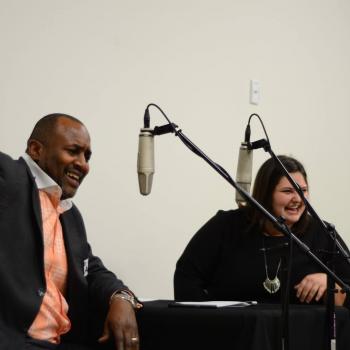
Theology Live: Theology and Race with Andre E....
TRENDING AT PATHEOS Progressive Christian

Why Christians Have a Sacred Duty to Vote:...
The Bible offers strong support for the sacred duty to vote. Here...

What Being a Modern-Day Apostle Means to Me
In my last column, I discussed the ins and outs of modern-day...

Did Ancient China Once Worship the God of...
Across human history, a common thread weaves through the origins of the...

Love Your Neighbor – Including Earth-Kin: Lev. 19,...
God’s command to love your neighbor means acting in an ethical and...

Lead a Church Study of “Jesus and Lao...
Guest writer Jack Thomas (The Irreverent Reverend) reflects on leading his church...

Principles for Understanding the Apostolic Ministry Today
Whenever people discover that my formal ministry title is "apostle," as in...
view all Progressive Christian blogs
Ad-Free & Subscriber Log-In Subscription Support
- About Us
- 2026 Calendar
- Videos
- Podcasts
- Library of World Religions
- Faith In Media Tracker
- Advertise With Us
- Write for Us
- Privacy Policy
- Terms of Service
- Do Not Sell My Data
- Contact Us
- Radiant Digital
- Manage Newsletter Subscriptions
- Unsubscribe From Notifications
- Sitemap
Copyright 2008-2026, Patheos. All rights reserved.
Subscription Support Ad-Free & Subscriber Log-In
Follow Patheos