
BuddhistCatholicContemplativeEvangelicalGeneral ChristianHinduJewishLatter-day SaintMuslimNew VisionsProgressive Christian
Beliefs
- Buddhist
- Catholic
- Contemplative
- Evangelical
- General Christian
- Hindu
- Jewish
- Latter-day Saint
- More Voices
- Muslim
- New Visions
- Pagan
- Progressive Christian
Topics
- Religion News
- Food and Religion
- Sports and Religion
- Religious Art
- Religious Music and Entertainment
- Religious Events
- History and Religion
- Style and Religion
- Politics and Religion
- Women in Religion
- Recreation Outdoors and Religion
- Business Finance and Religion
- Careers Workplace and Religion
- Education and Religion
- Family Parenting and Religion
- Health Fitness and Religion
- Home and Religion
- Relationships and Religion
- Technology and Religion
- Travel and Religion
Columnists
- Buddhist Columnists
- Business Finance and Religion Columnists
- Careers Workplace and Religion Columnists
- Catholic Columnists
- Contemplative Columnists
- Education and Religion Columnists
- Evangelists Columnists
- Family Parenting and Religion Columnists
- General Christian Columnists
- Health Fitness and Religion Columnists
- Hindu Columnists
- History and Religion Columnists
- Home and Religion Columnists
- Jewish Columnists
- More Voices Columnists
- Latter Day Columnists
- Muslim Columnists
- New Visions Columnists
- Nonreligious Columnists
- Pagan Columnists
- Politics and Religion Columnists
- Progressive Columnists
- Recreation Outdoors and Religion Columnists
- Relationships and Religion Columnists
- Religion News Columnists
- Religious Art Columnists
- Religious Events Columnists
- Religious Music and Entertainment Columnists
- Sports and Religion Columnists
- Style and Religion Columnists
- Technology and Religion Columnists
- Travel and Religion Columnists
- Women in Religion Columnists
Resource Library
- 2026 Calendar
- Library of World Religions
- The 100 Most Holy Places on Earth
- Patheos Answers
- Podcasts
- Videos
- Faith Leaders Database
- Anglican Episcopalian
- Bahai
- Baptist
- Buddhism
- Christianity
- Confucianism
- Eastern Orthodoxy
- Hinduism
- Holiness and Pentecostal
- ISKCON
- Islam
- Judaism
- Lutheran
- Methodist
- The Church of Jesus Christ of Latter-day Saints
- New Age
- Paganism
- Presbytarian and Reformed
- Protestantism
- Religion Behind the Scenes
- Roman Catholic
- Scientology
- Shia Islam
- Sikhism
- Sufism
- Sunni Islam
- Taoism
- Zen
- See all religions
Research Tools
 Ad-Free & Subscriber Log-In Subscription Support
Ad-Free & Subscriber Log-In Subscription Support
Follow Patheos 

- Trending:
- Forgiveness
- |
- Marriage
- |
- Consciousness
- |
- Death Penalty
- |
- Election
- |
- Halloween
 Rhetoric Race and Religion
- Home
- Progressive Christian
- The Church and the #BlackLivesMatter Movement-Pt. 2
The Church and the #BlackLivesMatter Movement-Pt. 2
Last updated on: May 31, 2015 at 1:21 pm by Katherine Whitfield
The Church and the #BlackLivesMatter Movement-Pt. 2 2015-05-31T13:21:36-05:00 Katherine Whitfield
Patheos Explore the world's faith through different perspectives on religion and spirituality! Patheos has the views of the prevalent religions and spiritualities of the world.
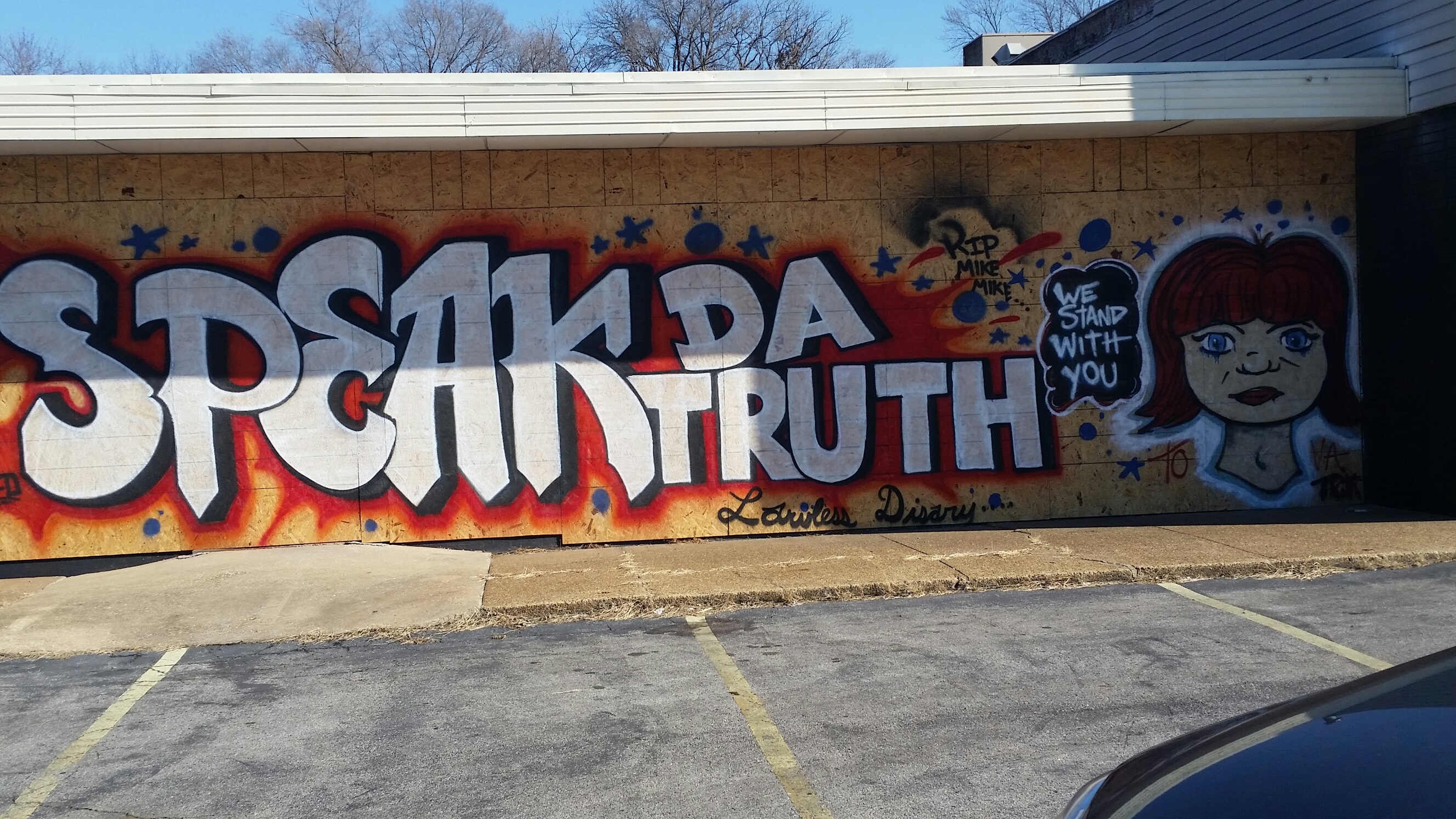
In my previous post, I ended wanting to explore the connection between the black church (assuming the “non-white” context of the early Christian church) and the Black Lives Matter movement, discussing the theological and practical aspects of the movement as a possible extension of the black, or womanist, church in the 21st century. Moreover, drawing from the work of Albert Cleage, in what James Evans called an ecclesiology of praxis rather than one of the proclaimed Word” (156), I would like to suggest that this ecclesiology of praxis is made manifest in the foundation, structure, rhetoric and actions of the Black Lives Matter movement.
Exploring similarities between the movement and what W.E.B. Du Bois set forth as “the ‘marks’ of the black church: the music, the preaching, and the frenzy,” (J. Evans 144), in this post, I will question whether the Black Lives Matter movement might reasonably be contextualized as a hybrid of the contemporary black church, with its emphasis on community, refuge and wellness for the totality of one’s being (and not just the spiritual self), and of the Invisible Institution, subversive in nature, born of necessity, steeped in secrecy and imbued with the power of those who band together against institutional and social oppression, daring to proclaim words of liberation at the risk of great personal cost. In this analysis, and as a member of the millennial “church defecting” generation, I will also explore whether the rag-tag and rough-hewn elements of the protest movement might be understood to more closely resemble the vision of “ekklesia” set forth in the Christian Gospels and the epistles than does the contemporary church, regardless of the color of its congregants.
Contemporary definitions of church tend to focus equally on the building or gathering space used for worship, and on the individuals or corporate body making up the congregation. Church may also be understood as the overarching ecclesial organization that represents one particular denomination, or the Christian body of worship as a whole entity. In the days of the earliest church, however, “church” did not exist as a formal space for worship. Church was counter-cultural, subversive and dangerous business; the gathering spaces were covert and private, typically located in the homes of believers who had the means to accommodate a small gathering of worshippers. To this end, “church” in the first century was indicative of a body of believers, not a formal house of worship. Church was fluid and omnipresent, and could not be relegated to any one single space.
Emil Brunner, a neo-orthodox theologian, indicates a problem with translation that further marks a distinction between the modern Christian church and that of the first generation of believers. In the New Testament, the church is understood as a spiritual community referred to as the “ekklesia” – a word that appears 114 times in the Greek Septuagint translation, but only appears 44 times as “ecclesia” in the Latin Vulgate translation. Clearly, the creators of Scripture struggled to land upon a consistent and accurate word to represent the gathering of Christ followers bound together in love through the power of the Holy Spirit. “Ekklesia,” often translated to mean “church,” serves as the root word for “ecclesiology,” which is the study of the church, and “ecclesiastical,” roughly translated to mean that which is not secular. The term “church” has its origin in the Greek word “kyriakos,” which means “belonging to the Lord.” While each of these terms stems from a similar place of origin and may be understood as largely synonymous, Brunner asserts that “if we wish to follow the New Testament, we cannot simply translate Ekklesia by the word ‘Church,’ and we have the right to say only of the Ekklesia and not of the Church that it is essentially bound up with faith in Jesus Christ” (22). James Evans explains that “while Protestant Christianity emphasizes the personal dimension of faith, the ekklesia is, according to Brunner, the social form of faith” (148).
Although the individuals who have joined the Black Lives Matter movement may be the least likely individuals to claim that their work is “essentially bound up with faith in Jesus Christ,” this is not to be entirely unexpected. Christianity, which was once a risky and counter-cultural practice, is now one of the most mainstream, wholly Americanized and “vanilla” social institutions to which one can subscribe. We have appropriated the notion of what it means to be Christian, and we have bleached Jesus Christ so thoroughly over the course of 2,000 years that most all of his radicality has been scrubbed from the minds of those who profess to love and follow him. Many of the same individuals who claim to be Christian are the same individuals who both benefit from and propagate the systemic injustices against which the Black Lives Matter movement is crying out. As such, protestors may be both unwilling and unable to identify their cause with the radical works and teaching of Jesus, but the message of the movement – a leveling of the social infrastructure, and liberation from oppression for the marginalized – is perfectly in keeping with the message of the Gospel.
The Black Lives Matter movement is certainly subject to the effects of external, governmental law, but within the movement itself, one can surely recognize the dynamics of a spiritual personhood, inviting and functioning independently of a stifling hierarchical structure. The movement is emblematic of “ekklesia” in its resemblance to the inclusive, grassroots nature of the earliest Christian church, and in its spiritual character as a gathering of people bound in spirit, through love, to achieve a common good. As James Evans writes of ekklesia, “in this ideal community, the bonds are not formal or structured, but free-flowing, other-centered expressions of agape” (148-149).
Also important to note is that, while the earliest Christian church is not traditionally understood as a direct precursor to either the Invisible Institution or the contemporary black church, members of the early church were, geographically speaking, most certainly people of color. Cain Hope Felder, professor of New Testament at Howard University School of Divinity, speaks to this point in his critical efforts to establish a corrective, Afrocentric biblical hermeneutic. Felder declares that race, as understood as a modern social construct, was not a relevant factor in the first-century world’s social structure and class system. To be sure, ancient peoples experienced many disputes based on land, ethnicity, tribal disputes and other political, geographical and social concerns, but skin color “was by no means a political or ideological basis for enslaving, oppressing, or in any way demeaning other peoples” (Felder Race 127). According to our culture’s contemporary definition of “blackness” – constructed based on physical attributes and the presence of African blood in one’s lineage – many noteworthy individuals in scripture “would have to be classified as ‘Blacks’” (Felder Ideology 189). Felder argues that “many Black women and men are fully part of the salvation history within the Bible itself” (Ideology 191).
By this reasoning, if the earliest Christian church was comprised almost exclusively of “non-white” individuals, and many Afro-Asiatic individuals who were neither Greek nor Roman, then the early church could be argued to share more in common with the Invisible Institution of African American slavery than with the “traditional” fair-skinned church of European origin. Demonstrating a clear ontological connection between the first-century church and the secret slave church helps to lay the groundwork for an understanding of the Black Lives Matter movement as an extension of the ekklesia.
To be Continued
Read part 3 here
Next Post

May 16, 2015 R3 Contributor: Crystal St. Marie Lewis
Browse Our Archives
Select a Category Amy Steele Andre E. Johnson Book Reviews/Series Brian Foulks Call for Chapters Carol Howard Merritt Classes Conferences Contributors Crystal St.Marie Lewis Daniel White Hodge Earle Fisher Eulogy Fredrick Robinson Guest Contributions Henry McNeal Turner Institutes Interviews Joseph Boston Katherine Whitfield Kimberly Peeler-Ringer Lectures/Roundtables Natalie Bullock Brown R3 Book Series R3 Contributor Rashad Grove Readers Reflections Symposiums Teaching Traci Ellis Travis Harris Uncategorized Video
Select a Month June 2020 February 2020 December 2019 November 2019 July 2019 June 2019 May 2019 October 2018 June 2018 May 2018 April 2018 March 2018 February 2018 January 2018 December 2017 November 2017 October 2017 September 2017 August 2017 July 2017 June 2017 May 2017 April 2017 March 2017 February 2017 January 2017 December 2016 November 2016 October 2016 September 2016 August 2016 July 2016 June 2016 May 2016 April 2016 March 2016 February 2016 January 2016 December 2015 November 2015 October 2015 September 2015 August 2015 July 2015 June 2015 May 2015 April 2015 March 2015 February 2015 January 2015 December 2014 November 2014 October 2014 September 2014 August 2014 July 2014 June 2014 May 2014 April 2014 March 2014 February 2014 January 2014 December 2013 November 2013 October 2013 September 2013 August 2013 July 2013 June 2013 May 2013 April 2013 March 2013 February 2013 January 2013 December 2012 November 2012 October 2012 September 2012 August 2012 July 2012 June 2012 May 2012 April 2012 March 2012 February 2012 January 2012 December 2011 November 2011 October 2011
Follow Us!
TAKE THE
Religious Wisdom Quiz
What did Jesus do for Lazarus in Bethany?
Select your answer to see how you score.
Raised him from the dead Turned him invisible Fed him Healed his blindness
Related posts from Rhetoric Race and Religion

New Book in R3 Book Series on #BLM...

Dislocations and Shutdowns: #MLK, #BLM and the Rhetoric...

A Critique of #MLK's Theory of Non-Violence
TRENDING AT PATHEOS Progressive Christian

Why Christians Have a Sacred Duty to Vote:...
The Bible offers strong support for the sacred duty to vote. Here...

What Being a Modern-Day Apostle Means to Me
In my last column, I discussed the ins and outs of modern-day...

Did Ancient China Once Worship the God of...
Across human history, a common thread weaves through the origins of the...

Love Your Neighbor – Including Earth-Kin: Lev. 19,...
God’s command to love your neighbor means acting in an ethical and...

Lead a Church Study of “Jesus and Lao...
Guest writer Jack Thomas (The Irreverent Reverend) reflects on leading his church...

Principles for Understanding the Apostolic Ministry Today
Whenever people discover that my formal ministry title is "apostle," as in...
view all Progressive Christian blogs
Ad-Free & Subscriber Log-In Subscription Support
- About Us
- 2026 Calendar
- Videos
- Podcasts
- Library of World Religions
- Faith In Media Tracker
- Advertise With Us
- Write for Us
- Privacy Policy
- Terms of Service
- Do Not Sell My Data
- Contact Us
- Radiant Digital
- Manage Newsletter Subscriptions
- Unsubscribe From Notifications
- Sitemap
Copyright 2008-2026, Patheos. All rights reserved.
Subscription Support Ad-Free & Subscriber Log-In
Follow Patheos