
BuddhistCatholicContemplativeEvangelicalGeneral ChristianHinduJewishLatter-day SaintMuslimNew VisionsProgressive Christian
Beliefs
- Buddhist
- Catholic
- Contemplative
- Evangelical
- General Christian
- Hindu
- Jewish
- Latter-day Saint
- More Voices
- Muslim
- New Visions
- Pagan
- Progressive Christian
Topics
- Religion News
- Food and Religion
- Sports and Religion
- Religious Art
- Religious Music and Entertainment
- Religious Events
- History and Religion
- Style and Religion
- Politics and Religion
- Women in Religion
- Recreation Outdoors and Religion
- Business Finance and Religion
- Careers Workplace and Religion
- Education and Religion
- Family Parenting and Religion
- Health Fitness and Religion
- Home and Religion
- Relationships and Religion
- Technology and Religion
- Travel and Religion
Columnists
- Buddhist Columnists
- Business Finance and Religion Columnists
- Careers Workplace and Religion Columnists
- Catholic Columnists
- Contemplative Columnists
- Education and Religion Columnists
- Evangelists Columnists
- Family Parenting and Religion Columnists
- General Christian Columnists
- Health Fitness and Religion Columnists
- Hindu Columnists
- History and Religion Columnists
- Home and Religion Columnists
- Jewish Columnists
- More Voices Columnists
- Latter Day Columnists
- Muslim Columnists
- New Visions Columnists
- Nonreligious Columnists
- Pagan Columnists
- Politics and Religion Columnists
- Progressive Columnists
- Recreation Outdoors and Religion Columnists
- Relationships and Religion Columnists
- Religion News Columnists
- Religious Art Columnists
- Religious Events Columnists
- Religious Music and Entertainment Columnists
- Sports and Religion Columnists
- Style and Religion Columnists
- Technology and Religion Columnists
- Travel and Religion Columnists
- Women in Religion Columnists
Resource Library
- 2026 Calendar
- Library of World Religions
- The 100 Most Holy Places on Earth
- Patheos Answers
- Podcasts
- Videos
- Faith Leaders Database
- Anglican Episcopalian
- Bahai
- Baptist
- Buddhism
- Christianity
- Confucianism
- Eastern Orthodoxy
- Hinduism
- Holiness and Pentecostal
- ISKCON
- Islam
- Judaism
- Lutheran
- Methodist
- The Church of Jesus Christ of Latter-day Saints
- New Age
- Paganism
- Presbytarian and Reformed
- Protestantism
- Religion Behind the Scenes
- Roman Catholic
- Scientology
- Shia Islam
- Sikhism
- Sufism
- Sunni Islam
- Taoism
- Zen
- See all religions
Research Tools
 Ad-Free & Subscriber Log-In Subscription Support
Ad-Free & Subscriber Log-In Subscription Support
Follow Patheos 

- Trending:
- Forgiveness
- |
- Marriage
- |
- Consciousness
- |
- Death Penalty
- |
- Election
- |
- Halloween
 Rhetoric Race and Religion
- Home
- Progressive Christian
- Bishop Henry McNeal Turner and the Politics of Reconstruction-Part 1
Bishop Henry McNeal Turner and the Politics of Reconstruction-Part 1
Last updated on: June 17, 2014 at 7:00 am by Guest Contributor
Bishop Henry McNeal Turner and the Politics of Reconstruction-Part 1 2014-06-17T07:00:00-05:00 Guest Contributor
Patheos Explore the world's faith through different perspectives on religion and spirituality! Patheos has the views of the prevalent religions and spiritualities of the world.
 by Andre E. Johnson
R3 Editor
*This is the first in a series. Get your copy of the Forgotten Prophet: Bishop Henry McNeal Turner and the African American Prophetic Tradition in paperback
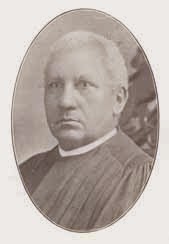
When Henry McNeal Turner returned South in 1866, he had already established a robust list of accomplishments. Licensed to preach by the Methodist Episcopal Church South (M.E. South) at nineteen, Turner preached to large audiences—both black and white and was quite a successful revival preacher. When he left the M.E. South Church and joined the African Methodist Episcopal Church (AME), he and his family moved to Washington DC where he would eventually become pastor of Israel AME Church. The church, located a block away from the Capitol, welcome many Congressional Representatives and Senators who enjoyed hearing Turner preach. Later Turner would become the first African American chaplain in the Armed Forces and accompany “his men”—as he liked to call them, on the battlefield.
However, what established Turner as a public figure was his work as a correspondent for the AME newspaper, the Christian Recorder. While precise subscription rates are not available, the Recorder nevertheless, made its rounds through the informal church grapevine. Turner wrote on issues of the day, church life, happenings in Washington DC and while chaplain, his correspondence from the battlefield became must-reads (Johnson 2012, 27-30). Therefore, Turner’s work alone before and during the Civil War would have established him as an important figure worthy of study.
It would be however, during Reconstruction that Turner’s public persona elevated and he established himself not only in the Black community, but the white community as well. While he preached and built the AME church in Georgia, Turner served on Georgia’s Constitutional Convention (1867), elected to the House of Representatives (1868), became Customs Inspector and Postmaster General in Macon (1869) won reelection to the State House (1870), served as pastor of St. Philip AME Church in Savannah (1872-1876), and became Publications Manager for the AME church (1876-1880). He did this while finding time to write regularly, not only for the Christian Recorder, but also for other newspapers and journals.
Writing During Reconstruction
Turner’s writing during this time focused on a number of issues, problems, and concerns that were germane to African Americans navigating the treacherous waters of Reconstruction. It is from his letters to the Union Republican Congressional Committee that we discover how the formerly enslaved people learn and disseminated information about Reconstruction. Turner wrote that he and others would participate in “dialogues” that instructed the freed people about their rights
We read over the dialogues to the delegates and commented on them at great length, so that no mistake might be entertained. While we were reading the dialogue, I acted as the Freedman and Mr. Campbell as the true Republican, I asking and he answering in a suitable voice, giving emphasis to the facts being related. You ought to have seen the effect which it produced. When Campbell would read some of those pointed replies, the whole house would ring with shouts, and shake with the spasmodic motions and peculiar gestures of the audience (Johnson 2013, 151).
For Turner, there was a rhetorical reason for presenting the information this way.
This, I find is much better than merely letting one man read them. The two voices and the interrogatory manner which can be assumed has double the effect upon the uneducated masses. I have ordered them read in our meetings until our people know them by heart and can relate them from memory (Johnson 2013, 151).
The dialogues that explained the Reconstruction measures to the freed people apparently were a success. Turner would further write
The dialogues are sought for with eagerness everywhere. I went twenty miles in the country yesterday and while going along the road, I saw a crowd of 25 or 30 persons sitting under a tree. When I came up I found them reading the dialogue (Johnson 2013, 151-152).
This however, did not stop opponents of Reconstruction. Turner also wrote on some of the disappointments as well. After writing about the strife between landowners and laborers, Turner lamented:
Politically, things are hot, at the boiling point. The contest is bitter between the retrogressive and progressive parties. The opponents of reconstruction are doing all in their power to retard, if not to thwart the measure, while friends of it are actively engaged….Hon. Mr. Hill, one of the leaders of the opposition party, has written several very bitter articles, denouncing everybody but him and his, which from their venom and malignant epithets did much harm among the common whites. He wrote some fifteen or sixteen articles which have been copied by most of the conservative papers, notwithstanding they were devoid of reason or consistency (Johnson 2013, 41).
Turner however, held out hope for the Reconstruction project. While admitting there had been a “vast amount of ignorance here among all classes, relative to the state of the country,” he “thanked God that all parties are to be elevated through the ordeal (Reconstruction) we are passing. Further, he proclaimed:
Reconstruction on the congressional plan is inevitable in this State. There are thousands of whites favorable to it. They say nothing at all, but will vote for it when the time comes. The great bulk of opposition comes from the disfranchised. But I cannot believe that a majority of the whites are going to vote to keep up civil commotion and political strife, which would follow opposition to reconstruction. (Johnson 2013, 44-45)
This optimism did not remove some doubts he had about the constructing of the hotly debated Fifteenth Amendment to the Constitution. While Macon citizens, he wrote were “full of hope,” despite the “tar
diness of Congress,” he still wondered if the amendment would lead to full equality. He called the amendment “incomplete” owing to the fear that states would not ratify it and subscribing to the old adage, “a half of loaf is better than nothing at all.” However, Turner believed Congress was too cautious and conservative with the amendment by striking out clauses that would guarantee all people the right not only to vote but to hold office and be jurors. He argued that the American people would have supported the amendment in its more completed form and that Congress risked compromising American ideals.
Besides, a mere voter, or making a man a mere political Jack Ass, is not an American idea of an elector, nor has it ever been, from the establishment of our government. Such an idea, or such a devilish theory was never broached, much less advocated, till the blind tyrants of the ignorant conclave known as the Georgia Legislature gave it birth and prominence before the country. Such a wild and oppressive theory was never dreamed of by any jurist, either in this or the old country before (Johnson 2013, 58).
Further, he surmised prophetically:
But just so soon as Congress struck out the right to hold office, and by their debates, whittled it down, by conceding the point that a voter was not constitutionally eligible to hold office, they made a breach in American jurisprudence, which will be productive of more evil than years of toil, and the expenditures of millions of dollars will remedy. We are thrown by it into a whirlpool, needless from every reasonable consideration (Johnson 2013, 58-59).
While he saw benefits in the amendment, he also saw its limitations when in the hands of “mean” legislatures.
But other rights which are as dear as life itself will be unseated by it, and any Legislature that may be mean enough, can, by a statute, prohibit the judges of elections from receiving a vote for any person or persons, class or classes, they may choose, regardless of the construction heretofore place upon the right of an elector (Johnson 2013, 59).
Turner’s insight proved to be correct as many state legislatures did all in their power to nullify the Fifteen Amendment and hinder African Americans right to vote.
To be continued…….
Works Cited
Johnson, Andre E. and Henry McNeal Turner (ed). An African American Pastor Before and During the American Civil War. The Literary Archive of Henry McNeal Turner, Vol 2. Edwin Mellen Press, 2012
__________________. An African American Pastor Before and During the American Civil War. The Literary Archive of Henry McNeal Turner, Vol 3. Edwin Mellen Press, 2013
Follow Andre on Twitter @aejohnsonphd
Previous Post

June 16, 2014
The #DonaldSterling Reader
Next Post
June 17, 2014 Navy Chaplains Obstruct Religious Liberty
Browse Our Archives
Select a Category Amy Steele Andre E. Johnson Book Reviews/Series Brian Foulks Call for Chapters Carol Howard Merritt Classes Conferences Contributors Crystal St.Marie Lewis Daniel White Hodge Earle Fisher Eulogy Fredrick Robinson Guest Contributions Henry McNeal Turner Institutes Interviews Joseph Boston Katherine Whitfield Kimberly Peeler-Ringer Lectures/Roundtables Natalie Bullock Brown R3 Book Series R3 Contributor Rashad Grove Readers Reflections Symposiums Teaching Traci Ellis Travis Harris Uncategorized Video
Select a Month June 2020 February 2020 December 2019 November 2019 July 2019 June 2019 May 2019 October 2018 June 2018 May 2018 April 2018 March 2018 February 2018 January 2018 December 2017 November 2017 October 2017 September 2017 August 2017 July 2017 June 2017 May 2017 April 2017 March 2017 February 2017 January 2017 December 2016 November 2016 October 2016 September 2016 August 2016 July 2016 June 2016 May 2016 April 2016 March 2016 February 2016 January 2016 December 2015 November 2015 October 2015 September 2015 August 2015 July 2015 June 2015 May 2015 April 2015 March 2015 February 2015 January 2015 December 2014 November 2014 October 2014 September 2014 August 2014 July 2014 June 2014 May 2014 April 2014 March 2014 February 2014 January 2014 December 2013 November 2013 October 2013 September 2013 August 2013 July 2013 June 2013 May 2013 April 2013 March 2013 February 2013 January 2013 December 2012 November 2012 October 2012 September 2012 August 2012 July 2012 June 2012 May 2012 April 2012 March 2012 February 2012 January 2012 December 2011 November 2011 October 2011
Follow Us!
TAKE THE
Religious Wisdom Quiz
From a rooftop, I was seen bathing, and this led to adultery, murder, and the death of a child. Who am I?
Select your answer to see how you score.
Bathsheba Tamar Michal Abigail
Related posts from Rhetoric Race and Religion

Why Christian Nationalism Betrays the Gospel

White People of Faith Who Affirm #BLM: How...

Deferred Dreams: The Consequence of Misaligned Personhood in...

TRENDING AT PATHEOS Progressive Christian

Why Christians Have a Sacred Duty to Vote:...
The Bible offers strong support for the sacred duty to vote. Here...

What Being a Modern-Day Apostle Means to Me
In my last column, I discussed the ins and outs of modern-day...

Did Ancient China Once Worship the God of...
Across human history, a common thread weaves through the origins of the...

Love Your Neighbor – Including Earth-Kin: Lev. 19,...
God’s command to love your neighbor means acting in an ethical and...

Lead a Church Study of “Jesus and Lao...
Guest writer Jack Thomas (The Irreverent Reverend) reflects on leading his church...

Principles for Understanding the Apostolic Ministry Today
Whenever people discover that my formal ministry title is "apostle," as in...
view all Progressive Christian blogs
Ad-Free & Subscriber Log-In Subscription Support
- About Us
- 2026 Calendar
- Videos
- Podcasts
- Library of World Religions
- Faith In Media Tracker
- Advertise With Us
- Write for Us
- Privacy Policy
- Terms of Service
- Do Not Sell My Data
- Contact Us
- Radiant Digital
- Manage Newsletter Subscriptions
- Unsubscribe From Notifications
- Sitemap
Copyright 2008-2026, Patheos. All rights reserved.
Subscription Support Ad-Free & Subscriber Log-In
Follow Patheos