
BuddhistCatholicContemplativeEvangelicalGeneral ChristianHinduJewishLatter-day SaintMuslimNew VisionsProgressive Christian
Beliefs
- Buddhist
- Catholic
- Contemplative
- Evangelical
- General Christian
- Hindu
- Jewish
- Latter-day Saint
- More Voices
- Muslim
- New Visions
- Pagan
- Progressive Christian
Topics
- Religion News
- Food and Religion
- Sports and Religion
- Religious Art
- Religious Music and Entertainment
- Religious Events
- History and Religion
- Style and Religion
- Politics and Religion
- Women in Religion
- Recreation Outdoors and Religion
- Business Finance and Religion
- Careers Workplace and Religion
- Education and Religion
- Family Parenting and Religion
- Health Fitness and Religion
- Home and Religion
- Relationships and Religion
- Technology and Religion
- Travel and Religion
Columnists
- Buddhist Columnists
- Business Finance and Religion Columnists
- Careers Workplace and Religion Columnists
- Catholic Columnists
- Contemplative Columnists
- Education and Religion Columnists
- Evangelists Columnists
- Family Parenting and Religion Columnists
- General Christian Columnists
- Health Fitness and Religion Columnists
- Hindu Columnists
- History and Religion Columnists
- Home and Religion Columnists
- Jewish Columnists
- More Voices Columnists
- Latter Day Columnists
- Muslim Columnists
- New Visions Columnists
- Nonreligious Columnists
- Pagan Columnists
- Politics and Religion Columnists
- Progressive Columnists
- Recreation Outdoors and Religion Columnists
- Relationships and Religion Columnists
- Religion News Columnists
- Religious Art Columnists
- Religious Events Columnists
- Religious Music and Entertainment Columnists
- Sports and Religion Columnists
- Style and Religion Columnists
- Technology and Religion Columnists
- Travel and Religion Columnists
- Women in Religion Columnists
Resource Library
- 2026 Calendar
- Library of World Religions
- The 100 Most Holy Places on Earth
- Patheos Answers
- Podcasts
- Videos
- Faith Leaders Database
- Anglican Episcopalian
- Bahai
- Baptist
- Buddhism
- Christianity
- Confucianism
- Eastern Orthodoxy
- Hinduism
- Holiness and Pentecostal
- ISKCON
- Islam
- Judaism
- Lutheran
- Methodist
- The Church of Jesus Christ of Latter-day Saints
- New Age
- Paganism
- Presbytarian and Reformed
- Protestantism
- Religion Behind the Scenes
- Roman Catholic
- Scientology
- Shia Islam
- Sikhism
- Sufism
- Sunni Islam
- Taoism
- Zen
- See all religions
Research Tools
 Ad-Free & Subscriber Log-In Subscription Support
Ad-Free & Subscriber Log-In Subscription Support
Follow Patheos 

- Trending:
- Forgiveness
- |
- Marriage
- |
- Consciousness
- |
- Death Penalty
- |
- Election
- |
- Halloween
 Nomad
Nomad
- Home
- Progressive Christian
- Religion News
- Struggling with “Struggling In Good Faith”: A Review
Struggling with “Struggling In Good Faith”: A Review
Last updated on: December 22, 2015 at 3:15 pm by Brandan Robertson
Struggling with “Struggling In Good Faith”: A Review 2015-12-22T15:15:45-04:00 Brandan Robertson
Patheos Explore the world's faith through different perspectives on religion and spirituality! Patheos has the views of the prevalent religions and spiritualities of the world.
I don’t often do full fledge reviews of book anymore, but recently I received a copy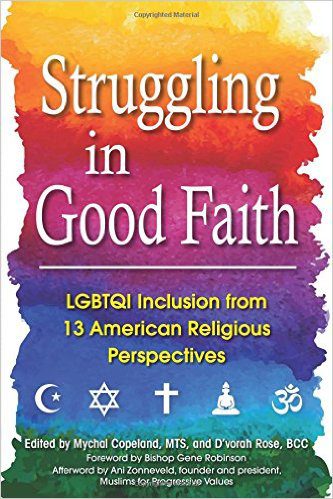 of a soon to be released book from Skylight Paths Publishing called “Struggling in Good Faith: LGBTQI Inclusion from 13 American Religious Perspectives” and have found myself both grateful and perplexed by much of what I have found in this book.
First, let me start with the positives. This book offers a brief theological overview of the case for full inclusion from many American religious traditions that those of us in the dominant Christian, Muslim, or Jewish traditions might not be familiar with, such as the First Nations, Buddhist, Mormon, and Hindu perspective. These brief, easy to understand summaries give the reader a unique glimpse into the religious beliefs that undergird many of these traditions and challenge us to think about some of our own theological beliefs in a fresh perspective.
The editors of this book were also clearly intentional about pulling together a number of diverse voices, including many women and people of color, to represent these American Religious traditions, which I find to be both encouraging and representative of the changing demographics of the American religious landscape in general.
But beyond the accessibility and diversity of this book, there are a number of problems that leap out from the very beginning. First, the breakdown of American Christianity is perplexing and problematic. The editors chose to break down the American Christian church in the following way:
- The Black Church
- Mormons
- Episcopal (ECA)
- Lutheran (ELCA)
- Presbyterian (PCUSA)
- Protestant Evangelical
- Catholic
I find this breakdown to be perplexing for a number of reasons. First and foremost, monolithically describing the “Black Church” as one singular tradition seems to do a great injustice to the amount of texture and diversity among traditionally African-American denominations. Though the author, Minister Rob Newells, clearly states “it is virtually impossible to make generalizations about the lack church without being able to cite significant exceptions…” he continues by saying, “there is still a sense that all black congregations and denominations respond to the same external circumstances and share common internal strenghts, pressures, and tensions.” (Newell’s, pg.2) Whether or not that sentiment is true, it is disappointing that more time was not spent exploring individual African-American traditions and how they have responded to the question LGBTQI inclusion in various theological ways, like was done for other denominations in the book.
The breakdown of American Christianity into Black, Lutheran, Episcopal, Presbyterian, Evangelical, and Catholic is also an interesting choice by the editors. While obviously an entire book could be devoted to the various Christian traditions responses to the question LGBTQI inclusion, choosing these particular denominations, some of which share nearly identical theologies, is confusing to me. Why not break down Christianity into more general camps instead of the almost random breakdown of a few denominations that occurs?
Now for a word on the chapter about my tradition, Evangelicalism: In the chapter on Protestant Evangelical Traditions, the author, Ryan Bell, also seemed to be an interesting choice to author the essay. Though I enjoy Bell’s writings and think he grasps a general understanding of the history of evangelicalism in his chapter, Bells perspective is not the most representative of Evangelicalism today. Bell now identifies as non-religious and his former religious tradition, Seventh-Day Adventism, holds many beliefs that are not in line with what a majority of U.S. Evangelicals believe today and fall outside of what most Evangelicals would consider to be “evangelical”, based on beliefs in extra-biblical revelation, modern day prophets, and untraditional views on eschatology. A chapter could have been written about Seventh Day Adventism alone, which would have been intriguing, but to try to jumble that together under “Protestant Evangelical Traditions” seemed to be quite a stretch, ignoring the great nuance of the various theological positions and denominations that make up evangelicalism today.
I cannot comment on the accuracy of the other theological perspectives represented from non-Christian traditions, but the breakdown of American Christianity gives me great pause in using this book as a resource to help my fellow Christians understand the landscape of the LGBTQI movement among Christians in America.
At risk of sounding overly critical, I do want to reiterate that for the average progressive person of faith who is seeking to grasp a surface level understanding of various religious positions on LGBTQI inclusion in America, this book serves as a tremendous resource and is a welcomed addition to the literature currently available. But as for in-depth theological, traditional, and demographic accuracy when it comes to the nuances of American Christianity, I question the reliability of this book as a resource to to the Christian community.
So, if you’re looking for a brief, progressive overview of positions on LGBTQI inclusion, then this book is for you. But if you’re looking for the depth and nuance that is so crucial to understanding the positions of most religious traditions, this book may leave you wanting.
“Struggling In Good Faith” is Edited by Mychal Copeland and D’vorah Rose and is available wherever books are sold.
Previous Post

December 17, 2015
The Scandal Of The Evangelical Academic Institution
Next Post
December 22, 2015 John Piper Gets Guns....Right?
Browse Our Archives
Select a Category Breaking News Contributor Post Current Events Devotional Devotional Ideas For A Better Tomorrow General Posts Guest Post Interview Missiology Nomad Rants Recalibrate Reflections Response Review The Other Side Theology Uncategorized
Select a Month May 2020 April 2020 March 2020 February 2020 January 2020 December 2019 September 2019 August 2019 July 2019 June 2019 May 2019 April 2019 March 2019 December 2018 November 2018 October 2018 September 2018 August 2018 July 2018 June 2018 May 2018 April 2018 August 2017 July 2017 May 2017 February 2017 January 2017 December 2016 September 2016 August 2016 July 2016 June 2016 May 2016 April 2016 March 2016 February 2016 January 2016 December 2015 November 2015 October 2015 September 2015 August 2015 July 2015 June 2015 May 2015 April 2015 March 2015 February 2015 January 2015 December 2014 November 2014 October 2014 September 2014 August 2014 July 2014 June 2014 May 2014 June 2013
Follow Us!
TAKE THE
Religious Wisdom Quiz
I stood on a wooden platform and read the Law from daybreak till noon, and the people wept. Who am I?
Select your answer to see how you score.
Joshua Moses Ezra Nehemiah
Related posts from Nomad
Continue The Fight: My (Potential) Experience with COVID-19
If We Want To See America’s Resurrection, Churches...
Why Progressives & Moderates Need Each Other
TRENDING AT PATHEOS Progressive Christian

Why Christians Have a Sacred Duty to Vote:...
The Bible offers strong support for the sacred duty to vote. Here...

What Being a Modern-Day Apostle Means to Me
In my last column, I discussed the ins and outs of modern-day...

Did Ancient China Once Worship the God of...
Across human history, a common thread weaves through the origins of the...

Love Your Neighbor – Including Earth-Kin: Lev. 19,...
God’s command to love your neighbor means acting in an ethical and...

Lead a Church Study of “Jesus and Lao...
Guest writer Jack Thomas (The Irreverent Reverend) reflects on leading his church...

Principles for Understanding the Apostolic Ministry Today
Whenever people discover that my formal ministry title is "apostle," as in...
view all Progressive Christian blogs
Ad-Free & Subscriber Log-In Subscription Support
- About Us
- 2026 Calendar
- Videos
- Podcasts
- Library of World Religions
- Faith In Media Tracker
- Advertise With Us
- Write for Us
- Privacy Policy
- Terms of Service
- Do Not Sell My Data
- Contact Us
- Radiant Digital
- Manage Newsletter Subscriptions
- Unsubscribe From Notifications
- Sitemap
Copyright 2008-2026, Patheos. All rights reserved.
Subscription Support Ad-Free & Subscriber Log-In
Follow Patheos